Bizimle iletişime geçmek için WeChat kodunu tarayın
Bizimle iletişime geçmek için WeChat kodunu tarayın
Bize e-posta göndermekten çekinmeyin; size en kısa sürede cevap vereceğiz.
Geleceği kalp ve ruhla yaratmak


In rail transit equipment manufacturing, the quality of rail castings is directly related to the safety and stability of train operations. Fakat, the burrs produced after rough machining remain a persistent pain point in the industry. These seemingly tiny metal protrusions can become a source of stress concentration and even cause component fracture. This article, drawing on practical examples from production sites, will provide a detailed analysis of the five core processes that achieve “zero burr” işleme, revealing the underlying technical logic and operational details.

In the grinding workshop of a rail transit equipment factory, 58-year-old Master Li hunched over, meticulously grinding the edge of a complex casting with a pneumatic grinder. His eyes fixed on every detail, his fingers moving nimbly along the contours of the casting. The moment the grinder made contact with the metal, sparks flew and metal chips fell.
“This casting is a key component of the bogie. Its structure is extremely complex, and machines simply can’t handle the corners,” Master Li said, pointing to a groove on the casting. “Hand-polishing relies on experience and feel, and the pressure must be adjusted according to the hardness of the metal and the size of the burrs.” He kept the grinding machine, a decade-old, polished to a gleaming shine. “Young people don’t want to learn these days, thinking it’s dirty and tiring, but some jobs really require manual labor.”
Although manual polishing is inefficient (a complex casting can take two to three hours) and relies on the worker’s experience, it is irreplaceable when handling special structures such as irregularly shaped and thin-walled parts. On one occasion, a batch of high-speed rail castings destined for Europe had a sudden change in edge structure due to a design change, making it difficult for automated equipment to adapt. Ultimately, Master Li’s team of polishers handled the process manually, ensuring on-time delivery.
Unlike the manual polishing workshop, six sandblasting machines are operating efficiently in the adjacent automated sandblasting workshop. Conveyor belts convey castings into a sealed sandblasting chamber. High-pressure air sprays quartz sand (80-120 örgü) onto the surface at a speed of 80 saniyede metre, instantly shattering burrs.
“Sandblasting not only quickly removes burrs but also cleans the surface oxide layer,” said Workshop Manager Wang, pointing to the control panel. “We adjust the grit size, spray pressure, and angle to accommodate castings of different materials.” Örneğin, when processing aluminum alloy castings, the grit size is adjusted to 120 mesh and the pressure is reduced to 0.4 MPa to avoid surface damage. When processing high-carbon steel castings, the grit size is adjusted to 80 örgü, and the pressure is adjusted to 0.6 MPa to ensure complete burr removal.
Automated sandblasting is 5-10 times more efficient than manual sandblasting, and the sand can be recycled (with a 95% recovery rate), offering significant cost advantages. Fakat, Engineer Wang also noted limitations: “After sandblasting, the surface roughness of the casting will reach Ra6.3-12.5μm. If the customer requires a higher finish, subsequent polishing is required.”
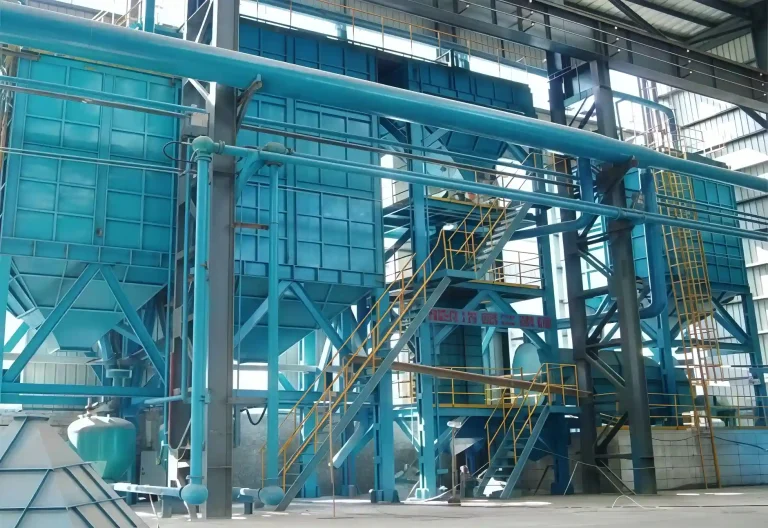
In the heat treatment workshop, rows of castings are slowly fed into the annealing furnace. The furnace temperature gradually rises to 880°C, where it is held for three hours before cooling to 500°C and being removed from the furnace. This is the key step in reducing burrs—the spheroidizing annealing process.
“Castings generate internal stresses during the casting and rough machining processes. These stresses are like time bombs hidden within the casting,” explained technician Xiao Zhang. “Annealing allows the casting to undergo structural transformation at high temperatures, eliminating these internal stresses.” Pointing to the annealing curve, he added, “Temperature control must be accurate to ±5°C, and the time error must not exceed 10 dakika; aksi takdirde, the annealing effect will be significantly reduced.”
Take a high-speed rail gearbox casting as an example. Before annealing, the burr rate after rough machining was as high as 15%. After spheroidizing annealing at 880°C for 3 saat, the burr rate dropped to less than 3%. On one occasion, an equipment malfunction caused the annealing temperature to fluctuate to 900°C, resulting in deformation of the casting and its eventual scrapping, resulting in losses of hundreds of thousands of yuan.
For some high-strength castings, such as high-speed rail axles, annealing alone is not sufficient; aging treatment is also required. In another heat treatment furnace, the casting is heated to 200°C, held for 8 saat, and then air-cooled. “Aging treatment can further eliminate residual stress and is particularly suitable for high-strength, high-hardness castings,” said Engineer Lao Li. “We once processed a batch of imported alloy steel axles. After annealing, they still had a burr rate of 5%. After aging, the burr rate dropped to below 0.5%.” He emphasized that the aging temperature and time need to be adjusted according to the material. Örneğin, the aging temperature for aluminum alloy castings is usually 170-190°C for 4-8 saat.
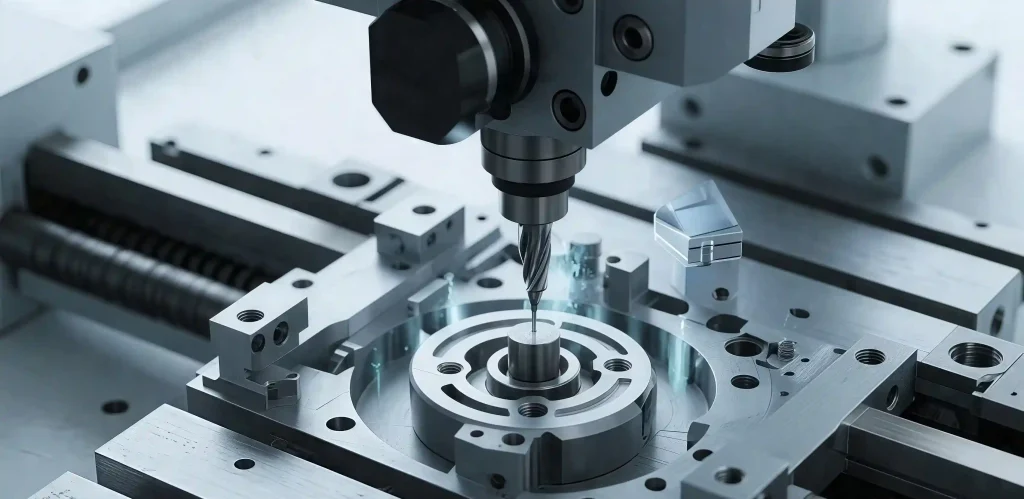
In the CNC machining workshop, eight CNC milling machines are operating at high speed. Operator Xiao Wang is staring at the computer screen, adjusting the machining parameters. This is one of the core equipment for precision trimming.
“CNC milling is suitable for castings of all materials, from aluminum alloys to high-carbon steel,” Xiao Wang said. “We control the milling cutter’s trajectory through programming, achieving an accuracy of 0.01 mm.” Pointing to a high-speed rail brake disc casting being processed, he said, “The arc transition on this edge must be CNC milled to ensure a smooth finish; aksi takdirde, braking performance will be affected.”
CNC milling’s advantages lie in its flexibility and precision, but it also has limitations. Örneğin, when machining deep cavities or thin-walled parts, the milling cutter is prone to vibration, resulting in increased surface roughness. In these cases, the feed rate must be reduced or a smaller cutter must be used.
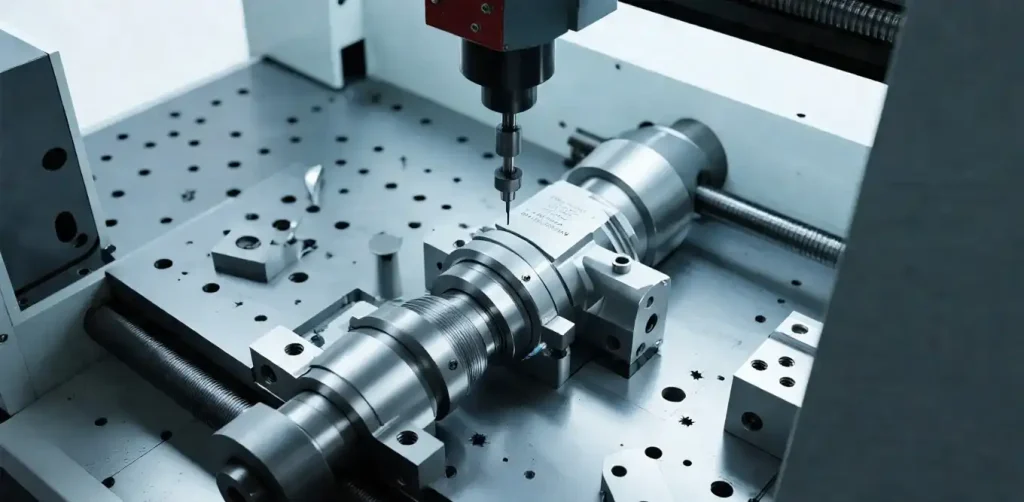
Adjacent to the CNC milling workshop, the laser cutting workshop is free of jarring mechanical noises, with only a gentle buzzing sound. A high-energy laser beam (power: 2000W) moves rapidly across the casting’s surface, instantly cutting clean edges.
“Laser cutting is non-contact and generates no mechanical stress, making it particularly suitable for thin castings,” explained engineer Lao Chen. “Örneğin, this high-speed rail sidewall casting is only 3mm thick. Laser cutting ensures edge perpendicularity of 0.1mm or less, and a heat-affected zone width of less than 0.5mm.” Pointing to the cut sample, he said, “Look at this edge! It’s as clean as cutting tofu with a knife. No further processing is required.”
Laser cutting is two to three times more efficient than CNC milling, but the equipment is expensive (üzerinde 5 million yuan per unit) and is sensitive to the material. Örneğin, laser cutting of highly reflective copper alloy castings requires wavelength adjustment or application of an absorbent coating; aksi takdirde, the cutting quality will deteriorate.
In the quality inspection laboratory, inspector Xiao Zhang conducts an ASTM E290 bend test. He secures a processed casting sample (50×20×5mm) to the testing machine and slowly applies a bending force until the sample bends 180 degrees.
“This test is like a ‘physical examination’ of the casting, directly verifying the edge integrity,” Xiao Zhang said. “If there are cracks or breaks on the edge, it means the treatment wasn’t done properly.” Pointing to the test results, he said, “A recent batch of castings showed intact surfaces after bending to 180 degrees, indicating acceptable quality. Fakat, a previous batch developed microcracks at 120 degrees due to excessive sandblasting pressure, and we promptly returned it for reprocessing.”
ASTM E290 testing parameters must strictly adhere to the standard: a bending speed of 2mm/min and a support point spacing of 30mm. On one occasion, an operator mistakenly adjusted the support point spacing to 35mm, resulting in a discrepancy in the test results. A retest was ultimately required to pass acceptance.

On the production site, engineers are integrating five major processes into the production process. From preliminary grinding after rough machining, to heat treatment for stress relief, to precision trimming and rigorous quality inspection, each link is closely linked.
“Achieving ‘zero burrs’ isn’t a single process solution; it requires a systematic approach,” said Chief Engineer Lao Liu. “Örneğin, when processing a certain type of high-speed rail bogie casting, we first sandblast to remove burrs (for high efficiency), then anneal to relieve stress (to prevent deformation during subsequent processing), then use CNC milling to trim edges (to ensure precision), and finally pass ASTM E290 testing (to ensure quality). Throughout the entire process, the burr rate has dropped from an initial 20% to below 0.2%.”
He emphasized that process integration must balance cost and efficiency. Örneğin, for large-volume ordinary castings, a combination of sandblasting + annealing + laser cutting can be used; whereas for small-volume, high-precision castings, a combination of manual polishing + aging treatment + CNC milling is more suitable.
Luoyang Fonyo Ağır Sanayi A.Ş., Ltd., 1998 yılında kurulan döküm demiryolu parçaları üreticisidir. Fabrikamız 72.600㎡ alanı kaplamaktadır, fazlasıyla 300 çalışanlar, 32 teknisyenler, içermek 5 kıdemli mühendisler, 11 yardımcı mühendisler, Ve 16 teknisyenler. Üretim kapasitemiz 30,000 ton/yıl. Şu anda, ağırlıklı olarak döküm üretiyoruz, işleme, ve lokomotif için montaj, vagon, yüksek hızlı trenler, madencilik ekipmanları, rüzgar enerjisi, vesaire. Ürünlerimiz Rusya'ya ihraç edildi, Amerika Birleşik Devletleri, Almanya, Arjantin, Japonya, Fransa, Güney Afrika, İtalya ve diğer ülkeler.
Temas etmek: Stella Liu
E-posta: satış@railwaypart.com
WhatsApp: +86-152-3615-7103