WeChat 코드를 스캔하여 문의하세요
WeChat 코드를 스캔하여 문의하세요
이메일을 보내주시면 최대한 빨리 답변해 드리겠습니다..
마음과 영혼을 다해 미래를 창조하다


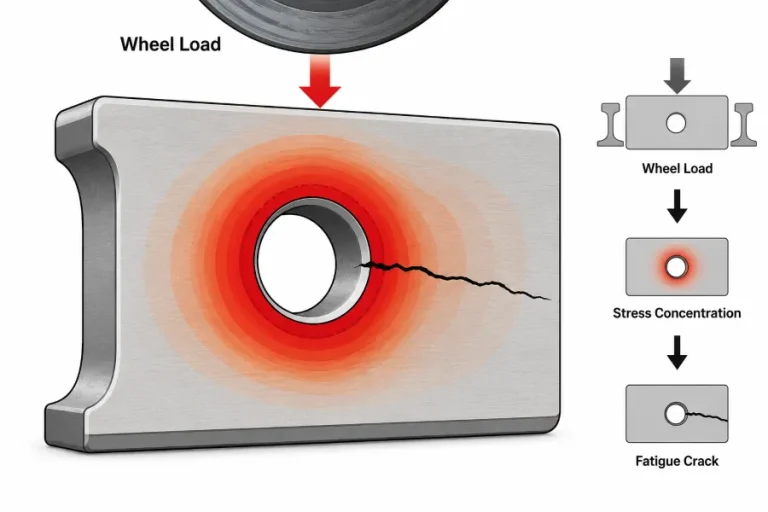
철도 침목 단순한 구조적 구성 요소처럼 보일 수 있습니다., 그러나 철도 엔지니어링에 관련된 사람이라면 누구나 선로 성능에 상당한 영향을 미친다는 것을 알고 있습니다.. 그들은 레일을 지원합니다, 정확한 게이지를 유지하다, 휠 하중을 밸러스트 또는 슬래브로 전달, 레일 고정 시스템과 함께 작동하여 반복되는 동적 하중에서도 트랙을 안정적으로 유지합니다..
올바른 철도 침목을 선택하는 것은 단순히 가장 강한 재료를 선택하는 문제가 아닙니다.. 무거운 화물 운송 노선에서 잘 작동하는 침목은 지하철 시스템에 최선의 선택이 아닐 수도 있습니다., 초기 비용이 가장 낮은 재료는 사용 수명 동안 훨씬 더 높은 유지 관리가 필요할 수 있습니다..
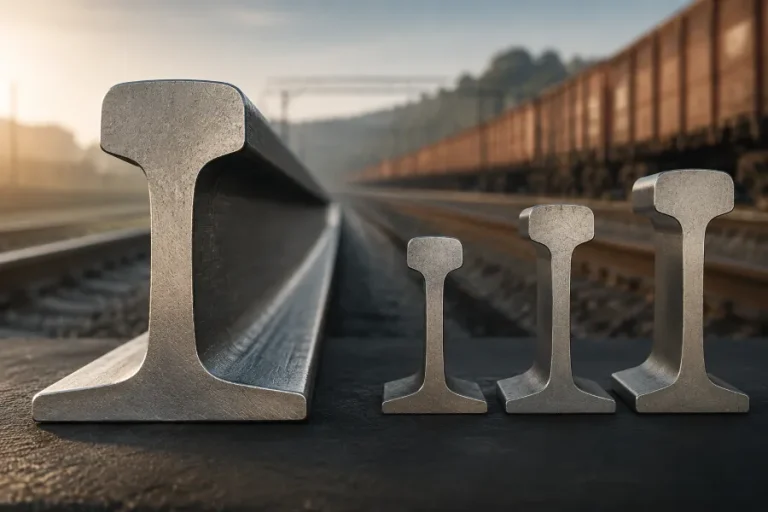
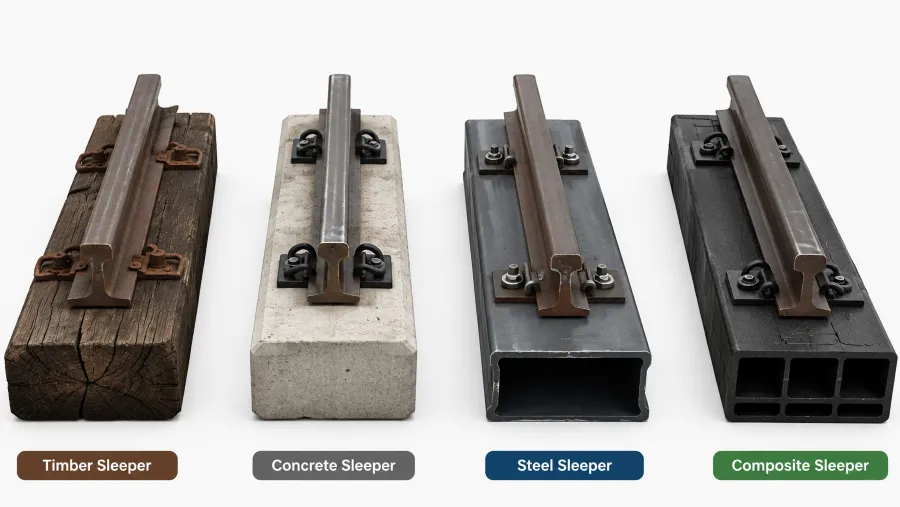
오늘, 네 가지 유형의 철도 침목이 전 세계적으로 널리 사용됩니다.:
각각의 장점이 있습니다, 한계, 그리고 이상적인 애플리케이션. 최선의 선택은 차축 하중과 같은 요인에 따라 달라집니다., 열차 속도, 기후, 유지관리 전략, 환경 조건, 및 프로젝트 예산.
이 가이드에서는, 콘크리트를 비교해보겠습니다, 재목, 강철, 엔지니어링 관점에서 본 복합 철도 침목. 단순히 장점과 단점을 나열하기 보다는, 각 재료의 성능이 다른 이유와 가장 큰 가치를 제공하는 부분에 대해 설명하겠습니다.. 새로운 철도를 설계하고 있는지 여부, 기존 라인 업그레이드, 또는 철도 부품 소싱, 이러한 차이점을 이해하면 보다 현명한 결정을 내리는 데 도움이 됩니다..
사람들이 철도 인프라에 대해 생각할 때, 그들은 보통 철도나 기차에 초점을 맞춥니다.. 실제로는, 전체 트랙 구조의 안정성은 여러 구성 요소 간의 상호 작용에 따라 달라집니다., 철도 침목은 그중에서 가장 중요한 것 중 하나입니다..
에이 철도 침목 몇 가지 필수 기능을 수행합니다.:
침목을 적절하게 선택하지 않은 경우, 심지어 고품질 레일과 패스너도 장기적인 트랙 형상을 유지할 수 없습니다..
이러한 이유로, 철도 엔지니어는 침목을 단독으로 평가하는 경우가 거의 없습니다.. 대신에, 그들은 전체 트랙 시스템을 고려합니다, 레일을 포함해, 레일 클립, 레일 패드, 어셈블리 고정, 밸러스트 상태, 및 예상 운영 환경.
에이 철도 침목 하나의 고정 시스템에서는 잘 작동하지만 다른 고정 시스템에는 적합하지 않을 수 있습니다.. 비슷하게, 고속 여객 노선용으로 설계된 침목은 높은 차축 하중을 운반하는 대형 화물 통로에 필요한 내구성을 제공하지 못할 수 있습니다..
올바른 침목 재료는 선로 안정성뿐만 아니라 유지 관리 효율성도 향상시킵니다., 승차감, 철도의 전체 수명주기 비용.
전문화된 침목 디자인이 많이 존재하지만, 현대 철도는 주로 네 가지 재료를 사용합니다.
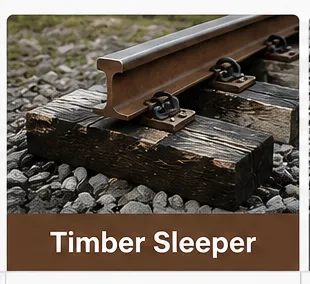
목재 침목은 철도 침목 중 가장 오래된 유형으로 철도 건설 초기부터 사용되어 왔습니다.. 오늘도, 그들은 북미에서 흔히 볼 수 있습니다, 호주, 그리고 기존의 많은 철도 네트워크.
목재 침목이 오랫동안 살아남은 한 가지 이유는 유연성 때문입니다.. 목재는 진동과 충격 하중을 자연적으로 흡수합니다., 어느 정도 탄력성이 유리한 위치에 적합합니다..
목재 침목은 드릴 작업도 상대적으로 쉽습니다., 자르다, 또는 현장에서 수정. 이러한 유연성으로 인해 스위치에 특히 유용합니다., 교차로, 교량, 맞춤형 설치가 필요한 경우가 많은 유지보수 작업.
하지만, 목재는 유기재료이다., 내구성은 수분의 영향을 많이 받습니다., 곤충, 진균류, 그리고 기상 조건. 방부제로 처리하더라도, 목재 침목은 일반적으로 콘크리트 또는 강철 대체품보다 수명이 짧습니다..
유지관리 관점에서, 더 자주 검사하고 교체해야 합니다., 특히 교통량이 많은 철도 노선에서는.
오늘, 목재 침목은 가장 일반적으로 사용됩니다.:
목재 침목은 더 이상 대부분의 새로운 고속 또는 중거리 철도에서 선호되는 선택이 아니지만, 최대 사용 수명보다 유연성과 유지 관리 용이성이 더 중요한 응용 분야에서 계속해서 실질적인 이점을 제공합니다..
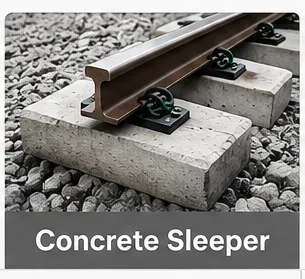
새로 건설된 고속철도를 방문한다면, 지하철 노선, 또는 전 세계 거의 모든 곳의 대형 화물 운송 통로, 콘크리트 철도 침목을 찾을 가능성이 높습니다..
널리 사용되는 것은 우연이 아닙니다.. 콘크리트 침목은 탁월한 강도 균형을 제공합니다., 내구성, 치수 안정성, 및 장기 유지보수 성능, 가장 현대적인 철도 인프라에서 선호되는 선택입니다..
대부분의 콘크리트 철도 침목은 프리스트레스트 콘크리트 침목으로 제조됩니다.. 생산 중, 콘크리트를 타설하기 전에 고강도 강철 힘줄을 긴장시킵니다.. 콘크리트가 요구되는 강도에 도달하면, 긴장이 풀리다, 침목 내부에 영구 압축 응력 생성. 이는 균열 저항성을 크게 향상시키고 침목이 수명 기간 동안 수백만 번의 반복되는 바퀴 하중을 견딜 수 있게 해줍니다..
목재침목에 비해, 콘크리트 침목은 훨씬 무겁습니다. 이로 인해 운송 및 설치 비용이 증가하지만, 추가 중량은 고속 교통 및 무거운 차축 하중에서도 트랙을 안정적으로 유지하는 데 도움이 됩니다.. 질량이 증가하면 잠자는 움직임이 줄어듭니다., 측면 힘에 대한 저항력을 향상시킵니다., 시간이 지남에 따라 더 나은 트랙 형상에 기여합니다..
또 다른 장점은 일관성이다.. 콘크리트 침목은 표준화된 금형과 엄격한 품질관리를 통해 제작되기 때문에, 모든 침목의 치수는 거의 동일합니다.. 이를 통해 레일 설치가 더욱 정확해지고 철도 수명 전반에 걸쳐 설계된 선로 게이지를 유지하는 데 도움이 됩니다..
콘크리트 침목은 특히 다음에 적합합니다.:
물론, 콘크리트 침목은 완벽하지 않습니다. 무게가 더 크면 설치 중에 리프팅 장비가 필요합니다., 손상된 침목을 수리하는 것은 목재를 교체하는 것보다 더 어렵습니다.. 게다가, 밸러스트 기초가 제대로 유지되지 않은 경우, 콘크리트는 목재보다 유연성이 떨어지기 때문에 충격력이 증가할 수 있습니다..
대부분의 현대 철도 프로젝트용, 하지만, 이러한 단점은 유지 관리 요구 사항이 낮고 서비스 수명이 상당히 길어서 상쇄됩니다.. 이것이 바로 콘크리트 침목이 새로운 철도 건설의 글로벌 표준이 된 이유입니다..
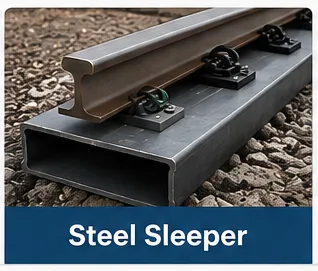
강철 철도 침목은 100년 이상 동안 사용되어 왔습니다., 비록 그 응용이 항상 콘크리트나 목재보다 더 전문화되어 왔음에도 불구하고.
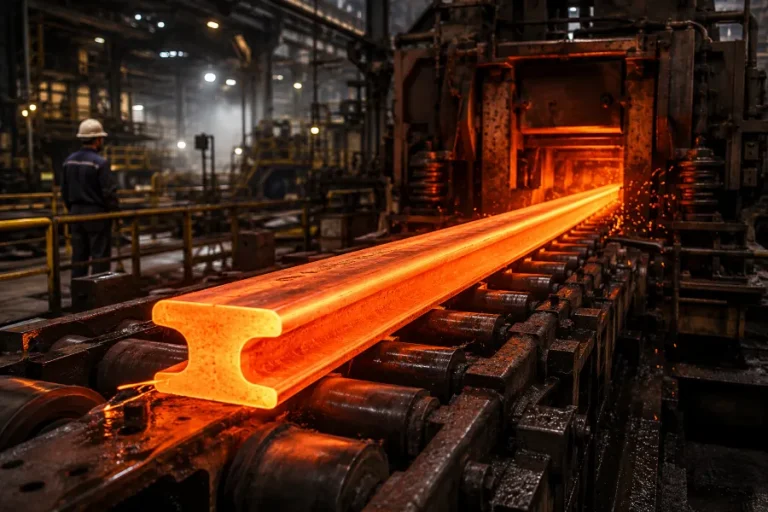
콘크리트 침목과 달리, 강침목은 강판을 특정 단면 형상으로 성형, 압착하여 제조됩니다.. 이는 콘크리트보다 전체 무게를 낮게 유지하면서 높은 강도를 제공합니다..
엔지니어들이 높이 평가하는 한 가지 특징은 탁월한 치수 정확도입니다.. 강철 침목은 엄격한 공차로 제조됩니다., 정확한 트랙 형상이 필수적인 프로젝트에 적합합니다..
강철은 또한 목재가 빠르게 악화되는 환경에서도 잘 작동합니다.. 흰개미의 영향을 받지 않습니다., 곰팡이 부패, 또는 나무와 같은 방식으로 수분, 열대 기후와 생물학적 분해가 우려되는 지역에서 매력적인 옵션이 됩니다..
또 다른 장점은 재활용성입니다.. 서비스 수명이 끝나면, 강철 침목은 거의 전부 재활용 가능, 물질적 낭비를 줄이고 지속 가능성 목표를 지원합니다..
하지만, 강철 침목은 또한 여러 가지 엔지니어링 과제를 제시합니다..
Because steel is highly conductive and relatively rigid, vibration and noise transmission can be greater than with timber sleepers. Corrosion protection is another important consideration, especially in coastal environments or regions where aggressive chemicals are present. Protective coatings and regular inspection are therefore essential for maintaining long-term performance.
Steel sleepers are commonly used in:
Although they represent only a small percentage of the global railway sleeper market, steel sleepers remain an effective solution for projects with specific environmental or operational requirements.
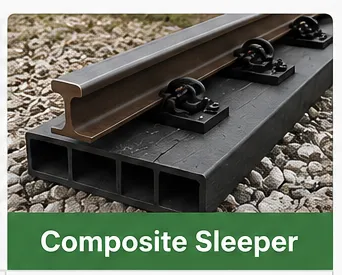
복합 철도 침목은 철도 침목의 최신 주요 카테고리이며 철도 운영업체가 보다 지속 가능한 인프라 솔루션을 모색함에 따라 계속해서 주목을 받고 있습니다..
천연목재나 철근콘크리트 대신, 복합 침목은 재활용 플라스틱을 사용하여 제조됩니다., 유리섬유, 합성수지, 또는 기타 가공 복합 재료. 제조업체마다 다른 공식을 사용합니다., 하지만 전체적인 목적은 같습니다: 전통적으로 목재와 관련된 유연성과 현대 소재의 내구성을 결합합니다..
엔지니어링 관점에서, 복합 침목은 흥미로운 특성 균형을 제공합니다..
그들은 썩지 않는다, 물을 흡수하다, or suffer insect damage like timber sleepers. They are also much lighter than concrete sleepers, making transportation and installation easier in locations where heavy lifting equipment is unavailable.
One feature that railway maintenance teams often appreciate is that composite sleepers can usually be drilled, 자르다, and machined on site using tools similar to those used for timber. This makes them particularly suitable for bridge renewals, tunnel maintenance, and track upgrades where customized installation is required.
Composite sleepers also provide excellent electrical insulation and good vibration damping, helping reduce stray current issues and improve ride comfort in certain railway systems.
The main limitation is cost. Initial purchase prices are generally higher than those of timber or concrete sleepers. Because composite technology is still evolving, long-term field data covering 40 에게 50 years of service is also less extensive than for traditional materials.
그럼에도 불구하고, when maintenance costs, environmental resistance, and expected service life are considered together, composite sleepers often deliver competitive life-cycle value.
Today they are increasingly used in:
There is no single railway sleeper that performs best in every situation. The right choice depends on the operating conditions, 유지관리 전략, environmental factors, and life-cycle cost of the railway.
The table below summarizes the key differences between the four major railway sleeper materials.
| 특징 | 목재 침목 | Concrete Sleepers | Steel Sleepers | Composite Sleepers |
| Initial Cost | 낮은 | 중간 | 중간 | 높은 |
| 서비스 수명 | 20–30 years* | 40–60 years* | 30–50 years* | 40–50+ years* |
| 무게 | 빛 | 무거운 | 중간 | 중간 |
| Track Stability | 좋은 | 훌륭한 | Very Good | Very Good |
| 유지 | 높은 | 낮은 | 중간 | 낮은 |
| 부식 저항 | 훌륭한 | 훌륭한 | Requires protection | 훌륭한 |
| Rot & Insect Resistance | 가난한 | 훌륭한 | 훌륭한 | 훌륭한 |
| Noise & 진동 감쇠 | 훌륭한 | 좋은 | 공정한 | Very Good |
| 설치 | Easy | Heavy lifting required | 보통의 | Easy |
| Recyclability | 보통의 | 보통의 | 훌륭한 | 좋은 |
| 일반적인 응용 분야 | Turnouts, 교량, secondary lines | 고속, 화물, 지하철 | 채광, 산업의, desert railways | Bridges, 터널, wet environments |
*Actual service life depends on axle load, traffic density, 기후, 유지 관리 관행, and local operating conditions.
Although comparison tables provide a useful overview, they should never be the only basis for selecting railway sleepers. Engineering decisions should always consider the entire railway system rather than focusing on a single component.
예를 들어, a heavy-haul railway carrying 32.5-tonne axle loads places very different demands on the track than a light industrial railway. 비슷하게, a coastal railway exposed to salt spray faces different durability challenges than a dry inland freight corridor.
This is why experienced railway engineers evaluate sleepers together with rail sections, ballast quality, 고정 시스템, drainage conditions, maintenance capabilities, and expected traffic volume before making a final decision.
One of the questions we hear most often from customers is:
“Which railway sleeper is the best?”
The answer is surprisingly simple:
보편성은 없다 “최상의” railway sleeper—only the sleeper that best matches your operating conditions.
Below are some typical recommendations based on common railway applications.
Concrete railway sleepers are the preferred choice for high-speed lines because they provide excellent stiffness, dimensional consistency, and long-term track stability.
At speeds exceeding 250 km/h, maintaining precise track geometry becomes critical. The heavier weight of concrete sleepers helps resist track movement, while prestressed construction minimizes cracking under repeated dynamic loading.
이러한 이유로, nearly all newly constructed high-speed railways use prestressed concrete sleepers.
Heavy-haul railways carrying high axle loads require sleepers capable of resisting enormous vertical and lateral forces over millions of loading cycles.
Concrete sleepers are generally the first choice due to their strength, 내구성, and low maintenance requirements.
하지만, in mining railways or industrial operations where track layouts change frequently, steel sleepers may also provide practical advantages because they are easier to recover, relocate, and recycle.
Urban rail systems operate under a different set of priorities.
Besides structural performance, operators often focus on ride comfort, 진동 제어, and maintenance efficiency.
Concrete sleepers remain the most common option for metro systems because they offer stable geometry and long service life. In locations with strict vibration or stray-current requirements, composite sleepers may also be considered for specific sections of track.
Bridges, 스위치, and crossings often require sleepers that can be modified during installation or maintenance.
This is one reason timber sleepers continue to be widely used in these locations.
Composite sleepers have also become increasingly popular because they combine many of timber’s installation advantages with significantly better resistance to moisture, 곤충, and weathering.
Moisture is one of the biggest challenges for railway infrastructure.
Timber sleepers may deteriorate more rapidly when exposed to continuous moisture, while unprotected steel sleepers require careful corrosion control.
Concrete and composite sleepers generally perform better in wet environments due to their superior resistance to biological degradation and water absorption.
Industrial facilities, construction railways, and temporary tracks often prioritize flexibility and lower initial investment.
Depending on the operating conditions, timber or steel sleepers may offer the most economical solution, particularly when track layouts are expected to change during the project’s lifetime.
궁극적으로, selecting the right railway sleeper is a balance between initial investment and long-term operating cost.
A sleeper with the lowest purchase price may require more frequent replacement and higher maintenance costs, while a more durable option can reduce track possessions, maintenance labor, and life-cycle expenditure over several decades.
이러한 이유로, many railway authorities now evaluate railway sleeper projects based on total life-cycle cost rather than purchase price alone.
Choosing the right railway sleeper is only part of the engineering decision. Equally important is selecting a rail fastening system that is compatible with the sleeper material.
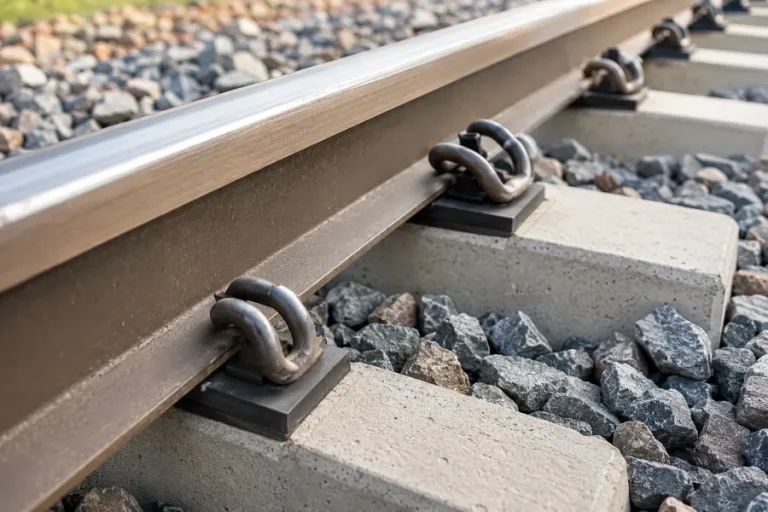
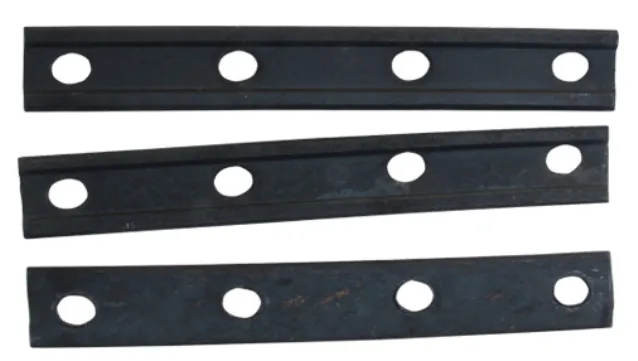
울타리, 침목, 레일 클립, 레일 패드, 생선 접시, 그리고 fastening fish bolts work together as one system. Changing the sleeper material often means changing the fastening arrangement as well.
This is why railway engineers evaluate the complete track structure instead of selecting each component independently.
Concrete sleepers are typically designed with cast-in shoulders or embedded inserts during manufacturing. These components provide secure anchoring points for elastic rail clips.
A typical concrete sleeper fastening assembly may include:
Because concrete is rigid, elastic rail clips and rail pads play an especially important role. They provide the necessary clamping force while absorbing impact loads and reducing vibration transmitted from the rail to the sleeper.
This combination allows concrete sleepers to maintain excellent track geometry while still providing the elasticity needed for modern railway operations.
Timber sleepers offer greater flexibility during installation because fasteners can be installed directly into the wood.
Depending on the railway standard, timber sleepers commonly use:
One advantage of timber sleepers is that damaged fastening locations can often be repaired or modified on site. This flexibility makes timber sleepers particularly suitable for turnouts, 교량, and maintenance work where customized installation is frequently required.
하지만, repeated loading may gradually reduce the holding strength of fasteners if the timber deteriorates with age or moisture exposure.
Steel sleepers require specially designed fastening systems because the sleeper itself is manufactured from formed steel sections.
Unlike timber, fasteners cannot simply be driven into the sleeper, and unlike concrete, there are no cast-in inserts. 대신에, fastening components are designed specifically to match the geometry of the steel sleeper.
Electrical insulation is another important consideration. Since steel is conductive, insulating components are required to prevent unwanted electrical current from passing through the track structure in electrified railway systems.
Composite sleepers are generally designed to be compatible with fastening methods already used for timber sleepers, making them a practical replacement in many track renewal projects.
Because composite materials can usually be drilled and machined on site, installation procedures are often familiar to maintenance crews.
그럼에도 불구하고, engineers must still verify that the fastening system is compatible with the mechanical properties of the composite material. Factors such as screw pull-out resistance, fastening torque, and long-term load distribution should all be considered during system design.
Selecting high-quality sleepers alone does not guarantee reliable track performance.
A concrete sleeper paired with an unsuitable rail clip, or a composite sleeper fitted with an incompatible fastening arrangement, can lead to premature component wear, reduced clamping force, 유지 관리 요구 사항 증가, and even deterioration of track geometry over time.
이러한 이유로, railway infrastructure projects are increasingly specified as complete fastening systems rather than individual components.
When evaluating a railway project, engineers typically consider:
Only when these elements work together can the track achieve the durability, 안전, and reliability expected throughout its service life.
콘크리트, 재목, 강철, and composite railway sleepers all have important roles in today’s railway industry. None of them is universally better than the others, because each material has been developed to solve different engineering challenges.
Concrete sleepers have become the preferred choice for most new mainline, 지하철, and high-speed railway projects thanks to their strength, 안정, 그리고 긴 서비스 기간.
Timber sleepers remain valuable for bridges, 투표율, and maintenance applications where flexibility and ease of modification are essential.
Steel sleepers continue to provide reliable performance in mining railways, industrial lines, and environments where durability and recyclability are priorities.
Composite sleepers represent an increasingly attractive alternative for bridge renewals, wet environments, and projects seeking longer service life with reduced maintenance.
The key is to evaluate the railway as a complete system rather than selecting components individually. The right sleeper, combined with a properly designed rail fastening system, helps improve track stability, 유지 관리 비용 절감, and extend the service life of the entire railway infrastructure.
~에 뤄양포뇨중공업(Luoyang Fonyo Heavy Industries), 주식회사., we manufacture a wide range of railway fastening components that are compatible with concrete, 재목, 강철, and composite sleeper systems. Our product portfolio includes 레일 클립, 레일 패드, 생선 접시, 물고기 볼트, and other railway fastening components manufactured to international standards for freight, 승객, 지하철, and heavy-haul railway projects worldwide.
If you’re selecting railway sleepers for a new project or upgrading an existing railway line, our engineering team can help you identify fastening solutions that match your track design and operating requirements.
There is no single best railway sleeper material for every project. Concrete sleepers are generally preferred for high-speed and heavy-haul railways because of their durability and stability. Timber sleepers remain suitable for bridges and turnouts, while steel and composite sleepers are often selected for specific environmental or operational requirements.
Concrete railway sleepers offer a long service life, 우수한 치수 안정성, and lower maintenance requirements than timber sleepers. Their strength and resistance to repeated dynamic loading make them the preferred choice for most modern railway infrastructure.
예. Although concrete sleepers dominate new railway construction, timber sleepers are still widely used for railway bridges, 스위치, 교차로, 유산 철도, and maintenance projects where on-site modification is important.
Composite railway sleepers resist moisture, 곤충, and rot while providing good vibration damping and electrical insulation. They are increasingly used in bridges, 터널, coastal railways, and environmentally sensitive areas where long service life is required.
Service life depends on material, traffic conditions, 유지, and climate.
Typical service lives are:
Actual performance varies depending on axle loads and operating conditions.
Prestressed concrete sleepers are generally the preferred choice for heavy-haul railways because they provide excellent load capacity, 트랙 안정성, and resistance to repeated fatigue loading.
Not always. Different sleeper materials require different fastening arrangements. Concrete sleepers commonly use elastic rail clips with cast-in shoulders or inserts, while timber, 강철, and composite sleepers require fastening systems specifically designed for their structural characteristics.
Neither material is universally better. Concrete sleepers are generally preferred for high-speed and mainline railways, while steel sleepers perform well in mining railways, 산업용 트랙, desert environments, and projects where recyclability is important.
Important factors include axle load, 열차 속도, traffic density, 기후, 유지관리 전략, 밸러스트 상태, environmental exposure, fastening system compatibility, and total life-cycle cost rather than purchase price alone.
Railway sleepers and fastening components work together as a complete track system. Selecting compatible rail clips, 레일 패드, 절연체, and fastening hardware helps maintain track geometry, improve vibration control, reduce maintenance, and extend the service life of the railway.