قم بمسح رمز WeChat للاتصال بنا
قم بمسح رمز WeChat للاتصال بنا
لا تتردد في مراسلتنا عبر البريد الإلكتروني وسوف نقوم بالرد عليك في أقرب وقت ممكن.
صنع المستقبل بالقلب والروح


عوارض السكك الحديدية قد تبدو وكأنها مكونات هيكلية بسيطة, لكن أي شخص مشارك في هندسة السكك الحديدية يعلم أن لها تأثيرًا كبيرًا على أداء المسار. إنهم يدعمون القضبان, الحفاظ على المقياس الصحيح, نقل أحمال العجلات إلى الصابورة أو البلاطة, والعمل جنبًا إلى جنب مع نظام تثبيت السكة للحفاظ على ثبات المسار تحت الأحمال الديناميكية المتكررة.
إن اختيار عوارض السكك الحديدية المناسبة لا يقتصر فقط على اختيار أقوى المواد. قد لا يكون النائم الذي يعمل بشكل جيد على خط الشحن الثقيل هو الخيار الأفضل لنظام المترو, في حين أن المادة التي تقدم أقل تكلفة أولية قد تتطلب صيانة أعلى بكثير طوال فترة خدمتها.
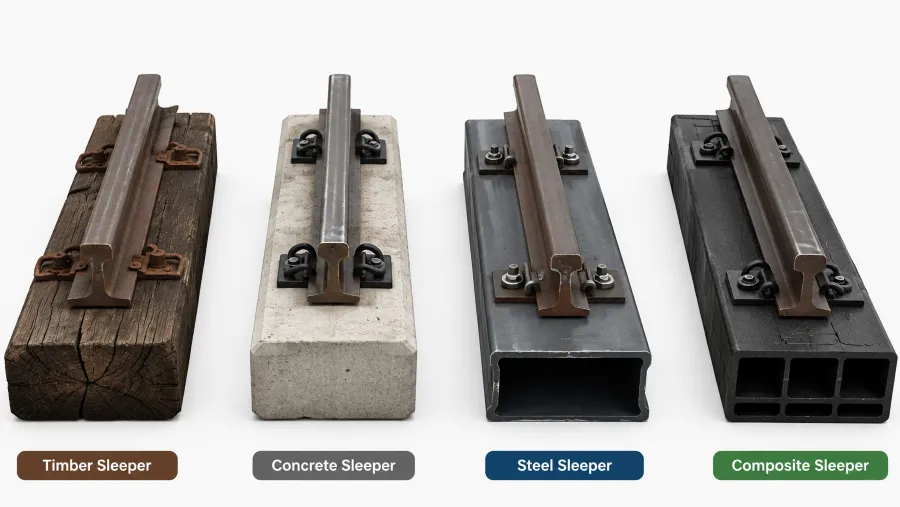
اليوم, تُستخدم أربعة أنواع من عوارض السكك الحديدية على نطاق واسع حول العالم:
لكل منها نقاط القوة الخاصة بها, القيود, والتطبيقات المثالية. يعتمد الخيار الأفضل على عوامل مثل حمل المحور, سرعة القطار, مناخ, استراتيجية الصيانة, الظروف البيئية, وميزانية المشروع.
في هذا الدليل, سنقوم بمقارنة الخرسانة, الأخشاب, فُولاَذ, وعوارض السكك الحديدية المركبة من منظور هندسي. بدلاً من مجرد سرد المزايا والعيوب, سنشرح سبب اختلاف أداء كل مادة وأين تقدم القيمة الأكبر. سواء كنت تصمم خط سكة حديد جديد, ترقية الخط الحالي, أو مصادر مكونات السكك الحديدية, سيساعدك فهم هذه الاختلافات على اتخاذ قرار أكثر استنارة.
عندما يفكر الناس في البنية التحتية للسكك الحديدية, يركزون عادة على القضبان أو القطارات. في الواقع, يعتمد استقرار هيكل المسار بأكمله على التفاعل بين عدة مكونات, وتعتبر عوارض السكك الحديدية من أهمها.
أ نائمة السكك الحديدية يؤدي العديد من الوظائف الأساسية:
بدون النائمين المختارين بشكل صحيح, حتى القضبان والمثبتات عالية الجودة لا يمكنها الحفاظ على هندسة المسار على المدى الطويل.
لهذا السبب, نادرًا ما يقوم مهندسو السكك الحديدية بتقييم النائمين بشكل منفصل. بدلاً من, إنهم يعتبرون نظام المسار بأكمله, بما في ذلك القضبان, مقاطع السكك الحديدية, منصات السكك الحديدية, جمعيات التثبيت, حالة الصابورة, وبيئة التشغيل المتوقعة.
أ نائمة السكك الحديدية الذي يعمل بشكل جيد مع نظام تثبيت واحد قد لا يكون مناسبًا لنظام آخر. على نفس المنوال, قد لا يوفر النائم المصمم لخط ركاب عالي السرعة المتانة المطلوبة لممر شحن ثقيل يحمل حمولات عالية المحور.
لا تعمل مادة النائمة المناسبة على تحسين ثبات الجنزير فحسب، بل تعمل أيضًا على تحسين كفاءة الصيانة, راحة الركوب, والتكلفة الإجمالية لدورة الحياة للسكك الحديدية.
على الرغم من وجود العديد من التصاميم النائمة المتخصصة, تستخدم السكك الحديدية الحديثة بشكل أساسي أربع مواد.
العوارض الخشبية هي أقدم نوع من عوارض السكك الحديدية وقد تم استخدامها منذ الأيام الأولى لبناء السكك الحديدية. حتى اليوم, تظل شائعة في أمريكا الشمالية, أستراليا, والعديد من شبكات السكك الحديدية القائمة.
أحد أسباب بقاء العوارض الخشبية على قيد الحياة لفترة طويلة هو مرونتها. يمتص الخشب بشكل طبيعي الاهتزازات وأحمال الصدمات, مما يجعلها مناسبة للمواقع التي تكون فيها بعض المرونة مفيدة.
من السهل نسبيًا أيضًا حفر العوارض الخشبية, يقطع, أو التعديل في الموقع. هذه المرونة تجعلها مفيدة بشكل خاص للمفاتيح, المعابر, الجسور, وأعمال الصيانة حيث غالبًا ما يكون التثبيت المخصص مطلوبًا.
لكن, الخشب مادة عضوية, ومتانته تتأثر بشدة بالرطوبة, الحشرات, فطريات, والظروف الجوية. حتى عندما يتم علاجها بالمواد الحافظة, تتمتع العوارض الخشبية عمومًا بعمر خدمة أقصر من البدائل الخرسانية أو الفولاذية.
من منظور الصيانة, أنها تتطلب المزيد من التفتيش والاستبدال المتكرر, خاصة على خطوط السكك الحديدية التي تشهد حركة مرور كثيفة.
اليوم, يتم استخدام عوارض الأخشاب بشكل شائع في:
في حين أن العوارض الخشبية لم تعد الخيار المفضل لمعظم خطوط السكك الحديدية الجديدة عالية السرعة أو الثقيلة, يستمرون في تقديم مزايا عملية في التطبيقات التي تكون فيها المرونة وسهولة الصيانة أكثر أهمية من الحد الأقصى لعمر الخدمة.
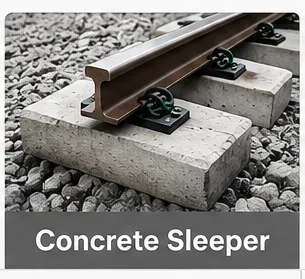
إذا قمت بزيارة السكك الحديدية عالية السرعة التي تم بناؤها حديثا, خط المترو, أو ممر شحن ثقيل في أي مكان في العالم تقريبًا, ستجد على الأرجح عوارض خرسانية للسكك الحديدية.
استخدامها على نطاق واسع ليس من قبيل الصدفة. توفر العوارض الخرسانية توازنًا ممتازًا للقوة, متانة, استقرار الأبعاد, وأداء الصيانة على المدى الطويل, مما يجعلها الخيار المفضل لمعظم البنية التحتية الحديثة للسكك الحديدية.
يتم تصنيع معظم عوارض السكك الحديدية الخرسانية على شكل عوارض خرسانية سابقة الإجهاد. أثناء الإنتاج, يتم شد الأوتار الفولاذية عالية القوة قبل صب الخرسانة. بمجرد وصول الخرسانة إلى القوة المطلوبة, يتم تحرير التوتر, خلق ضغط ضغط دائم داخل النائم. يؤدي هذا إلى تحسين مقاومة التشققات بشكل كبير ويسمح للنائم بتحمل الملايين من أحمال العجلات المتكررة طوال فترة خدمته.
بالمقارنة مع عوارض الأخشاب, عوارض الخرسانة أثقل بكثير. في حين أن هذا يزيد من تكاليف النقل والتركيب, يساعد الوزن الإضافي أيضًا في الحفاظ على ثبات المسار في ظل حركة المرور عالية السرعة والأحمال الثقيلة على المحور. الكتلة المتزايدة تقلل من حركة النائم, يحسن المقاومة للقوى الجانبية, ويساهم في تتبع الهندسة بشكل أفضل مع مرور الوقت.
ميزة أخرى هي الاتساق. لأنه يتم تصنيع العوارض الخرسانية باستخدام قوالب موحدة ومراقبة صارمة للجودة, كل نائم له أبعاد متطابقة تقريبًا. وهذا يجعل تركيب السكك الحديدية أكثر دقة ويساعد في الحفاظ على مقياس المسار المصمم طوال عمر السكك الحديدية.
تعتبر العوارض الخرسانية مناسبة بشكل خاص:
بالطبع, العوارض الخرسانية ليست مثالية. يتطلب وزنها الأكبر معدات الرفع أثناء التثبيت, وإصلاح العوارض التالفة أكثر صعوبة من استبدال العوارض الخشبية. فضلاً عن ذلك, إذا كانت صيانة أساس الصابورة سيئة, قد تزيد قوى التأثير لأن الخرسانة أقل مرونة من الخشب.
لمعظم مشاريع السكك الحديدية الحديثة, لكن, يتم التغلب على هذه العيوب من خلال انخفاض متطلبات الصيانة وعمر الخدمة الأطول بشكل ملحوظ. ولهذا السبب أصبحت عوارض السكك الحديدية الخرسانية هي المعيار العالمي لبناء السكك الحديدية الجديدة.
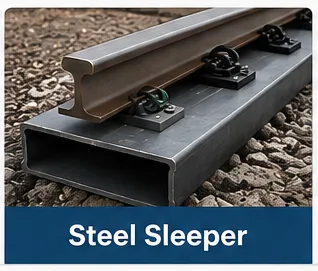
تم استخدام عوارض السكك الحديدية الفولاذية لأكثر من قرن, على الرغم من أن تطبيقها كان دائمًا أكثر تخصصًا من الخرسانة أو الخشب.
على عكس العوارض الخرسانية, يتم تصنيع العوارض الفولاذية عن طريق تشكيل وضغط الألواح الفولاذية في أشكال مقطعية محددة. This gives them high strength while keeping their overall weight lower than concrete.
One characteristic engineers appreciate is their excellent dimensional accuracy. Steel sleepers are manufactured with tight tolerances, making them suitable for projects where precise track geometry is essential.
Steel also performs well in environments where timber deteriorates quickly. It is not affected by termites, fungal decay, or moisture in the same way as wood, making it an attractive option in tropical climates and regions where biological degradation is a concern.
Another advantage is recyclability. At the end of their service life, steel sleepers can be recycled almost entirely, reducing material waste and supporting sustainability goals.
لكن, steel sleepers also present several engineering challenges.
Because steel is highly conductive and relatively rigid, vibration and noise transmission can be greater than with timber sleepers. Corrosion protection is another important consideration, especially in coastal environments or regions where aggressive chemicals are present. Protective coatings and regular inspection are therefore essential for maintaining long-term performance.
Steel sleepers are commonly used in:
Although they represent only a small percentage of the global railway sleeper market, steel sleepers remain an effective solution for projects with specific environmental or operational requirements.
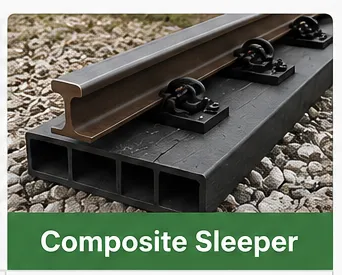
Composite railway sleepers are the newest major category of railway sleepers and continue to gain attention as railway operators look for more sustainable infrastructure solutions.
Instead of natural timber or reinforced concrete, composite sleepers are manufactured using recycled plastics, fiberglass, synthetic resins, or other engineered composite materials. Different manufacturers use different formulations, but the overall objective is the same: combine the durability of modern materials with the flexibility traditionally associated with timber.
من وجهة نظر هندسية, composite sleepers offer an interesting balance of properties.
They do not rot, absorb water, or suffer insect damage like timber sleepers. They are also much lighter than concrete sleepers, making transportation and installation easier in locations where heavy lifting equipment is unavailable.
One feature that railway maintenance teams often appreciate is that composite sleepers can usually be drilled, يقطع, and machined on site using tools similar to those used for timber. This makes them particularly suitable for bridge renewals, tunnel maintenance, and track upgrades where customized installation is required.
Composite sleepers also provide excellent electrical insulation and good vibration damping, helping reduce stray current issues and improve ride comfort in certain railway systems.
The main limitation is cost. Initial purchase prices are generally higher than those of timber or concrete sleepers. Because composite technology is still evolving, long-term field data covering 40 ل 50 years of service is also less extensive than for traditional materials.
مع ذلك, when maintenance costs, environmental resistance, and expected service life are considered together, composite sleepers often deliver competitive life-cycle value.
Today they are increasingly used in:
There is no single railway sleeper that performs best in every situation. The right choice depends on the operating conditions, استراتيجية الصيانة, environmental factors, and life-cycle cost of the railway.
The table below summarizes the key differences between the four major railway sleeper materials.
| ميزة | النائمون الأخشاب | Concrete Sleepers | Steel Sleepers | Composite Sleepers |
| Initial Cost | قليل | واسطة | واسطة | عالي |
| Service Life | 20–30 years* | 40–60 years* | 30–50 years* | 40–50+ years* |
| وزن | ضوء | ثقيل | واسطة | واسطة |
| Track Stability | جيد | ممتاز | Very Good | Very Good |
| صيانة | عالي | قليل | واسطة | قليل |
| مقاومة التآكل | ممتاز | ممتاز | Requires protection | ممتاز |
| Rot & Insect Resistance | Poor | ممتاز | ممتاز | ممتاز |
| Noise & تخميد الاهتزاز | ممتاز | جيد | Fair | Very Good |
| تثبيت | Easy | Heavy lifting required | معتدل | Easy |
| Recyclability | معتدل | معتدل | ممتاز | جيد |
| التطبيقات النموذجية | الإقبال, الجسور, secondary lines | عالية السرعة, الشحن, مترو | التعدين, صناعي, desert railways | Bridges, الأنفاق, wet environments |
*Actual service life depends on axle load, كثافة حركة المرور, مناخ, ممارسات الصيانة, and local operating conditions.
Although comparison tables provide a useful overview, they should never be the only basis for selecting railway sleepers. Engineering decisions should always consider the entire railway system rather than focusing on a single component.
على سبيل المثال, a heavy-haul railway carrying 32.5-tonne axle loads places very different demands on the track than a light industrial railway. على نفس المنوال, a coastal railway exposed to salt spray faces different durability challenges than a dry inland freight corridor.
This is why experienced railway engineers evaluate sleepers together with rail sections, ballast quality, أنظمة التثبيت, drainage conditions, maintenance capabilities, and expected traffic volume before making a final decision.
One of the questions we hear most often from customers is:
“Which railway sleeper is the best?”
The answer is surprisingly simple:
There is no universal “أفضل” railway sleeper—only the sleeper that best matches your operating conditions.
Below are some typical recommendations based on common railway applications.
Concrete railway sleepers are the preferred choice for high-speed lines because they provide excellent stiffness, dimensional consistency, and long-term track stability.
At speeds exceeding 250 كم/ساعة, maintaining precise track geometry becomes critical. The heavier weight of concrete sleepers helps resist track movement, while prestressed construction minimizes cracking under repeated dynamic loading.
لهذا السبب, nearly all newly constructed high-speed railways use prestressed concrete sleepers.
Heavy-haul railways carrying high axle loads require sleepers capable of resisting enormous vertical and lateral forces over millions of loading cycles.
Concrete sleepers are generally the first choice due to their strength, متانة, and low maintenance requirements.
لكن, in mining railways or industrial operations where track layouts change frequently, steel sleepers may also provide practical advantages because they are easier to recover, relocate, and recycle.
Urban rail systems operate under a different set of priorities.
Besides structural performance, operators often focus on ride comfort, vibration control, and maintenance efficiency.
Concrete sleepers remain the most common option for metro systems because they offer stable geometry and long service life. In locations with strict vibration or stray-current requirements, composite sleepers may also be considered for specific sections of track.
Bridges, مفاتيح, and crossings often require sleepers that can be modified during installation or maintenance.
This is one reason timber sleepers continue to be widely used in these locations.
Composite sleepers have also become increasingly popular because they combine many of timber’s installation advantages with significantly better resistance to moisture, الحشرات, and weathering.
Moisture is one of the biggest challenges for railway infrastructure.
Timber sleepers may deteriorate more rapidly when exposed to continuous moisture, while unprotected steel sleepers require careful corrosion control.
Concrete and composite sleepers generally perform better in wet environments due to their superior resistance to biological degradation and water absorption.
Industrial facilities, construction railways, and temporary tracks often prioritize flexibility and lower initial investment.
اعتمادا على ظروف التشغيل, timber or steel sleepers may offer the most economical solution, particularly when track layouts are expected to change during the project’s lifetime.
أخيرًا, selecting the right railway sleeper is a balance between initial investment and long-term operating cost.
A sleeper with the lowest purchase price may require more frequent replacement and higher maintenance costs, while a more durable option can reduce track possessions, maintenance labor, and life-cycle expenditure over several decades.
لهذا السبب, many railway authorities now evaluate railway sleeper projects based on total life-cycle cost rather than purchase price alone.
Choosing the right railway sleeper is only part of the engineering decision. Equally important is selecting a rail fastening system that is compatible with the sleeper material.
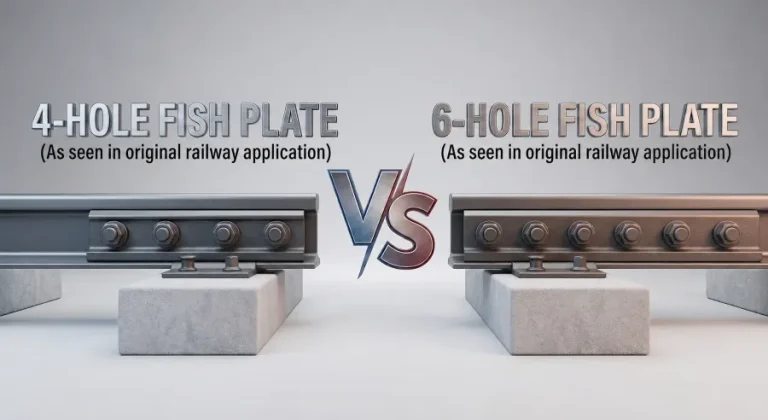
القضبان, النائمون, مقاطع السكك الحديدية, منصات السكك الحديدية, طبق السمك, و fastening fish bolts work together as one system. Changing the sleeper material often means changing the fastening arrangement as well.
This is why railway engineers evaluate the complete track structure instead of selecting each component independently.
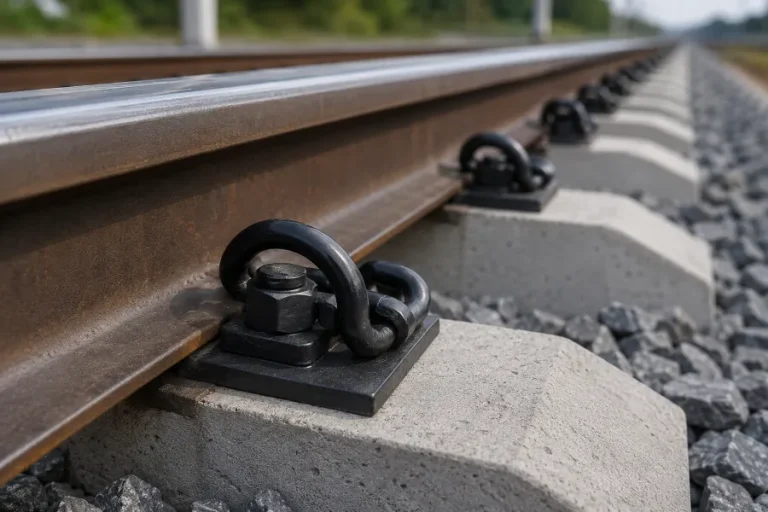
Concrete sleepers are typically designed with cast-in shoulders or embedded inserts during manufacturing. These components provide secure anchoring points for elastic rail clips.
A typical concrete sleeper fastening assembly may include:
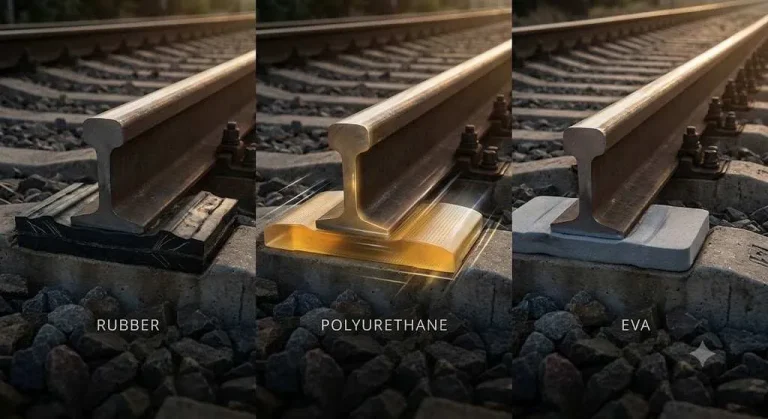
Because concrete is rigid, elastic rail clips and rail pads play an especially important role. They provide the necessary clamping force while absorbing impact loads and reducing vibration transmitted from the rail to the sleeper.
This combination allows concrete sleepers to maintain excellent track geometry while still providing the elasticity needed for modern railway operations.
Timber sleepers offer greater flexibility during installation because fasteners can be installed directly into the wood.
Depending on the railway standard, timber sleepers commonly use:
One advantage of timber sleepers is that damaged fastening locations can often be repaired or modified on site. This flexibility makes timber sleepers particularly suitable for turnouts, الجسور, and maintenance work where customized installation is frequently required.
لكن, repeated loading may gradually reduce the holding strength of fasteners if the timber deteriorates with age or moisture exposure.
Steel sleepers require specially designed fastening systems because the sleeper itself is manufactured from formed steel sections.
Unlike timber, fasteners cannot simply be driven into the sleeper, and unlike concrete, there are no cast-in inserts. بدلاً من, fastening components are designed specifically to match the geometry of the steel sleeper.
Electrical insulation is another important consideration. Since steel is conductive, insulating components are required to prevent unwanted electrical current from passing through the track structure in electrified railway systems.
Composite sleepers are generally designed to be compatible with fastening methods already used for timber sleepers, making them a practical replacement in many track renewal projects.
Because composite materials can usually be drilled and machined on site, installation procedures are often familiar to maintenance crews.
مع ذلك, engineers must still verify that the fastening system is compatible with the mechanical properties of the composite material. Factors such as screw pull-out resistance, fastening torque, and long-term load distribution should all be considered during system design.
Selecting high-quality sleepers alone does not guarantee reliable track performance.
A concrete sleeper paired with an unsuitable rail clip, or a composite sleeper fitted with an incompatible fastening arrangement, can lead to premature component wear, انخفاض قوة لقط, زيادة متطلبات الصيانة, and even deterioration of track geometry over time.
لهذا السبب, railway infrastructure projects are increasingly specified as complete fastening systems rather than individual components.
When evaluating a railway project, engineers typically consider:
Only when these elements work together can the track achieve the durability, أمان, and reliability expected throughout its service life.
Concrete, الأخشاب, فُولاَذ, and composite railway sleepers all have important roles in today’s railway industry. None of them is universally better than the others, because each material has been developed to solve different engineering challenges.
Concrete sleepers have become the preferred choice for most new mainline, مترو, and high-speed railway projects thanks to their strength, استقرار, وعمر الخدمة الطويل.
Timber sleepers remain valuable for bridges, الإقبال, and maintenance applications where flexibility and ease of modification are essential.
Steel sleepers continue to provide reliable performance in mining railways, industrial lines, and environments where durability and recyclability are priorities.
Composite sleepers represent an increasingly attractive alternative for bridge renewals, wet environments, and projects seeking longer service life with reduced maintenance.
The key is to evaluate the railway as a complete system rather than selecting components individually. The right sleeper, combined with a properly designed rail fastening system, helps improve track stability, تقليل تكاليف الصيانة, and extend the service life of the entire railway infrastructure.
في شركة لويانغ فونيو للصناعات الثقيلة, المحدودة., we manufacture a wide range of railway fastening components that are compatible with concrete, الأخشاب, فُولاَذ, and composite sleeper systems. Our product portfolio includes مقاطع السكك الحديدية, منصات السكك الحديدية, لوحات السمك, مسامير السمك, and other railway fastening components manufactured to international standards for freight, راكب, مترو, and heavy-haul railway projects worldwide.
If you’re selecting railway sleepers for a new project or upgrading an existing railway line, our engineering team can help you identify fastening solutions that match your track design and operating requirements.
There is no single best railway sleeper material for every project. Concrete sleepers are generally preferred for high-speed and heavy-haul railways because of their durability and stability. Timber sleepers remain suitable for bridges and turnouts, while steel and composite sleepers are often selected for specific environmental or operational requirements.
Concrete railway sleepers offer a long service life, استقرار الأبعاد ممتازة, and lower maintenance requirements than timber sleepers. Their strength and resistance to repeated dynamic loading make them the preferred choice for most modern railway infrastructure.
نعم. Although concrete sleepers dominate new railway construction, timber sleepers are still widely used for railway bridges, مفاتيح, المعابر, السكك الحديدية التراثية, and maintenance projects where on-site modification is important.
Composite railway sleepers resist moisture, الحشرات, and rot while providing good vibration damping and electrical insulation. They are increasingly used in bridges, الأنفاق, coastal railways, and environmentally sensitive areas where long service life is required.
Service life depends on material, traffic conditions, صيانة, and climate.
Typical service lives are:
Actual performance varies depending on axle loads and operating conditions.
Prestressed concrete sleepers are generally the preferred choice for heavy-haul railways because they provide excellent load capacity, تتبع الاستقرار, and resistance to repeated fatigue loading.
ليس دائما. Different sleeper materials require different fastening arrangements. Concrete sleepers commonly use elastic rail clips with cast-in shoulders or inserts, while timber, فُولاَذ, and composite sleepers require fastening systems specifically designed for their structural characteristics.
Neither material is universally better. Concrete sleepers are generally preferred for high-speed and mainline railways, while steel sleepers perform well in mining railways, المسارات الصناعية, desert environments, and projects where recyclability is important.
Important factors include axle load, سرعة القطار, كثافة حركة المرور, مناخ, استراتيجية الصيانة, حالة الصابورة, environmental exposure, fastening system compatibility, and total life-cycle cost rather than purchase price alone.
Railway sleepers and fastening components work together as a complete track system. Selecting compatible rail clips, منصات السكك الحديدية, العوازل, and fastening hardware helps maintain track geometry, improve vibration control, reduce maintenance, and extend the service life of the railway.