WeChat 코드를 스캔하여 문의하세요
WeChat 코드를 스캔하여 문의하세요
이메일을 보내주시면 최대한 빨리 답변해 드리겠습니다..
마음과 영혼을 다해 미래를 창조하다


The production process of gearboxes is closely related to their structural composition. 현재, the main structure of gearboxes in wind turbines is a first-stage planetary gear plus two-stage parallel gears and two-stage planetary gears plus one-stage parallel gears, mainly used in wind turbines with power ranging from 650KW to 3MW. They consist of gears, bearings, 하우징, lubrication systems and some accessories. The processing technology of gears includes rough machining of gears, surface processing, heat treatment process and fine surface processing of gears.
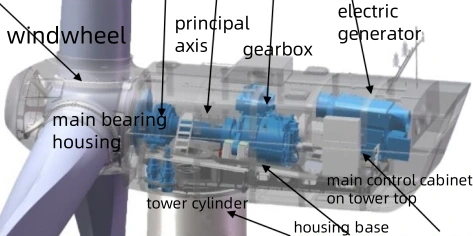
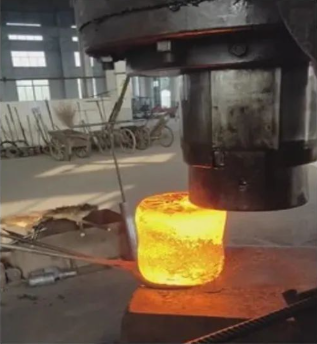
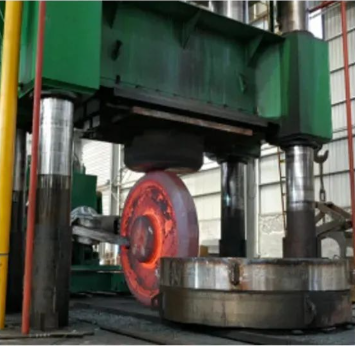
The raw materials for gears are mainly forgings and castings, among which forgings are the most commonly used, as shown in Figures 1 그리고 2.
1. Tooth surface processing: The damaged parts are first subjected to heat treatment to improve their cutting processing characteristics, making them easier to cut. 그 다음에, rough processing is carried out. According to the design requirements of the gears, the damaged parts are first processed into a rough shape, with a considerable amount of allowance retained; then, semi-finish processing and turning, 구르는, gear hobbing, 등., are carried out.
2. Gear heat treatment and tooth surface finishing
After the basic shape of the gears is formed, they are subjected to heat treatment to improve the mechanical properties of the gears. Depending on the usage requirements and the materials used, heat treatment methods such as quenching and tempering, carburizing and quenching, and tooth surface high-frequency induction heating quenching are adopted. 마지막으로, the gears are subjected to finishing processing, including fine adjustment of the reference and fine processing of the tooth shape.
3. Gear inspection
After the gear processing is completed, it is also necessary to inspect the gears. The common inspection method is to use a gear-measuring instrument for inspection. The main inspection items include whether the processing accuracy meets the requirements, such as the deviation of helix angle and pressure angle, as well as the accuracy of tooth profile and tooth direction shaping.
4. Gear assembly
During gear assembly, it is necessary to check whether the load distribution is uniform when the gears mesh. The conventional method is the coloring inspection method. After the individual inspection of the gears is completed, they are assembled, and the operation of the gearbox is tested to check the overall operation of the gearbox. The main inspections include whether there is abnormal noise or vibration, whether the oil temperature at each lubrication point is normal, and whether the gears are overloaded.
Gearbox operating characteristics
High load: Wind turbine gearboxes are subjected to significant loads and impacts, so their materials and structural designs must meet the requirements of high strength.
High speed: The rotational speed of wind turbine gearboxes is high, so the machining accuracy and dynamic balance requirements of the gears must be very high.
Complex environment: Wind turbine gearboxes are usually installed on the top of the wind turbines and are in harsh environments, so their protection grades must be very high.
Common fault phenomena
Common fault phenomena of wind turbine gearboxes include:
1. Gear wear: Gear wear is the most common fault of gearboxes, which can lead to decreased gear accuracy, increased noise, and reduced efficiency.
2. 베어링 손상: Bearing damage can cause increased vibration and increased heat generation in the gearbox.
3. Lubrication failure: Lubrication failure can lead to increased friction between gears and bearings and accelerated wear.
4. Sealing failure: Sealing failure can cause contamination inside the gearbox, exacerbating the wear of gears and bearings.
Fault inspection and repair methods
1. Gear wear
Check for wear marks on the surface of the gears.
Measure the tooth thickness and pitch of the gears.
Use a gear wear detector for inspection.
2. 베어링 손상
Check for abnormal phenomena such as vibration and noise in the bearings.
Measure the temperature rise of the bearings.
Use a bearing vibration detector for inspection.
3. Lubrication failure
Check the quality and quantity of the lubricating oil.
Check if the oil circuit of the lubrication system is unobstructed.
Use an oil analysis instrument for inspection.
4. Sealing failure
Check the sealing parts are damaged.
Check if there are contaminants inside the gearbox.
Use a sealing leakage detector for inspection.
The gearbox of a 풍력 터빈 is an indispensable component in wind power generation equipment, playing a crucial role in transmission and energy conversion. With the continuous development of wind power technology, the gearbox of wind turbines is also improved, moving towards larger size, lighter weight, intelligence, and environmental sustainability. Through regular maintenance and fault resolution, the gearbox can operate normally, improving the efficiency and reliability of the wind power generation system.
1. Large-scale
To adapt to larger wind turbine generators, the gearbox of a wind turbine is developing towards larger dimensions to increase the transmission ratio and output power.
2. 경량
To reduce the weight of the entire wind turbine generator, the design of the gearbox will tend to be lightweight, using high-strength lightweight materials and advanced manufacturing processes.
3. Intelligent
By applying the Internet of big data and artificial intelligence technologies, the gearbox of wind turbines can be remotely monitored, fault predicted, and optimized for maintenance, improving work efficiency and reliability.
4. Environmental sustainability
In the selection of gear materials and the design of the lubrication system, more emphasis is placed on environmentally friendly materials and lubricants to reduce energy consumption and environmental pollution.
Surface processing of the gear pair first undergoes heat treatment to improve its cutting processing characteristics, facilitating cutting. 그 다음에, rough processing is carried out according to the requirements of gear design, first machining the rough part into a general shape, retaining more allowance; then, semi-finish processing and turning, 구르는, gear hobbing, 등.
2. Gear heat treatment and surface finishing
After the basic formation of the gear, it undergoes heat treatment to improve the mechanical properties of the gear, according to the usage requirements and the different materials used; there are quenching and tempering, carburizing and quenching, surface high-frequency induction heating quenching, 등. 마지막으로, the gear is subjected to fine processing, fine adjusting the benchmark, and fine processing the tooth shape.
3. Gear inspection
After the gear is processed, it also needs to be inspected. The conventional inspection method uses a gear measuring instrument for inspection, mainly checking whether the processing accuracy meets the standards, such as the helix angle, pressure angle deviation, and the accuracy of tooth profile and tooth direction shaping.
4. Gear assembly
During gear assembly, it is necessary to inspect whether the load distribution during meshing is uniform. The conventional method is the coloring inspection method. After the gear is inspected separately, it is assembled, and the operation of the gearbox is tested to check the overall operation of the gearbox. Mainly check whether there is abnormal noise or vibration, whether the oil temperature at each lubrication point is normal, and whether the gear is overloaded.
Gearbox operating characteristics
High load: Wind turbine gearboxes are subjected to significant loads and impacts, so their materials and structural designs must meet the requirements of high strength.
High speed: The rotational speed of wind turbine gearboxes is high, so the machining accuracy and dynamic balance requirements of the gears must be very high.
Complex environment: Wind turbine gearboxes are usually installed on the top of the wind turbines and are in harsh environments, so their protection grades must be very high.
Common fault phenomena
Common fault phenomena of wind turbine gearboxes include:
1. Gear wear: Gear wear is the most common fault of gearboxes, which can lead to decreased gear accuracy, increased noise, and reduced efficiency.
2. 베어링 손상: Bearing damage can cause increased vibration and increased heat generation in the gearbox.
3. Lubrication failure: Lubrication failure can lead to increased friction between gears and bearings and accelerated wear.
4. Sealing failure: Sealing failure can cause contamination inside the gearbox, exacerbating the wear of gears and bearings.
Fault inspection and repair methods
1. Gear wear
Check if there are any wear marks on the surface of the gears.
Measure the tooth thickness and tooth pitch of the gears.
Use a gear wear detector for inspection.
2. 베어링 손상
Check if there are any abnormal phenomena, such as vibration and noise from the bearings.
Measure the temperature rise of the bearings.
Use a bearing vibration detector for inspection.
3. Lubrication failure
Check the quality and quantity of the lubricating oil.
Check if the oil circuit of the lubrication system is unobstructed.
Use an oil analysis instrument for inspection.
4. Sealing failure
Check if the sealing parts are damaged.
Check if there are pollutants inside the gearbox.
Use a sealing leakage detector for inspection.
Development Trends
The gearbox of a 풍력 터빈 is an indispensable component in wind power generation equipment, playing a crucial role in transmission and energy conversion. With the continuous development of wind power technology, the gearbox of wind turbines is also evolving and improving, moving towards larger size, lighter weight, intelligence and environmental sustainability. Through regular maintenance and fault resolution, the gearbox can operate normally, improving the efficiency and reliability of the wind power generation system.
1. Large-scale
To adapt to increasingly larger wind turbine generators, the gearbox of wind turbines is developing towards larger dimensions to increase the transmission ratio and output power.
2. 경량
To reduce the weight of the entire wind turbine generator, the design of the gearbox will tend to be lightweight, using high-strength lightweight materials and advanced manufacturing processes.
3. Intelligent
By applying the Internet of Things, big data and artificial intelligence technologies, the gearbox of the wind turbine can be remotely monitored, fault-warned and maintained, improving work efficiency and reliability.
4. Environmental sustainability
In the selection of gear materials and the design of lubrication systems, more and more attention is paid to environmentally friendly materials and lubricants to reduce energy consumption and environmental pollution.
공급자
뤄양포뇨중공업(Luoyang Fonyo Heavy Industries), 주식회사, 1998년에 설립된 철도 주조 부품 제조업체입니다.. 우리 공장의 면적은 72,600㎡입니다., 이상으로 300 직원, 32 기술자, 포함 5 수석 엔지니어, 11 보조 엔지니어, 그리고 16 기술자. 우리의 생산 능력은 30,000 연간 톤. 현재, 우리는 주로 주조물을 생산하고 있습니다, 가공, 기관차 조립 및 조립, 철도 차량, 고속 열차, 광산 장비, 풍력, 등.
우리는 CRRC에 철도 부품을 공급하고 있습니다.(이상 포함 20 CRRC의 지사 및 자회사), Gemac 엔지니어링 기계, 삼니그룹, 중공업, 등. 우리의 제품은 러시아로 수출되었습니다, 미국, 독일, 아르헨티나, 일본, 프랑스, 남아프리카, 이탈리아와 전 세계의 다른 나라들.
연락하다: 캐시
이메일:[email protected]
이동하는:008615515321683