WeChat 코드를 스캔하여 문의하세요
WeChat 코드를 스캔하여 문의하세요
이메일을 보내주시면 최대한 빨리 답변해 드리겠습니다..
마음과 영혼을 다해 미래를 창조하다


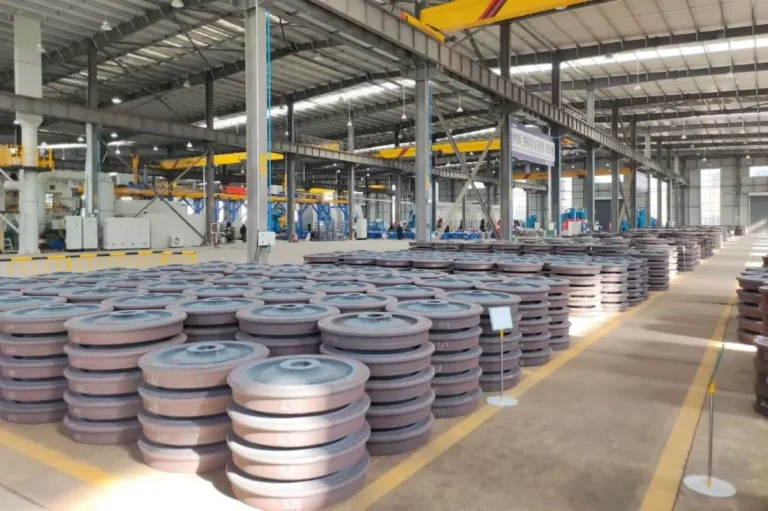
핵심 구성요소로는 철도 교통 시스템, 기차 바퀴의 품질은 안전에 직접적인 영향을 미칩니다, 능률, 열차의 수명과. 캐스트 휠, 우수한 종합 기계적 특성과 높은 경제성으로 인해, 중량 화물 운송 및 철도 분야에서 선호되는 선택이 되었습니다.. 하지만, 제조 공정에는 여러 가지 정확하고 엄격한 기술 요구 사항이 포함됩니다., 재료 선택을 포함하여, 구조 설계, 주조 공정, 열처리, 그리고 비파괴검사, 무엇보다도. 전체 공정에 걸쳐 엄격한 제어를 통해서만 실제 작동 중에 휠의 높은 신뢰성과 긴 수명을 보장할 수 있습니다..
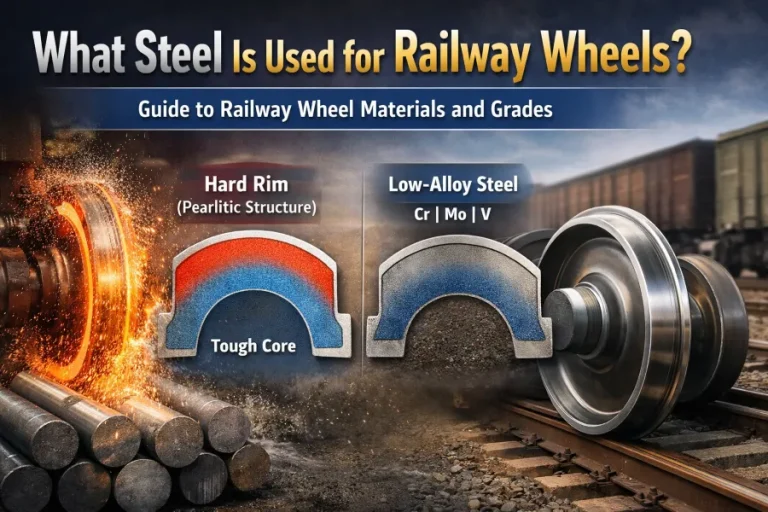
1.1 바퀴의 재질은 강도가 높아야 합니다., 경도, 및 내마모성. 동시에, 제조업체는 또한 우수한 인성과 피로 저항성을 고려합니다.. 현재, 고탄소 저합금강이 널리 사용됩니다., R7과 같은, R8, 유럽 표준의 R9 시리즈, 또는 CL60, ER8, 중국 표준의 ER9. 탄소 함량은 일반적으로 0.55% 그리고 0.65%, 실리콘을 첨가하여, 망간, 크롬, 경화성 및 포괄적인 기계적 특성을 향상시키는 기타 합금 원소.
1.2 화학성분 기준을 엄격하게 준수할 뿐만 아니라, 미세구조도 중요하다. 이상적인 미세조직은 미세한 라멜라 펄라이트여야 합니다.. 따라서 네트워크와 같은 사전 공융 페라이트 또는 큰 탄화물의 존재를 피할 수 있습니다., 이는 휠의 내마모성과 접촉 피로에 대한 저항성에 큰 영향을 미치기 때문입니다.. 그러므로, 제강부터 주조까지, 모든 단계에서 재료의 순도를 엄격하게 제어해야 합니다., 가스 함량, 비금속 개재물.
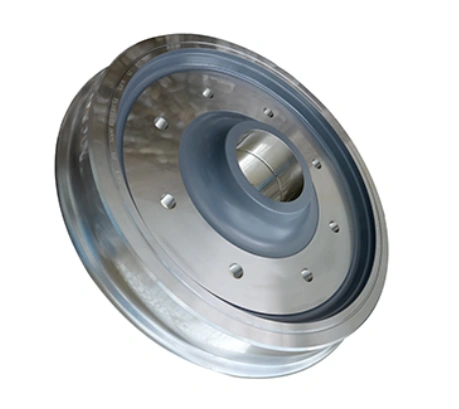
2.1 바퀴의 구조적 설계는 기계적 합리성과 균형을 이루어야 합니다., 운영 안정성, 및 제조 타당성. 주로 림으로 구성되어 있습니다., 스포크, 그리고 허브. 림, which directly contacts the rails, must strictly comply with the profile standards set by the country or the International Union of Railways (UIC) for the tread contour, 플랜지 높이, and thickness to ensure guiding performance through curves and reduce derailment risks.
2.2 The spokes are supporting structure connecting the rim and the hub. So they need to have good bending resistance and fatigue resistance. Common designs include S-shaped and wavy shapes, which can effectively buffer vibrations and impacts during operation.
2.3 In terms of dimensional accuracy, the key dimensions of the finished wheels, such as diameter, flange thickness, and rim width, typically need to be controlled within ±0.5 mm. So it can ensure correct fit with the rails and smooth train operation.
3.1 Casting is the fundamental step that determines the performance of the wheels. 현재, gravity casting or centrifugal casting are the mainstream methods. Centrifugal casting is widely adopted due to its ability to significantly increase metal density and mechanical properties. 붓는 과정에서, the temperature of the molten steel (generally controlled between 1480°C and 1520°C) must be strictly controlled to avoid defects such as coarse grains due to excessively high temperatures or insufficient filling due to low temperatures.
3.2 게다가, parameters such as mold design and preheating, pouring speed, and centrifuge speed all need to be precisely controlled. Modern wheel casting often uses computer simulation technology to predict potential problems such as shrinkage cavities, 다공성, or hot cracks during the casting process, thereby optimizing the process and improving the first-pass qualification rate.
4.1 캐스팅 후, the wheels must undergo appropriate heat treatment to adjust their microstructure and properties, mainly including normalizing, 담금질, 그리고 템퍼링. Normalizing aims to refine grains and eliminate casting stresses; quenching obtains a high-hardness martensitic microstructure through rapid cooling; and tempering reduces brittleness and improves toughness, stabilizing the microstructure.
4.2 The heating rate, holding temperature and time, cooling medium and rate during heat treatment must be set according to the wheel material and size. 예를 들어, some high-strength wheels use isothermal quenching to obtain a lower bainite microstructure, achieving both high hardness and good toughness.
To ensure that each wheel is free of internal defects, comprehensive non-destructive testing must be conducted. Commonly used methods include ultrasonic testing (유타), 자분 테스트 (MT), and eddy current testing (동부 표준시). Ultrasonic waves can effectively detect internal cracks, 포함, shrinkage cavities and other defects, while magnetic particle and eddy current testing are mainly used for identifying surface and near-surface defects.
In addition to non-destructive testing, destructive tests should also be conducted on samples from the same batch of wheels, including tensile tests, impact tests, hardness tests and metallographic analysis, to ensure that their mechanical properties and microstructure meet the standard requirements.
Wheels need to maintain stable performance under different climatic conditions, track conditions and operating loads. 예를 들어, in cold regions, they need to have low-temperature impact toughness; in high-speed operation environments, they need to have excellent resistance to thermal damage and rolling contact fatigue. 그러므로, in addition to the control of the above manufacturing processes, their durability should also be verified through bench tests and actual operation evaluations.
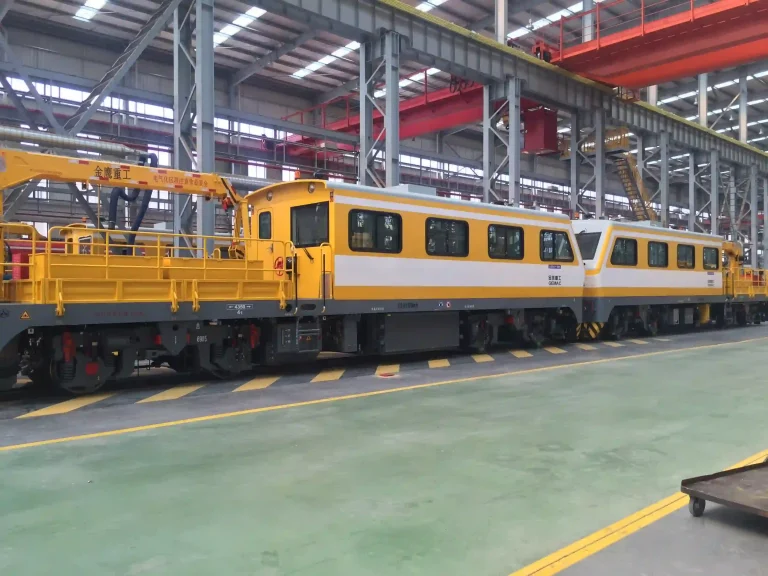
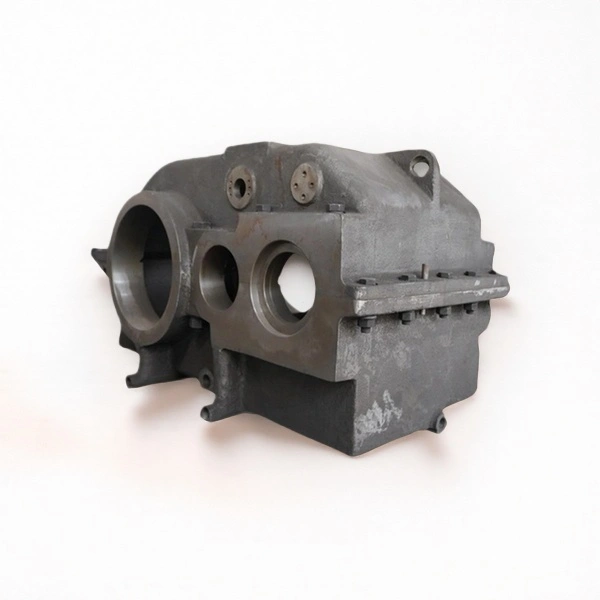
뤄양포뇨중공업(Luoyang Fonyo Heavy Industries), 주식회사,1998년에 설립된 철도 주조 부품 제조업체입니다. 저희 공장 부지는 72,600㎡입니다., 이상으로 300 직원, 32 기술자, 포함 5 수석 엔지니어, 11 보조 엔지니어, 그리고 16 기술자. 우리의 생산 능력은 30,000 연간 톤. 현재, 우리는 주로 주조물을 생산하고 있습니다, 가공, 기관차 조립 및 조립, 철도 차량, 고속 열차, 광산 장비,풍력,등.
우리는 CRRC에 철도 부품을 공급하고 있습니다.(이상 포함 20 CRRC의 지사 및 자회사),Gemac 엔지니어링 기계,삼니그룹, 중공업,등. 우리의 제품은 러시아로 수출되었습니다, 미국, 독일, 아르헨티나, 일본, 프랑스, 남아프리카,이탈리아와 전 세계의 다른 나라들.
연락처 정보:
이메일:[email protected]
이동하는:008615515321683