WeChat コードをスキャンしてご連絡ください
WeChat コードをスキャンしてご連絡ください
お気軽にメールをお送りください。できるだけ早くご返信させていただきます.
心と魂で未来を創る

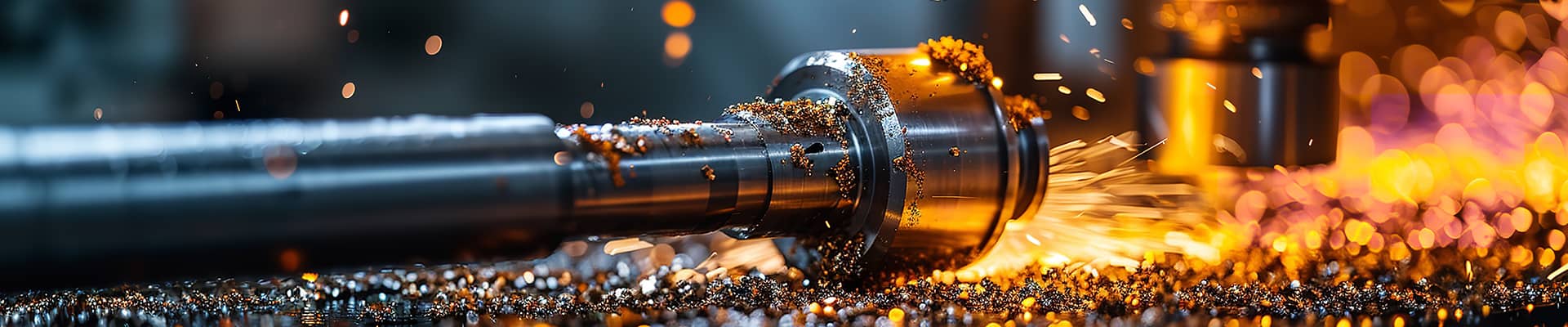
In the modern rail transit system, ギアボックス, as the core component for power transmission, is like the joint system of the human body, precisely transmitting the torque from the power source to the wheel sets to drive the train forward. With the full arrival of the high-speed rail era and the rapid expansion of urban metro networks, railcar gearboxes have evolved from simple mechanical transmission devices into complex systems integrating materials science, precision manufacturing, and intelligent design.
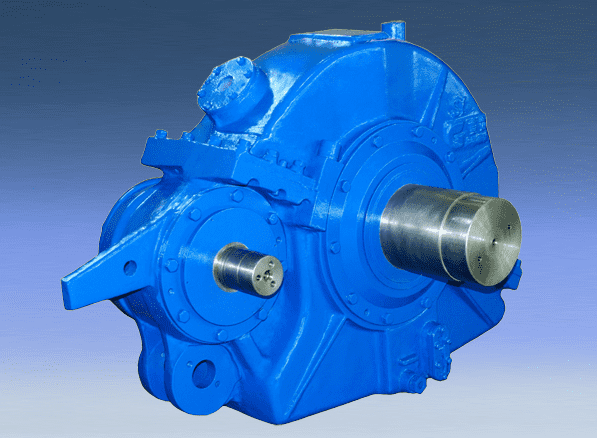
Locomotive gearboxes are mainly classified into three types based on gear combination and structural design, each with different operational requirements:
Conical gear first, cylindrical gear second structure: The power from the universal shaft is first input into the conical gear set, which then undergoes a 90° direction change and is transmitted to the wheel sets through cylindrical gears. This structure features high conical gear speed (について 3000 回転数) and relatively low torque, significantly extending the conical gear’s lifespan; 同時に, as the conical gears are far from the wheel sets, they effectively isolate track impacts, making it reliable in heavy-duty railcars. Representative models include the NY6/NY7 type hydraulic transmission diesel locomotives.
Cylindrical gear first, conical gear second structure: The power is first reduced by cylindrical gears and then redirected to the wheel sets through conical gears. Its advantage lies in the lower conical gear speed (について 1000 回転数) and increased torque, reducing the reliance on conical gear manufacturing precision and improving transmission smoothness. This design is widely used in Beijing-type diesel locomotives and 120 km/h heavy-duty railcars, especially suitable for maintenance scenarios with smaller traction loads.
Due to the compact space and frequent starts and stops in urban metros, helical gears are commonly used:
Single-stage helical gearbox: Simple structure, light weight, effectively reducing the unsprung mass and enhancing operational efficiency. しかし, due to single-stage reduction, the gears must withstand higher-intensity loads, suitable for medium and small metro vehicles (such as B/C type vehicles).
By distributing the load through two stages of reduction, it offers a wider range of center distances and speed ratios. So it can significantly enhance the load-bearing capacity. It meets the demands of high-density operations.
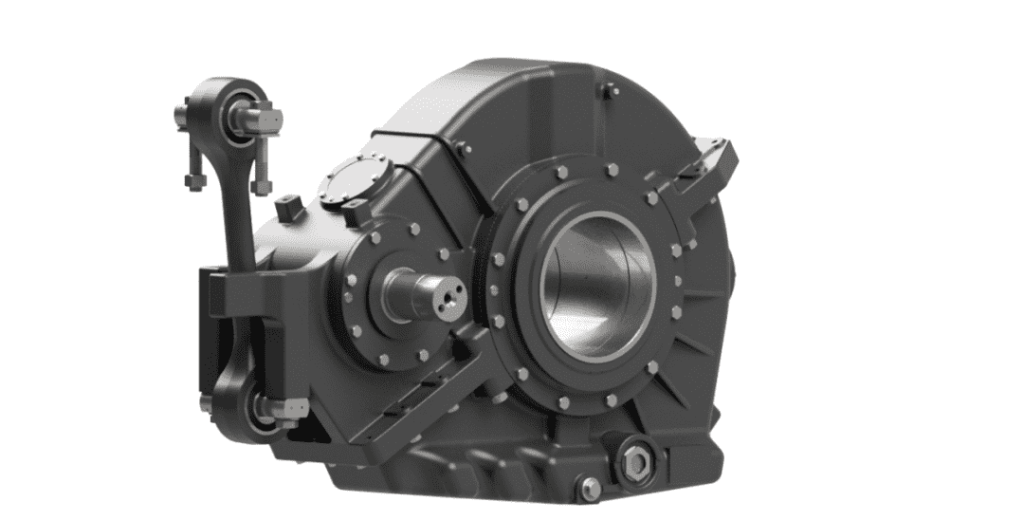
To accommodate the strapless design of 100% low-floor trams, this type of gearbox adopts a compact integrated structure, such as the Nantong Gear VDT230 series. Its characteristic is the minimal height difference between the input and output shafts, achieving power transmission through an optimized gear layout while maintaining low noise (<78 dB) and vibration resistance.
The performance leap of railcar gearboxes relies on the coordinated evolution of multiple core technologies:
Structural lightweight and strength balance
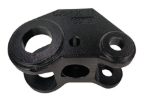
The gearbox housing is mainly made of ductile iron, balancing strength and economy; a few use cast aluminum to reduce weight (such as in metro vehicles) but require additional bearing sleeves and steel wire inserts to compensate for strength loss. The housing structure preferably adopts a split design (upper and lower housing bolted together), facilitating maintenance and disassembly and avoiding the need to disassemble the wheel sets for integral housing designs.
Precision matching of bearing systems
For the axial force of helical gears, the traditional solution employs a face-to-face layout of tapered roller bearings, which is convenient for adjusting the clearance. Modern high-speed gearboxes have upgraded to a combination of “cylindrical roller bearings + four-point contact angular contact bearings”, separating radial and axial loads, and are suitable for high-speed (>2000 rpm) and high-torque operating conditions. This is typically applied in the gearboxes of 350 km/h high-speed trains.
Innovations in Lubrication and Sealing Technology
In splash lubrication, the immersion depth of the large gear in oil needs to be precisely calculated – too shallow leads to insufficient lubrication, while too deep causes oil churning and temperature rise. For metro systems with frequent starts and stops and bidirectional operation, dynamic oil deflector plates and negative pressure zone oil return holes are incorporated into the design to ensure that the bearings receive adequate lubrication at any angle. The sealing adopts a multi-stage labyrinth structure combined with rubber sealing rings to achieve the goal of “zero leakage”. Taking the Nantong High Gear PDM490 gearbox as an example, it can operate stably in an ambient temperature range of -25°C to 50°C.
Manufacturing Process and Life Optimization
The gears are made of high-quality and low-carbon alloy steel, which can undergo carburizing and quenching, with grinding accuracy reaching ISO 6 学年 (error < 5μm). Through tooth profile modification technology, load deformation is compensated for and meshing impact is reduced. A typical product is the PDM490 gearbox exported to Australia, which uses a unique modification process to achieve a maintenance-free life of 1.2 million kilometers and a design life of 40 years for key components.
The technology of track vehicle gearboxes has passed strict engineering verification:
In the high-speed and heavy-load field, The CRH3C EMU gearbox operating at 350 km/h uses a two-stage helical gear + split housing design, with cumulative operation exceeding 1 billion kilometers;
Adaptation to extreme cold environments: The CRH5 gearbox is specially designed for the severe cold in Northeast China, and its low-temperature start-up performance at -40°C has been certified in Russia.
International Project Benchmark: Nandi PDM490 Two-stage Gearbox Secures 1,040 Orders from Queensland, オーストラリア. Its compact structure and thermal management design are well-suited for tropical climates. 現在, over 60,000 units are in operation worldwide.
The next generation of gearboxes is evolving towards deeply integrated sensor systems, enabling real-time monitoring of bearing temperatures, oil quality, and vibration spectra for predictive maintenance. Concurrently, the development of lightweight materials (such as carbon fiber reinforced composites) and eco-friendly lubricants (biodegradable oils) will drive carbon reduction throughout the gearbox’s lifecycle. As urban rail networks extend to the metropolitan area, hybrid gearboxes capable of handling speeds between 160km/h and 200km/h have become a research hotspot to meet the new transportation ecosystem of seamless transfer between metro and intercity services.
The precision of gear meshing lies in its silent operation behind the speed – when a metro train travels through a tunnel at 80km/h, passengers are unaware that each gear engagement within the gearbox has undergone 3,000 finite element simulation iterations.
The evolution of rail vehicle gearboxes is an eternal quest for efficiency and reliability in the game between steel and friction. As “Made in China” gearboxes reach six continents, this core component will continue to drive every acceleration of rail civilization.
洛陽豊洋重工業株式会社, 株式会社, 1998年に設立された鉄道鋳造部品のメーカーです. 当社の工場面積は72,600㎡です。, 以上の 300 従業員, 32 技術者, 含む 5 シニアエンジニア, 11 アシスタントエンジニア, そして 16 技術者. 弊社の生産能力は 30,000 年間トン. 現在, 私たちは主に鋳物を生産しています, 機械加工, 機関車の組立て, 鉄道車両, 高速鉄道, 鉱山機械, 風力, 等.
当社はCRRCに鉄道部品を供給しています。(以上を含む 20 CRRCの支店および子会社),Gemacエンジニアリングマシナリー, サニーグループ, 中信重工業, 等. 当社の製品はロシアに輸出されています, 米国, ドイツ, アルゼンチン, 日本, フランス, 南アフリカ, イタリアをはじめとする世界中の国.
接触: キャシー
電子メール:[email protected]
携帯:008615515321683