Escanea el código WeChat para contactarnos
Escanea el código WeChat para contactarnos
No dudes en enviarnos un correo electrónico y te responderemos lo antes posible.
Creando el futuro con corazón y alma


En el campo del procesamiento de metales., La fundición en arena es un método de fabricación con una larga historia y amplia aplicación., Especialmente adecuado para la producción de piezas de acero fundido y hierro fundido con formas complejas y varios tamaños.. entre ellos, El proceso de fundición en arena revestida ocupa una posición importante en la producción de fundición moderna debido a su alta precisión., alta eficiencia, buena desintegración y protección del medio ambiente. La siguiente es una introducción detallada a la línea de producción de arena recubierta y su proceso., que cubrirá todo el proceso desde la preparación de la materia prima hasta la salida del producto terminado..
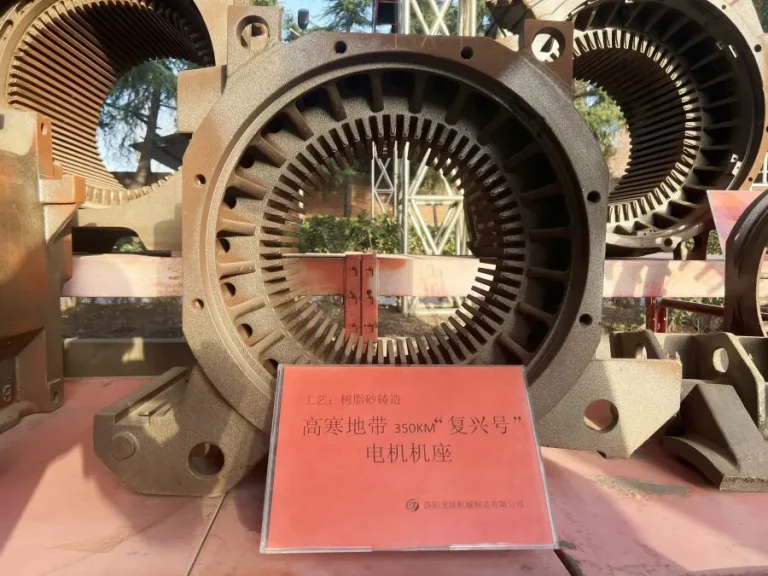
1. Descripción general del proceso de fundición en arena recubierta
El proceso de fundición en arena recubierta es un método de fundición que utiliza arena recubierta como material de modelado.. La arena recubierta se obtiene mezclando arena cruda., resina, agente de curado y otras materias primas en una proporción particular. Después de un proceso específico, la resina se recubre uniformemente sobre la superficie de las partículas de arena para formar una fina capa de película de resina. Después de calentar y curar, Esta capa de película de resina puede mejorar significativamente la resistencia y la capacidad anticorrosión del molde de arena., asegurando así la calidad y precisión dimensional de la pieza fundida..
2. Principales vínculos y características de la línea de producción de arena revestida.
La línea de producción de arena recubierta incluye principalmente eslabones clave como la fabricación de moldes., mezcla de arena, tiro al núcleo, moldura, conjunto de caja, torrencial, enfriamiento y caída de arena, limpieza y posprocesamiento. Cada enlace tiene sus requisitos y características de proceso específicos..
fabricación de moldes
Descripción del proceso: Según los dibujos de diseño de la fundición., utilizar materiales como la madera, metal o plástico para hacer el patrón. Los patrones de alta precisión son la base para garantizar la exactitud dimensional de las piezas fundidas.. Modern casting technology often uses CNC machining technology to improve the accuracy and production efficiency of patterns.
Características: The application of CNC machining technology makes pattern-making more accurate and efficient, laying a solid foundation for the subsequent casting process.
Sand mixing
Descripción del proceso: Add raw sand, resina, curing agent and other raw materials to the sand mixer in proportion, and through the stirring action of the sand mixer, the resin is evenly coated on the surface of the sand particles. Advanced sand mixing equipment can accurately control the amount of each raw material added and the sand mixing time, thereby ensuring the stability of the quality of the coated sand.
Características: El alto grado de automatización y el control preciso del proceso de mezcla de arena hacen que la calidad de la arena recubierta sea más estable y confiable., Proporcionar materiales de moldeo de alta calidad para el posterior proceso de fundición..
Tiro central
Descripción del proceso: Utilice una máquina de disparo de núcleos para disparar arena recubierta en la caja de núcleos y calentarla y solidificarla en la caja de núcleos para formar un núcleo de arena.. El proceso de disparo de núcleos requiere un control estricto de parámetros como la presión de disparo de arena., Temperatura y tiempo para garantizar la precisión dimensional., Calidad de la superficie y resistencia del núcleo de arena..
Características: La alta automatización y el control preciso del proceso de disparo de núcleos han mejorado significativamente la eficiencia de producción y la calidad del núcleo de arena..
Moldura
Descripción del proceso: Fill the coated sand into the sandbox or special molding equipment and form a mold through operations such as compaction and demolding. The molding process needs to ensure that the compactness of the mold is uniform to prevent defects such as shrinkage and pores in the casting.
Características: The automation and precise control of the molding process make the compactness of the mold more uniform, providing a high-quality mold for the subsequent pouring process.
Mold Closing
Descripción del proceso: Put the sand core into the mold cavity, then put the upper and lower sandboxes or the left and right half molds together and fix them with clips, pernos, etc.. The closing process needs to ensure that the sand core and the mold are accurately positioned to prevent misalignment during the pouring process.
Características: The precise control of the closing process further ensures the dimensional accuracy of the casting.
Torrencial
Descripción del proceso: Pour the molten metal into the mold cavity. The pouring process requires precise control of the pouring temperature and speed to prevent defects in the casting.
Características: The precise control of the pouring process significantly improves the quality of the casting.
Cooling and sand removal
Descripción del proceso: The cast casting is cooled naturally or forcedly in the mold after pouring. After cooling, the casting is taken out of the mold, which is the sand removal process.
Características: In the coated sand casting process, the coated sand core and sand mold are easy to collapse, which is convenient for sand removal and cleaning, reducing the cleaning workload and damage to the casting.
Cleaning and post-processing
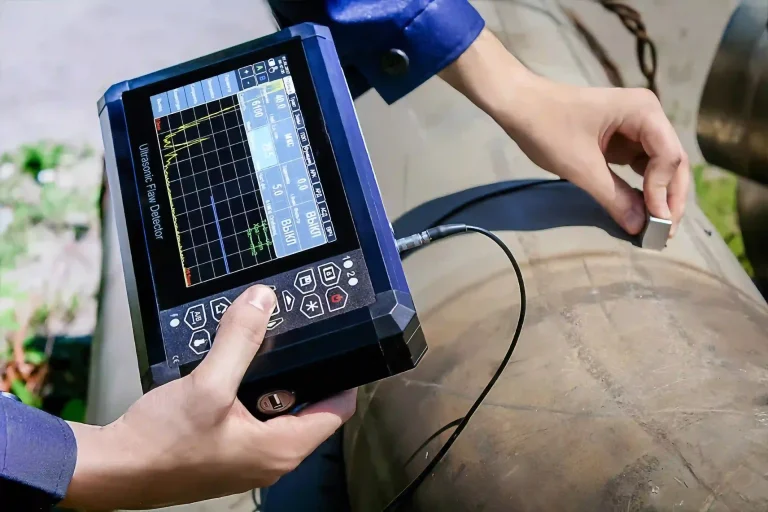
Descripción del proceso: Remove sand particles, rebabas, destello, etc., en la superficie de la pieza fundida, y realizar granallado, Esmerilado y otros tratamientos en la pieza fundida para mejorar la calidad de la superficie.. Algunas piezas fundidas también requieren procedimientos de posprocesamiento, como tratamiento térmico y mecanizado..
Características: El control preciso del proceso de limpieza y posprocesamiento ha mejorado significativamente la calidad de la superficie y el rendimiento de las piezas fundidas..
3. Características y ventajas del proceso de fundición en arena recubierta.
El proceso de fundición en arena recubierta tiene una posición esencial en la producción de fundición moderna con sus ventajas y características únicas.. Entre sus principales características y ventajas se encuentran:
Alta precisión: La arena recubierta tiene buena fluidez y alta resistencia y puede replicar con precisión la forma del patrón y la caja del núcleo para que la pieza fundida tenga una alta precisión dimensional y una baja rugosidad superficial., reducing the subsequent processing allowance.
High efficiency: The core shooting and molding process has a high degree of automation, which significantly improves production efficiency, can quickly form sand cores and castings, shorten production cycles, and is suitable for mass production.
Good collapsibility: After the casting cools, the coated sand core and sand mold are easy to collapse, which is convenient for sand dropping and cleaning, reducing the cleaning workload and damage to the casting.
Strong adaptability: The formula and process parameters of the coated sand can be adjusted according to the requirements of different castings to adapt to the production of castings of various complex shapes and materials, such as iron casting, fundición de acero, non-ferrous alloys, etc..
Better environmental protection: Compared with some traditional casting processes, coated sand casting produces relatively less dust and harmful gases, and waste-coated sand can be recycled and reused, which is beneficial to environmental protection.
4. Production efficiency and specifications of coated sand production line
The production efficiency and specifications of coated sand production line vary depending on factors such as equipment type, degree of automation and technical level. En términos generales, the efficiency of semi-automatic production lines is relatively low, while the efficiency of fully automatic production lines is higher. The following are some standard specifications and efficiency of coated sand production lines:
Semi-automatic production line: The efficiency of semi-automatic production lines with manual feeding is relatively low, and the output per hour is generally around 2-3 montones. This production line is suitable for small-scale production or trial production stages.
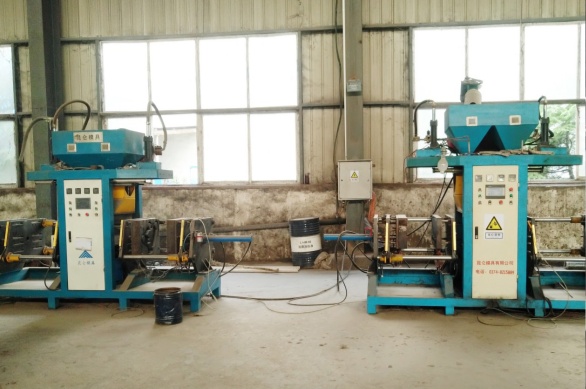
Fully automatic production line: The computer-controlled fully automatic production line has higher efficiency. Por ejemplo, the fully automatic coated sand production line uses gas flame direct injection, 300 type one-time feeding 300Kg, each production furnace takes 3.5min, and the output per hour can reach about 5 montones. This production line is suitable for large-scale batch production, which can significantly improve production efficiency and reduce costs.
Además, there are many options for heating methods of coated sand production lines, such as gas, electricidad, liquefied gas, bioparticles, etc.. Different heating methods are suitable for various production environments and needs. Al mismo tiempo, the processing capacity of the production line is also different. Por ejemplo, the processing capacity of the thermal regeneration production line is generally between 1.5-2.0t/h.
5. Application and development of coated sand casting process
Due to its unique advantages and characteristics, the coated sand casting process has been widely used in automobile manufacturing, machinery manufacturing, aerospace and other fields. Especially in the field of automobile manufacturing, the coated sand casting process is commonly used in the production of key castings such as engine cylinder blocks, culatas, crankshafts, etc.. These castings have extremely high requirements for dimensional accuracy and surface quality, and the coated sand casting process can meet these requirements.
With the advancement of science and technology and the continuous development of casting technology, the coated sand casting process is also constantly innovating and improving. Por ejemplo, some advanced coated sand casting production lines have realized multiple functions such as data collection, automatic core making, automatic core connection, automatic cleaning, automatic spraying of release agent, rapid mold change and environmental protection dust removal. The application of these advanced technologies has further improved the production efficiency and product quality of the coated sand casting process and reduced production costs and environmental pollution.
6. Summary and Outlook
En resumen, the coated sand casting process occupies an important position in modern casting production with its advantages of high precision, alta eficiencia, good disintegration, strong adaptability and good environmental protection. With the advancement of science and technology and the continuous development of casting technology, the coated sand casting process will be more widely used and developed. En el futuro, Esperamos que el proceso de fundición en arena recubierta muestre sus ventajas y valor únicos en más campos y haga contribuciones más significativas al desarrollo de la industria de procesamiento de metales..