Escanea el código WeChat para contactarnos
Escanea el código WeChat para contactarnos
No dudes en enviarnos un correo electrónico y te responderemos lo antes posible.
Creando el futuro con corazón y alma


Cuando se trata de trabajar con hierro dúctil, especialmente el tipo que funciona bien en bajas temperaturas, cada detalle en el proceso de casting importa.
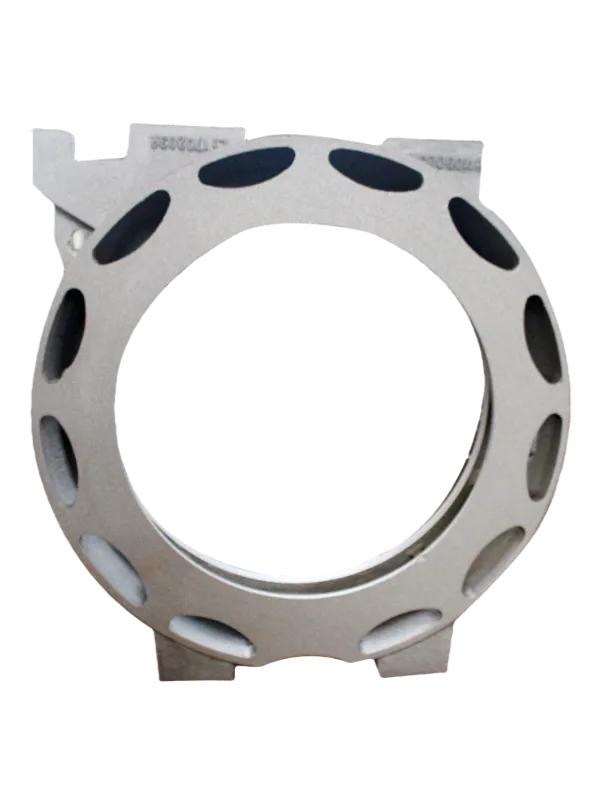
En Industrias pesadas Co. de Luoyang Fonyo., Limitado., we produce -40°C low-temperature ductile iron parts such as motor bases,Carcasa de generador de turbina eólica grande y carcasas de caja de cambios for railway and industrial use. A lo largo de los años, our engineers have learned that keeping ductile iron tough and reliable in cold environments requires both science and experience.
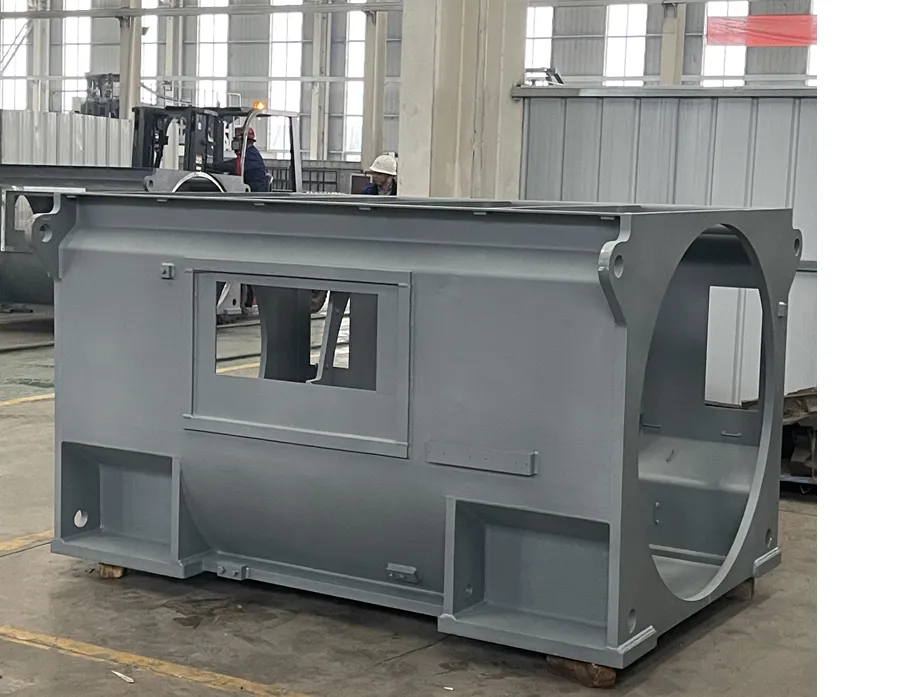
Let’s look at what we always pay attention to during casting.
Low-temperature ductile iron starts with the right chemical balance.
We carefully control carbon, silicio, and magnesium levels to ensure stable graphite formation. The addition of nickel (En) or copper (Cu) helps the material stay ductile even at -40°C.
We also keep sulfur and phosphorus very low — because even a small amount can make the casting brittle in cold conditions.
En breve, clean and balanced composition is the foundation for strong ductile iron.
To make the iron truly “ductile,” graphite must form as smooth, round spheres inside the metal. That’s why we control the magnesium treatment and add the inoculant at just the right time. Although this step may sound small, but it greatly affects how the casting behaves later. Our engineers always check the melt temperature and timing to make sure the spheroidization stays effective.
Temperature control is critical during casting.
We usually pour low-temperature ductile iron at a slightly higher temperature than regular grades, to keep the metal flow smooth and uniform.
Then we manage cooling carefully — not too fast, to avoid white iron layers, and not too slow, to keep the structure even.
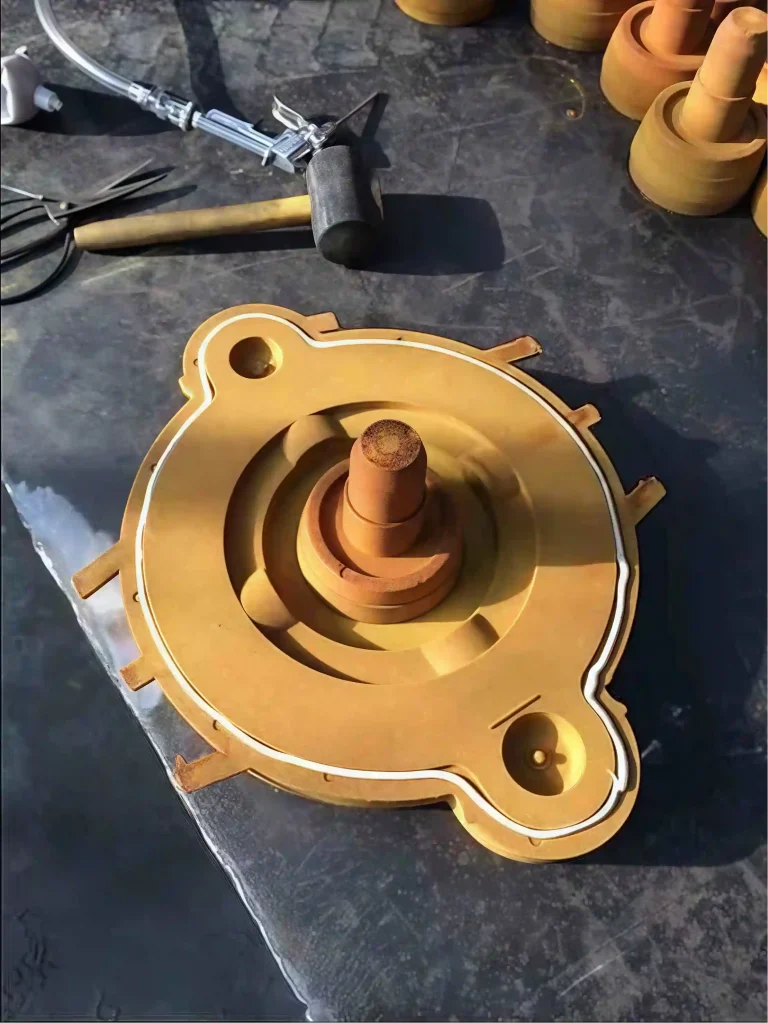
En algunos casos, we use preheated molds or cover sand to ensure the cooling rate stays just right.
después del casting, the parts often undergo annealing to remove internal stress and make the microstructure more uniform. For critical applications like railway gearbox housings, we may also use isothermal heat treatment to achieve both strength and flexibility.
The result is a fine balance, so the casting remains strong but still ductile even in freezing weather.
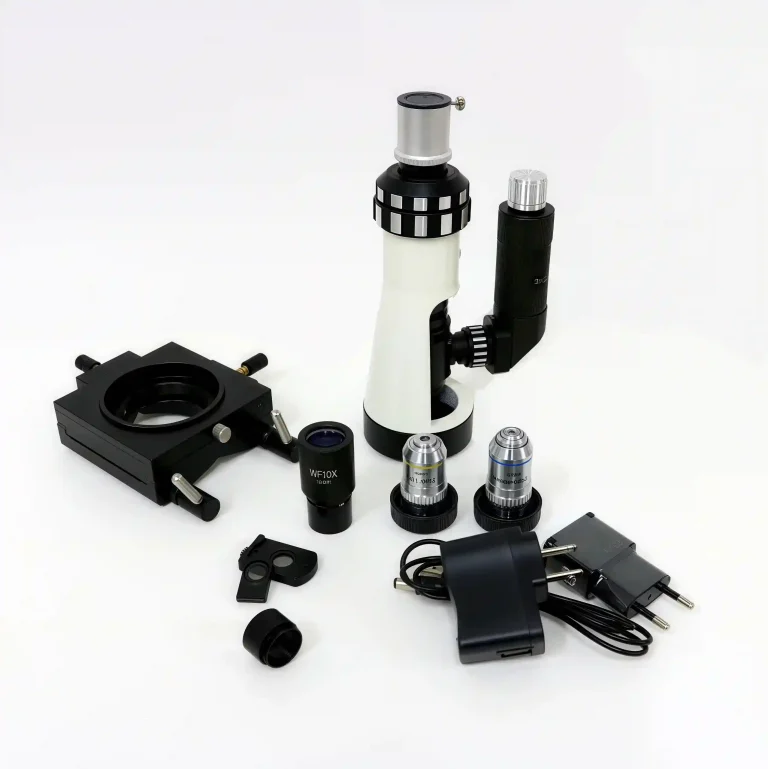
We don’t just stop at the process — every batch of ductile iron castings goes through microstructure inspection and low-temperature impact testing.
Under the microscope, then we expect to see uniform, round graphite nodules in a mostly ferritic matrix.
This combination gives our -40°C motor bases and gearbox housings their reliable toughness and long life.
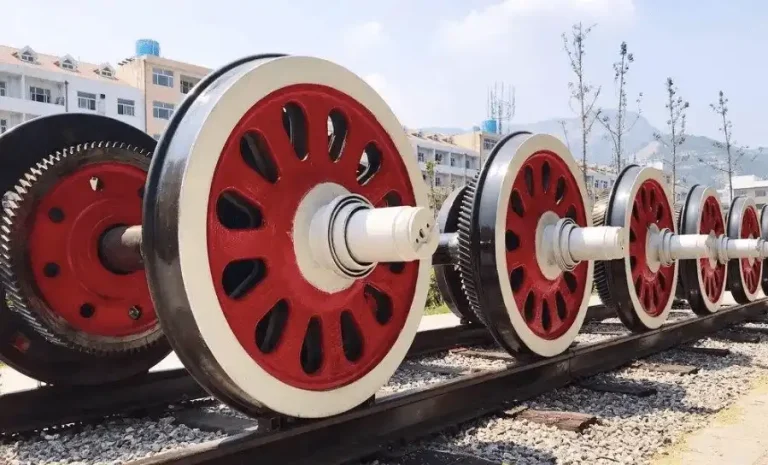
Our low-temperature ductile iron motor bases and gearboxes are designed to work in extreme environments, such as cold railway regions or northern industrial zones.
So they perform steadily even when the temperature drops below freezing.
This reliability comes from every small control we make in composition, fundición, y tratamiento térmico.
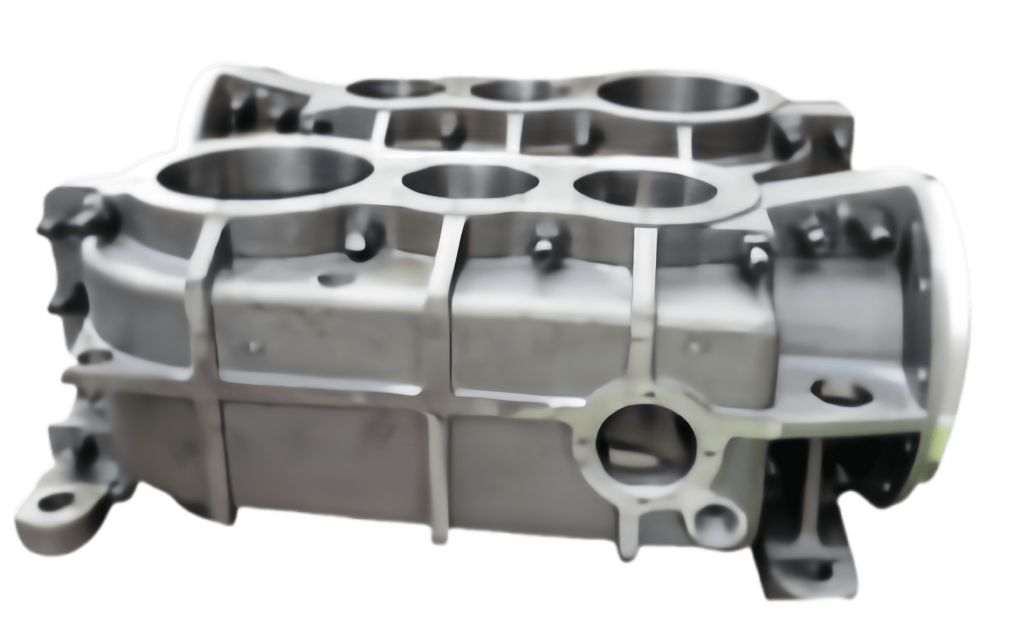
Casting low-temperature ductile iron is not just about pouring metal — it’s about understanding how each factor affects the final performance.
En Fonyo Heavy Industries Co., Limitado., we focus on every stage. From alloy design to microstructure testing, we want to ensure our castings remain safe, difícil, and stable even at -40°C.
So if you are looking for custom ductile iron castings for cold environments, feel free to reach out to us. Por favor visite nuestro sitio web www.railwaypart.com to get more information. We’ll be glad to share our experience and help you find the most reliable solution for your project.