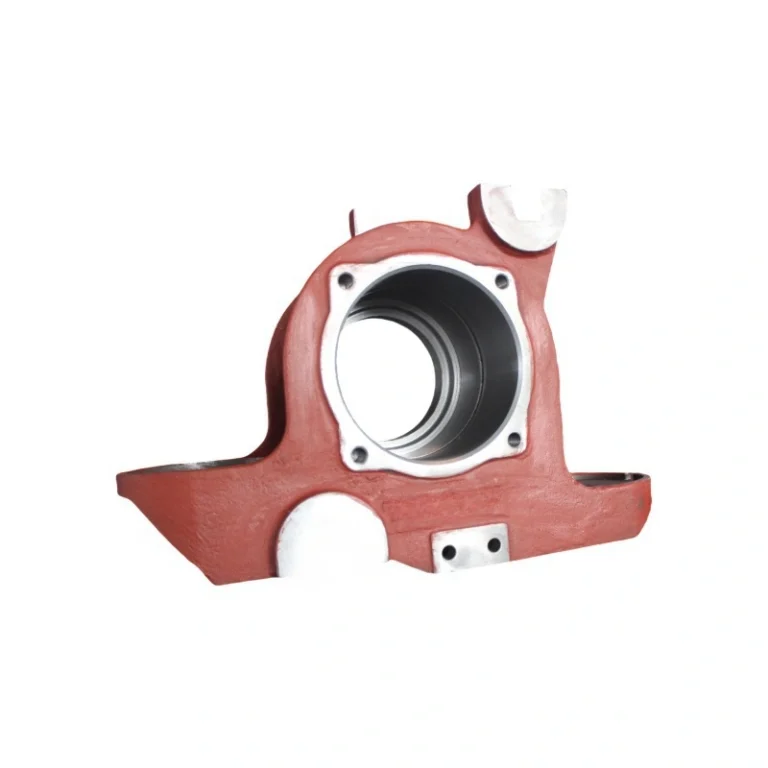
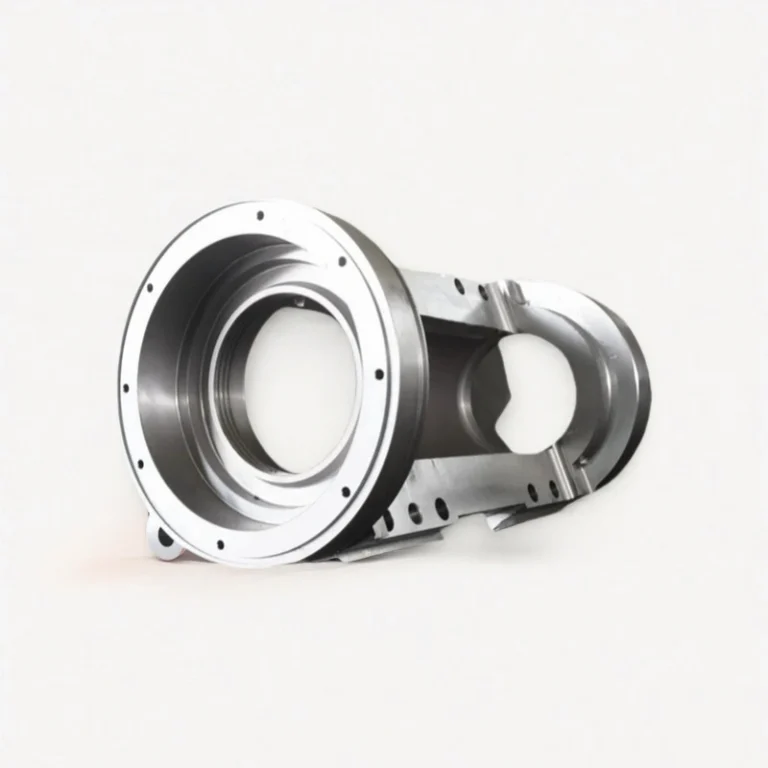
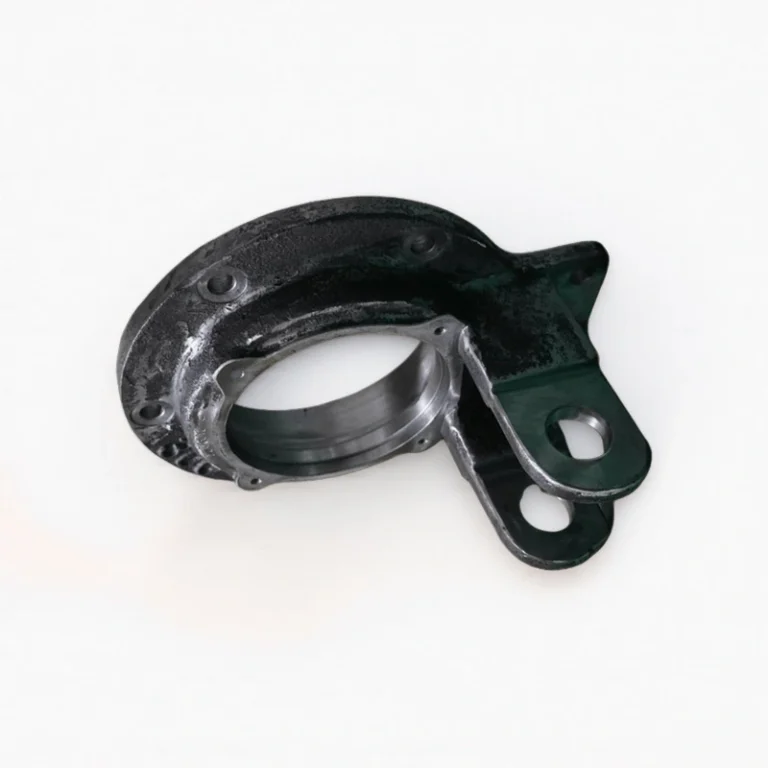
Scannen Sie den WeChat-Code, um mit uns Kontakt aufzunehmen
Scannen Sie den WeChat-Code, um mit uns Kontakt aufzunehmen
Schicken Sie uns gerne eine E-Mail und wir werden Ihnen so schnell wie möglich antworten.
Mit Herz und Seele die Zukunft gestalten


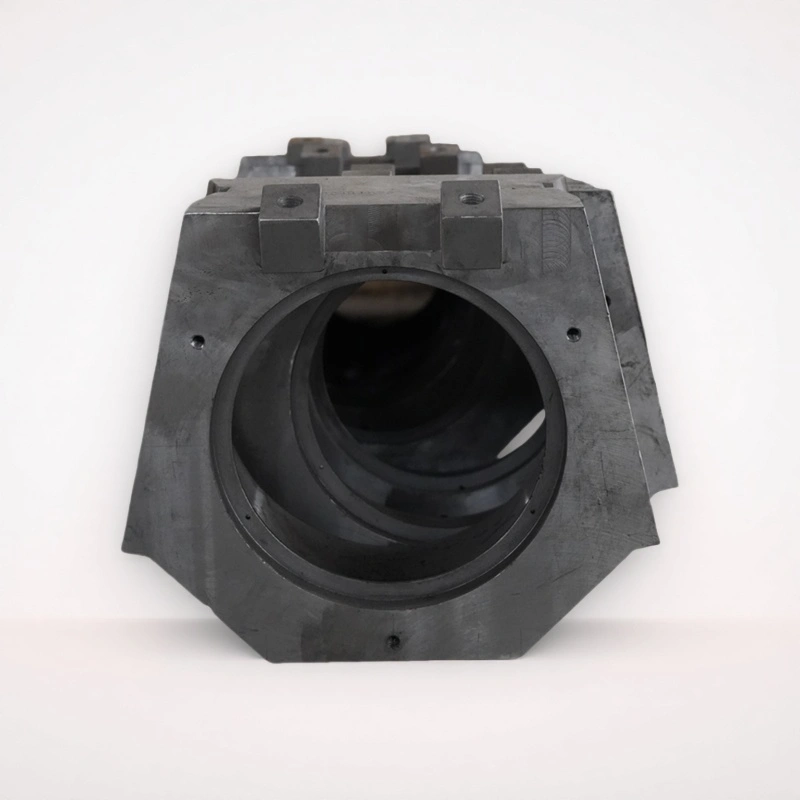
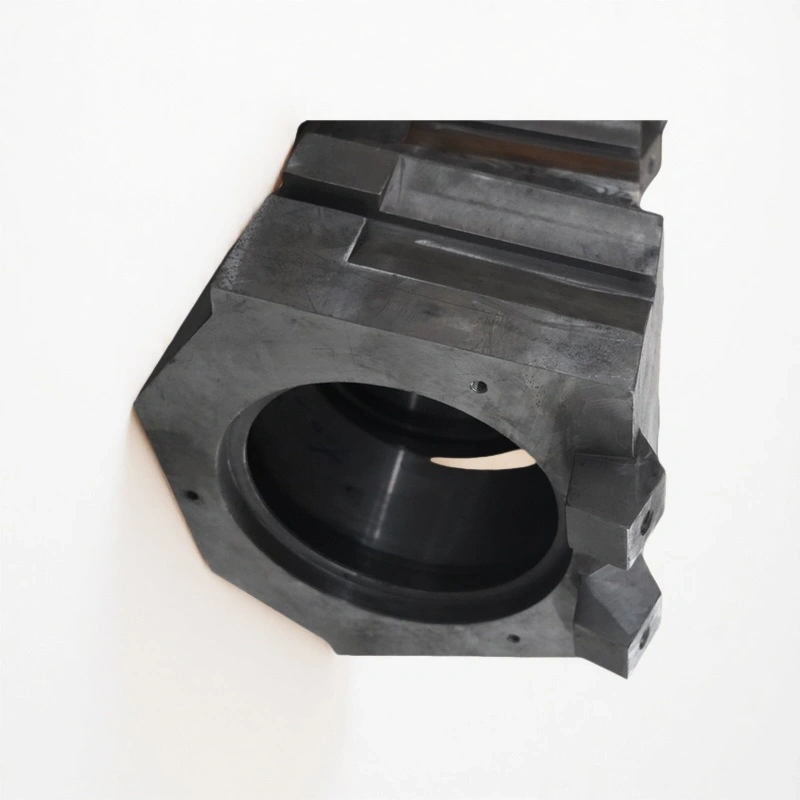
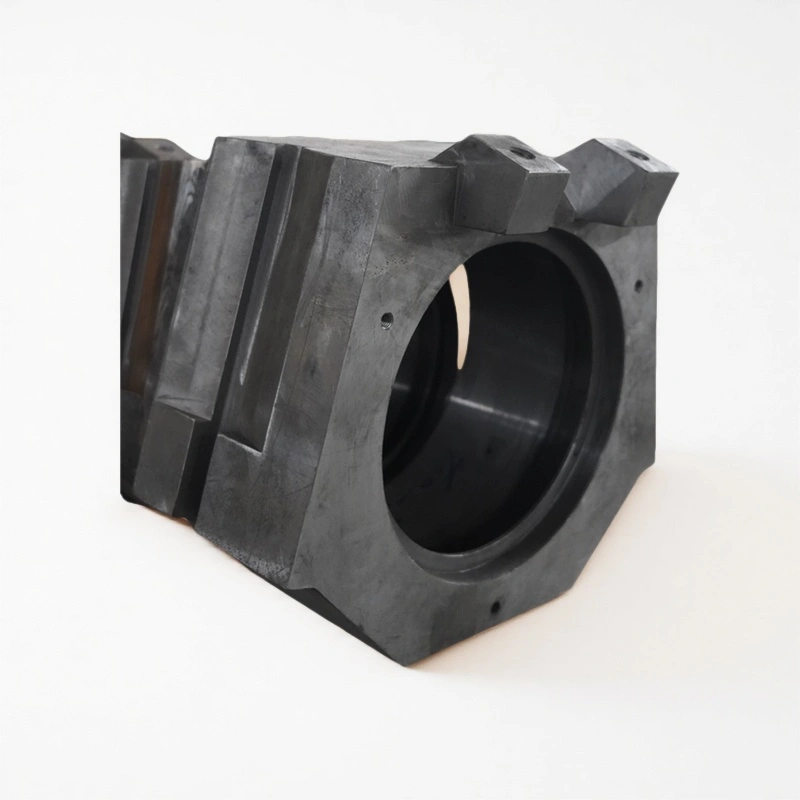
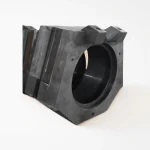
Introduction of Railway Axle Housing
The axle housing ( Achslager) of the rail vehicle, as the core load-bearing component of the bogie system of the rail vehicle, its design and material selection are directly related to the safety, stability and service life of the train operation.
Material and Process Features of Modern Railway Axle Housing
The axle box is made with high-strength alloy cast steel (such as ZG25MnCrNiMo) and nodular cast iron (QT500-7), two kinds of base material, supplemented by differential heat treatment process to meet the demand of different working conditions. Darunter, cast steel structures are widely used in heavy-duty freight transportation and high-speed EMU fields due to their excellent impact toughness (impact energy at room temperature ≥35J) und Zugfestigkeit (≥600 MPa). During the casting process of the box body, resin sand precision forming technology is adopted, combined with 3D scanning reverse detection, to ensure that the dimensional accuracy of the complex inner cavity structure is controlled within ±0.3mm.
In view of the development trend of lightweight, new aluminum alloy axle box body (AlSi7Mg – T6) has gradually been pilot applied in urban rail vehicles. The aluminum alloy box formed by the vacuum die-casting process is 40% lighter than the traditional cast steel part. Combined with anodic oxidation surface treatment (film thickness 20-25μm), the corrosion resistance is improved by more than three times while maintaining a yield strength of 450MPa. It is worth noting that in an extremely low-temperature environment (-40℃), the material needs to pass the Charpy V-notch impact test to verify its low-temperature toughness.
| Material | Hochfester legierter Stahlguss (such as ZG25MnCrNiMo) and ductile iron (QT500-7) | |
| Material und Eigenschaften | Stärke der Dehnung | ≥600 MPa |
| dimensional accuracy of the inner cavity structure | within ±0.3mm | |
| Überlegungen zur Umweltdimension | Particle barrier efficiency | 99.97%(test in EN 15085 standard) |
| adaptive Temperatur | from -40~150℃ | |
The Structural Design and Technical Characteristics of Railway Axle Housing
Topology optimization design was used to construct variable cross-section box structure, key bearing area wall thickness of 25 mm, and the stress section thinning to 12 mm to achieve maximum stiffness weight ratio. Finite element analysis shows that the maximum stress point of this structure under a longitudinal impact load of 300kN is 20% lower than the allowable value of the material.
(1)Composite seal system: configuration labyrinth mechanical seal with double protection, fluorine rubber lip seal with the compression type sealing ring (compression ratio 18 + / – 2%), which can effectively cut off grade PM10 level fine dust. The IP67 protection level ensures a maintenance-free cycle of 500,000 kilometers for the bearing lubrication system.
(2)Intelligent monitoring integration: Reserve an embedded sensor installation base, supporting real-time monitoring of multiple parameters such as temperature (-40 to 150℃), Vibration (0.5 to 10kHz frequency response), and stress (±2000με range). The data sampling rate can reach up to 10kHz, providing a technical foundation for predictive maintenance.
Function Implementation and System Integration of Railway Axle Housing
As the wheel/rail system of “mechanical conversion hubs” bears the multi-dimensional function bearing axle box body: static, dynamic load transfer: The vertical direction bears the self-weight of the bogie (typischer Wert 8-12 Tonnen) and the dynamic wheel-rail impact force (peak can reach three times the axle weight), as well as the centrifugal force when the lateral transmission curve passes through (under the maximum acceleration condition of 0.3g).
(1)Motion constraint control: The longitudinal/lateral displacement elastic constraint of the wheelset is achieved through the positioning node (rubber joint stiffness 25±3kN/mm) to ensure stability loss at the critical speed.
(2)Thermal management center: The heat dissipation fin design of the box body keeps the temperature rise of the bearing within ΔT≤35℃ (under a continuous working condition of 80km/h) and is combined with thermal grease (3.5W/m·K) to enhance the heat conduction efficiency.
(3)Fault isolation barrier: When the binding of the bearings, the mechanical weak link of the preset of the (shear pin) directional rupture, prevent expanding hot shaft failure as EN15085 welding system certification and ISO/TS22163 the in-depth implementation of rail transit industry standards, Modern axle box manufacturing has established a full-process quality control system covering material metallurgy (cleanliness control [O]≤30ppm), precision casting (CT8 grade accuracy), and intelligent detection (industrial CT defect identification accuracy 0.2mm).
Future Development of Railway Axle Hosuing
In der Zukunft, with the maturation of metal matrix composites (SiC particle-reinforced aluminum matrix composites) and 3D printed conformal cooling channel technology, the new generation of axle box bodies will achieve breakthroughs in lightweight (with a target weight reduction of 50%) and functional integration.
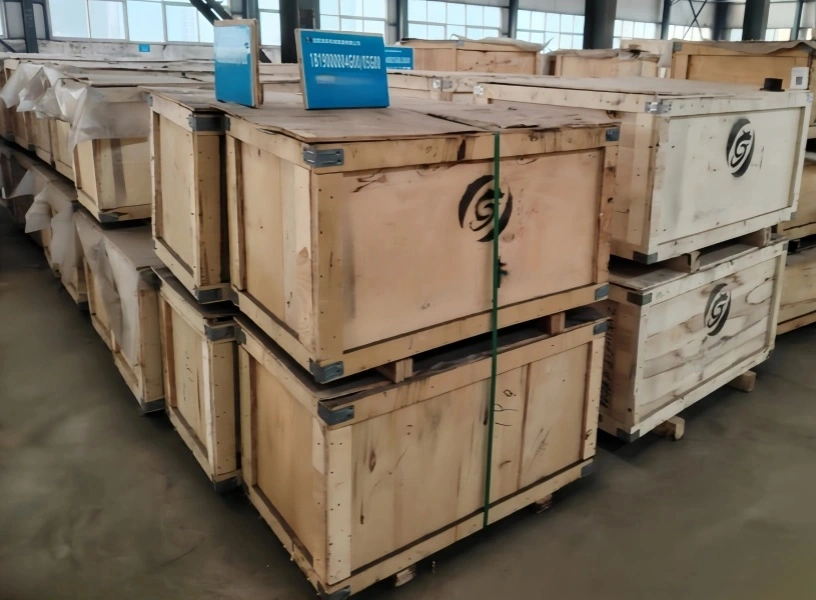
Paket mit Eisenbahnachskasten
Mehrzwecktasche + Karton + Holzkiste/Palette, nach Kundenwunsch
Unternehmensprofil
Luoyang Fonyo Heavy Industries Co., Ltd. wurde gegründet 1998, umfasst eine Fläche von 72.600㎡, mit mehr als 300 Mitarbeiter, 32 Techniker, einschließlich 5 leitende Ingenieure, 11 Hilfsingenieure, Und 16 Techniker. Es wurde als Luoyang Engineering Technology Center eingestuft, Luoyang Technologie R&D-Zentrum, und nationales High-Tech-Unternehmen für viele Male.
Unsere Produktionskapazität beträgt 30,000 Tonnen pro Jahr. Momentan, Wir produzieren hauptsächlich Stahlguss, Gusseisen (Grauguss, Sphäroguss, usw.), Verarbeitung des fertigen Produkts und Montage der Komponenten. Die Produkte wurden nach Russland exportiert, die Vereinigten Staaten, Deutschland, Argentinien, Japan, Frankreich, Südafrika,Italien und andere Länder.
Häufig gestellte Fragen
Q1: Sie sind Hersteller oder Handelsunternehmen??
A:Wir sind ein Hersteller. Unser Unternehmen wurde gegründet 1998, mit fast 30 Jahren Erfahrung in der Gussindustrie, eine Gesamtfläche von 72.600㎡, mit einer Fabrikgebäudefläche von 51.000㎡.
Q2. Was sind Ihre Hauptprodukte??
A: Unser Hauptaugenmerk liegt auf dem Stahlguss, Eisenguss, Bearbeitung des fertigen Produkts, und Baugruppenfertigung.
Q3: Wie präzise können Sie Gussteile herstellen??
A: Wir sind in der Lage, Gussteile mit unterschiedlichen Gussverfahren herzustellen. Die Produktion erfolgt strikt nach ISO 9001, ISO 14001 und ISO45001, EN15085, IRIS.
Q4. Können Sie nach den Mustern produzieren??
Ja, Wir können nach Ihren Mustern oder technischen Zeichnungen produzieren. Wir können auch Zeichnungen für Sie erstellen, nachdem wir Ihre Muster erhalten haben.
F5: Wie führen Sie eine Qualitätskontrolle vor der Lieferung durch??
A: Die Qualitätsprüfung ist ein sehr wichtiger Faktor zur Gewährleistung der Qualität von Stahlgussteilen. Wir folgen 3 Kontrollzeiten während des gesamten Produktionsprozesses. Und wir stellen einen Materialtestbericht zur Verfügung, Maßprüfbericht, und Bericht über die Prüfung der mechanischen Eigenschaften an unsere Kunden vor der Lieferung.
Wenn Sie an Produkten interessiert sind,Nehmen Sie gerne Kontakt mit uns auf.
E-Mail:[email protected]
Mobile:008615515321683