Scannen Sie den WeChat-Code, um mit uns Kontakt aufzunehmen
Scannen Sie den WeChat-Code, um mit uns Kontakt aufzunehmen
Schicken Sie uns gerne eine E-Mail und wir werden Ihnen so schnell wie möglich antworten.
Mit Herz und Seele die Zukunft gestalten


In many industrial fields, such as machinery manufacturing, locomotive tracks, aerospace, usw., cast iron parts are basic components, and their quality is directly related to the performance and safety of the entire product. Ultrasonic flaw detection technology, like a keen “quality detective”, escorts the quality inspection of cast iron parts.
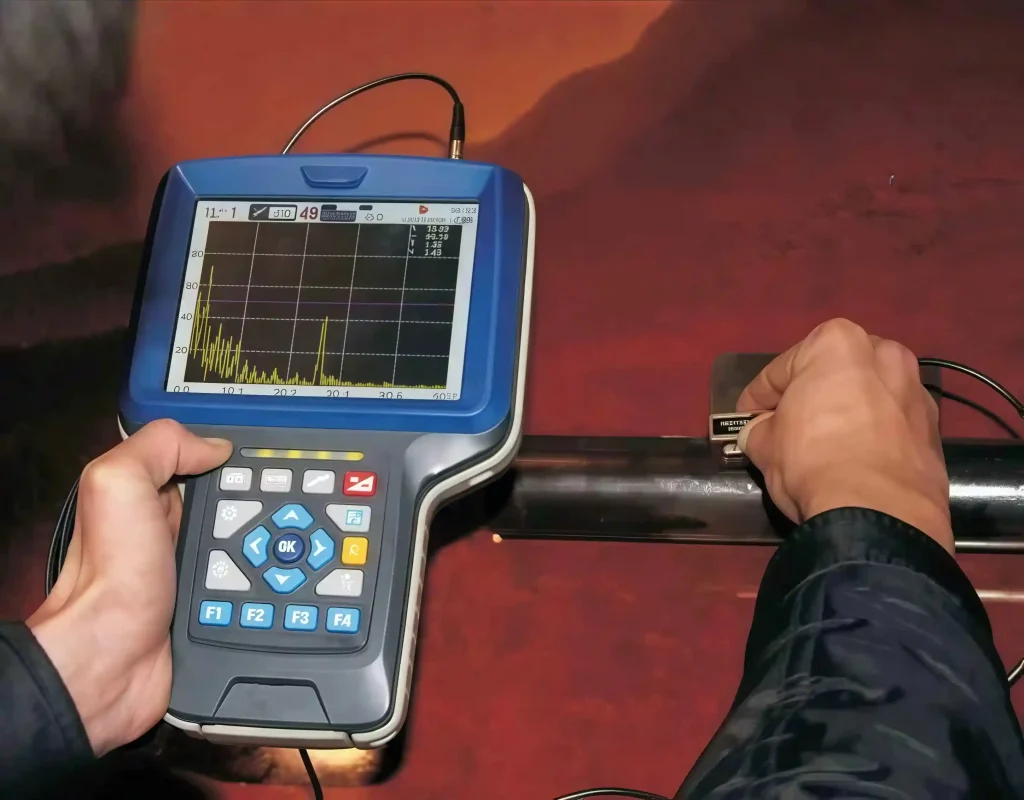
The Secret of Ultrasonic Flaw Detection Principle
Ultrasonic waves are sound waves with a frequency higher than 20,000 Hz. They have the characteristics of good directionality and strong penetration. Bei der Fehlererkennung von Gusseisenteilen, the flaw detector generates high-frequency electrical pulses to stimulate the probe to emit ultrasonic waves. These ultrasonic waves are shot into the interior of the cast iron parts at a specific angle. When encountering the interface of different media, wie Poren, Schlackeneinschlüsse, cracks and other defects, reflection, refraction and waveform conversion will occur. The reflected ultrasonic waves are received by the probe and converted into electrical signals. Nach der Verarbeitung durch das Fehlersuchgerät, they are displayed in the form of waveforms or images. By analyzing the characteristics of these signals, flaw detectors can determine whether there are defects inside the cast iron parts and the location, size and nature of the defects.
Full analysis of the flaw detection process
When conducting ultrasonic flaw detection on cast iron parts, first of all, the appropriate probe and flaw detection frequency should be selected according to the material, Form, size and flaw detection requirements of the cast iron parts. Zum Beispiel, for cast iron parts with rough surfaces, a probe with a lower frequency and a larger chip size should be selected to ensure that the ultrasonic wave can be effectively coupled into the workpiece.
Next is surface preparation. The oil, rust, usw., on the flaw detection surface of the cast iron parts should be cleaned and polished if necessary to ensure good contact between the probe and the workpiece surface. During flaw detection, the probe moves on the surface of the workpiece in a certain way. Common ones include zigzag scanning, front and back scanning, usw., to cover the flaw detection area fully. The flaw detector needs to pay close attention to the display of the flaw detector. Sobald ein abnormales Signal gefunden wird, seine Position, Amplitude und andere Informationen sollten detailliert aufgezeichnet werden, and a comprehensive judgment should be made based on the actual situation of the cast iron parts.
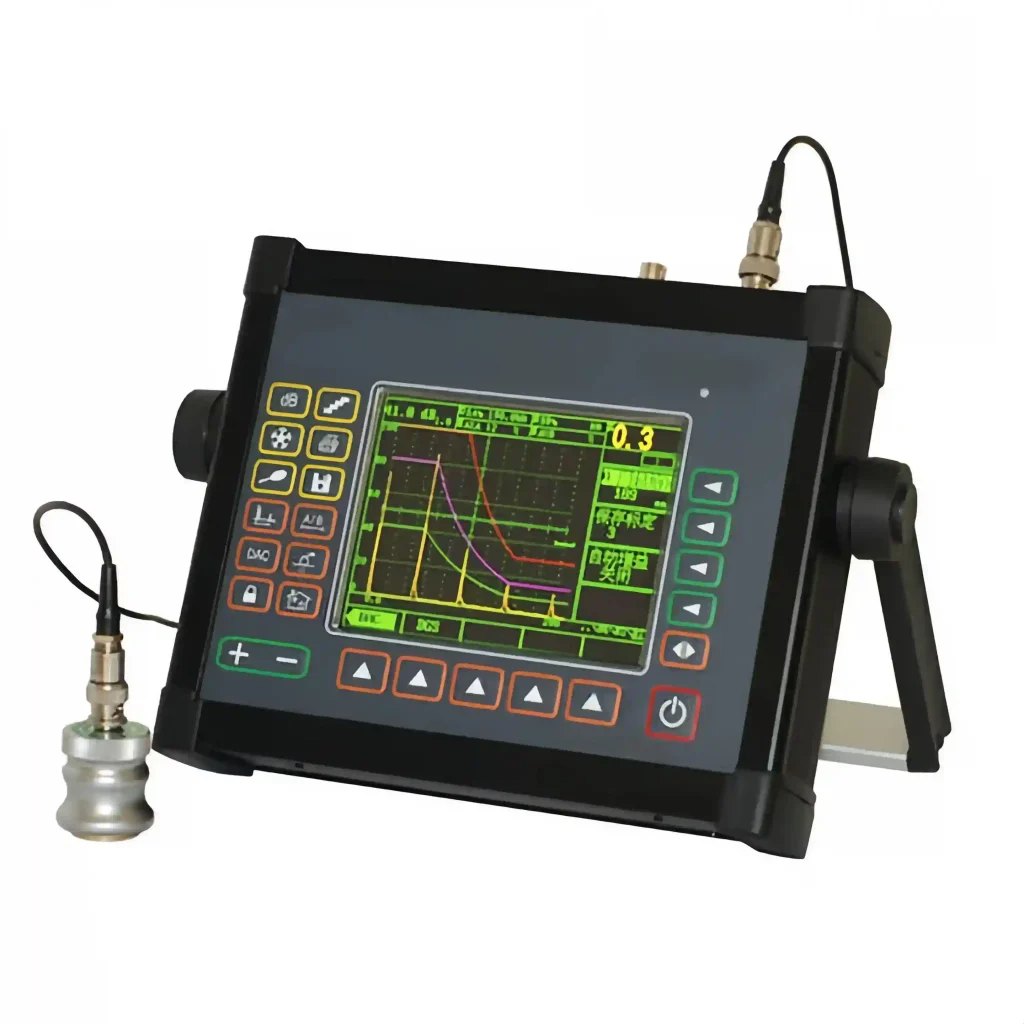
Advantages and challenges of technology
Ultrasonic flaw detection technology has many advantages. It has high sensitivity to detect internal defects of cast iron parts and can detect tiny pores and cracks; it has a fast detection speed and is suitable for quality inspection in large-scale production; Es ist für den menschlichen Körper ungefährlich und kann in verschiedenen Umgebungen sicher betrieben werden. Jedoch, the technology also faces some challenges. Die Struktur von Gusseisenteilen ist ungleichmäßig, and the ultrasonic wave attenuates greatly when propagating in them, which will affect the detection depth and sensitivity; cast iron parts with complex shapes, such as those with curved surfaces or special-shaped structures, will bring difficulties to the movement of the probe and the location of defects.
With the continuous advancement of science and technology, ultrasonic flaw detection technology is also developing continuously. Digital and intelligent flaw detection equipment continues to emerge, improving the accuracy and efficiency of detection. In der Zukunft, Die Ultraschall-Fehlererkennungstechnologie wird eine wichtigere Rolle bei der Sicherung der Qualität von Gusseisenteilen und der Förderung der industriellen Entwicklung spielen, and will become an indispensable quality guardian in the industrial field.
Anbieter
Luoyang Fonyo Heavy Industries Co., Ltd,Das 1998 gegründete Unternehmen ist ein Hersteller von gegossenen Eisenbahnteilen. Unsere Fabrik erstreckt sich über eine Fläche von 72.600 qm, mit mehr als 300 Mitarbeiter, 32 Techniker, einschließlich 5 leitende Ingenieure, 11 Hilfsingenieure, Und 16 Techniker. Unsere Produktionskapazität beträgt 30,000 Tonnen pro Jahr. Momentan, Wir produzieren hauptsächlich Gussteile, Bearbeitung, und Montage für Lokomotive,Triebwagen,Hochgeschwindigkeitszüge, Bergbauausrüstung,Windkraft,usw. Unsere Produkte wurden nach Russland exportiert, die Vereinigten Staaten, Deutschland, Argentinien, Japan, Frankreich, Südafrika,Italien und andere Länder.
Kontakt: Stella Liu
E-Mail:[email protected]
Mobile:+8615515351287