Scan WeChat-koden for at kontakte os
Scan WeChat-koden for at kontakte os
Du er velkommen til at sende os en e-mail, og vi vil svare dig hurtigst muligt.
At skabe fremtiden med hjerte og sjæl


Metal heat treatment is a crucial process. It involves precise control of the heating and cooling of metal materials to adjust their physical and chemical properties. It is not only a common step in manufacturing. It is also regarded as a “rite” of the transformation of metal properties. Through a series of scientific and rigorous heat treatment procedures, metals can acquire new performance characteristics, meeting diverse engineering requirements.
It is worth noting that heat treatment is not simply about heating the metal and then cooling it. It is a highly complex, systematic process that heavily relies on the coordination of temperature, time, and cooling method. Different metals respond differently to the heat treatment process, so it is necessary to precisely design the process parameters based on the material type, part size, and final usage requirements in order to achieve the expected performance optimization – whether it is to enhance strength, increase toughness, or improve wear resistance.
1.Heating: The Starting Point and Foundation of the Treatment Process
Heating is the initial and crucial step in the heat treatment process. It is not merely about raising the temperature, but requires strict control of the heating rate, target temperature, and holding strategy. The metal is heated above a certain critical temperature to cause a phase transformation in its crystal structure, which is the foundation for subsequent performance adjustments. This temperature varies significantly depending on the type of metal and must be determined through scientific calculations and experimental verification. Either too high or too low a temperature can lead to material failure.
2.Even heating: The key stage for achieving uniform temperature.
After the metal reaches the preset temperature, it needs to be held at that temperature for a certain period of time. Denne proces kaldes “even heating”. The purpose is to make the overall temperature distribution of the workpiece uniform. So it can ensure the consistency of microstructure transformation and avoid internal stress or deformation caused by temperature gradients. The length of the even heating time depends on the material’s thermal conductivity, the size of the workpiece, and the required performance indicators. It is a key factor to affects the quality of heat treatment.
3.Temperering: The fine processing step for adjusting performance
Tempering is usually carried out after quenching, referring to heating the metal to a temperature lower than the critical point, holding it for a certain period of time, and then cooling it down. This process aims to reduce the high brittleness caused by rapid cooling. So it can balance the hardness and toughness, and enable the material to maintain a certain strength while improving its impact resistance. Especially for parts that bear dynamic loads or are in complex stress conditions, tempering treatment can significantly increase their service life and reliability.
In addition to the above basic steps, in actual production, various heat treatment processes such as annealing, normalisere, and quenching are adopted according to the requirements. These processes work together to jointly provide the metal with the comprehensive properties it needs.
1.Significantly enhance hardness and strength.
One of the most well-known advantages of heat treatment is that it can significantly increase the surface hardness and overall strength of metals, enhancing their ability to resist plastic deformation and surface damage. It is particularly suitable for the manufacturing of components under high-load or high-wear conditions.
2.Enhancing toughness and ductility
Contrary to common belief, not all application scenarios require metals to be as hard as possible. I nogle tilfælde, materials need to have good toughness to withstand impacts or vibrations. Through treatments such as tempering, the balance between toughness and brittleness of metals can be effectively regulated, preventing sudden fractures.
3.Optimize wear resistance
Appropriate heat treatment can form a high-hardness layer on the metal surface. So it can significantly enhance its wear resistance and prolong the service life of the parts in continuous motion or frictional contact environments.
4.Eliminating internal stress
During welding, cold processing, or forging, metals tend to have residual stress within them, which may cause deformation. The annealing process in heat treatment can effectively release these internal stresses, so that it can improve dimensional stability and structural integrity.
5.Improving machinability
Some metals may be too hard or have too high viscosity when in their original state, making them difficult to cut and shape. By conducting pre-treatment heat treatment, the microstructure can be adjusted. So it can make subsequent mechanical processing easier. Således, it can improve production efficiency and surface quality.
6. Controlling thermal expansion behavior
For components used in precision instruments or under high-temperature conditions, materials are often required to have specific thermal expansion coefficients. Heat treatment can regulate the thermal expansion behavior of metals to a certain extent by altering their crystal structure, thus meeting the requirements of specific working conditions.
Som konklusion, metal heat treatment is a highly sophisticated process that integrates material science, thermodynamics, and mechanical engineering. It not only expands the application scope of metal materials but also plays an indispensable role in modern manufacturing. With the development of intelligent control and process simulation technologies, the accuracy and efficiency of heat treatment will continue to be improved. So it will further drive industrial products towards higher performance and greater reliability.
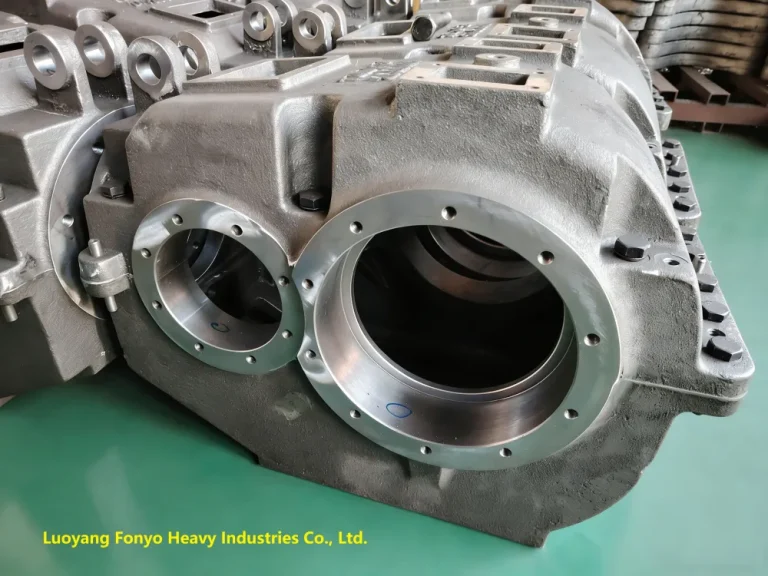
Luoyang Fonyo Heavy Industries Co., Ltd,grundlagt i 1998, er en producent i jernbanestøbningsdele. Vores fabrik dækker et areal på 72.600㎡, med mere end 300 medarbejdere, 32 teknikere, inklusive 5 senioringeniører, 11 assistentingeniører, og 16 teknikere.Vores produktionskapacitet er 30,000 tons om året. For tiden, vi producerer hovedsageligt støbning, bearbejdning, og montage til lokomotiv, jernbanevogn, højhastighedstog, mineudstyr,vindkraft,osv.
Vi er leverandør af jernbanedele til CRRC(inklusive mere end 20 filialselskaber og datterselskaber af CRRC),Gemac Engineering Machinery,Sanygroup, Citic Heavy Industries,osv. Vores produkter er blevet eksporteret til Rusland, USA, Tyskland, Argentina, Japan, Frankrig, Sydafrika,Italien og andre lande over hele verden.
Kontaktoplysninger:
E-mail:[email protected]
Mobil:008615515321683