Scan the WeChat code to contact us
Scan the WeChat code to contact us
Feel free to send us a email and we will reply to you as soon as possible.
Creating the future with heart and soul

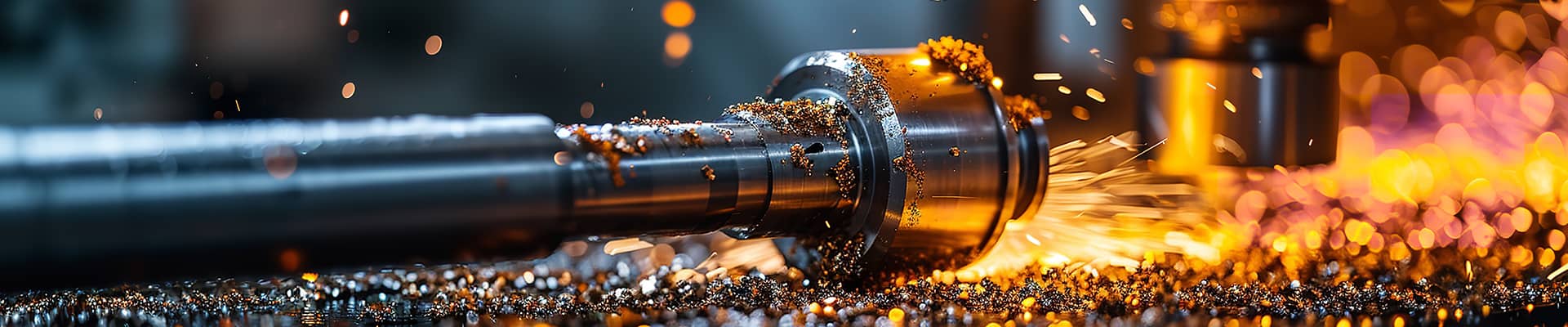
The mechanical properties of a metal part are set by a handful of things working together: its chemical composition, the grain structure, the way it was formed and heat treated, and the temperature it runs at. Change any one of them and the same alloy can behave like a different material.
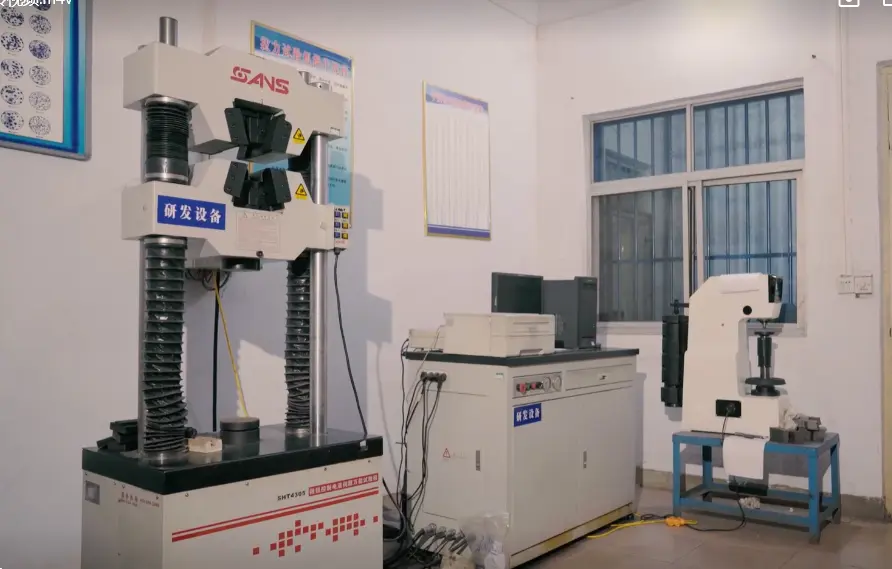
Ask most people why two metal parts behave differently and they will point at the alloy. Fair enough. Carbon in steel, chromium in stainless, molybdenum in high-temperature alloys. These elements change the strength, hardness, and corrosion resistance in ways that are real and measurable.
But composition is only the starting point. Here is the thing that catches people out: two parts with the exact same chemistry can still land on very different mechanical properties. The certificate of analysis says the same thing. The parts do not perform the same way.
I have watched this happen with steel more times than I can count. Same grade on paper, one part fine, the other one fails early. The chemistry was never the difference.
The real difference is usually hidden inside the metal. Metals are made of tiny crystals called grains, and the size and shape of those grains decide a lot.
Fine grains generally mean higher strength and better toughness, because the boundaries between grains act as barriers to the movement that lets metal deform. This is the Hall-Petch relationship, and it runs the other way too: coarse grains are weaker but can be easier to form and can hold up better against creep at high temperature.
Now imagine a railway wheel. The same steel, made two ways. Pour it into a mould and let it cool slowly, and you get a fairly random, coarse grain structure, sometimes with shrinkage porosity and segregation hiding in the thick sections. Forge it instead, and the compressive working breaks up and refines those grains, and lines them up in the direction the metal flows. The forged wheel is tougher and more fatigue-resistant, not because the steel is different, but because the grain structure is.
Same material. Different grain. Different life in service.
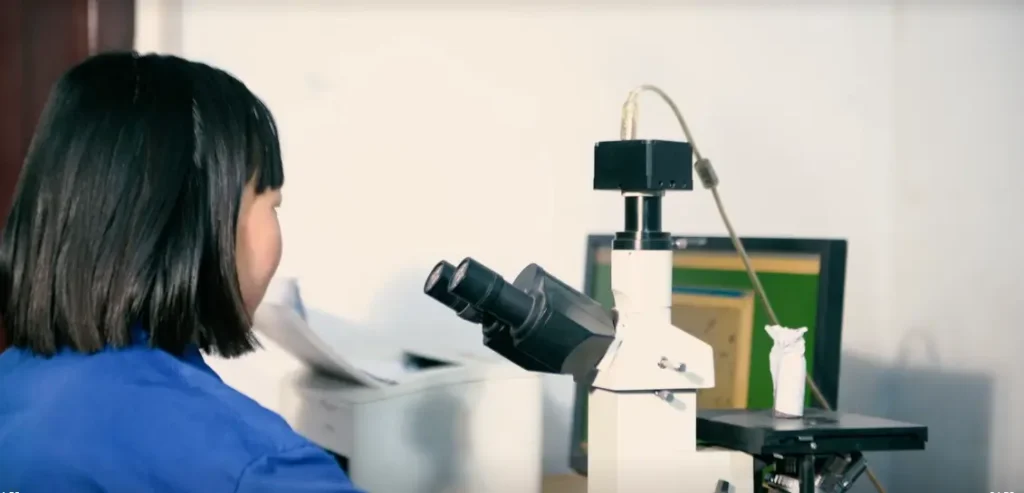
This is where manufacturing process stops being a footnote and becomes the main event. Casting, forging, rolling, and machining do not just change the shape. They change the microstructure underneath.
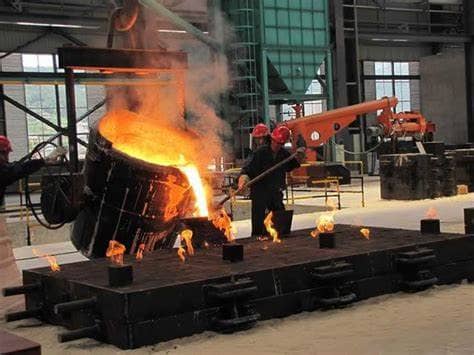
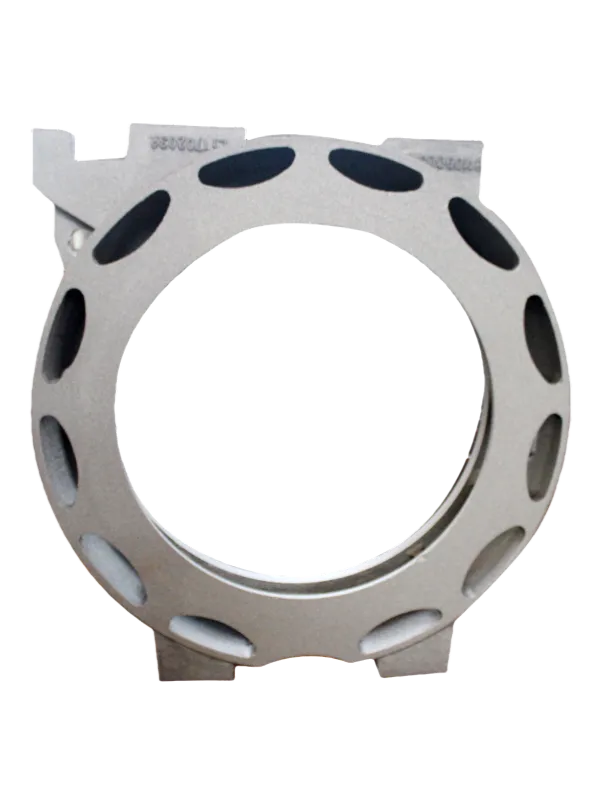
A railway casting product cools from the molten state, so the section thickness controls how fast it solidifies and what the resulting structure looks like. Thick sections cool slower, which can mean lower strength in those areas unless the casting gets a later heat treatment. A test bar poured separately will not always tell you what the thick wall of the actual casting can take.
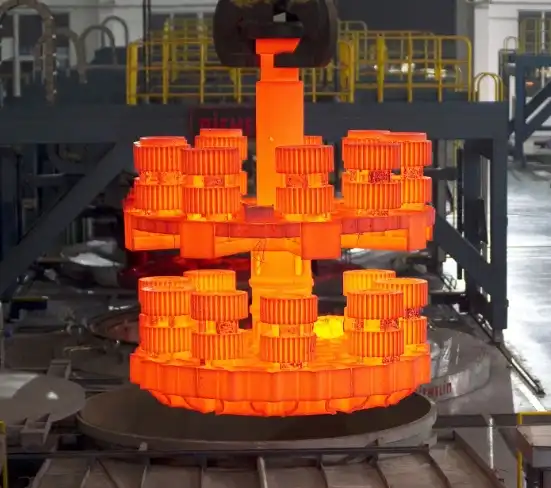
Forging and rolling work the metal, refine the grains, and often align inclusions and second phases in one direction. That creates directionality. A forged part can be strong along the direction it was worked and noticeably weaker across the short-transverse direction. Designers who ignore that directionality occasionally get a very expensive surprise.
None of this shows up on the drawing. The part looks identical. It is not.
If composition and forming set the starting point, heat treatment is the lever that moves the mechanical properties afterward.
Quench a steel and it gets hard and strong, often brittle. Temper it and you trade a little hardness back for toughness. Anneal it and you soften it and relieve the internal stresses left by working. The same alloy, run through different heat treatments, can span an enormous range of strength and ductility.
This is also where mistakes hide. A part that was not heated uniformly, or cooled unevenly, can carry residual stresses that only show up later as distortion or early cracking. On a wheel or a casting, the heat treatment is as much a part of the specification as the alloy number.
Personally, I would rather see the heat treatment records than the tensile number alone. The tensile number tells me the alloy was capable. The heat treatment tells me whether the part actually got there.
Then there is the service environment, which is the factor nobody controls at the factory.
Cold makes most metals stronger but more brittle. Steel, in particular, has a ductile-to-brittle transition; below a certain temperature the toughness can fall off a cliff. Non-ferrous metals like aluminium and copper tend to hold their toughness better at low temperature.
Heat does the opposite. Strength and stiffness fall as temperature climbs, and creep creeps in, a slow deformation that happens even under a load that would be harmless at room temperature. A part sized for room temperature is not automatically sized for a hot exhaust or a heavy braking cycle.
Corrosion and oxidation are their own quiet problem. They eat at the surface, and surface damage is where fatigue cracks like to start.
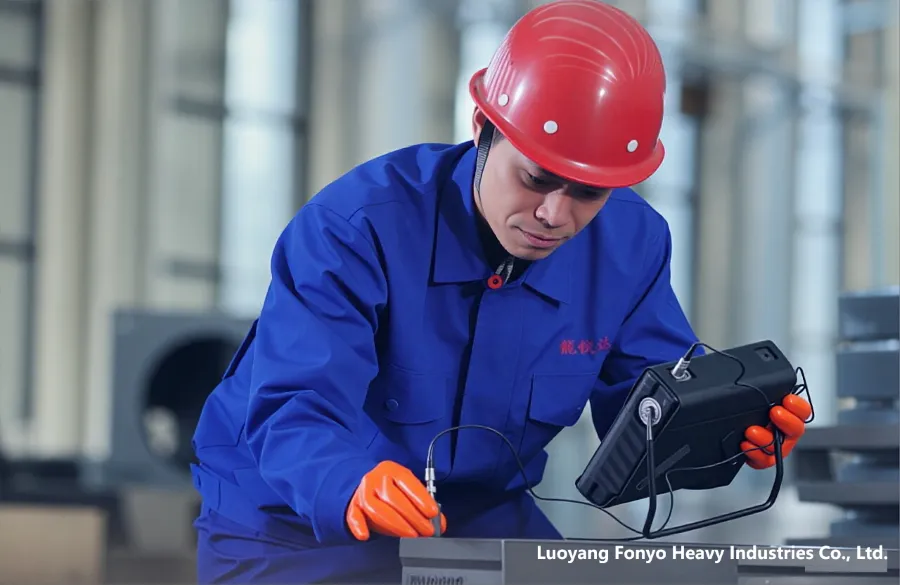
If you are on the buying side, you cannot see the grain structure and you are not going to run your own tensile test. Your job is to make sure the supplier can prove the mechanical properties are real and not just claimed. The short list I would want:
One check I run first: the heat number. When I review a supplier’s documents I do not start with the tensile strength. I check whether the heat number on the certificate matches the marking on the wheel or the casting. If those two do not line up, I stop reading, because the whole trace is already broken.
What is the difference between yield strength and tensile strength?
Yield strength is the stress at which a metal starts to deform permanently, the point it stops springing back. Tensile strength is the maximum stress it can take before it breaks. For a part that must not bend in service, the yield strength is often the number that actually matters.
How does grain size affect the mechanical properties of a metal?
Fine grains generally mean higher strength and toughness, because the grain boundaries block the movement that lets metal deform. This is the Hall-Petch relationship. Coarse grains are usually weaker at room temperature but can be easier to form and can resist creep better at high temperature.
Does heat treatment always improve the mechanical properties?
Sometimes yes, sometimes no. Heat treatment moves the properties in a chosen direction: quenching raises hardness and strength, tempering trades some of that back for toughness, annealing softens and relieves stress. It improves the part only when it is matched to what the part is supposed to do.
Why can two parts from the same material perform differently?
Because the chemistry is only one input. Two parts with identical composition can have different grain structure, different forming history, different heat treatment, and different residual stress, all of which change the mechanical properties. The certificate matching does not mean the performance will.
How does temperature affect the mechanical properties of a metal?
Cold generally raises strength but lowers toughness, and steel in particular can turn brittle below a transition temperature. Heat lowers strength and stiffness and brings in creep at high temperature. A part sized for one temperature is not automatically sized for another.
Should a casting always be heat treated?
Not always, but often. A casting solidifies with the section thickness controlling its structure, and thicker sections can cool slowly and end up weaker unless a later heat treatment evens things out. Whether it is needed depends on the alloy, the section thickness, and what the part has to withstand. The specification, not habit, should decide.
A metal component may look like nothing more than a shaped piece of alloy, but its mechanical properties are decided long before it leaves the shop. Composition, grain structure, forming, heat treatment, and the temperature it runs at all pull on the same part, and the part is only as good as the weakest of them.
Whether you are specifying a new railway wheel, reviewing a railway casting product, or replacing worn fasteners, the question is not just what the material is, but what has been done to it and what it will face in service. If you would like a second set of eyes on a material or heat treatment specification, we are glad to look at it before you commit.
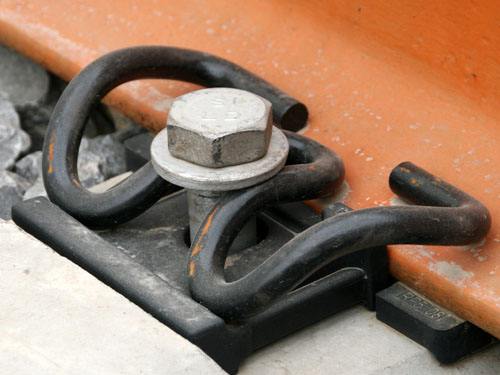
At FONYO, we manufacture railway wheels, railway gearbox, fish plates, fish bolts, elastic rail clips, and rail pads. Send us your drawing, the applicable standard, and the service conditions, and our engineering team will help you confirm the mechanical properties the part actually needs before quotation.