Scan the WeChat code to contact us
Scan the WeChat code to contact us
Feel free to send us a email and we will reply to you as soon as possible.
Creating the future with heart and soul


Railway wheels are one of the most critical components of any train. They must carry heavy loads, resist wear, and withstand millions of rolling cycles over their service life. Choosing the right steel is essential to ensure safety, performance, and durability.
In this article, we explain what steel is used for railway wheels, including the differences between high-carbon and low-alloy steels, the importance of pearlitic microstructure, and the role of heat treatment like rim quenching.
Railway wheels face extreme working conditions:
Because of these challenges, railway wheel steel must provide:
These properties are achieved through careful steel selection and precise heat treatment.
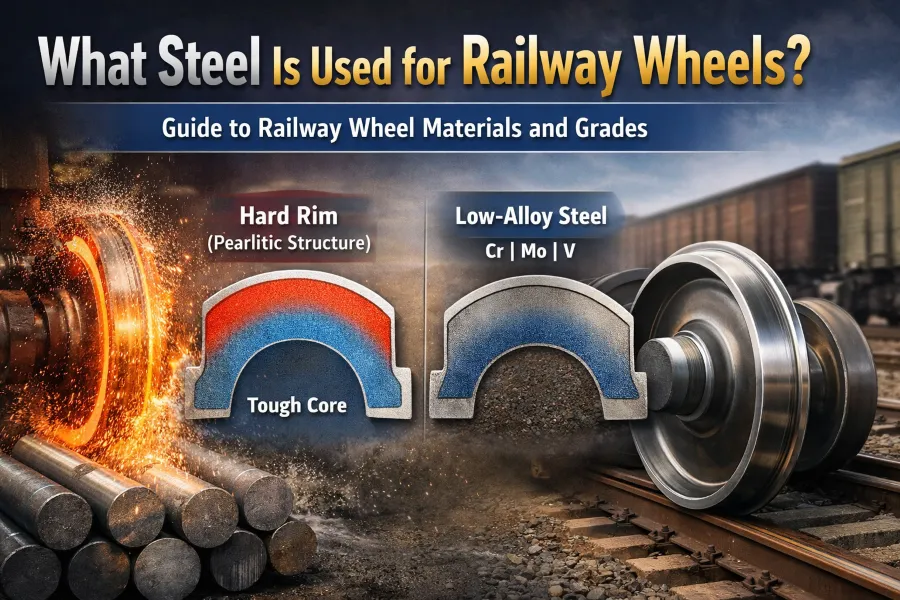
Most railway wheels are made from high-carbon pearlitic steel, sometimes called medium-high carbon steel. This steel provides a balance between hardness and toughness, essential for long-lasting wheels.
Typical composition:
| Element | Content |
| Carbon (C) | 0.55–0.75% |
| Manganese (Mn) | 0.60–0.90% |
| Silicon (Si) | 0.15–0.40% |
Key points:
In short, pearltic railway wheel steel provides an ideal combination of hardness, strength, and toughness, making it widely used for freight, passenger, and regional trains.
For applications requiring extra performance, low-alloy steels are often used:
Common alloying elements:
| Element | Function |
| Chromium (Cr) | Improves wear and heat crack resistance |
| Molybdenum (Mo) | Enhances strength and fatigue resistance |
| Vanadium (V) | Refines grain structure and increases toughness |
| Nickel (Ni) | Improves impact resistance |
Low-alloy steels are designed to resist rolling contact fatigue, thermal cracks, and wear, extending the wheel’s service life even under heavy loads or high-speed conditions.
Railway wheel steels are strictly regulated under international standards. Two widely recognized standards are:
European Standard (EN 13262)
European Standard EN 13262 covers several steel grades—ER6, ER7, ER8, and ER9—each with its own specified chemical composition, mechanical properties, and heat treatment requirements. Which one you actually go with depends on factors like the wheel diameter, braking system, service load, and the rim hardness you need. It’s worth noting that ER7 and ER8 are steel grades, not just hardness levels, so choosing the right wheel is really about matching performance requirements rather than just picking a grade name.
American Standard (AAR M-107 / M-208)
The American Standard AAR M-107 and M-208 covers several steel classes—A, B, C, and D—each with defined chemical composition and mechanical properties. Which class you choose really depends on the service conditions, axle load, and fatigue requirements you’re dealing with.
A key process in making railway wheels is rim quenching, which ensures high hardness at the tread while maintaining a tough core.
Process steps:
Benefits:
Today, most modern railway wheels are rim-quenched for optimal performance and safety.
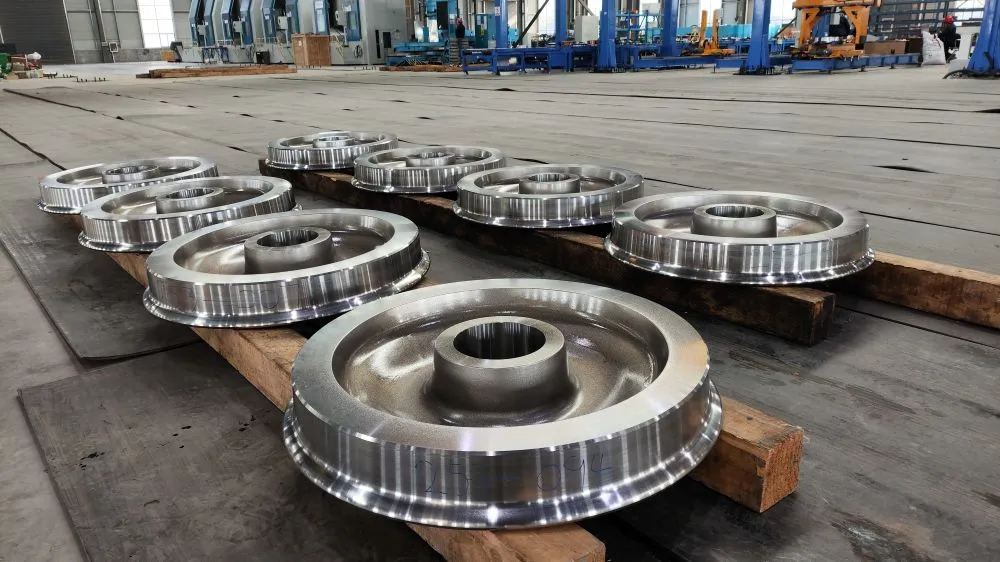
Simply put, the microstructure determines the wheel’s ability to resist wear, fatigue, and impact, making pearlitic steel ideal for railway wheels.
When selecting railway wheel material, engineers consider:
| Factor | Recommendation |
| Service type | Passenger, freight, high-speed, heavy-haul |
| Load & braking | Determines required rim hardness and heat treatment depth |
| Environmental conditions | High temperatures, thermal cycles, corrosion |
| Fatigue life | Steel must resist rolling contact fatigue over millions of cycles |
Tip: Always source wheels from a reputable railway wheel manufacturer that meets EN 13262 or AAR M-107/M-208 standards.
For high-quality railway wheels, you can rely on Luoyang Fonyo Heavy Industries Co., Ltd., a professional railway wheel manufacturer providing wheels that meet international standards and deliver long-term performance and safety.
Contact us today to request a quote or learn more about our railway wheel solutions.