Scan the WeChat code to contact us
Scan the WeChat code to contact us
Feel free to send us a email and we will reply to you as soon as possible.
Creating the future with heart and soul


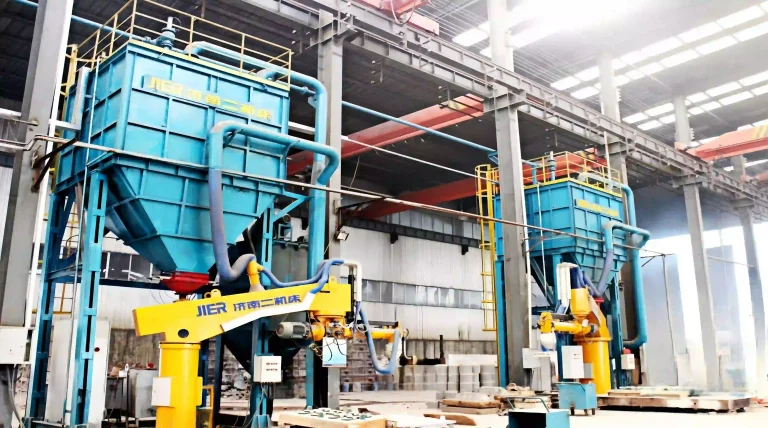
Water glass sand casting, also known as sodium silicate sand casting, is a widely used casting process for producing medium to large steel castings. In this process, water glass (sodium silicate) is used as a binder to bond the sand mold, providing good strength and dimensional stability.
Compared with traditional resin sand processes, water glass sand casting offers a good balance between cost efficiency and casting quality, making it suitable for many industrial applications.
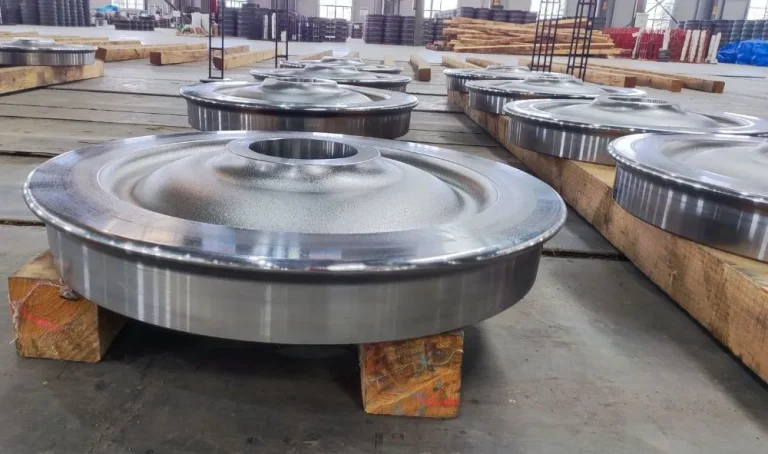
This casting method is commonly used for components that require reliable mechanical properties and relatively complex structures, especially in projects that require custom metal casting service for industrial or railway equipment.
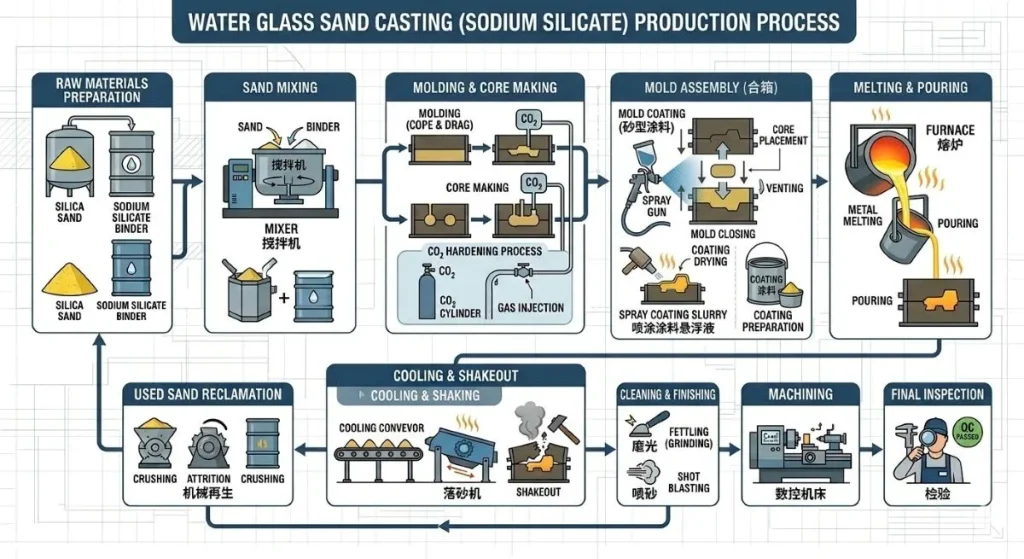
Our foundry operates a dedicated water glass sand casting production line capable of manufacturing a wide range of custom steel castings and providing reliable custom casting service for industrial applications.
The process begins with precise sand mixing, where silica sand is blended with sodium silicate binder. The mixed sand is then used for molding (cope and drag) and core making, both hardened efficiently with CO₂ gas to achieve excellent strength.
After hardening, a refractory coating is applied to the mold and core surfaces to enhance the final casting finish and prevent sand adhesion. The coated molds and cores are then assembled and closed, ready for pouring.
Melting is performed under strict control using advanced furnaces, and the molten metal is poured into the assembled molds. After solidification and cooling, the castings are shaken out to separate them from the sand.
The used sand is directed to a mechanical reclamation unit, where binder residues are removed, allowing the sand to be recycled back into the process — reducing waste and material costs.
Subsequently, castings undergo cleaning (including shot blasting and removal of gates and risers) and precision machining to meet dimensional specifications. Every casting is subject to rigorous final inspection to ensure it meets customer requirements.
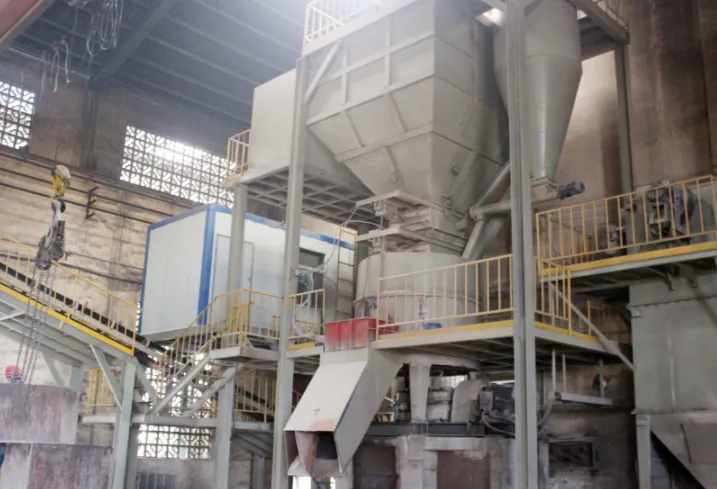
We provide custom metal casting service based on customer drawings or samples. Our engineering team can assist in selecting suitable materials, casting processes, and machining solutions according to the specific application.
Typical materials include carbon steel, alloy steel, and other grades required for industrial and railway applications.
With integrated casting and machining capabilities, we can support customers from prototype development to batch production, providing a reliable custom casting service for demanding industrial components.
As a professional manufacturer of railway components, we, Luoyang Fonyo Heavy Industries Co., Ltd. provide high-quality railway wheels and custom casting products for global railway projects.
If you would like to learn more about our railway products, please visit our product page.