Bizimle iletişime geçmek için WeChat kodunu tarayın
Bizimle iletişime geçmek için WeChat kodunu tarayın
Bize e-posta göndermekten çekinmeyin; size en kısa sürede cevap vereceğiz.
Geleceği kalp ve ruhla yaratmak


Genel Bakış
Modern raylı ulaşım sisteminde, castings are like the steel veins running through the power system, bogies and car body structures. The strictness of their technical standards directly determines the safety margin of high-speed trains traveling at 350 km/saat. From wheel hub bearing seats to traction motor housings, each casting component must withstand tens of millions of load impacts and extreme environmental tests. Their technical requirements are the pinnacle of industrial manufacturing.
BEN. Diversified Evolution of Material Systems
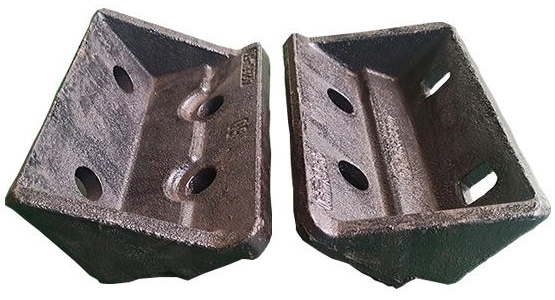
Railway and track vehicle castings have formed a gradient material matrix: in the field of bogie components that bear impact loads, ductile iron QT500-7, with a tensile strength of 540 MPa and an elongation of 10%, is the preferred material for brake brackets, and its graphite spheroidization rate must be strictly controlled above 85% to ensure a fatigue life of 3. For car body connection parts that need to balance lightweight and corrosion resistance, the A356-T6 cast aluminum alloy specified in the TB/T 3409-2015 standart, after T6 heat treatment, has a yield strength of 220 MPa and a density of only one-third that of steel, making it particularly suitable for the manufacturing of equipment compartment brackets for EMUs.
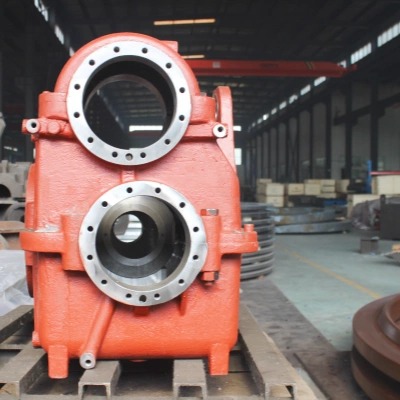
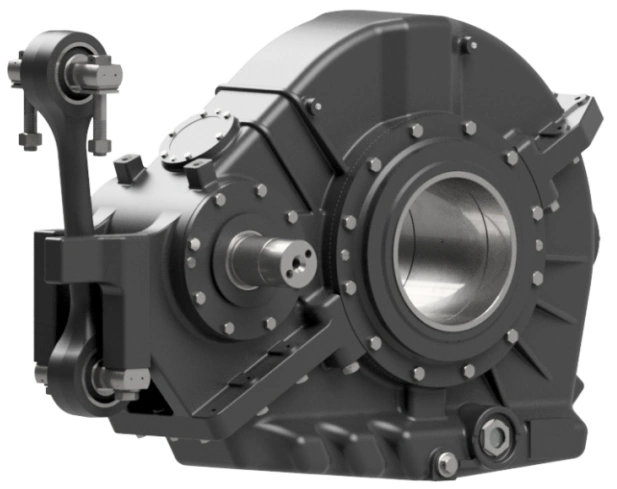
Son yıllarda, vermicular cast iron RuT300 has emerged in the field of gearbox housings. Its thermal conductivity is 40% higher than that of gray cast iron. Its tensile strength exceeds 300 MPa, making it particularly suitable for the thermal stress impact caused by frequent starts and stops. According to the TB/T 2444-1993 technical specification, the pearlite content of such castings must be stable in the range of 30-50% to ensure toughness at -40°C.
II. Extreme Breakthroughs in Structural Design
Modern rail castings adopt technological innovation combining topological optimization and bionic design. Taking the high-speed rail traction motor housing as an example, its internal cooling channels draw inspiration from the fractal structure of human blood vessels. Through computational fluid dynamics (CFD) simulation optimization, the cooling fluid flow rate gradient is controlled within the range of 0.5-2 m/sn, increasing the heat dissipation efficiency by 60%. In terms of vibration-damping design, the bogie side beams adopt a honeycomb sandwich structure combined with damping alloy bushings, which can reduce the vibration transmission rate in the 200 Hz frequency band to below 0.12.
For components subjected to complex stresses, the casting process needs to achieve a “sert ve esnek” characteristic match: the gearbox mounting seat uses gradient material casting technology, with a 3mm thick surface layer of high-chromium cast iron (hardness HRC58-62) and an internal matrix of ductile iron, forming a composite structure combining a hard and wear-resistant surface with a tough carrier.
III. Micron-level Control of Manufacturing Precision
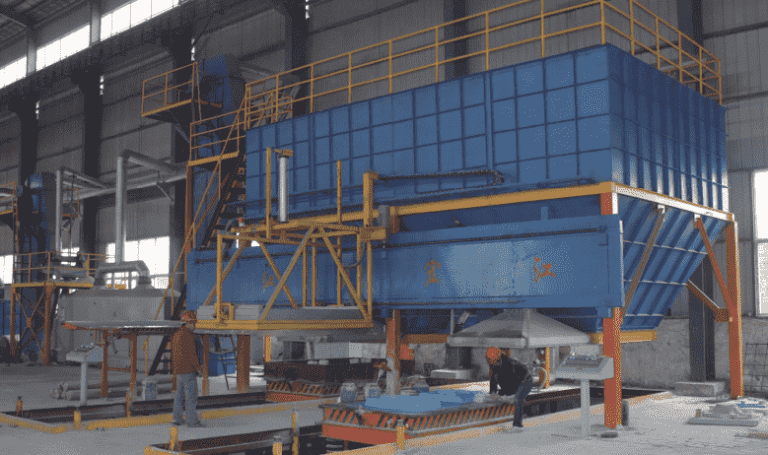
Digital casting technology is reshaping the production paradigm. The use of 3D printed sand molds combined with vacuum differential pressure casting technology can achieve CT9-level dimensional accuracy and Ra≤6.3μm surface roughness for complex flow channel castings. The five-axis linkage machining center is equipped with a laser online measurement system, which can compensate for 0.005mm thermal deformation errors in real-time during the cutting process to ensure that the cylindricality of the bearing mating surface is ≤8μm17.
The quality control system has formed a multi-dimensional detection network: industrial CT can identify Φ0.2mm shrinkage defects, eddy current detectors scan surface cracks with a resolution of 0.01mm, and X-ray stress analyzers can accurately determine the residual stress distribution. A “digital passport” içeren 357 parameters is established for each product, leaving the factory to achieve full life cycle traceability115.
IV. Stringent Verification of Environmental Adaptability
Railway and track vehicle castings must pass a series of extreme working condition tests: in the -50°C low-temperature impact test, the pendulum impact energy value attenuation rate must be ≤ 15%; the salt spray test requires no red rust on the surface after 3000 saat; for the special environment of the Qinghai-Tibet Railway, components must also pass a low-pressure discharge test under simulated conditions at an altitude of 5500 metre, with the surface insulation resistance maintained at ≥ 100 MΩ. The vibration fatigue test standards for railway components far exceed those for conventional industrial parts: key castings of the bogie must withstand 10^9 cycles of random vibration at 20-2000Hz without visible cracks. The latest multi-axis vibration table can simultaneously simulate longitudinal 3g, lateral 2g, and vertical 2.5g composite accelerations, accurately reproducing the time-domain characteristics of wheel-rail impacts.
V. Innovative Practices in Green Manufacturing
The foundry industry is reducing environmental loads through process innovations: the lost foam casting technology has reduced the amount of waste sand by 90%, and the waste heat recovery system can capture 85% of the heat energy from the smelting process. Bio-based binders are beginning to replace traditional furan resins, reducing the formaldehyde emission concentration in the workshop to below 0.08mg/m³. A new aluminum alloy casting production line has reduced the carbon emission equivalent per ton of castings from 2.1t to 1.3t through melt purification technology.
These casting standards, which integrate materials science, mechanical simulation, and precision manufacturing technologies, are driving China’s rail transit equipment toward greater safety and intelligence. When the Fuxing bullet train traverses the snow-capped plateau, the silent castings that bear the strength of steel are the best testimony to China’s manufacturing prowess reaching new technological heights.
Luoyang Fenyo Ağır Sanayi A.Ş., Ltd.. kuruldu 1998, 72.600㎡ alanı kapsıyor, fazlasıyla 300 çalışanlar, 32 teknisyenler, içermek 5 kıdemli mühendisler, 11 yardımcı mühendisler, Ve 16 teknisyenler. Luoyang Mühendislik Teknoloji Merkezi olarak derecelendirildi, Luoyang Teknoloji R&D Merkezi, ve birçok kez Ulusal Yüksek Teknoloji Şirketi.
Üretim kapasitemiz 30,000 ton/yıl. Şu anda, esas olarak çelik döküm üretiyoruz, dökme demir (gri demir, sünek demir, vesaire.), bitmiş ürün ve bileşen montajının işlenmesi. ürünler Rusya'ya ihraç edildi, Amerika Birleşik Devletleri, Almanya, Arjantin, Japonya, Fransa, Güney Afrika,İtalya ve diğer ülkeler.
Herhangi bir ürünle ilgileniyorsunuz,lütfen bizimle iletişime geçmekten çekinmeyin.
Temas etmek:Cathy
E-posta:satış@railwaypart.com
Mobil:008615515321683