Bizimle iletişime geçmek için WeChat kodunu tarayın
Bizimle iletişime geçmek için WeChat kodunu tarayın
Bize e-posta göndermekten çekinmeyin; size en kısa sürede cevap vereceğiz.
Geleceği kalp ve ruhla yaratmak


Whenever a train passes over the tracks, the rhythmic “click-clack” sound always evokes memories of the journey. Rail joints produce this distinctive sound – they are not only components of the railway but also key technical nodes that carry safety and efficiency. These simple connection points actually embody profound engineering wisdom and functional design.
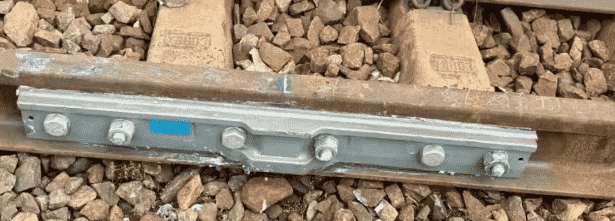
When we look closely at the joints of the railway tracks, we will find that there lies a sophisticated engineering logic. The rail joints are usually composed of fishplates (also known as splice plates), bolts, spring washers and other components. The most ingenious part is that it achieves a “flexible balance in rigid connection”. Unlike seamless tracks, the joints allow the rails to have a limited displacement when the temperature changes, just like leaving a “breathing space” for the rails, effectively avoiding the deformation of the track caused by thermal expansion and contraction. This is particularly important in areas with large temperature differences – the rails may be tens of millimeters longer in the scorching summer sun than in the cold winter night. Without this adjustable rail gap, the track would face huge internal stress.

1.1 The fishplate closely fits the web of the rail, and a reliable friction force is formed through the preload of high-strength bolts, enabling the effective transmission of longitudinal loads and lateral forces. Bu sırada, an appropriate rail joint gap (usually controlled between 6 Ve 20 milimetre) is maintained in the joint area, which not only allows for rail expansion and contraction but also avoids the risk of fatigue fracture that might result from a completely rigid connection.
1.2 It is worth mentioning that modern demiryolu bağlantıları also bear the important mission of electrical insulation. In automatic block sections or electrified lines, insulated joints can block the track circuit, ensuring the normal operation of the signal system. Such joints use insulating fishplates and sleeves made of nylon or composite materials to achieve mechanical connection while completing circuit isolation, demonstrating the design wisdom of mechanical and electrical integration.
2.1 The first is to coexist harmoniously with temperature stress.
Rails will expand and contract significantly with temperature changes. Joints allow for reserved rail gaps, enabling the rails to “breathe freely” and preventing stress accumulation that could lead to rail buckling or breakage, greatly enhancing the reliability of the line.
2.2 ikinci olarak, there are the load transfer and shock absorption functions.
When the train wheels pass over the joint, the impact force is dispersed to the adjacent rail sections through the fishplate, reducing local stress concentration. Modern joint designs often incorporate elastic pads, which further absorb vibrations and reduce noise, providing passengers with a more comfortable ride.
2.3 The third consideration is the practicality of inspection and maintenance.
Compared with seamless tracks, jointed tracks are more convenient for flaw detection and component replacement. If a section of rail or fishplate is damaged, maintenance personnel only need to loosen the bolts to replace it. This modular design saves time and effort and is economically efficient.
2.4 The last is the good adaptability to special sections.
At key locations such as the end points of bridges, turnout areas, and curve transition sections, the joints can provide the necessary displacement tolerance, adjust the uneven displacement caused by structural settlement or deformation, and maintain the stability of the track geometry.
Of course, demiryolu bağlantıları do have some inherent limitations. The impact from the rail gap can accelerate the wear of the rails and vehicle components, requiring more frequent maintenance; the vibration and noise generated when trains pass at high speed can have a certain impact on the surrounding environment. Bu nedenle, seamless track technology is widely used in high-speed railways. Fakat, rail joints have not been phased out of history. They still play an irreplaceable role in conventional railways, stations, katılımlar, and special sections.
3.1 Improved components such as high-strength alloy fishplates, anti-loosening bolts, and self-locking washers have significantly enhanced the durability and reliability of the joints. The emergence of bonded insulated joints is a major innovation. By filling with epoxy resin, it achieves a smooth transition, effectively reducing impact forces while maintaining the joint’s functionality. It is widely used in high-speed railway turnout areas and insulated sections.
3.2 Ağır yük demiryolları alanında, demiryolu bağlantıları continue to play a crucial role. Örneğin, in coal transportation corridors such as the Daqin Railway and Shuohuang Railway, the rail joints have successfully transmitted huge tractive and braking forces by optimizing the curved surface of the fishplates and the arrangement of bolts, demonstrating outstanding resistance to peeling and shearing.
3.3 When we listen to that rhythmic “click” sound again, perhaps we will have a new understanding: it is not only the sound of steel colliding, but also the pulse of the railway system’s steady operation. Although the rail joints may not be as advanced and silent as seamless tracks, their advantages in reliability, maintainability, and economy make them a “flexible bridge” demiryolu sisteminde. Though small, they embody the wisdom of railway engineers and are a vivid demonstration of mechanical adaptation to natural laws.
These connection points are like punctuation marks on railway lines, both separating and connecting, finding the best balance between rigidity and flexibility. They silently safeguard every safe journey of the train, telling the essence of railway engineering in their own unique way – achieving the most complex functions in the simplest design.
Luoyang Fonyo Ağır Sanayi A.Ş., Ltd.,1998 yılında kurulan demiryolu döküm parçaları üreticisidir. Fabrikamız 72.600㎡ alanı kaplamaktadır., fazlasıyla 300 çalışanlar, 32 teknisyenler, içermek 5 kıdemli mühendisler, 11 yardımcı mühendisler, Ve 16 teknisyenler.Üretim kapasitemiz 30,000 ton/yıl. Şu anda, ağırlıklı olarak döküm üretiyoruz, işleme, ve lokomotif için montaj, vagon, yüksek hızlı trenler, madencilik ekipmanları,rüzgar enerjisi,vesaire.
CRRC'nin demiryolu parça tedariği biziz(fazlası dahil 20 CRRC'nin şube şirketleri ve bağlı ortaklıkları),Gemac Mühendislik Makina,Sanygroup, Citic Ağır Sanayi,vesaire. Ürünlerimiz Rusya'ya ihraç edildi, Amerika Birleşik Devletleri, Almanya, Arjantin, Japonya, Fransa, Güney Afrika,İtalya ve dünyanın her yerindeki diğer ülkeler.
İletişim Bilgileri:
E-posta:satış@railwaypart.com
Mobil:008615515321683