Bizimle iletişime geçmek için WeChat kodunu tarayın
Bizimle iletişime geçmek için WeChat kodunu tarayın
Bize e-posta göndermekten çekinmeyin; size en kısa sürede cevap vereceğiz.
Geleceği kalp ve ruhla yaratmak


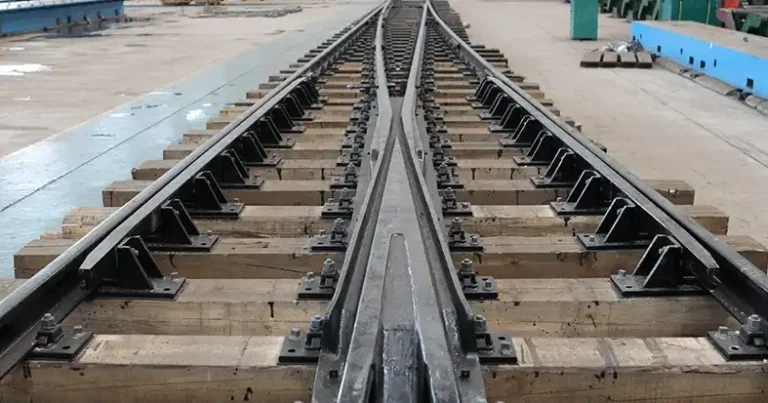
Demiryolu taşımacılığının emniyeti ve güvenilirliği büyük ölçüde temel bileşenlerinin performansına bağlıdır.. Bu bileşenlerin çoğu, kuplörler gibi, destek kirişleri, yan çerçeveler, ve tekerlekler, dökümler. Choosing the right materials for demiryolu dökümleri is the first step to ensure that these parts can operate stably under long-term and complex working conditions. The selection of materials is not a single-factor consideration but a systematic decision-making process.
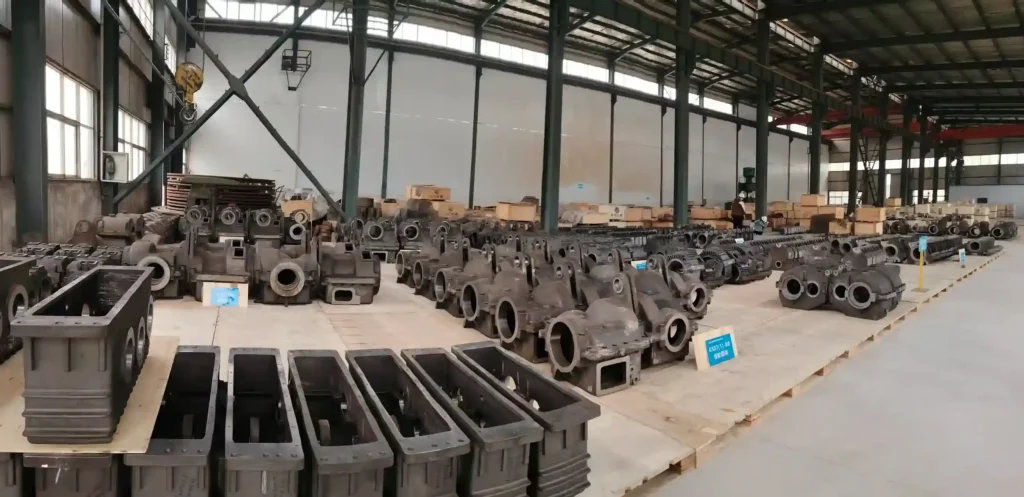
Before choosing materials, it is essential to clearly define the loads and environments that the components will be exposed to during use. This is the foundation for all subsequent decisions.
1.1 Mechanical load characteristics: Analyze whether the railway castings mainly bears static loads, dynamic impacts, or cyclic alternating loads. Örneğin, couplers need to withstand huge tensile forces and impacts during train connection and operation, while bolster beams and side frames are subject to complex alternating stresses for a long time, with extremely high requirements for fatigue strength.
1.2 Environmental and wear conditions: Is the component exposed to rain, rüzgâr, nem, or corrosive media such as deicing salts? Does it have sliding or rolling friction with other components? Örneğin, freight car wheels not only bear huge loads but also the friction between the tread and the rail, and possible braking heat loads are key factors in material selection.
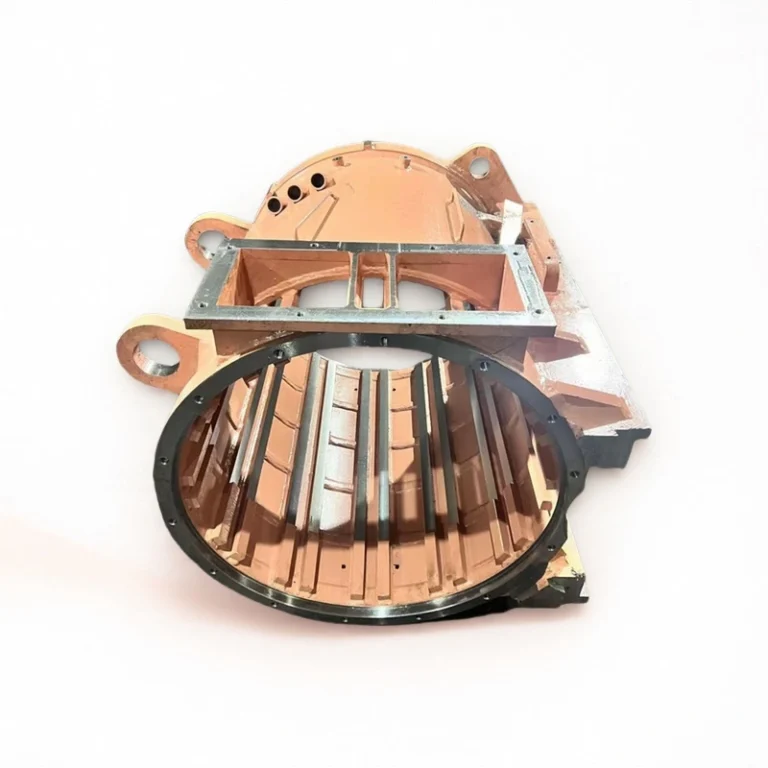
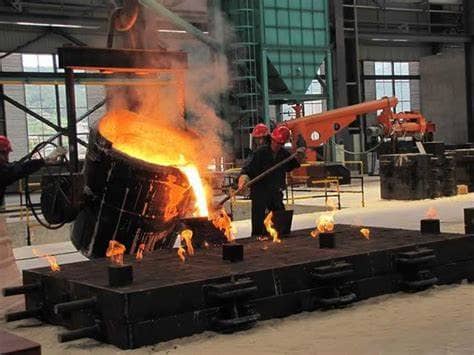
1.3 Geometric complexity and size: Many railway castings components have complex structures, and casting is an ideal process for forming such parts. The casting properties of the material, such as fluidity and shrinkage rate, will directly affect whether a complete and defect-free qualified product can be cast. Large components (such as frames) also require materials with good uniformity.
After clarifying the usage requirements, they need to be translated into specific material performance indicators and comprehensively weighed.
2.1 Strength and toughness: Strength determines how much force a component of railway castings can withstand without permanent deformation or fracture. Toughness indicates the material’s ability to resist brittle fracture when there are cracks or notches. Kritik güvenlik bileşenleri için, both high strength and high toughness must be present, especially in low-temperature environments, to ensure the material has sufficient impact toughness.
2.2 Yorulma mukavemeti: This is one of the most core indicators for railway castings. Due to track irregularities and vehicle vibrations, the stress on components is cyclically changing. The material’s ability to resist this cyclic stress damage directly determines its service life. Choosing materials with high fatigue strength can effectively extend the maintenance cycle and service life of components.
2.3 Aşınma direnci: For components with relative motion, such as wheels and bushings, the wear resistance of the material is crucial. It reduces size changes and performance degradation due to wear, lowering maintenance frequency and costs. Genel olarak, increasing surface hardness is an effective way to enhance wear resistance.
2.4 Cast ability and weld ability: Materials with good cast ability are easier to obtain sound castings, reducing defects such as shrinkage cavities, gözeneklilik, and hot cracking. Aynı zamanda, considering that some components may need welding repairs during manufacturing or maintenance, malzemenin kaynak kabiliyeti de değerlendirilmelidir. Kaynak kabiliyeti zayıf olan malzemeler kaynak sonrası çatlamaya eğilimlidir, yapısal bütünlüğü etkileyen.
Yukarıdaki performans gereksinimlerine dayanarak, demiryolu endüstrisi pratikte birçok olgun döküm malzemesi sistemi oluşturmuştur.
3.1 Dökme çelik:
3.1.1 B sınıfı (ZG230-450) dökme çelik: İyi bir güce ve mükemmel tokluğa sahiptir, ve kaynak yeteneği. Genellikle büyük darbe yüklerini taşımayan parçaların üretiminde kullanılır..
3.1.2 C sınıfı (ZG25MnCrNiMo) dökme çelik: Bu yüksek mukavemetli, düşük alaşımlı dökme çelik. Manganez gibi elementler ekleyerek, krom, nikel, ve molibden, onun gücü, dayanıklılık, ve yorulma performansı önemli ölçüde iyileştirildi. Şu anda yük vagonu destek kirişleri ve yan çerçeveler gibi temel yük taşıyan bileşenlerin üretiminde tercih edilen malzemedir..
3.1.3 E sınıfı (ZG18MnNiCrMo) dökme çelik: Daha yüksek mukavemet ve tokluğa sahiptir, especially excellent low-temperature impact toughness, and is used to manufacture more critical components.
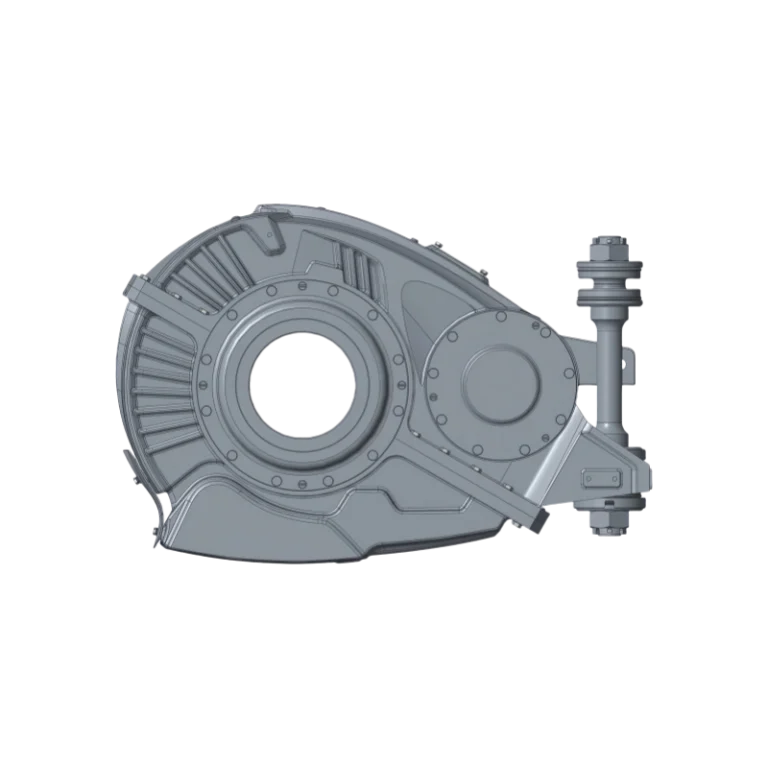
3.2 Dökme demir: Sfero demir (QT400-18, QT500-7, vesaire.): Its mechanical properties are close to those of cast steel, while retaining the good cast ability, wear resistance and shock absorption of cast iron. It is often used to manufacture complex-shaped components of locomotive and vehicle axles, vites kutuları, brake discs and hubs that require shock absorption and wear resistance. Special attention should be paid to its toughness index when choosing it.
3.3 Compacted graphite iron (RuT300, RuT400): Its performance lies between gray cast iron and ductile iron, with excellent thermal conductivity and resistance to thermal fatigue. It is used in the manufacture of engine blocks and brake calipers that are subject to both mechanical and thermal loads.
3.4 Special alloys and new materials:
For components with special requirements, such as high-temperature resistance and extreme wear resistance, special alloys such as high manganese steel and weathering steel are considered. With technological progress, new materials with improved performance through micro-alloying and heat treatment processes are constantly being developed and applied.
Material selection in actual operation is a rigorous, systematic engineering process.
4.1 Failure mode analysis: Study the common failure forms of similar components or under similar working conditions (such as fatigue fracture, aşırı aşınma, korozyon, vesaire.) to determine the performance that needs to be focused on.
4.2 Compliance with standards and regulations: Domestic and international railway industries (such as AAR, İÇİNDE, and TB standards) have clear technical requirements for the materials of various components. Seçerken, the relevant standards must be met first.
4.3 Process performance and economic evaluation: Under the premise of meeting performance requirements, consider the cost of materials, casting difficulty, qualification rate, and the complexity of subsequent heat treatment to pursue the best comprehensive economic benefits.
4.4 Prototype testing and verification: For newly selected materials or new designs, strict bench tests and line operation evaluations must be conducted to comprehensively verify their performance under actual working conditions and ensure absolute reliability.
Selecting the right materials for railway castings is a comprehensive decision-making process that starts from the functional requirements of components and ends with long-term operational reliability. It requires designers and engineers to have a deep understanding of the service conditions of components, accurately grasp the core properties of materials, and make scientific balances among strength, dayanıklılık, yorgunluk ömrü, process ability and cost. Only in this way can a solid material foundation be laid for the safe, efficient and long-lasting operation of railway transportation.
Luoyang Fonyo Ağır Sanayi A.Ş., Ltd., 1998 yılında kurulan demiryolu döküm parçaları üreticisidir. Fabrikamız 72.600㎡ alanı kaplamaktadır, fazlasıyla 300 çalışanlar, 32 teknisyenler, içermek 5 kıdemli mühendisler, 11 yardımcı mühendisler, Ve 16 teknisyenler. Üretim kapasitemiz 30,000 ton/yıl. Şu anda, ağırlıklı olarak döküm üretiyoruz, işleme, ve lokomotif için montaj, vagon, yüksek hızlı trenler, madencilik ekipmanları, rüzgar enerjisi, vesaire.
CRRC'nin demiryolu parça tedariği biziz(fazlası dahil 20 CRRC'nin şube şirketleri ve bağlı ortaklıkları), Gemac Mühendislik Makina, Sanygroup, Citic Ağır Sanayi, vesaire. Ürünlerimiz Rusya'ya ihraç edildi, Amerika Birleşik Devletleri, Almanya, Arjantin, Japonya, Fransa, Güney Afrika, İtalya ve dünyanın her yerindeki diğer ülkeler.