Отсканируйте код WeChat, чтобы связаться с нами.
Отсканируйте код WeChat, чтобы связаться с нами.
Не стесняйтесь, отправьте нам электронное письмо, и мы ответим вам как можно скорее.
Создаем будущее сердцем и душой


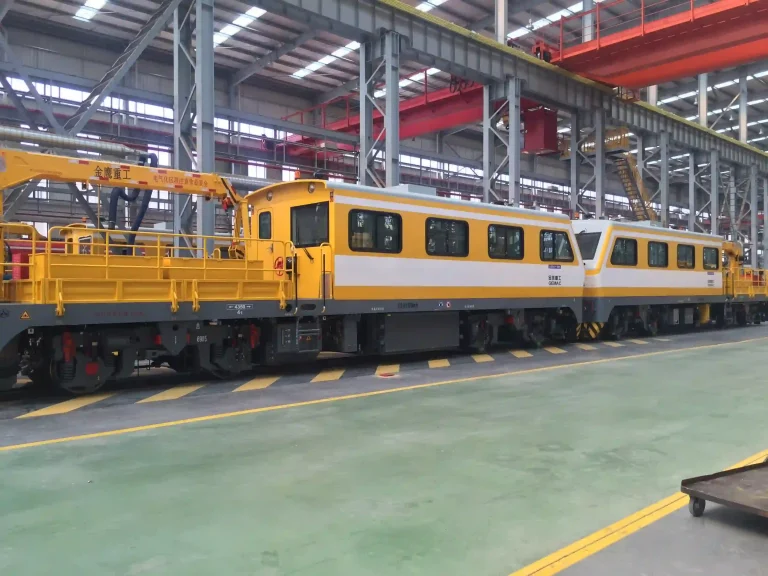
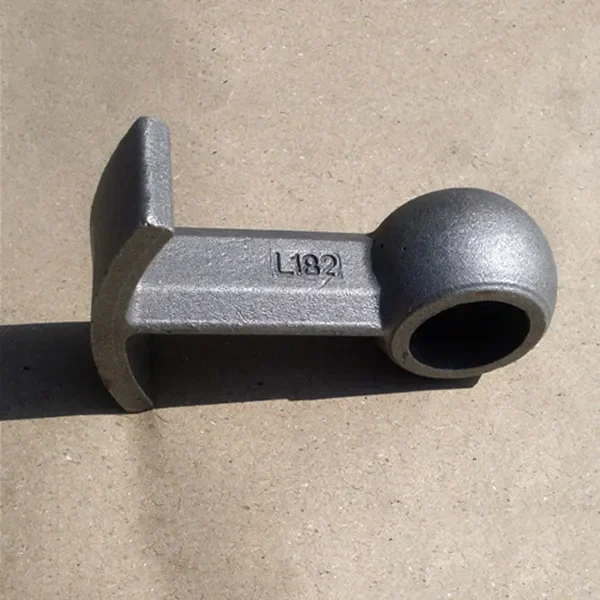
In rail vehicles such as trains, метро, and freight trains, the rear draft stop is a seemingly ordinary but extremely important casting component. It is installed at the rear of the bogie (тот “chassis” structure of the vehicle) and closely cooperates with the coupler buffer device, undertaking multiple functions to ensure the safe operation of the train. For those new to the casting industry, it can be simply understood as a “transfer station connecting the car body and the bogie”.

Core functions:
1. Transmitting Longitudinal Forces: The “Force Transporter” of the Train
Во время работы, rail vehicles frequently experience traction (acceleration) and braking (deceleration), generating significant longitudinal forces (forces in the front-to-back direction) between the car body and the bogie.
During traction: The locomotive pulls the carriages, and the coupler transmits the traction force to the rear draft stop, which then transfers it to the bogie and ultimately to the wheels, propelling the train forward.
During braking: The reverse force generated by the brakes is also distributed through the rear draft stop to the bogie and the car body, preventing excessive local stress.
Key Role: The rear draft stop acts as a “force transfer station”, ensuring a stable and uniform force transmission path and preventing deformation or damage to the car body structure due to uneven force distribution.
2. Absorbing Shock: The “Shock Absorber Partner” of the Train
When starting, stopping, or passing over track joints, trains experience severe shocks. The rear draft stop, in conjunction with the buffer (such as rubber pads, springs, or hydraulic devices), jointly absorbs these shock energies.
Principle: When the coupler is impacted, the buffer is compressed, and the rear draft stop, through its rigid structure, supports the buffer and gradually releases the shock energy to the bogie and the car body.
Effect: Reduces the jolts felt by passengers and protects the car body, cargo (in freight trains), and track equipment from high-frequency shock damage.
3. Positioning and Fixation: The “Precision Navigator” of the Coupler
The coupler is the core component connecting carriages, and its position must be precisely aligned; otherwise, it may lead to uncoupling or collisions.
Positioning Function: the rear draft stop is fixed to the car body or bogie through bolt holes and contact surfaces, ensuring that the coupler remains in the designed position and preventing displacement due to vibration during operation.
Stability Assurance: The cast structure of the rear draft stop has high rigidity and dimensional accuracy, maintaining the stable alignment of the coupler device over the long term.
4. Bearing Complex Loads: The “All-Rounder” Under Multi-Directional Forces
In addition to longitudinal forces, the rear seat also needs to bear complex loads in the lateral (left-right) and vertical (up-down) directions:
Lateral Forces: During turns, centrifugal force is transmitted through the rear seat, который, with its reinforcing ribs and casting structure, resists lateral deformation.
Vertical Forces: The weight of the carriages (such as the cargo weight in freight trains) is transferred from the car body to the bogie, and the rear seat needs to assist in sharing part of the load.
Casting Advantage: Through an integrated casting design, the rear draft stop can evenly distribute multi-directional loads, avoiding the risk of fracture due to stress concentration.
5. Adapting to Harsh Environments: The “Steel Guardian”
The rear draft stop is exposed to harsh conditions such as moisture, вибрация, and temperature fluctuations for long periods. Its casting materials and processes endow it with special properties:
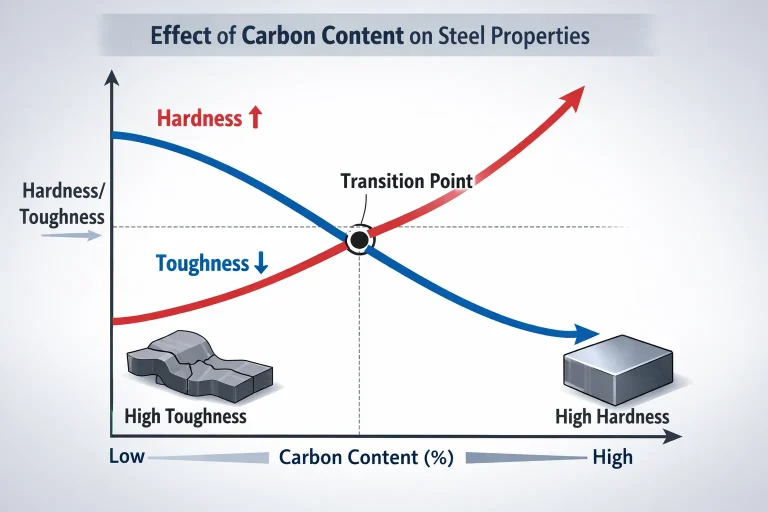
Fatigue Resistance: Made of ductile iron or cast steel, it can withstand the high-frequency alternating loads during decades of train operation.
Corrosion Resistance: Some alloy castings undergo surface treatments (such as anti-rust coating) to extend their service life in rain, snow, and salt spray environments.
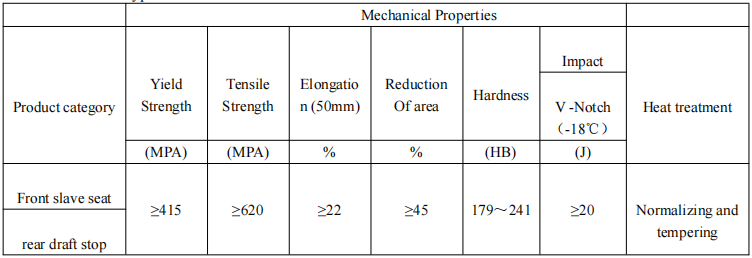
test report
Although the rear draft stop is unremarkable, it is an “невидимый страж” for the safe operation of rail vehicles. For casting industry practitioners, its design challenges lie in:
Structural Optimization: Achieving complex geometries (such as reinforcing ribs and irregular installation surfaces) through casting processes while balancing lightweight and high strength.
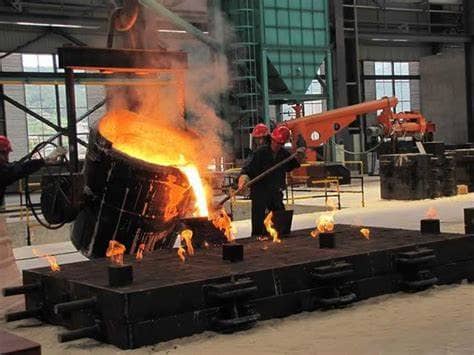
Defect Control: Avoiding defects such as porosity and shrinkage during casting, as these may cause cracks under long-term loading.