סרוק את קוד WeChat כדי ליצור איתנו קשר
סרוק את קוד WeChat כדי ליצור איתנו קשר
אתם מוזמנים לשלוח לנו מייל ואנו נענה לכם בהקדם האפשרי.
יצירת העתיד בלב ובנשמה


כאשר מהנדסים מתכננים או מתחזקים מסילת רכבת, תשומת הלב מתמקדת לעתים קרובות במסילות, ישנים, אטבי הידוק, ורכיבי הצבעה. אוּלָם, one small component has a significant impact on track performance throughout its service life—the rail pad.
Although rail pads are relatively inexpensive compared with other fastening components, the material used can directly affect vibration control, חלוקת עומסים, noise reduction, תדירות תחזוקה, and even the lifespan of the rail itself.
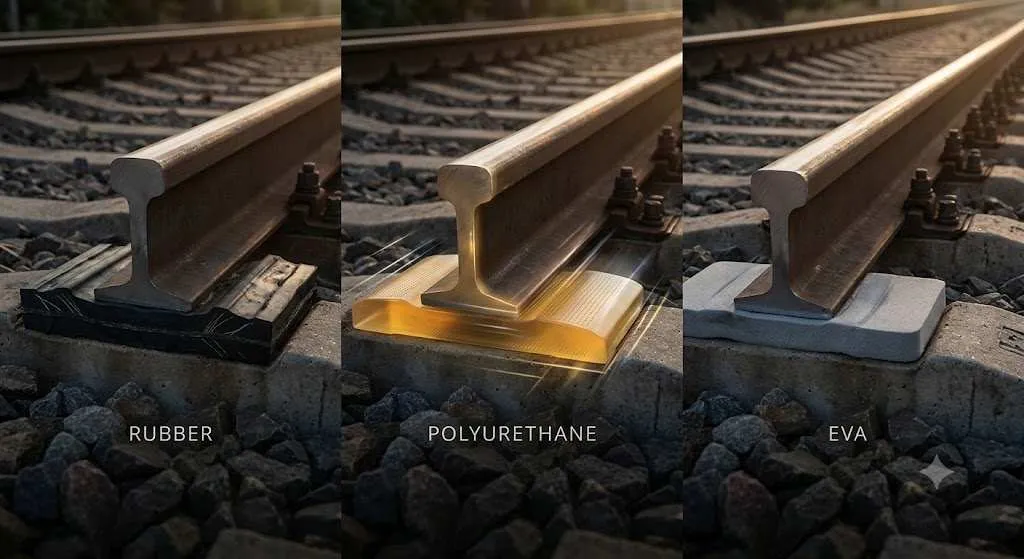
הַיוֹם, the three most common rail pad materials are rubber, EVA (Ethylene Vinyl Acetate), and polyurethane (PU). Each material has distinct mechanical properties and is suitable for different operating conditions. אין אוניברסלי “טוֹב בִּיוֹתֵר” חוֹמֶר. הבחירה הנכונה תלויה בעומס הסרן, מהירות הרכבת, אַקלִים, מערכת הידוק, ואסטרטגיית תחזוקה.
במדריך זה, we’ll compare the three most widely used rail pad materials and explain where each performs best.
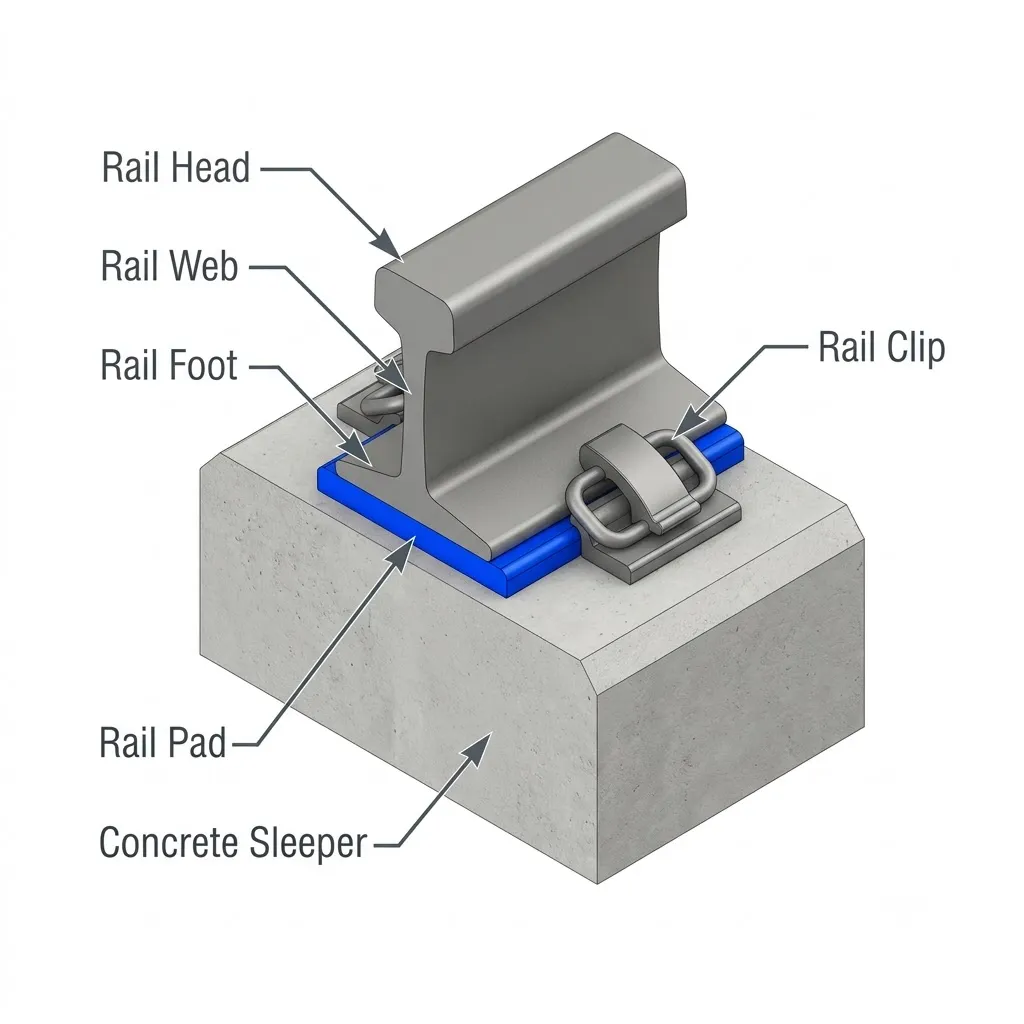
A rail pad is an elastic layer installed between the rail foot and the sleeper or baseplate. Although small in size, it performs several critical functions within the railway fastening system.
Its primary role is to absorb impact loads generated by passing trains and distribute wheel loads more evenly to the supporting structure. במקביל, the pad reduces vibration and rolling noise, protects the rail and sleeper from direct contact, and provides electrical insulation where required.
Because the rail pad continuously experiences compression and recovery under dynamic loading, its material properties largely determine how well it performs over years of service.
Two rail pads may look nearly identical, yet their long-term performance can be completely different.
The material influences several key engineering characteristics, לְרַבּוֹת:
A rail pad that loses elasticity too quickly can increase impact loads on the rail, accelerate wear of fastening components, and require more frequent replacement. מסיבה זו, material selection should be considered during the design stage rather than after installation.
Natural rubber and synthetic rubber have been used in railway fastening systems for decades. Their proven reliability and relatively low manufacturing cost make them one of the most widely used rail pad materials worldwide.
Rubber provides good elasticity and shock absorption under normal operating conditions. It performs well in conventional freight railways, ציפויים תעשייתיים, and many mixed-traffic railway networks.
יתרונות
מגבלות
Rubber gradually ages when exposed to ultraviolet radiation, ozone, oil contamination, and high temperatures. לאורך זמן, דפורמציה קבועה (compression set) increases, reducing its ability to absorb impacts effectively.
יישומים אופייניים
Rubber rail pads are commonly used in:
For projects with moderate axle loads and routine maintenance schedules, rubber remains an economical solution.
EVA (Ethylene Vinyl Acetate) has become increasingly popular in modern railway infrastructure because it combines excellent elasticity with improved long-term dimensional stability.
Compared with traditional rubber, EVA generally exhibits lower compression set, meaning it recovers its original shape more effectively after repeated loading cycles.
This property helps maintain consistent support stiffness throughout its service life.
יתרונות
Because of these characteristics, EVA pads can help maintain more stable track geometry over extended operating periods.
מגבלות
Although EVA performs well under dynamic loading, its wear resistance is generally lower than polyurethane in extremely heavy-duty environments.
יישומים אופייניים
EVA rail pads are frequently used in:
Where vibration reduction and consistent elastic performance are priorities, EVA has become a preferred option.
Polyurethane represents one of the highest-performance materials currently used for rail pads.
Instead of focusing only on elasticity, PU combines high strength with exceptional wear resistance, allowing it to withstand severe loading conditions over long service periods.
Its outstanding resistance to oil, כימיקלים, abrasion, and weathering makes it particularly suitable for demanding industrial environments.
יתרונות
מגבלות
The main disadvantage of polyurethane is its higher manufacturing cost. In applications where loading conditions are relatively mild, the additional investment may not provide proportional economic benefits.
יישומים אופייניים
Polyurethane rail pads are commonly selected for:
For harsh operating environments where maintenance access is difficult, PU often delivers the lowest life-cycle cost despite its higher initial price.
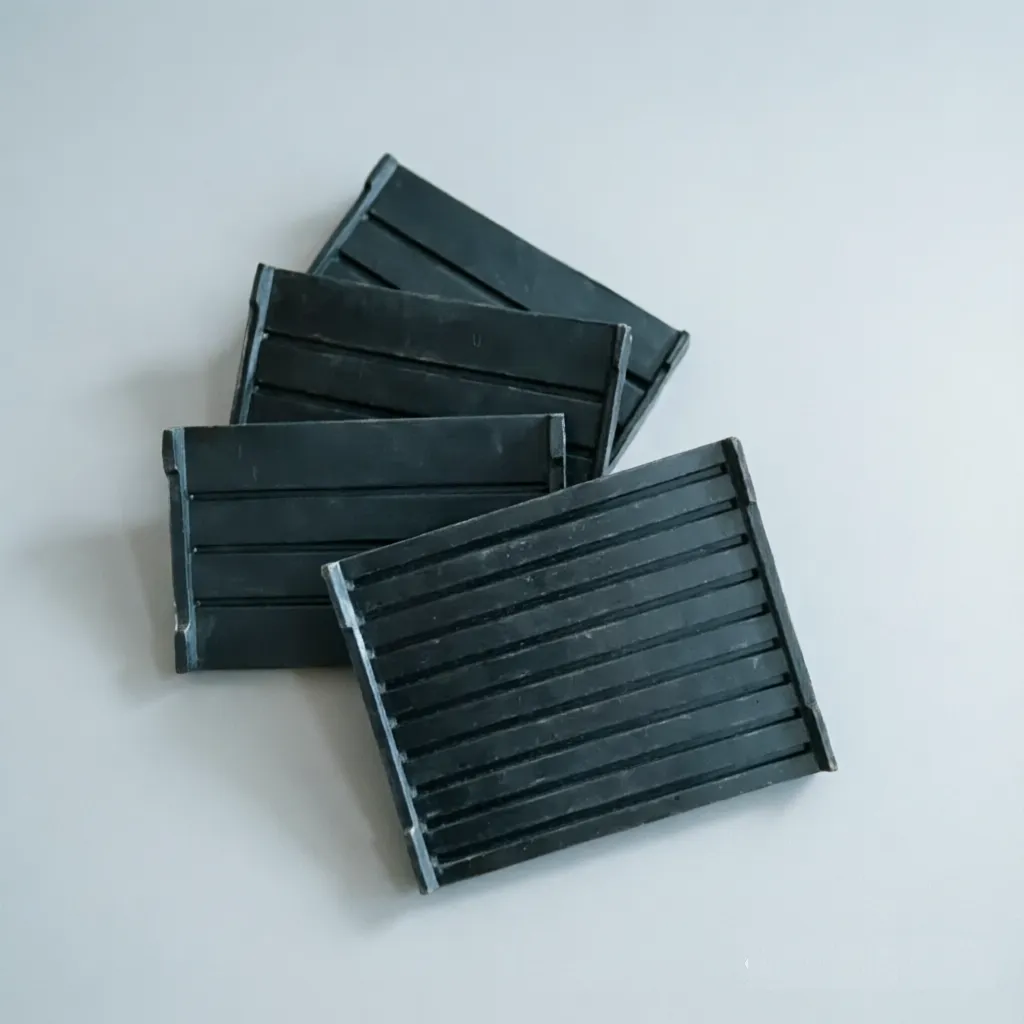
The following comparison summarizes the typical characteristics of the three materials.
| נֶכֶס | גוּמִי | EVA | Polyurethane |
| גְמִישׁוּת | טוֹב | מְעוּלֶה | טוֹב |
| התנגדות ללבוש | טוֹב | טוֹב | מְעוּלֶה |
| Compression Set | בֵּינוֹנִי | נָמוּך | Very Low |
| Vibration Reduction | טוֹב | מְעוּלֶה | טוֹב |
| עמידות בפני מזג אוויר | בֵּינוֹנִי | טוֹב | מְעוּלֶה |
| Oil Resistance | Fair | טוֹב | מְעוּלֶה |
| התנגדות לעייפות | טוֹב | מְעוּלֶה | מְעוּלֶה |
| Electrical Insulation | טוֹב | מְעוּלֶה | טוֹב |
| Relative Cost | נָמוּך | בֵּינוֹנִי | גָבוֹהַ |
| חיי שירות אופייניים | בֵּינוֹנִי | אָרוֹך | Longest |
It is important to remember that actual performance also depends on material formulation, קַשִׁיוּת, manufacturing quality, ותנאי הפעלה. Two EVA pads produced by different manufacturers may not perform identically.
Instead of asking which material is best overall, engineers usually ask which material is best for a particular railway.
| יישום רכבת | Recommended Material |
| Conventional Freight Railway | Rubber or EVA |
| Heavy-Haul Railway | Polyurethane |
| מטרו מערכות | EVA |
| High-Speed Railway | EVA |
| Mining Railway | Polyurethane |
| Port Railway | Polyurethane |
| Industrial Railway | גוּמִי |
| Turnouts and Crossings | Polyurethane |
| Noise-Sensitive Urban Areas | EVA |
Selecting the appropriate material requires balancing performance, maintenance expectations, and project budget rather than simply choosing the strongest material available.
During discussions with railway customers, several misconceptions appear repeatedly.
The first is assuming that harder materials always perform better. במציאות, excessive stiffness can increase impact loads transmitted to rails and sleepers, reducing the vibration isolation that rail pads are designed to provide.
Another common mistake is evaluating only the purchase price. A lower-cost pad that requires replacement twice as often may ultimately increase maintenance costs and traffic interruptions.
Environmental conditions are also frequently overlooked. Oil contamination, extreme temperatures, עומסי סרן כבדים, and high-frequency train operations can significantly influence the durability of different materials.
לְבָסוֹף, not every rail fastening system is designed around the same pad geometry or stiffness. Even high-quality materials may perform poorly if they are not matched to the fastening design.
Before selecting a rail pad, engineers typically evaluate several operating factors.
Consider the maximum axle load and traffic volume expected on the line. Heavy-haul freight routes place far greater demands on pad durability than urban passenger systems.
Operating speed also affects material selection. High-speed railways require consistent elastic performance to maintain track geometry and ride comfort over long periods.
Climate is another important consideration. Regions with severe winters, intense sunlight, or frequent exposure to oil and chemicals may require materials with enhanced environmental resistance.
לְבָסוֹף, consider maintenance strategy. If replacing components is costly or requires extended track possession, selecting a longer-lasting material may reduce total life-cycle costs even if the initial purchase price is higher.
Not necessarily. EVA generally offers better elastic recovery and lower compression set, making it well suited to passenger and metro systems. Rubber remains an economical and reliable option for many conventional railway applications.
In demanding environments such as mining railways, קווי משא כבדים, ומערכות רכבת תעשייתיות, polyurethane often provides the longest service life due to its superior wear and fatigue resistance.
EVA typically offers excellent vibration damping and is widely used in metro systems where passenger comfort and noise reduction are important.
Only if the dimensions, stiffness, and design specifications are compatible. Rail pads should always match the requirements of the fastening system manufacturer.
לֹא. Although rail pads require little routine attention, they should be inspected during scheduled track maintenance for signs of cracking, excessive deformation, לִלבּוֹשׁ, or loss of elasticity.
There is no single rail pad material that outperforms all others in every railway application.
Rubber remains a dependable and cost-effective choice for conventional railways. EVA provides excellent resilience and vibration control, making it ideal for passenger and metro systems. Polyurethane delivers exceptional durability for heavy-duty environments where long service life is the highest priority.
The most effective solution is selecting a material that matches the operating conditions, מערכת הידוק, and maintenance strategy of the railway.
בְּ Luoyang Fonyo Heavy Industries, we manufacture railway fastening components including רפידות מסילה, תפסי מסילה, ברגי דגים, and other custom railway track accessories. Whether your project requires rubber, EVA, or polyurethane rail pads, our engineering team can recommend suitable materials and dimensions to meet different railway standards and operating conditions.