סרוק את קוד WeChat כדי ליצור איתנו קשר
סרוק את קוד WeChat כדי ליצור איתנו קשר
אתם מוזמנים לשלוח לנו מייל ואנו נענה לכם בהקדם האפשרי.
יצירת העתיד בלב ובנשמה


עומד על רציף צופה ברכבת שחולפת על פניה, אתה כנראה לא שם לב הרבה לגלגלים שלו. הם עשויים להיראות פשוטים, אפילו רגילים. אבל האם ידעת? These railway wheels are actually among the most “stressed” components in the entire rail system. כל יום, they silently bear the weight of dozens of tons, endure friction and wear over vast distances, and withstand immense impacts from high-speed operation. כָּך, how can they be so tough and reliable? הַיוֹם, we reveal 5 facts you might not know about rגלגלי רכבת and uncover the secrets behind their strength.

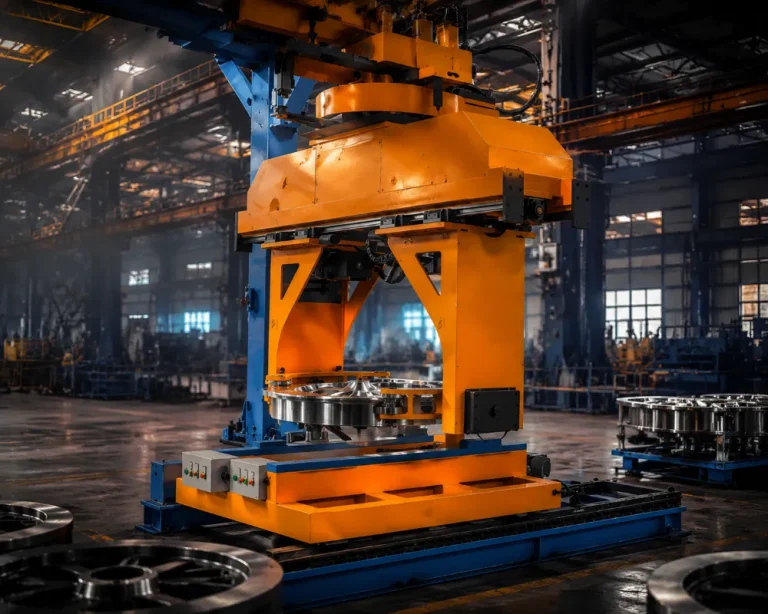
You might think wheels are simply made by pouring molten steel into a mold. לְמַעֲשֶׂה, that’s not the case. To give railway wheels exceptional strength, engineers choose the “לְטִישָׁה” תַהֲלִיך. במילים פשוטות, forging is like repeatedly “kneading” a heated steel block with tremendous force. This makes its internal structure incredibly dense and the metal grain flow more continuous. כתוצאה מכך, wheels made this way have far greater fatigue and impact resistance than cast wheels. לְמַעֲשֶׂה, this is the first key reason railway wheels can handle heavy loads and long-term shocks.
The extreme hardness of a railway wheel’s surface is not natural—it is created through a carefully controlled process of intense heating and rapid cooling. After the גלגל רכבת is forged and fully formed at high temperature, it is transferred to a dedicated heat treatment line for performance optimization. The wheel is reheated to 950°C, the proper temperature range for quenching. It is then rapidly cooled to 500°C under automatically controlled water, ensuring precise and uniform cooling.
This selective quenching process hardens the tread and the flange—both of which are in direct contact with the rail—giving them excellent wear resistance and contact fatigue strength, while the wheel hub remains tough and crack-resistant.
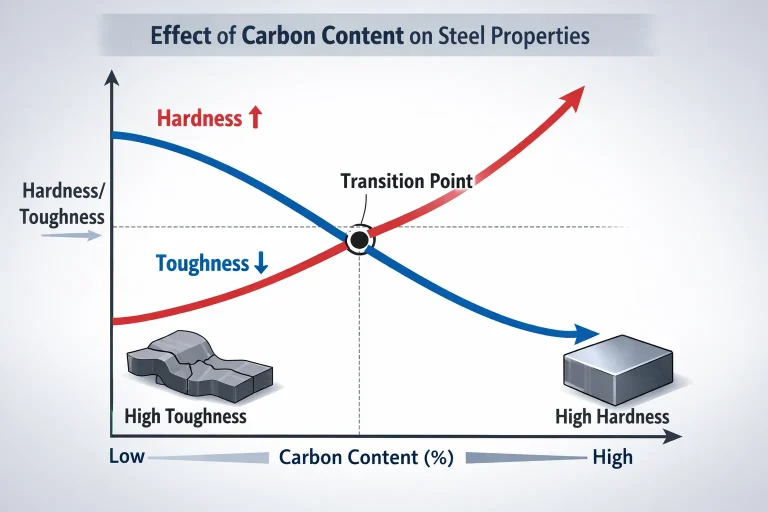
לאחר מרווה, the wheel undergoes tempering, a second heat treatment at a lower temperature. This step relieves internal stresses caused by rapid cooling and restores the necessary toughness inside the wheel. כתוצאה מכך, the wheel achieves an ideal balance of high surface hardness and strong internal toughness. This “hard yet tough” structure is the fundamental reason railway wheels can withstand hundreds of thousands of kilometers of heavy service while remaining safe and reliable.
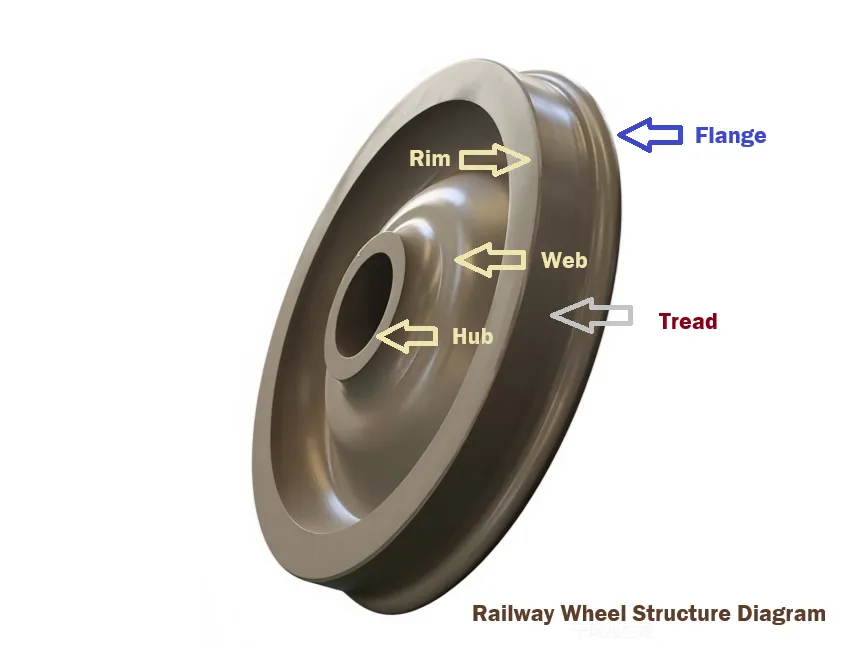
Look closely: the shape of a railway wheel is quite sophisticated. המורם “אוֹגֶן” is a guardian against derailment. The slightly tapered “לִדרוֹך” helps the train navigate curves more smoothly. בינתיים, את “אינטרנט” connecting the hub to the rim distributes the enormous load evenly. Every curve and thickness is precisely calculated. לָכֵן, the design aims to use material in the most rational way to achieve the strongest support and most stable operation. במילים אחרות, smart design makes railway wheels both lighter and stronger.
Every railway wheel must pass a series of rigorous “בדיקות בריאות” before leaving the factory. These include:
בדיקת קשיות: Special equipment checks surface hardness to ensure wear resistance meets standards uniformly.
בדיקת אולטרסאונד: Like giving the wheel an “ultrasound,” sound waves detect tiny internal flaws invisible to the eye.
בדיקת חלקיקים מגנטיים: This makes surface or near-surface cracks “visible” under fluorescent light, ensuring no hidden defects.
Balance Testing: Precisely measures the wheel’s balance to guarantee smooth, quiet rotation at high speed without abnormal vibration.
Visual & Dimensional Check: לְבָסוֹף, thorough manual inspection from all angles ensures perfection.
בקיצור, only after passing all these comprehensive tests can a railway wheel earn its operational “license.”
לְבָסוֹף, the right material forms the foundation of everything. Railway wheels are not made from ordinary steel. במקום זאת, they use specially developed “railway wheel steel.” This steel needs to carefully balance toughness, התנגדות ללבוש, and fatigue strength. Although more costly, it ensures the wheels won’t deform easily or fail suddenly under long-term, high-impact stress and heavy loads. במילים פשוטות, top performance relies on top-tier materials.
So the remarkable strength of railway wheels doesn’t happen by chance. It comes from premium materials, masterful forging, intelligent mechanical design, extreme heat treatment, and the kind of meticulous inspection that ensures absolute safety. בְּ Luoyang Fonyo Heavy Industries Co., בע"מ. We refine every step to perfection, allowing trains to run safely and smoothly over long distances. למידע נוסף על המוצרים והיכולות שלנו, you can visit our website: www.railwaypart.com. If you want to see how a strong railway wheel is truly born from a steel block, we also provide a detailed guide to the full manufacturing process for your reference.