Scannez le code WeChat pour nous contacter
Scannez le code WeChat pour nous contacter
N'hésitez pas à nous envoyer un email et nous vous répondrons dans les plus brefs délais.
Créer l'avenir avec cœur et âme


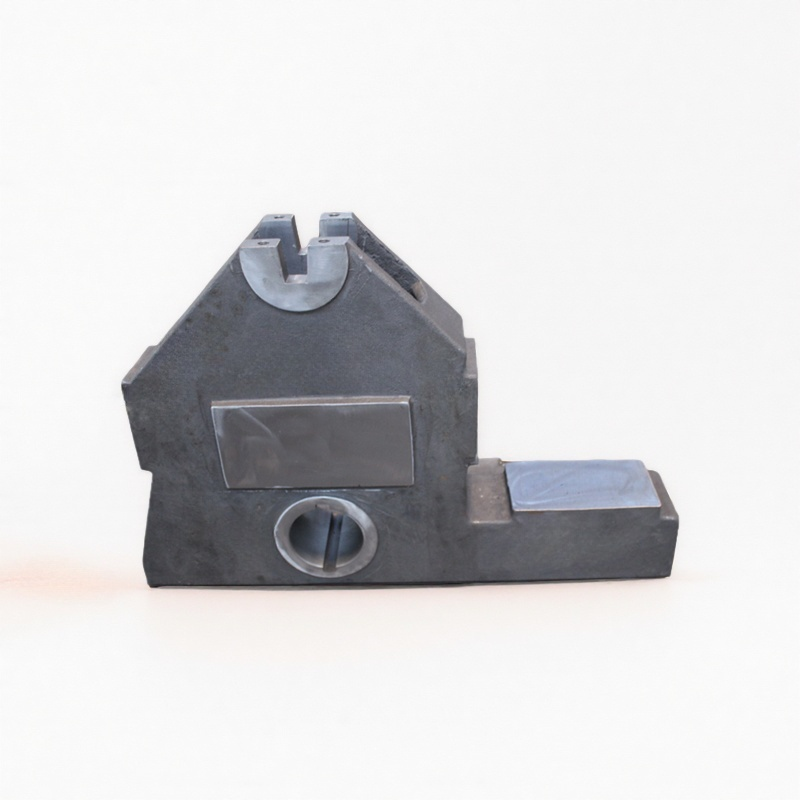
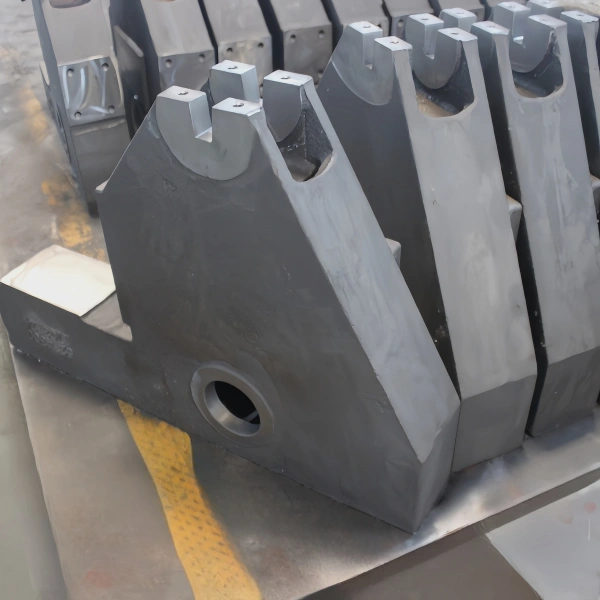
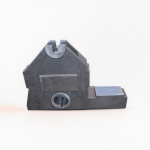
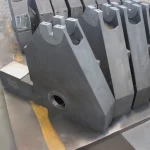
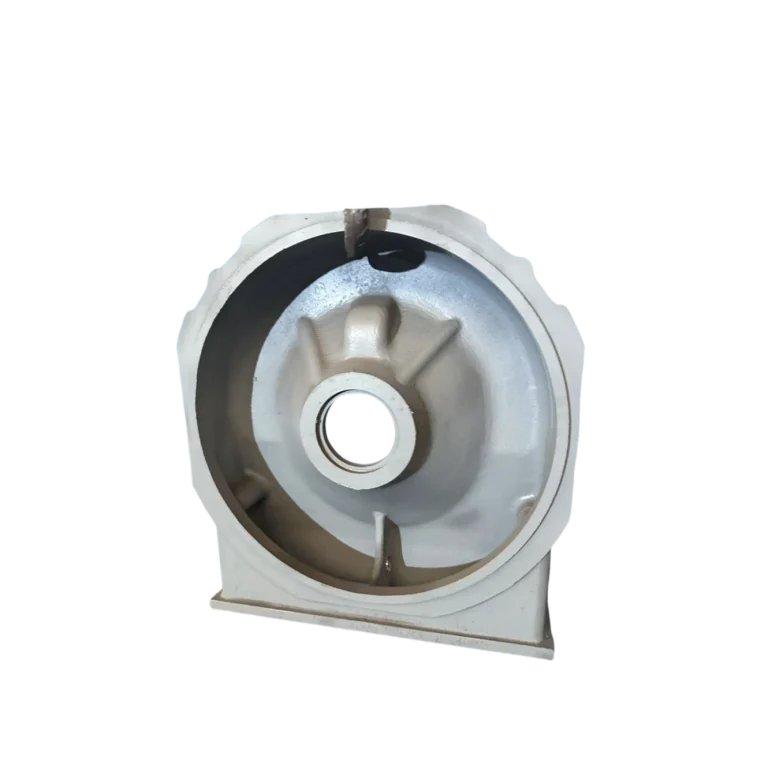
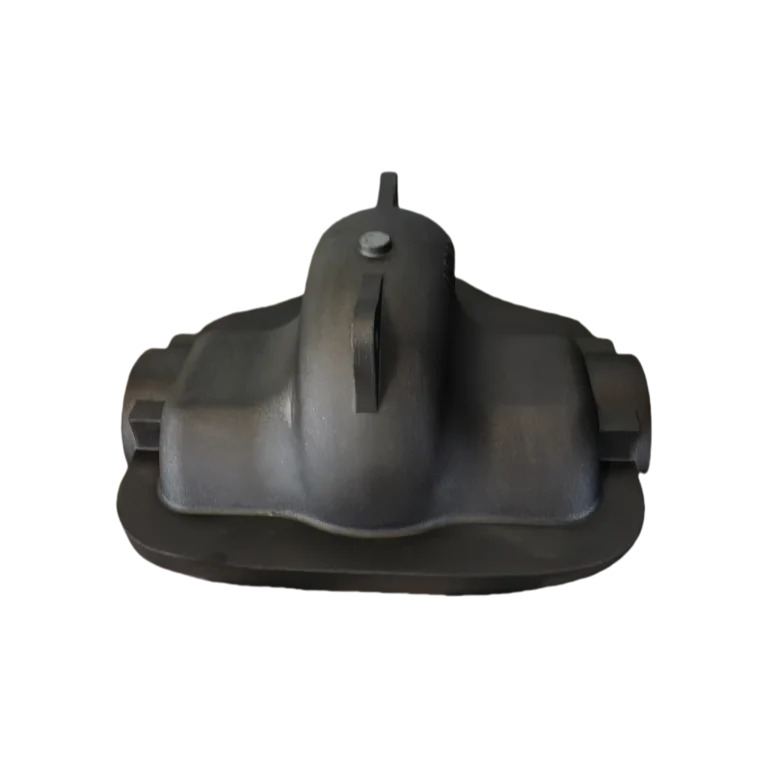
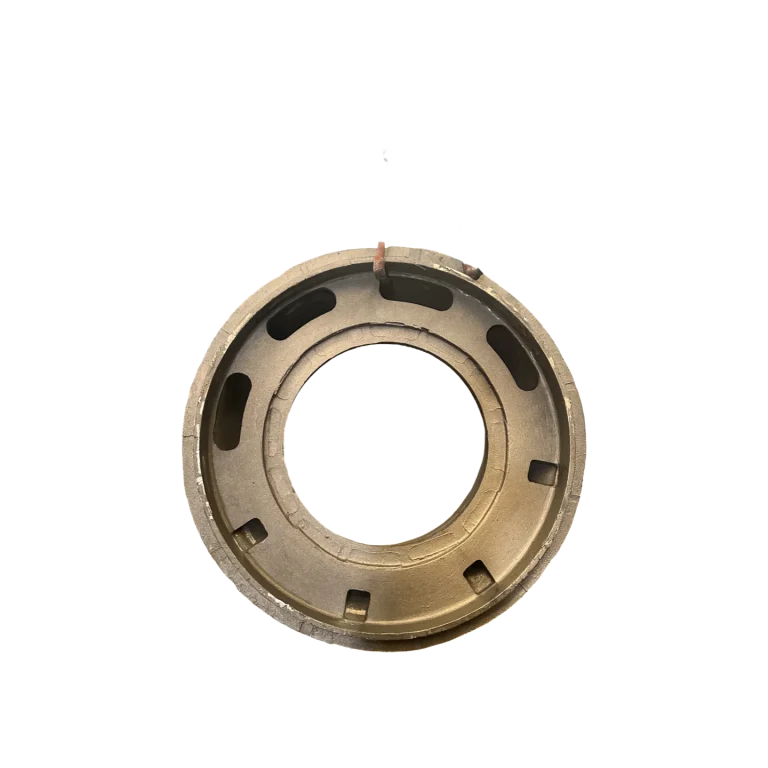
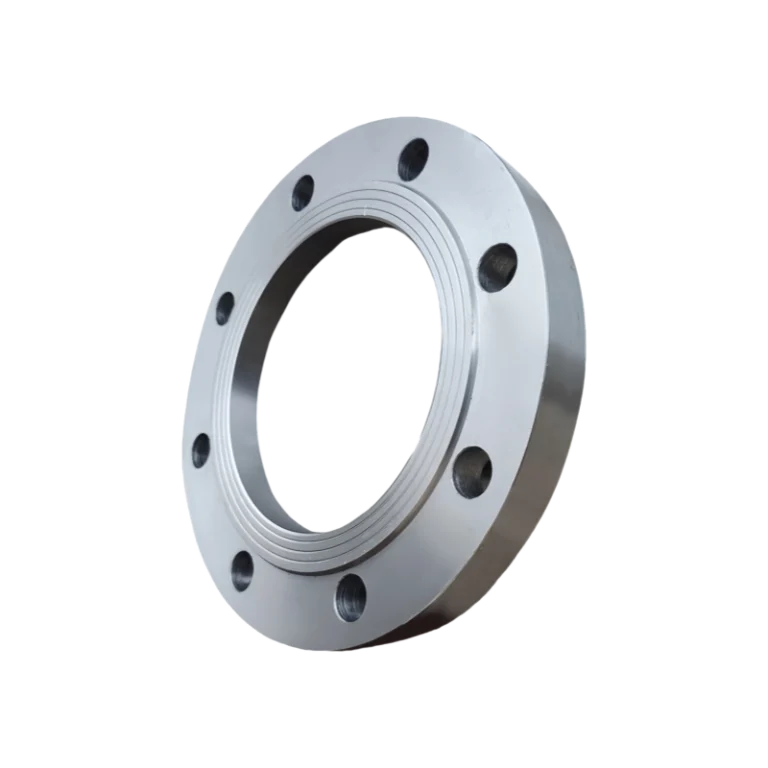
Introduction to Traction Seat of Rail Vehicle
The traction seat of the rail vehicle, as the core force-transmitting component of rail transit equipment, can be regarded as the “système nerveux central” of the train traction system. Ce composant de précision, made of high-strength alloy through casting, not only bears the heavy responsibility of force transmission but also is the key to ensuring the safe operation of the train. Under extreme working conditions of high speed and heavy load, the traction seat needs to conduct thousands of tons of power with millimeter-level precision. Its performance directly determines the traction efficiency and operational safety of the train.
The Design of The Modern Traction Seat
It can be regarded as a model of engineering mechanics. The special-shaped cavity structure constructed by using three-dimensional topology optimization technology not only ensures structural rigidity but also achieves the lightweight goal. Engineers discovered through finite element simulation that adding a 15° inclined wavy reinforcing rib at the traction seat rib plate can reduce the stress concentration coefficient by 37%. The layered structure of shells inspires this biomimetic design. While enhancing fatigue resistance, it controls the overall weight at 82% of the traditional structure. The contact surface treated by laser cladding has a wear resistance coefficient reaching the level of aircraft engine bearings, ensuring stable contact even in complex vibration environments.
The Breakthrough in Materials Science
It has brought a revolutionary upgrade to the traction seat. The latest developed nano-crystalline reinforced alloy has achieved a breakthrough in tensile strength by embedding silicon carbide nanowires in the metal matrix, exceeding the 2000 MPa mark. Ce “flexible and tough” composite material successfully withstood 2 million alternating load tests in laboratory simulation tests, with the crack propagation rate being two orders of magnitude lower than that of traditional materials. Combined with vacuum precision casting technology, internal defects of the components were controlled within φ0.2mm, meeting the standards of aerospace manufacturing.
Intelligent Transformation de The Modern Traction Seat
The implanted distributed optical fiber sensor network can monitor stress distribution in six dimensions in real-time. Combined with the edge computing unit, it can identify abnormal load patterns within 50 milliseconds. After applying this technology to a specific type of EMU, the traction system fault early warning time was successfully shortened to 72 heures, and the maintenance efficiency was increased by 40%. What is more noteworthy is the popularization of modular design. The traction seat modules with standard interfaces support rapid replacement, reducing the maintenance operation time from 8 hours to 90 minutes.
From the cast steel parts of steam locomotives in the past to the intelligent force-transmitting systems of today, the evolution history of the traction seat bears witness to the leap in rail transit technology. This mysterious component hidden beneath the train is silently safeguarding the safe arrival of every train with the power of technology. When we watch the departing trains from the platform, we may not notice these precise components, but they carry the most solid promise of modern transportation.
| Matériels | acier forgé, acier moulé,fonte ductile,etc. |
| Artisanat de transformation | Dessins → fabrication de moules → moulage sous pression → usinage grossier → usinage CNC → traitement de surface → vérification du produit → emballage → livraison |
| Traitement thermique | Undergo heat treatment processes like quenching and tempering |
| Traitement de surface | Electroplating, Chrome Plating, Zinc Plating, Nickel plating, Electrophoresis, Anodization, Polishing, Sandblasting, Passivation, Powder coating, Spray painting, Etc. |
| Tolerance | ± 0.02mm |
| Inspection | 1.Fonderie en interne: 100% inspection sur la dimension critique; 100% sur l'apparence. 2.Inspection par un tiers disponible sur demande |
| Certificats | ISO9001,ISO14001,EN 15085 et IRIS |
| Personnalisation | OEM,ODM,Drawings,Samples |
| Emballer | Poly-sac + boîte en carton + caisse en bois/palette, selon la demande du client |
| Shipment | By Sea/Train, or other method according to customer’s request |
| Paymenty Term | TT, West Union,L/C at sight |
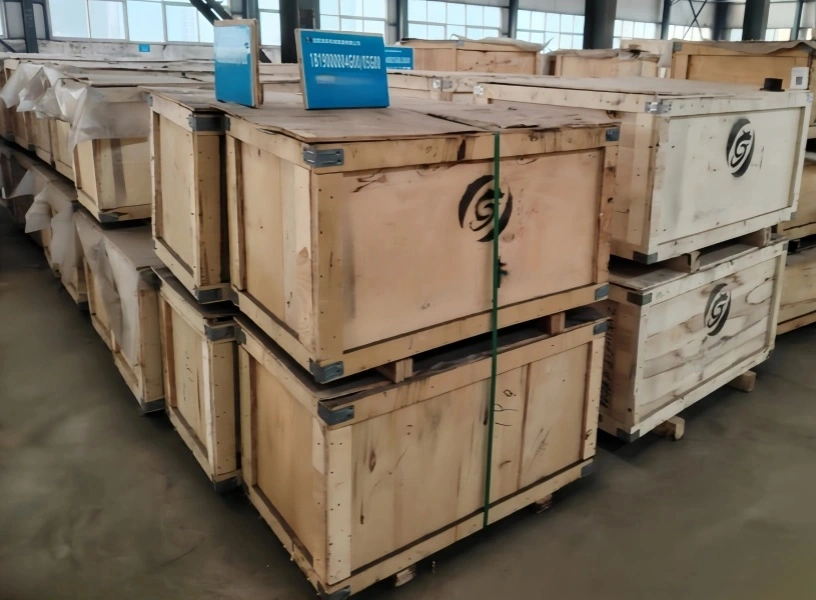
Package of Railway Traction Seat
Poly-sac + caisse en bois/palette, selon la demande du client
Profil de l'entreprise
Luoyang Fonyo Heavy Industries Co., Ltée. a été fondée en 1998, couvre une superficie de 72 600㎡, avec plus de 300 employés, 32 techniciens, y compris 5 ingénieurs supérieurs, 11 ingénieurs adjoints, et 16 techniciens. Il a été classé centre technologique d'ingénierie de Luoyang., Technologie Luoyang R&Centre D, et entreprise nationale de haute technologie à plusieurs reprises.
Notre capacité de production est de 30 000 tonnes par an. Actuellement, nous produisons principalement de l'acier moulé, fonte (fonte grise, fonte ductile, etc.), traitement du produit fini et assemblage des composants. L'entreprise produit principalement des pièces et des ensembles de composants de boîtes de vitesses pour wagons à grande vitesse., wagons, locomotives, voitures particulières, métros, mines, machines à charbon, machines pétrolières, énergie éolienne, conservation de l'eau, céramique, machines d'ingénierie et autres équipements. En même temps, les produits ont été exportés vers la Russie, les États-Unis, Allemagne, Argentine, Japon, France, Afrique du Sud, Italie et autres pays.
FAQ
T1: Êtes-vous un fabricant ou une société commerciale?
UN: Nous sommes un fabricant. Notre entreprise a été fondée en 1998, avec près de 30 ans d'expérience dans l'industrie du moulage, une superficie totale de 72 600㎡, avec une superficie de construction d'usine de 51 000㎡.
T2. Quels sont vos principaux produits?
UN: Nous nous concentrons principalement sur le moulage d'acier, fonte de fer, usinage du produit fini, et production d'assemblages de composants.
T3: Avec quelle précision pouvez-vous produire des pièces moulées?
UN: Nous avons la capacité de produire des pièces moulées avec différents procédés de coulée. La production est strictement conforme à la norme ISO 9001, OIN 14001 et ISO45001, EN15085, IRIS.
T4. Pouvez-vous produire selon les échantillons?
Oui, nous pouvons produire par vos échantillons ou dessins techniques. Nous pouvons également créer des dessins pour vous après avoir reçu vos échantillons.
Q5: Comment effectuez-vous le contrôle qualité avant la livraison?
UN: L'inspection de la qualité est un facteur très important pour garantir la qualité des pièces moulées en acier. Nous suivons 3 temps d'inspection pendant tout le processus de production. Et nous fournirons un rapport de test de matériaux, rapport d'essai dimensionnel, et rapport d'essais de propriétés mécaniques à nos clients avant la livraison.
Si vous êtes intéressé par des produits, n'hésitez pas à nous contacter.
Coordonnées:
Mobile:008615515321683
E-mail: [email protected]