قم بمسح رمز WeChat للاتصال بنا
قم بمسح رمز WeChat للاتصال بنا
لا تتردد في مراسلتنا عبر البريد الإلكتروني وسوف نقوم بالرد عليك في أقرب وقت ممكن.
صنع المستقبل بالقلب والروح


Railway freight cars, as the core carriers of the railway freight system, have their reliability and efficiency directly related to the smooth operation of the logistics artery. To understand how these colossal vehicles safely and smoothly carry hundreds of tons of goods over thousands of miles, we need to delve into their intricate “bones”, “muscles”, “المفاصل”, و “nervous system” – إنه, the core component systems that make up a railway freight car. Each part has its function and works in concert to create a magnificent picture of railway transportation.
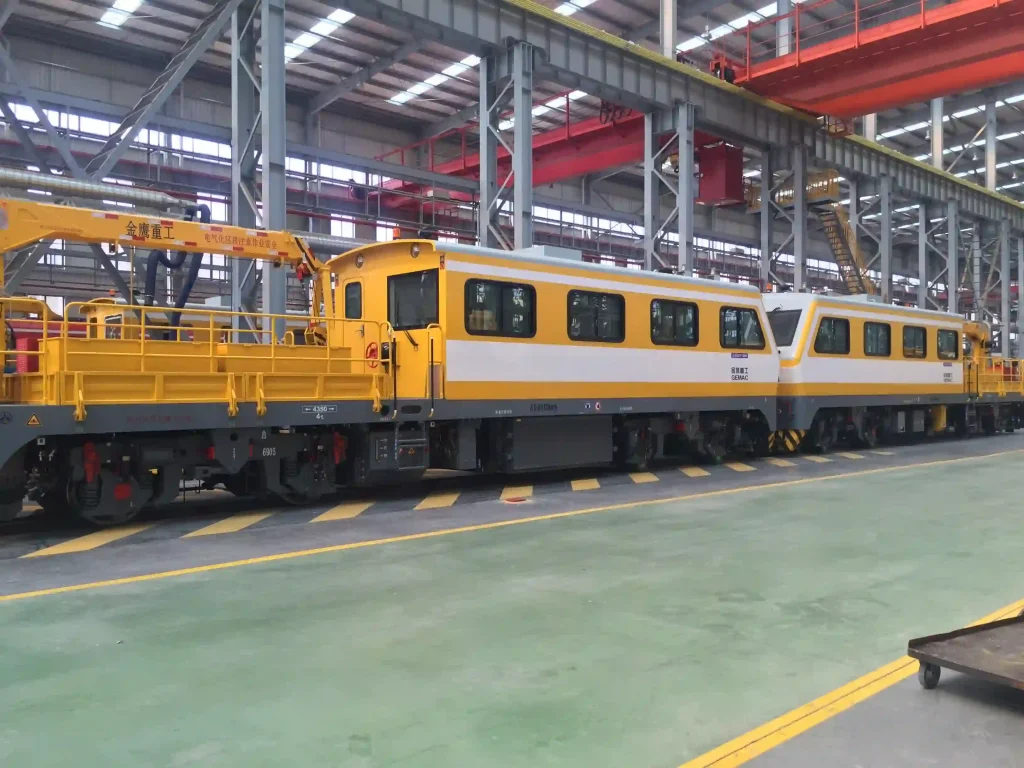
This is the most visible part of a railway freight car, directly defining its purpose and the space for carrying goods.
Underframe:
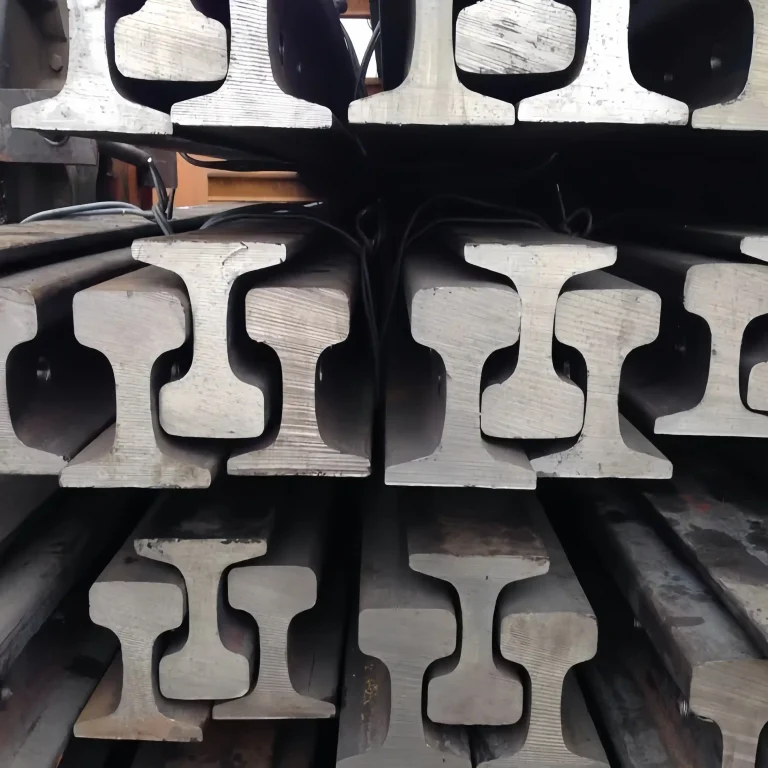
وظيفة: ال “spine” and the basic platform of the car body. It directly bears the weight of the goods, the self-weight of the car body, and all vertical, طولية, and lateral forces generated during operation (such as impact, اهتزاز, and centrifugal force). The underframe must have extremely high strength and rigidity, usually constructed from large sections of steel (such as I-beams and channel steel) welded or riveted into a sturdy frame structure.
Key Features: It is designed with center beams (the main beams running through the center of the car body), side beams, bolster beams (located above the bogies, bearing and transmitting loads), end beams, إلخ., forming a rigid whole. Its strength is the core factor determining the vehicle’s load-carrying capacity (rated load).
Side Walls and End Walls:
وظيفة: They form the enclosure structure of the car body. For covered wagons, they provide a closed space to protect the goods from wind and rain; for open wagons, the side walls mainly prevent the goods from falling off (sometimes they can be folded down); the end walls connect the two sides, enhancing the overall rigidity and ability to withstand longitudinal impacts (such as collisions during shunting). For tank cars, ال “side walls” are the cylindrical or ellipsoidal tank itself.
Material and Form: Commonly used materials are weathering steel or aluminum alloy. Forms are diverse, including plate girder type, frame type, corrugated plate type, إلخ., balancing strength and lightweight.
Floor/Cargo Tank:
وظيفة: The floor is the platform where goods are directly placed (flat cars, covered wagons, some open wagons), requiring wear resistance and corrosion resistance. The cargo tank is the core container of tank cars for holding liquids or gases, which must be strictly sealed, capable of withstanding internal pressure, and the material should be selected based on the physical and chemical properties of the goods (corrosiveness, flammability, إلخ.) such as special steel or inner lining.
Special Considerations: Some special vehicles have special floor structures, such as the locking device of container flat cars or the hopper bottom of coal open wagons.
Roof:
وظيفة: Essential for covered wagons, some tank cars (with heating jackets), and passenger cars. It mainly provides top protection for goods or passengers, shielding from rain, ثلج, wind, and sand. The roof of covered wagons is usually designed as an arc to facilitate drainage.
مادة: Steel or aluminum alloy plates.
These are the “legs and shock absorbers” of rail vehicles, directly related to the safety, smoothness, and curve-passing ability of operation. The vast majority of modern freight cars use two two-axle bogies.
إطار:
وظيفة: ال “هيكل عظمي” من العربة, serving as the installation base for all other components. It bears and transmits various complex force systems from the car body and the track, requiring extremely high structural strength and fatigue life.
بناء: Usually H-shaped or box-shaped welded steel structures composed of side beams and cross beams (or end beams).
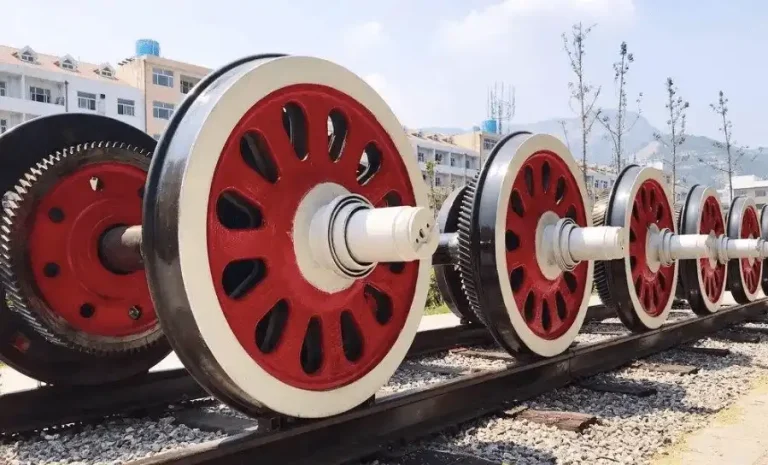
Wheelset:
وظيفة: The part that directly contacts the rails, the ultimate executor of vehicle operation. It guides the vehicle along the track, bears the entire vertical load of the vehicle, and transmits the tractive and braking forces to the rails.
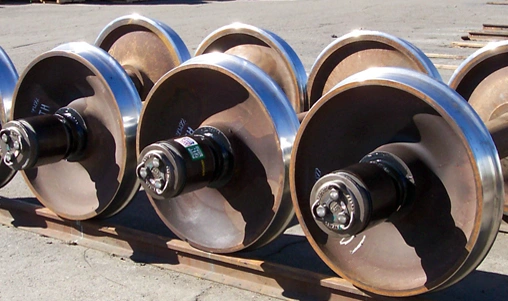
Composition:
Axle: The core component that supports the wheels and transmits loads, bearing huge bending and torsional loads.
Wheel: Usually an integral rolled steel wheel. Its tread has a specific taper (1:20 أو 1:40), enabling the vehicle to have self-centering ability (anti-snake motion stability) on the track and achieve a difference in rolling radii between the inner and outer wheels on curves, reducing sliding friction. The flange prevents the wheel from derailing. Wheelsets require precise machining and strict dynamic balance.
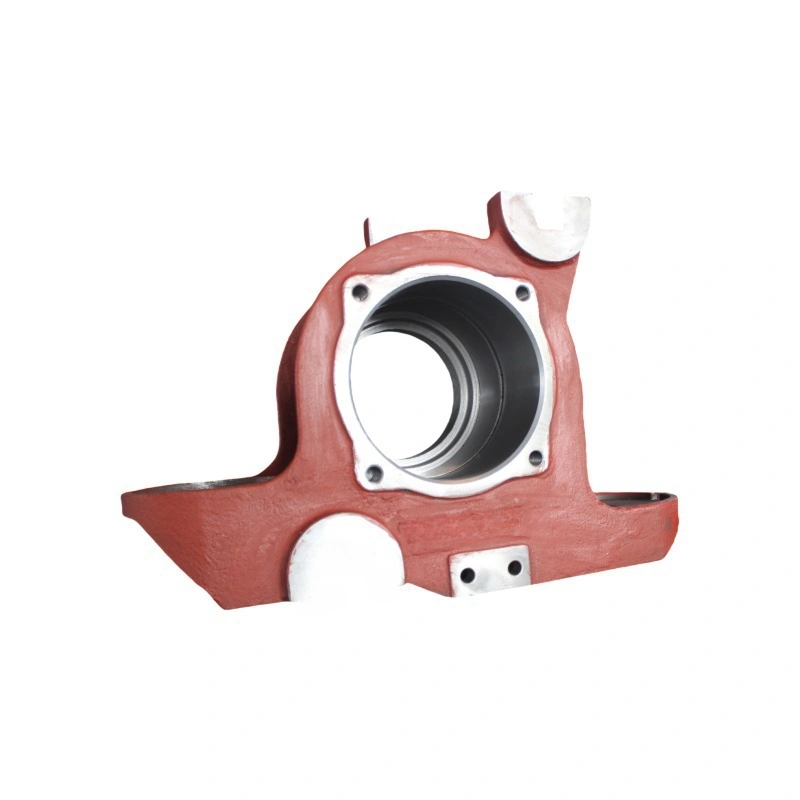
وظيفة: The key joint connecting the wheelset and the frame. The axle box houses the bearing, allowing the axle to rotate freely while transmitting the vertical and lateral loads of the wheelset to the frame (through the primary suspension). Modern freight cars generally use maintenance-free compact rolling bearings (such as tapered roller bearing units), replacing the old sliding bearings (صناديق المحور), significantly improving reliability and operational efficiency.
Primary Suspension:
وظيفة: Located between the axle box and the frame (usually axle box springs or rubber pads). Its main role is to buffer the high-frequency impacts and vibrations between the wheel and rail (such as rail joints, turnouts, and uneven rail surfaces) and to control the positioning parameters of the wheelset (such as the front-back and left-right positions of the wheelset relative to the frame) within a reasonable range, ensuring operational stability. It directly senses the impact of the rail.
Secondary Suspension:
وظيفة: Located between the bogie frame and the car body (usually central bolster springs, such as coil spring groups or air springs; some freight cars also use simple bolster devices). Its main role is to filter out the medium and low-frequency vibrations not eliminated by the primary suspension, as well as the swaying of the car body itself, providing the car body with the main vertical and lateral flexibility, significantly improving the smoothness of goods transportation and riding comfort (for freight cars, mainly protecting the goods and reducing the impact on the track). It determines the “floating sensation” of the car body.
Bolster and Side Frame (Three-piece Bogie):
وظيفة: This is the core feature of traditional freight car bogies (such as the Chinese K series). The bolster connects the two side frames laterally and is connected to the car body through the lower center plate, transmitting tractive/braking forces and part of the vertical forces. The side frame connects the left and right wheel sets (via the axle box) and bears and transmits vertical and lateral forces. The primary suspension is usually integrated between the side frame and the axle box. This structure is simple, موثوق, low-cost, and easy to maintain, making it the mainstream choice for freight cars.
Brake system:
وظيفة: Installed on the bogie, it directly executes the braking command and generates frictional braking force to slow down or stop the wheels. Main components include:
Brake beam: Transmits the force from the brake cylinder to press the brake shoes against the wheels.
Brake shoes/brake pads: Friction materials that press against the wheel treads (for shoe braking) or brake discs (for disc braking) to generate frictional force.
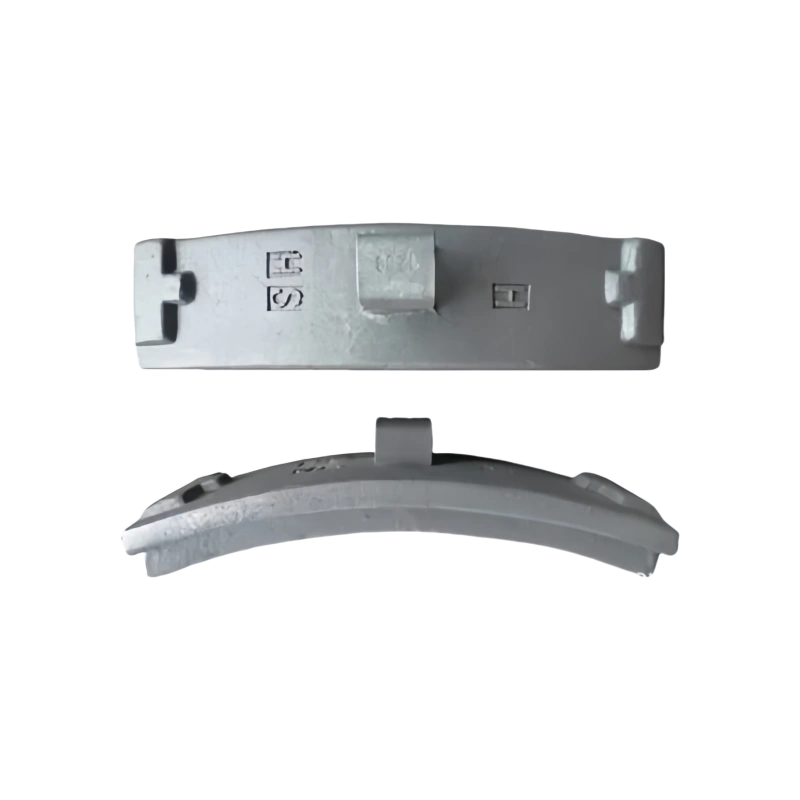
Brake lever system: Amplifies the thrust of the brake cylinder piston and evenly distributes it to each brake shoe/brake pad.
هذا هو “joint” of train formation, achieving mechanical connection between vehicles, transmitting tractive and braking forces, and absorbing longitudinal impact energy generated during train operation.
Coupler:
وظيفة: A key component for automatic connection and disconnection between vehicles. Modern standards include automatic couplers (such as China’s No. 13, No. 16, and No. 17 couplers, compatible with international SA3, Janney, إلخ.). The coupler tongue can be automatically locked and manually unlocked using a drawbar. It requires high strength, good reliability, and ease of operation.
Key indicators: Maximum tractive force, maximum compressive force (breaking load), coupling range, vertical swing angle, إلخ.
Buffer:
وظيفة: Installed behind the coupler, it is the core component for absorbing longitudinal impact kinetic energy (such as during start-up, speed regulation, braking, and shunting collisions). Through the deformation or frictional damping of internal elastic elements (springs, rubber, friction plates, hydraulic oil, إلخ.), it converts the intense impact force into a relatively smooth force, protecting the vehicle structure and cargo safety.
أنواع: Spring type, friction type, rubber type, hydraulic type (with the best performance and high energy absorption, such as MT-2/3 type), إلخ.
Coupler tail frame and draft gear:
وظيفة: The coupler tail frame encloses the rear of the coupler and contacts the buffer through the front and rear draft gears. It transmits the tensile/compressive force from the coupler to the buffer and transfers the reaction force from the buffer to the traction beam of the vehicle underframe, forming a complete force transmission path.
ال “brakes” of rail vehicles it is the fundamental guarantee for train safety. Freight cars mainly use air brake systems.
Brake main pipe:
وظيفة: A steel pipe running through the entire train; it is the main channel for transmitting compressed air. The locomotive provides or discharges compressed air through it to control braking and relief for the entire train.
Angle cock and hose connector:
وظيفة: Located at both ends of the vehicle, they connect the brake main pipes of adjacent vehicles. The angle cock is used to open or close the braking passage of this vehicle (when closed, this vehicle is disconnected from the train braking system). The hose connector ensures the airtightness at the connection.
Brake branch pipe:
وظيفة: It leads out from the brake main pipe joint in the middle of the vehicle and guides the compressed air to the distribution valve in the middle of the vehicle.
Air distribution valve:
وظيفة: ال “brain” and core control unit of the braking system (such as Type 120, GK type, ABDW type, إلخ.). It senses the pressure changes in the brake main pipe and, according to the preset logic (inflation, relief, normal braking, emergency braking), controls the inflation of the brake cylinder from the auxiliary air tank (braking) or the exhaust of the brake cylinder to the atmosphere (relief). Its performance directly affects the braking effect and the longitudinal dynamics of the train.
Auxiliary air tank:
وظيفة: A container for storing compressed air. During braking, the distribution valve controls the compressed air in the auxiliary air tank to enter the brake cylinder to generate braking force. During relief, the compressed air from the brake main pipe recharges the auxiliary air tank to reserve energy for the next braking.
Brake cylinder:
وظيفة: A device that converts the pressure energy of compressed air into mechanical thrust. When the compressed air from the auxiliary air tank enters the brake cylinder, it pushes the piston (or diaphragm) and the piston rod outwards. Through the basic braking device (lever system), the brake shoes are pressed against the wheels to generate braking force.
Load adjustment device for empty and loaded vehicles:
وظيفة: Specific to freight cars. It automatically or manually adjusts the pressure output of the brake cylinder according to the vehicle’s load (empty, half-loaded, fully loaded). The purpose is to avoid excessive braking force on empty vehicles that could cause wheel lockup and scuffing while ensuring a safe braking distance. Common methods include adjusting the volume of the auxiliary air tank or using a sensor valve to change the pressure path to the brake cylinder.
Hand brake device:
وظيفة: A manually operated backup braking device used for preventing the vehicle from rolling when parked or as an emergency measure when air braking fails. It usually drives the basic braking device through a chain, gear, or screw mechanism.
Air pipelines and valves:
وظيفة: Includes cut-off cocks, centrifugal dust collectors, relief valves, إلخ. They are used to control the on-off of the air path, filter impurities and moisture from the compressed air, and manually release the air in the brake cylinder or auxiliary air tank (for individual vehicle relief or replacement).
Vehicle identification and markings:
وظيفة: Includes vehicle number, نموذج, load capacity, self-weight, volume, exchange length, regular maintenance marks (factory repair, depot repair, auxiliary repair, axle inspection), ownership marks, إلخ. They are important bases for vehicle management, operation, and maintenance.
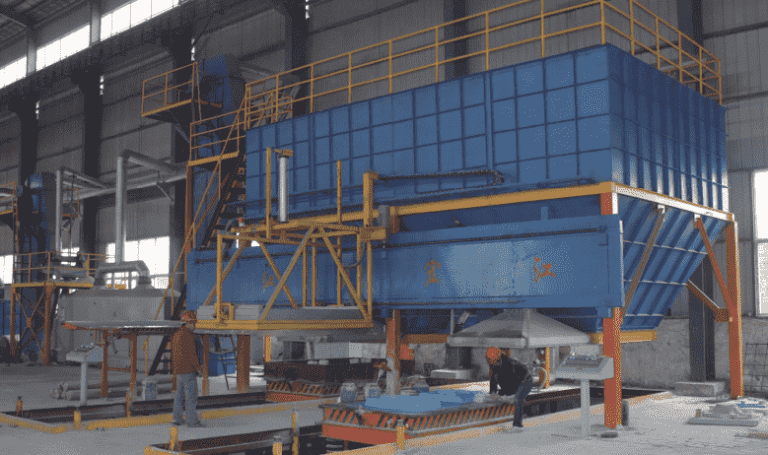
شركة لويانغ فونيو للصناعات الثقيلة, المحدودة, تأسست في عام 1998، وهي شركة مصنعة لأجزاء صب السكك الحديدية. مصنعنا يغطي مساحة 72,600㎡, مع اكثر من 300 موظفين, 32 الفنيين, مشتمل 5 كبار المهندسين, 11 المهندسين المساعدين, و 16 الفنيين. قدرتنا الإنتاجية هي 30,000 طن سنويا. حالياً, نحن ننتج بشكل رئيسي الصب, بالقطع, والتجمع للقاطرة, عربة السكك الحديدية, القطارات عالية السرعة, معدات التعدين, طاقة الرياح,إلخ.
نحن نقوم بتوريد قطع غيار السكك الحديدية إلى CRRC(بما في ذلك أكثر من 20 الشركات الفرعية والشركات التابعة لـ CRRC),الآلات الهندسية جيماك, ساني جروب, سيتي للصناعات الثقيلة, إلخ. وقد تم تصدير منتجاتنا إلى روسيا, الولايات المتحدة, ألمانيا, الأرجنتين, اليابان, فرنسا, جنوب أفريقيا,إيطاليا وبلدان أخرى في جميع أنحاء العالم.
معلومات الاتصال:
بريد إلكتروني:[email protected]
متحرك:008615515321683