قم بمسح رمز WeChat للاتصال بنا
قم بمسح رمز WeChat للاتصال بنا
لا تتردد في مراسلتنا عبر البريد الإلكتروني وسوف نقوم بالرد عليك في أقرب وقت ممكن.
صنع المستقبل بالقلب والروح


عندما يقوم المهندسون بتقييم موثوقية عربة السكك الحديدية, ال الإطار الجانبي is usually one of the components that receives the most attention. Although it appears to be a relatively simple steel structure, the railway bogie side frame actually performs several critical functions inside the bogie system. It supports the wheelset loads, maintains the correct position of the axle assembly, and transfers forces generated during train operation.
Unlike many general mechanical components, a side frame operates under continuously changing loads. A freight wagon running on imperfect tracks is exposed not only to the static weight of the vehicle and cargo but also to dynamic forces caused by vibration, impacts, الكبح, تسريع, and curve negotiation. Over millions of operating cycles, these repeated loads can create fatigue stress inside the structure.
لهذا السبب, the design of a railway bogie side frame is not simply about achieving sufficient strength. Engineers must also consider fatigue life, جودة الصب, دقة الأبعاد, material performance, and long-term maintenance requirements.
In practical railway applications, a well-designed and properly manufactured side frame can significantly improve bogie stability, reduce wheel wear, and extend the service life of the entire rail vehicle.
This article explains the function, التصميم الهيكلي, اختيار المواد, and manufacturing process of railway bogie side frames from an engineering perspective.
أ الإطار الجانبي لعربات السكك الحديدية is a major structural component installed on both sides of a railway bogie. It connects the wheelset assemblies with the suspension system and works together with the bolster to form the main load-bearing structure of the bogie.
In a conventional three-piece freight wagon bogie, the structure mainly consists of:
لكن, the side frame is not simply a supporting bracket between wheels. من وجهة نظر هندسية, it is the structural link that controls how forces move through the bogie.
The typical load path during operation is:
Vehicle body → Bolster → Suspension system → Side frame → Bearing adapter → Wheelset → Rail
Every component in this path must work together correctly. If the side frame has insufficient strength, poor dimensional accuracy, or manufacturing defects, the entire bogie performance can be affected.
For freight wagons, especially heavy-haul applications, the side frame must maintain reliable performance under high axle loads and repeated impact conditions.
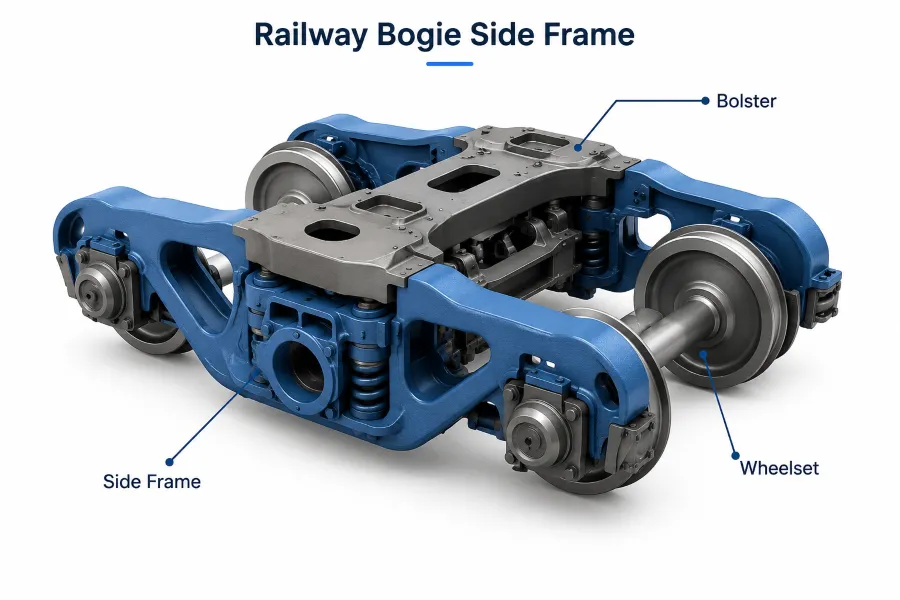
The primary function of the side frame is to transfer vertical and dynamic loads from the bogie structure to the wheelsets.
During railway operation, the weight of the vehicle and cargo is transmitted through the suspension system. The side frame receives these forces and transfers them to the bearing adapter and wheelset.
من منظور التصميم, the challenge is not only handling the maximum load. A railway component may experience millions of loading cycles during its service life, and fatigue performance becomes equally important.
لهذا السبب, engineers usually focus on:
A side frame that is too flexible may affect vehicle stability, while excessive weight can increase manufacturing cost and unsprung mass. The final design is always a balance between strength and efficiency.
Another important function of the railway bogie side frame is controlling the position of the wheelset.
The pedestal area of the side frame supports the bearing adapter and helps maintain the correct relationship between the axle and bogie structure.
أثناء العملية, wheelsets must move within a controlled range. Excessive movement may result in:
This is why the machining accuracy of the pedestal opening is a critical manufacturing requirement.
In actual railway maintenance, engineers often inspect this area carefully because wear or deformation here can provide early signs of bogie performance problems.
Railway vehicles experience many forces that are not purely vertical.
When a train passes through curves, changes speed, or travels over irregular track conditions, the bogie is subjected to lateral and longitudinal forces.
The side frame must absorb these forces while maintaining structural integrity.
This becomes especially important for:
A side frame designed only for static strength may fail prematurely because railway operation involves continuous dynamic loading.
لذلك, fatigue analysis and practical operating conditions must be considered during the design stage.
Designing a railway bogie side frame is a process of balancing several engineering requirements. The component must be strong enough to withstand heavy loading, flexible enough to work with the suspension system, and practical enough to be manufactured consistently.
في تطبيقات السكك الحديدية, a side frame is expected to operate safely for many years under changing environmental and loading conditions. لذلك, engineers do not only consider the maximum load that the component can carry. They also pay close attention to how stress is distributed throughout the structure and how the component will behave after millions of operating cycles.
A well-designed side frame should achieve three main objectives:
The pedestal area is one of the most important regions in a railway bogie side frame.
This area directly supports the bearing adapter and connects the side frame with the wheelset assembly. أثناء العملية, it is continuously exposed to vertical loads, اهتزاز, and impact forces generated from wheel-rail interaction.
من وجهة نظر هندسية, the challenge is maintaining accurate positioning while allowing the necessary movement between components.
If the pedestal geometry is not properly controlled, several problems may occur:
لهذا السبب, manufacturers pay particular attention to the machining accuracy and surface condition of the pedestal area after casting.
ال casting process itself is also important because defects in this region can significantly reduce fatigue performance. Any internal shrinkage, الادراج, or micro-cracks may become potential failure points under repeated railway loading.
The spring seat is another important area in side frame design.
In many freight bogie designs, the suspension springs are positioned between the side frame and bolster. The spring seat must provide stable support and ensure that the suspension forces are evenly distributed.
A poorly designed spring seat may lead to:
During the design stage, engineers consider factors such as contact area, local wall thickness, and stress concentration.
The goal is not simply to make the spring seat stronger. Excessive reinforcement can increase casting difficulty and add unnecessary weight. بدلاً من, the structure should be optimized so that the material is placed where it contributes most to strength.
This is one of the reasons why experienced railway casting manufacturers rely heavily on engineering analysis before producing the first casting.
Although a railway bogie side frame is manufactured as a single structural casting, different areas experience different stress levels.
Sharp changes in geometry can create stress concentration points. Under repeated loading conditions, these areas may become locations where fatigue cracks initiate.
During design optimization, engineers usually focus on:
لمكونات السكك الحديدية, fatigue performance is often more important than short-term strength. A component may easily pass a static load test but still experience problems after years of repeated service if fatigue behavior is not considered.
لذلك, side frame design normally involves both static analysis and fatigue evaluation.
Reducing weight is an important consideration in modern railway vehicle design, but it must be achieved without compromising safety.
A heavier side frame may provide additional strength, but it also increases:
على الجانب الآخر, excessive weight reduction can reduce fatigue life and structural reliability.
The ideal design uses optimized geometry to achieve the best balance between:
Modern engineering methods such as 3D modeling and casting simulation help designers evaluate different structural solutions before production.

Material selection is one of the most important decisions in railway bogie side frame manufacturing.
Unlike ordinary steel structures, railway side frames must withstand repeated impact loads, اهتزاز, and fatigue cycles throughout their service life. لذلك, the material must provide not only high strength but also good toughness and resistance to fatigue damage.
لهذا السبب, most railway bogie side frames are manufactured from high-strength cast steel.
Cast steel has become the preferred material for many railway bogie side frames because it offers several advantages.
أولاً, casting allows manufacturers to produce complex structural shapes that would be difficult or expensive to manufacture through welding or machining from solid steel.
A side frame contains many functional areas, مشتمل:
Casting makes it possible to integrate these features into one continuous structure.
ثانية, cast steel provides good mechanical performance. With proper alloy design and heat treatment, it can achieve the required combination of:
These characteristics make it suitable for demanding railway applications.
For international freight railway applications, AAR M-201 cast steel specifications are widely recognized, especially in North American railway systems.
Different grades are selected depending on operating requirements.
على سبيل المثال:
Higher-strength grades may be selected for:
Standard grades may be suitable for:
The final material choice depends on several factors, مشتمل:
When evaluating cast steel for railway side frames, engineers usually focus on more than tensile strength.
Important considerations include:
Railway components may experience sudden impact loads, especially when vehicles operate on uneven track conditions. Good toughness helps prevent brittle failure.
A side frame may experience millions of load cycles during service. The ability to resist fatigue crack initiation is essential.
Even a high-strength material can fail if internal casting defects exist. لذلك, material performance is closely related to the quality control of the foundry process.
Proper heat treatment improves the internal structure of cast steel and ensures consistent mechanical properties throughout the component.
For a railway component manufacturer, selecting the right material is not only a matter of choosing a steel grade.
The complete manufacturing system must be considered:
A reliable side frame requires cooperation between material engineering, casting technology, بالقطع, and quality control.
This is why railway casting production requires much more experience than ordinary industrial steel castings.
ال manufacturing process of a railway bogie side frame is much more demanding than producing a general steel casting. Because the side frame is a safety-critical railway component, every stage from casting design to final inspection must be carefully controlled.
A small defect that may be acceptable in ordinary industrial castings can become a serious risk in railway applications. لهذا السبب, experienced manufacturers focus not only on producing a casting that meets the drawing requirements, but also on ensuring long-term reliability under actual operating conditions.
The typical manufacturing process includes casting design, steel melting, المعالجة الحرارية, بالقطع, والتفتيش.
The production of a railway bogie side frame starts before the first piece of steel is poured.
Engineers first analyze the component drawing and develop the casting process. Unlike simple castings, a side frame has complex geometry with different wall thicknesses and high requirements for structural integrity.
During this stage, manufacturers consider:
A properly designed casting process helps reduce common casting problems such as shrinkage cavities, المسامية, and uneven microstructure.
اليوم, many experienced foundries use 3D modeling and casting simulation technology to predict potential defects before production. This allows engineers to optimize the mold design and improve first-pass production quality.
من منظور التصنيع, good casting quality is largely determined before the actual pouring process begins.
After the casting process is confirmed, steel melting becomes the next critical stage.
The chemical composition of the steel directly affects the final mechanical properties of the railway side frame. لذلك, manufacturers must strictly control alloy elements during melting.
Typical controlled elements include:
أثناء الإنتاج, samples are taken for chemical analysis to verify that the molten steel meets the specified requirements.
لمكونات السكك الحديدية, consistency is especially important. A single casting with abnormal chemical composition may have different mechanical performance compared with other production batches.
لذلك, professional railway foundries normally maintain strict process records for each heat of steel.
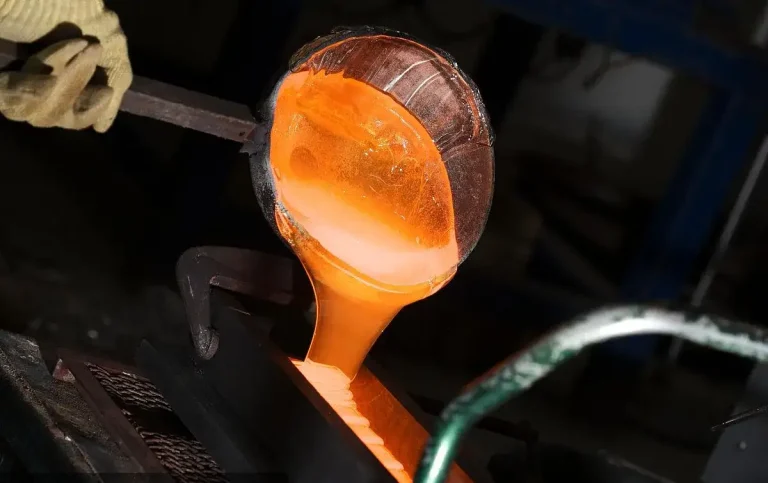
Railway bogie side frames are usually produced using sand casting because this process provides the flexibility required for large and complex structural components.
During pouring, several factors influence casting quality:
The temperature must be controlled carefully. If it is too low, incomplete filling may occur. If it is too high, excessive oxidation or grain growth may affect the material properties.
The cooling process determines the internal structure of the casting.
Uneven cooling may create:
The quality of the sand mold also affects surface finish and dimensional accuracy.
لسبائك السكك الحديدية الكبيرة, process stability is essential because even small variations can influence final performance.
بعد الصب, the railway side frame usually requires المعالجة الحرارية to achieve the required mechanical properties.
The casting process naturally creates internal stresses due to uneven cooling. Heat treatment helps improve the internal structure and provides more stable performance.
Common heat treatment methods include:
Normalizing is used to refine the grain structure and improve material consistency.
It helps:
For higher-strength requirements, quenching and tempering may be applied.
This process improves:
The exact heat treatment process depends on the selected material grade and customer requirements.
لتطبيقات السكك الحديدية, heat treatment control is extremely important because mechanical properties must remain consistent throughout the entire casting.
بعد المعالجة الحرارية, the side frame enters the بالقطع stage.
Although the component is produced by casting, several areas require precision machining to achieve the necessary dimensional accuracy.
The most important machining areas include:
The pedestal opening directly affects the relationship between the side frame and wheelset assembly.
Incorrect dimensions may influence:
The spring seat must provide accurate support for the suspension components.
Machining accuracy helps ensure proper load distribution.
These areas require controlled dimensions to guarantee correct assembly with other bogie components.
لتطبيقات السكك الحديدية, بالقطع is not simply about achieving dimensional accuracy. It directly affects how the complete bogie behaves during operation.
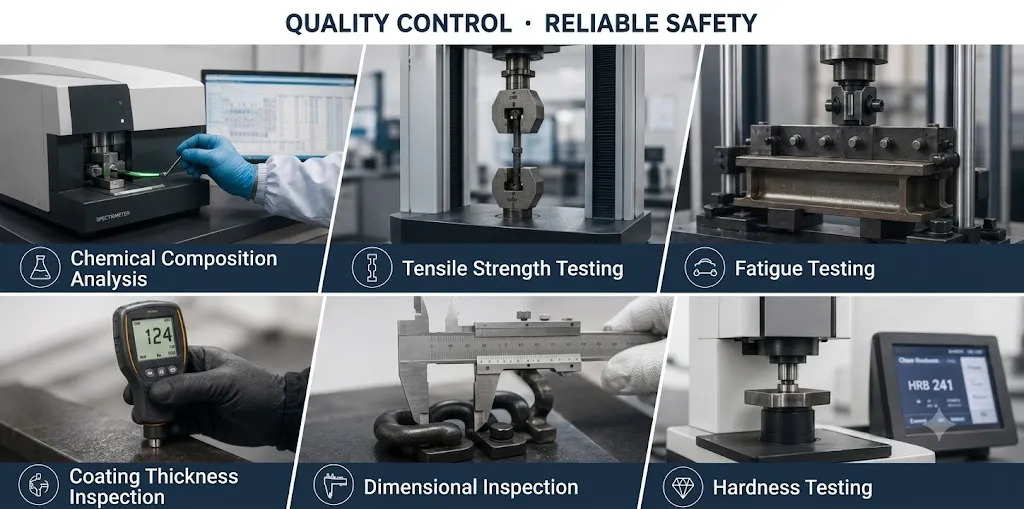
Because railway bogie side frames are safety-related components, inspection requirements are much stricter than ordinary steel castings.
A qualified manufacturer normally performs inspections throughout the production process rather than only checking the final product.
Chemical analysis confirms that the steel grade meets the required specification.
This ensures that the material has the expected mechanical performance after heat treatment.
Mechanical tests are performed to verify the strength and toughness of the material.
Typical tests include:
These results confirm that the finished side frame can withstand the required operating conditions.
Because internal defects cannot always be identified visually, non-destructive testing is an important part of railway casting inspection.
تشمل الطرق الشائعة:
Used to detect surface and near-surface defects such as cracks.
Used to identify internal defects that may exist inside the casting.
These inspection methods help ensure that potential problems are discovered before the component enters service.
Final dimensional inspection verifies that the machined side frame meets the engineering drawing requirements.
Important measurements include:
Accurate dimensions ensure smooth assembly with other bogie components.
Although railway side frames are designed for long service life, understanding possible failure mechanisms is important for both manufacturers and operators.
Most failures are related to fatigue, يرتدي, or manufacturing defects.
Fatigue cracking is one of the main concerns for railway structural components.
Because a side frame experiences repeated loading during every journey, small areas of stress concentration may gradually develop into cracks.
تشمل الأسباب الشائعة:
Good structural design, high-quality casting, and proper inspection are essential for preventing fatigue-related failures.
The pedestal area experiences continuous interaction with the bearing adapter.
متأخر , بعد فوات الوقت, wear may affect:
Regular inspection and correct maintenance practices help identify wear before it becomes a serious problem.
Casting defects are another important consideration.
Potential defects include:
This is why process control during melting, صب, and solidification is critical.
A high-quality railway side frame is not only the result of good material selection but also the result of a controlled manufacturing process.
Railway bogie side frames are safety-critical structural components, so their design and manufacturing are usually controlled by railway standards and customer-specific specifications.
على عكس المسبوكات الصناعية العامة, railway components often require strict requirements for:
لمشاريع السكك الحديدية الدولية, manufacturers normally need to understand not only the component drawing but also the applicable railway standards and operating conditions.
For North American freight railway applications, AAR (رابطة السكك الحديدية الأمريكية) specifications are among the most widely referenced standards.
The AAR M-201 specification for cast steel is commonly associated with railway cast components such as:
These requirements focus on ensuring that cast steel components have sufficient:
For freight wagons operating under heavy loads, compliance with AAR requirements provides confidence that the component can withstand demanding service conditions.
لكن, in practical manufacturing, meeting a material standard alone is not enough. The complete production process, including casting control, المعالجة الحرارية, بالقطع, and inspection capability, also determines the final quality of the side frame.
Railway bogie side frames are mainly used in freight and heavy-duty railway vehicles, especially where high load capacity and long service life are required.
وتشمل التطبيقات النموذجية:
Freight wagons are one of the most common applications.
تشمل الأمثلة:
These vehicles often operate under high axle loads, requiring side frames with excellent fatigue resistance.
Heavy-haul railways place some of the highest demands on bogie components.
In mining and bulk transportation systems, trains may operate continuously with extremely heavy loads.
في ظل هذه الظروف, the side frame must provide:
Industrial railways used in ports, مصانع الصلب, مناجم, and large manufacturing facilities also rely on robust bogie structures.
Although operating speeds may be lower than mainline railways, the loading conditions can be severe due to heavy cargo and frequent operation.
The same side frame design cannot always be applied to every railway project.
Engineers usually consider several operating conditions before selecting the appropriate design and material.
Axle load is one of the most important factors.
Higher axle loads create greater stress on:
Heavy-load applications generally require stronger structures and stricter quality control.
Environmental conditions also influence material and manufacturing requirements.
على سبيل المثال:
A component designed for one environment may not be suitable for another without modification.
Railway operators usually expect long service intervals.
Because replacing bogie components can be expensive and time-consuming, manufacturers must consider long-term fatigue performance rather than only initial strength.
Selecting a supplier for railway bogie side frames is different from purchasing ordinary steel castings.
A qualified manufacturer must have not only casting capability but also a deep understanding of railway applications.
From a buyer’s perspective, several aspects are worth evaluating.
Experience is one of the most important factors.
Railway castings have unique requirements compared with general mechanical castings.
An experienced manufacturer understands:
A supplier that has produced railway components before can usually identify potential problems earlier during the engineering stage.
A reliable side frame manufacturer should have complete control over the production process.
وهذا يشمل:
Having all these capabilities under controlled management helps ensure stable quality.
For international customers, engineering communication is also important. The supplier should be able to understand technical drawings, المعايير, والمتطلبات الخاصة بالعملاء.
Railway customers normally pay close attention to quality documentation and traceability.
A professional manufacturer should be able to provide production records covering:
Traceability is especially important for safety-critical railway components because every component must be linked back to its production history.
Producing one qualified prototype is not enough.
Railway customers usually require stable quality during long-term supply.
A reliable manufacturer should demonstrate:
For railway projects, production consistency is often more important than a single low-cost quotation.
A railway bogie side frame may appear to be a simple steel casting, but its engineering requirements are anything but simple. From structural design and material selection to casting, المعالجة الحرارية, بالقطع, والتفتيش, every stage plays a role in determining the safety, متانة, and long-term performance of the bogie.
For railway manufacturers and operators, choosing a high-quality side frame is not simply about meeting drawing dimensions. It is about ensuring consistent material properties, reliable manufacturing quality, and proven performance throughout the component’s service life.
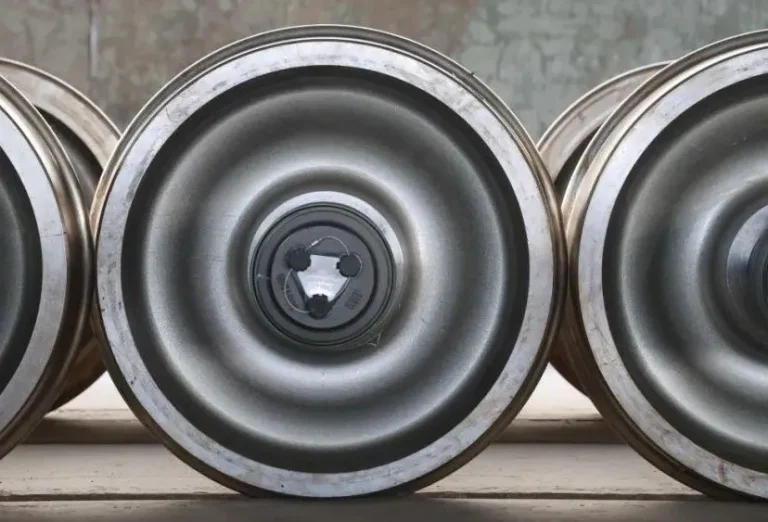
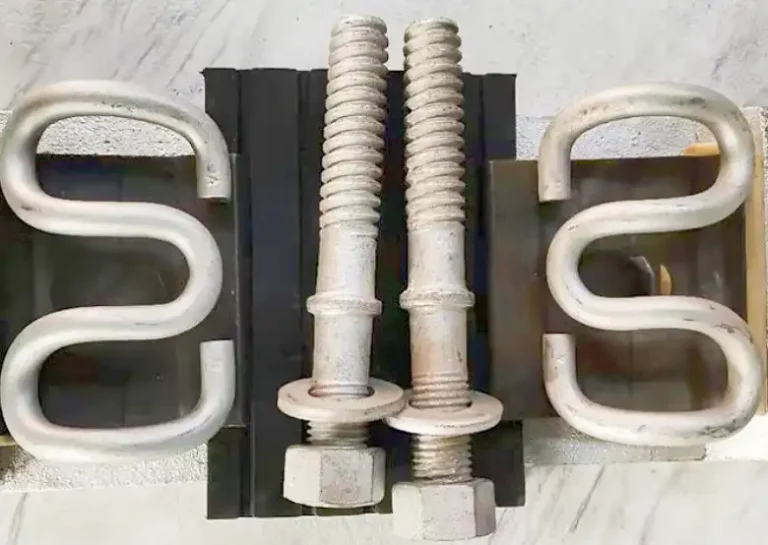
في لويانغ فونيو للصناعات الثقيلة, we manufacture a wide range of railway components for freight, راكب, مترو, and heavy-haul railway applications. Our product portfolio includes railway bogie side frames و يعزز, عجلات السكك الحديدية, and complete مكونات مسار السكك الحديدية manufactured to international standards.
If you are looking for a trusted partner for railway components or custom railway castings, ملكنا الفريق الهندسي is ready to support your project from design consultation to mass production.