Bizimle iletişime geçmek için WeChat kodunu tarayın
Bizimle iletişime geçmek için WeChat kodunu tarayın
Bize e-posta göndermekten çekinmeyin; size en kısa sürede cevap vereceğiz.
Geleceği kalp ve ruhla yaratmak


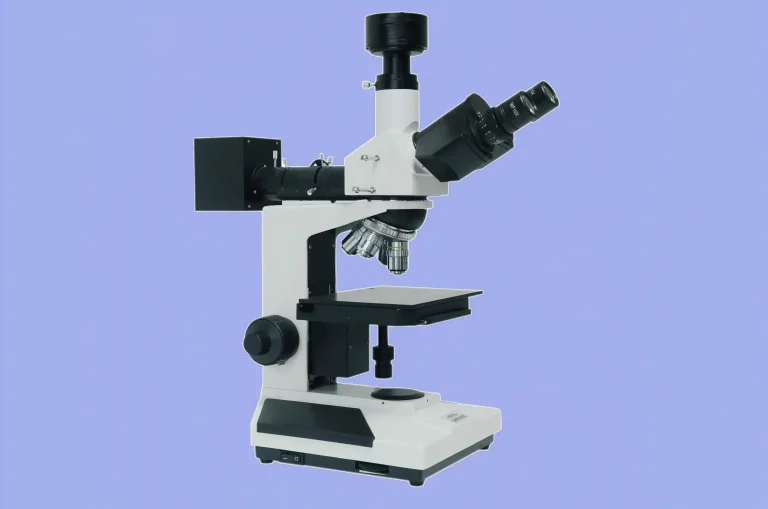
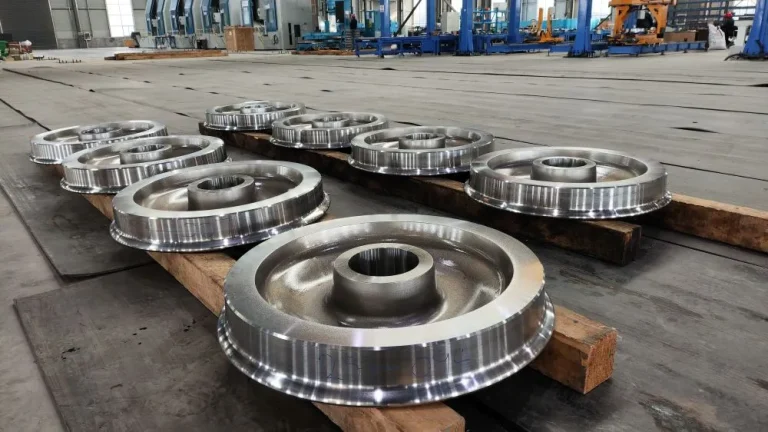
Railway castings, as key load-bearing components in railway systems, have their internal microstructure directly determining the performance and service life. Metalografik analiz, by revealing the microstructure characteristics of materials, provides a direct basis for the quality assessment of track castings.
1.1 Metallographic analysis mainly consists of three steps: sampling, sample preparation, and observation.
Sampling locations are typically selected near the risers, at the locations of sudden changes in wall thickness, and other critical areas of the casting. The sample preparation process involves rough grinding, fine grinding, and polishing to obtain a mirror-like observation surface. Daha sonra, specific etching agents (örneğin 4% nitric acid alcohol solution) are used to etch the samples, making the grain boundaries, phase boundaries, and other microstructures visible. Nihayet, the microstructure is observed under a metallographic microscope, and when necessary, a scanning electron microscope is used for high-magnification analysis.

1.2 The main elements of microstructure observation include: the morphology and distribution of graphite, the type of matrix structure, the grain size rating, and the morphology and quantity of microscopic defects. These microscopic features need to be compared and evaluated against relevant national standards (such as GB/T 9441) or industry norms.
2.1 The macroscopic properties of materials are essentially an objective reflection of their microstructure. Taking the common ductile iron track casting as an example:
The morphology of graphite directly affects the mechanical properties of the material. Ideally, graphite should be uniformly distributed in the form of spheres in the matrix. Spherical graphite has the least disruptive effect on the matrix, ensuring the material achieves good strength and toughness. If flake graphite is present, the continuity of the matrix will be severely disrupted, leading to a significant decrease in strength indicators. In actual testing, the spheroidization rate should not be less than 80%, and the size of graphite should be controlled at 6-7 grades.
2.2 The matrix structure determines the strength and wear resistance of the material.
2.3 Pearlite matrix has higher strength and hardness, while ferrite matrix gives the material better toughness.
Through metallographic analysis, the relative content of pearlite and ferrite, as well as the lamellar spacing of pearlite, can be accurately evaluated. Genel olarak, the content of pearlite is controlled between 60% Ve 80%, which can ensure sufficient strength while also considering a certain degree of toughness.
The grain size affects the performance in accordance with the Hall-Petch relationship. Fine grains can simultaneously improve the strength and toughness of the material. This is because grain boundaries can effectively hinder dislocation movement; the finer the grains, the larger the grain boundary area, and the more pronounced the strengthening effect. In the casting process, the ideal grain size can be achieved by controlling the cooling rate and adding inoculants.
2.4 The presence of microscopic defects is often the direct cause of premature failure of components. Casting defects such as porosity and shrinkage cavities significantly reduce the effective load-bearing area of the material and cause stress concentration at the defect edges. Non-metallic inclusions, especially those distributed in chains, such as sulfides and oxides, severely disrupt the continuity of the matrix and become the source of crack initiation.
3.1 In production practice, metallographic analysis is mainly applied in the following aspects:
In terms of process verification, by analyzing the microstructure changes under different heat treatment processes, process parameters can be optimized. Örneğin, normalizing treatment can effectively promote the transformation of pearlite, eliminate network cementite, and improve the comprehensive performance of the material.
3.2 In the incoming inspection stage, sampling metallographic analysis of each batch of castings has become a routine quality control method.
By quickly evaluating the morphology of graphite, the type of matrix structure, and the defect grade, non-conforming products can be effectively intercepted from entering the production line.
In the process of failure analysis, taking samples from the fractured component for metallographic observation often directly reveals the microscopic factors causing the failure. A heavy-duty railway switch casting experienced early failure during service. Metallographic analysis revealed a large amount of vermicular graphite and porosity defects near the fracture surface. These microscopic defects gradually expanded under alternating loads, eventually leading to brittle fracture.
3.3 The implementation of quality standards also relies on metallographic analysis technology. Industry standards have clear limits on the morphology of graphite, the quantity of pearlite, the content of cementite, vesaire. Only through systematic metallographic examination can these indicators be accurately evaluated.
Metalografik analiz, as an important technical means connecting microstructure with macroscopic properties, plays an irreplaceable role in the quality determination of rail castings. It not only objectively reflects the quality status of materials but also provides a basis for the improvement of production processes and technical support for the safety of railway transportation. With the continuous development of detection technology, the application of metallographic analysis in the quality control of rail castings will become more in-depth and extensive.
Luoyang Fonyo Ağır Sanayi A.Ş., Ltd.,1998 yılında kurulan demiryolu döküm parçaları üreticisidir. Fabrikamız 72.600㎡ alanı kaplamaktadır., fazlasıyla 300 çalışanlar, 32 teknisyenler, içermek 5 kıdemli mühendisler, 11 yardımcı mühendisler, Ve 16 teknisyenler.Üretim kapasitemiz 30,000 ton/yıl. Şu anda, ağırlıklı olarak döküm üretiyoruz, işleme, ve lokomotif için montaj, vagon, yüksek hızlı trenler, madencilik ekipmanları,rüzgar enerjisi,vesaire.
CRRC'nin demiryolu parça tedariği biziz(fazlası dahil 20 CRRC'nin şube şirketleri ve bağlı ortaklıkları),Gemac Mühendislik Makina,Sanygroup, Citic Ağır Sanayi,vesaire. Ürünlerimiz Rusya'ya ihraç edildi, Amerika Birleşik Devletleri, Almanya, Arjantin, Japonya, Fransa, Güney Afrika,İtalya ve dünyanın her yerindeki diğer ülkeler.