WeChat 코드를 스캔하여 문의하세요
WeChat 코드를 스캔하여 문의하세요
이메일을 보내주시면 최대한 빨리 답변해 드리겠습니다..
마음과 영혼을 다해 미래를 창조하다


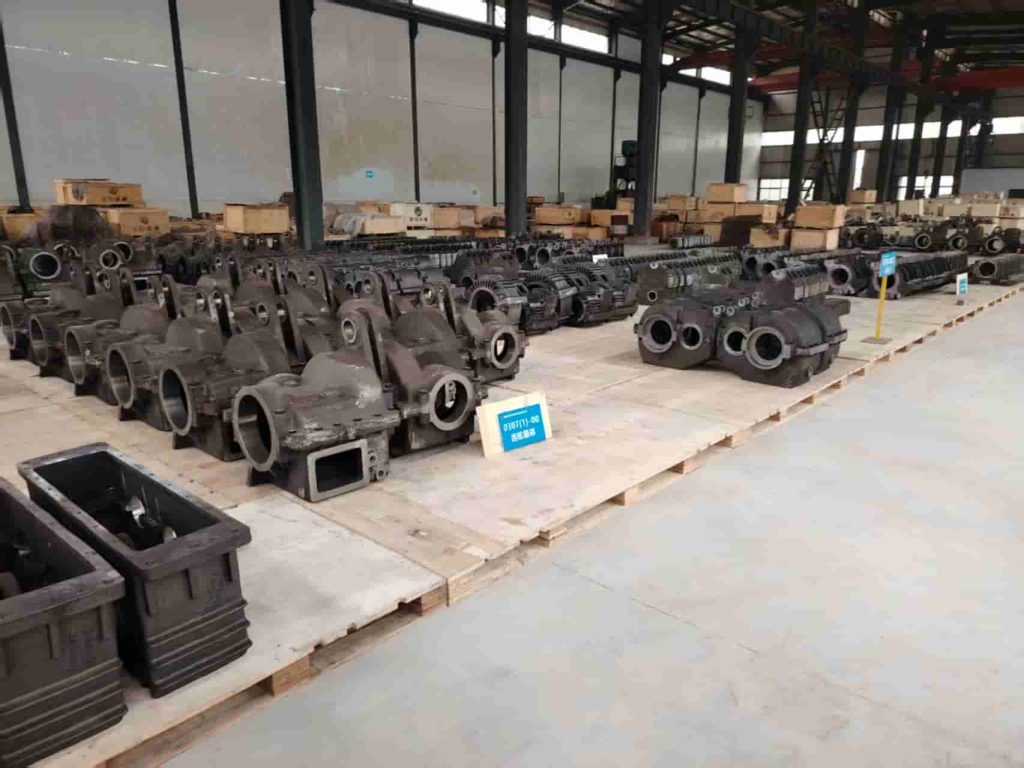
The safety and reliability of railway transportation largely depend on the quality of its core components. 철도 주물, such as couplers, components of bogies, and some key connecting parts for locomotives and rolling stock, are essential parts of railway equipment.
The inspection standards for railway castings serve as the basis for quality determination and mainly cover the following aspects:
1.1 Material Standards: The chemical composition and mechanical properties of the railway castings must comply with the requirements of the design drawings and relevant technical specifications. This includes precise control of the content of major elements such as carbon, silicon, 망간, sulfur, 그리고 인, as well as assessment of mechanical performance indicators such as tensile strength, 항복강도, 연장, 및 충격 인성.
Dimension and Geometric Tolerance Standards: The actual dimensions, machining allowances, and shape and position tolerances (such as straightness, flatness, 동축성, 등.) of the railway castings must be inspected strictly in accordance with the product drawings to ensure precise assembly with other components.
1.2 Surface Quality Standards:
Appearance Defects: The railway castings’ surfaces must not have defects that affect their performance, such as cracks, cold shuts, shrinkage cavities, and scabs. Permissible surface imperfections (such as minor sand sticking and burrs) are subject to clear limits on depth, size, and quantity.
Surface Cleaning: The residual molding sand, oxide scale, flash, and gates on the castings’ surfaces must be cleaned thoroughly to meet the specified requirements.
Internal Quality Standards: This is a critical inspection step. The castings must not have internal defects such as shrinkage porosity, gas holes, slag inclusions, and cracks that could affect structural integrity and safety. The allowable levels, sizes, and distribution ranges of these internal defects are typically specified in non-destructive testing standards.
The inspection procedures for railway castings are carried out throughout the entire production process, following the sequence from raw materials to finished products. They mainly include the following steps:
2.1 Incoming Inspection: Chemical composition or physical properties of raw materials such as metal furnace charges, alloy additives, casting sands, and resin binders are sampled and inspected upon entry into the production process to ensure material stability from the source.
Process Inspection (First Article Inspection and Patrol Inspection):
2.2 Mold Inspection: Before batch production, the dimensions and surface conditions of the molds are verified to ensure they can produce qualified blanks.
2.3 Melting and Pouring Control: The melting process is monitored, and rapid composition analysis is usually conducted at the furnace front. Chemical composition in the furnace is adjusted if necessary. Temperature and time during pouring are strictly controlled.
2.4 First Article Inspection: After each batch of products or when there is a change in the production process, the first few railway castings produced are inspected comprehensively for dimensions and appearance. Production can continue only after they are confirmed to be qualified.
2.5 Patrol Inspection: Inspectors conduct random inspections at the production site to supervise whether the operations of molding, core making, box closing, 붓는 것, and cleaning comply with the process specifications.
2.6 최종검사: This is a comprehensive quality assessment of the railway castings before they leave the factory and is the core of quality control.
Visual Inspection: Inspectors visually inspect or use magnifying glasses to check 100% of the castings’ surfaces for obvious surface defects.
3.1 Tool Inspection: Key dimensions and tolerances are measured using conventional tools such as calipers, 마이크로미터, thread gauges, and templates. For complex-shaped castings, a coordinate measuring machine may be used for precise inspection.
3.2 Mechanical Properties Testing:
Sampling: Special test bars (blocks) are cast in the same melting furnace batch and heat treatment batch for mechanical property testing, or sample blanks are cut from designated parts of the castings.
테스트: 인장강도, 항복강도, and elongation of the samples are determined on a universal material testing machine; impact toughness is measured on an impact testing machine. The results must meet the material standards. 화학 성분 분석: Drill shavings from castings or test bars are taken, and the precise determination of chemical composition is carried out using equipment such as spectrometers or carbon-sulfur analyzers.
3.3 비파괴 테스트: This is a necessary means to detect minute defects inside and on the surface of castings.
3.4 자분탐상시험 (MT): It is applicable to ferromagnetic materials (such as cast steel and cast iron) and is used to detect linear defects such as cracks and folds on or near the surface of castings.
3.5 Penetrant testing (PT): It is suitable for various metal materials and is mainly used to detect surface opening defects.
3.6 초음파 테스트 (유타): By utilizing the propagation characteristics of ultrasonic waves in objects, it detects internal defects such as shrinkage cavities, 포함, and cracks in castings, and can also assess their depth and size.
3.7 Radiographic testing (RT): X-rays or gamma rays are used to penetrate castings, and the two-dimensional shape and distribution of internal defects are displayed through film or imaging systems. This method is costly and is typically used for important and structurally complex castings.
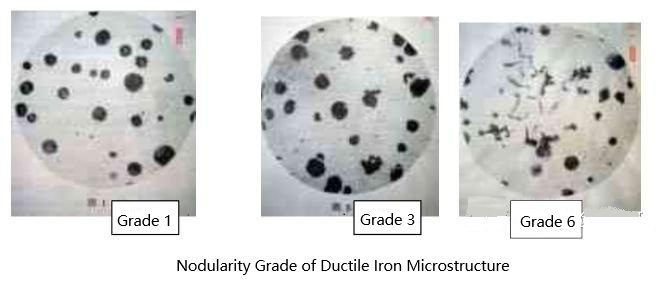
Samples are cut, ground, polished, and etched, and their microstructure (such as grain size and phase composition) is observed under a metallographic microscope to evaluate the effect of heat treatment and whether the microstructure meets requirements.
4.1 Pressure testing: For castings with pressure-bearing requirements (such as valves and brake system components), water pressure or air pressure tests are conducted to check for leaks or permanent deformation within the specified pressure and holding time.
4.2 Identification and record-keeping: All qualified castings must be marked with permanent identifiers (such as batch numbers and material codes) to enable quality traceability. All data throughout the production and inspection process, including chemical composition reports, mechanical property reports, and non-destructive testing reports, must be compiled into a complete and searchable quality record archive.
4.3 Control of non-conforming products: Non-conforming products identified during inspection must be clearly marked, isolated, and reviewed according to procedures. Possible handling methods include scrapping, rework (which requires approval and re-inspection), or downgrading for use.
뤄양포뇨중공업(Luoyang Fonyo Heavy Industries), 주식회사, 1998년에 설립된 철도 주조 부품 제조업체입니다.. 우리 공장의 면적은 72,600㎡입니다., 이상으로 300 직원, 32 기술자, 포함 5 수석 엔지니어, 11 보조 엔지니어, 그리고 16 기술자. 우리의 생산 능력은 30,000 연간 톤. 현재, 우리는 주로 주조물을 생산하고 있습니다, 가공, 기관차 조립 및 조립, 철도 차량, 고속 열차, 광산 장비, 풍력,등.
우리는 CRRC에 철도 부품을 공급하고 있습니다.(이상 포함 20 CRRC의 지사 및 자회사),Gemac 엔지니어링 기계,삼니그룹, 중공업,등. 우리의 제품은 러시아로 수출되었습니다, 미국, 독일, 아르헨티나, 일본, 프랑스, 남아프리카, 이탈리아와 전 세계의 다른 나라들.