Scansiona il codice WeChat per contattarci
Scansiona il codice WeChat per contattarci
Sentiti libero di inviarci un'e-mail e ti risponderemo il prima possibile.
Creare il futuro con cuore e anima


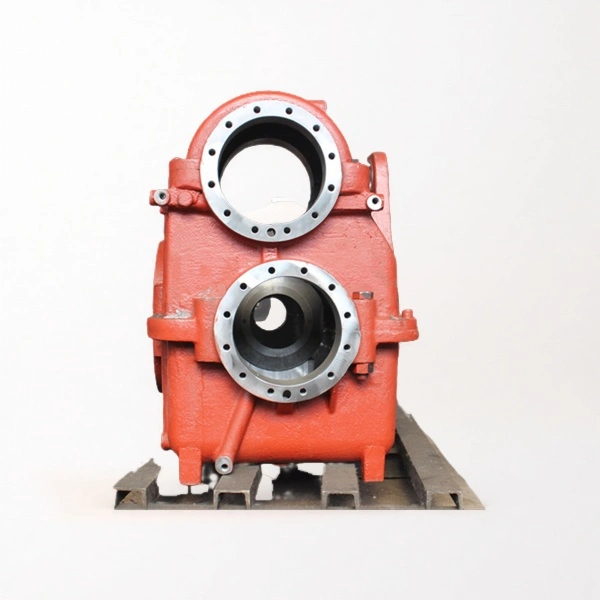
Beside the high-speed rail tracks, under the huge blades of offshore wind turbines, a seemingly ordinary but crucial component-the cambio, is silently undertaking the core conversion task of mechanical power. It is like the heart of the human body, accurately distributing the original power to various actuators and supporting the operation of the modern industrial system. From steam locomotives to smart wind power, the technological evolution of gearboxes reflects the wisdom of human beings in power transmission control.
The essence of the gearbox is the “transformer” of mechanical power, which realizes the flexible adjustment of power parameters through the precise matching of gear sets. Its core functions can be summarized as speed change, torque increase and power distribution: when the engine outputs high-speed and low-torque power, the gearbox meshes with gears of different numbers of teeth to reduce the speed to the required range of the equipment, and at the same time amplify the torque proportionally. This conversion principle is similar to that of a bicycle transmission-by adjusting the gear ratio of the front and rear sprockets, the rider can drive the vehicle to climb or accelerate with the same pedaling force.
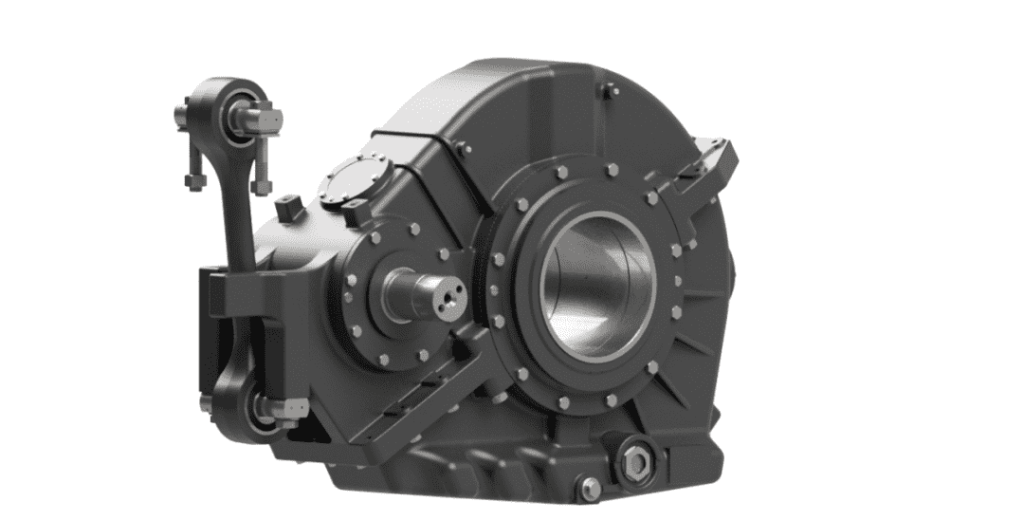
Nelle applicazioni industriali, this conversion requires extremely high precision. Take the high-speed rail gearbox as an example. It needs to reduce the motor output of 3000 giri al minuto 400 giri/min, and amplify the torque by 7.5 times to drive the 80-ton carriage. To achieve this goal, engineers use a planetary gear transmission structure: the sun gear, planetary gear and ring gear form a coaxial transmission system, which completes energy conversion in a compact space with a diameter of only 30 cm, with a transmission efficiency of up to 98.5%, which is equivalent to only 1 liter of diesel energy per 100 chilometri.
The performance requirements of gearboxes in different industries are clearly different. Railway locomotive gearboxes are considered “power players” and need to face three major challenges:
Shock load tolerance: Quando parte il treno, the motor torque can reach 3 times the rated value, and the gearbox needs to withstand instantaneous overload without plastic deformation;
Adattabilità ambientale: From the extreme cold of -40℃ in Siberia to the scorching heat of 50℃ in the desert of the Middle East, the thermal expansion coefficient of the material needs to be accurately matched to avoid jamming;
Extremely long maintenance cycle: The design life needs to cover 1.2 million kilometers of running mileage, equivalente a 30 laps around the earth, which places strict requirements on the fatigue life of the gears.
The gearbox developed by a certain company for the “Fuxing” train uses a carburizing and quenching process to make the gear surface hardness reach HRC60, and uses finite element analysis to optimize the box structure, riducendo il peso di 15% while increasing the impact resistance by 40%. Its unique labyrinth seal design can effectively block the sand and dust rolled up by the airflow at a speed of 350 chilometri orari, so that the gearbox can still maintain trouble-free operation for millions of kilometers in a windy and sandy environment.
Wind power gearboxes are “endurance players”, and their design focuses on:
Ultra-long life guarantee: maintenance-free operation must be guaranteed for 20 anni, and the number of gear meshing times exceeds 10^9 times, which poses an extreme challenge to the material’s fatigue resistance;
Corrosion protection system: Offshore units must resist salt spray erosion, and the gearbox protection level reaches IP68, which is equivalent to being able to work normally after continuous immersion in 1 meter of water for 30 giorni;
Vibration suppression technology: Under the action of random loads on the blades, the gearbox must control the vibration amplitude within 0.1mm through an elastic support system to avoid structural damage caused by resonance.
A certain type of offshore wind power gearbox uses nano-coating technology to form a 0.02mm thick protective layer on the gear surface, extending the salt spray test life from 2000 ore a 8000 ore. Its unique torque limiting device can automatically disconnect the transmission chain when encountering extreme wind speeds, protecting the gearbox from impact damage.
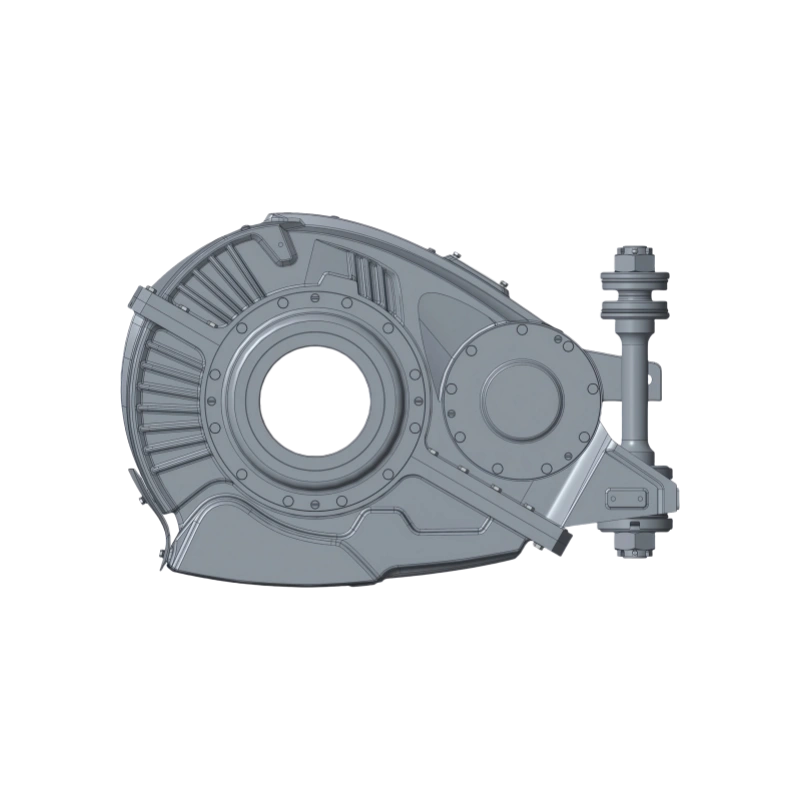
The reliability of the gearbox depends on the delicate balance of material selection. In the railway field, ductile iron QT500-7 has become the mainstream choice: this material has a tensile strength of 500MPa and can withstand the huge impact of train braking; its spheroidal graphite structure increases the fracture toughness by 3 volte, effectively preventing brittle fracture; the casting process is mature, and the cost of the box is 25% lower than that of cast steel. By embedding alloy steel bushings in key parts, this material has been successfully used in high-speed rail gearboxes with a speed of 350 chilometri orari, achieving the best balance between weight and strength.
The wind power field prefers the comprehensive advantages of cast steel ZG270-500: its yield strength is 270MPa, which is suitable for manufacturing super-large boxes with a diameter of more than 3 metri; excellent welding performance, can cope with offshore conditions through structural reinforcement; after special heat treatment, the low-temperature impact energy can reach 30J (-20℃), which meets the needs of Arctic wind power development. The hybrid gearbox developed by a certain enterprise uses forged steel parts in high-stress parts such as the planet carrier, and QT500-7 for the gearbox body. The weight is reduced by 18% through topological optimization design, and the fatigue life exceeds 1.5×10^8 cycles, which is equivalent to 17 years of continuous operation without failure.
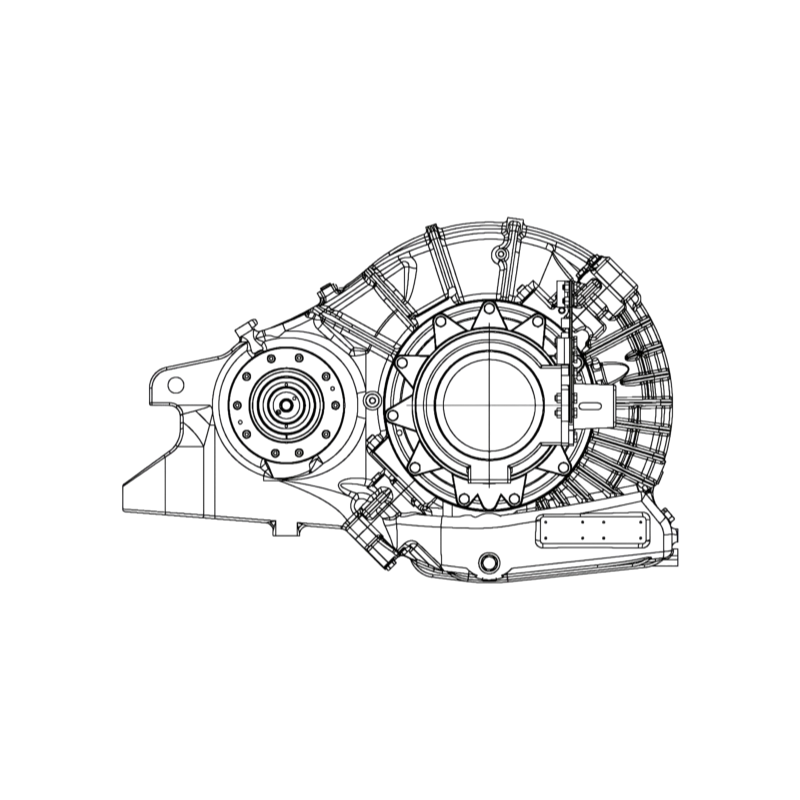
From steam locomotives to high-speed rail networks, from land wind power to offshore giant ships, gearboxes have always been the power center of mechanical systems. When high-speed trains cross mountains and rivers at a speed of 350 chilometri orari, and when wind turbine blades capture wind energy at an altitude of 100 metri, these steel “hearts” are precisely biting thousands of times per minute, transforming human pursuit of power into energy that changes the world. In futuro, with the emergence of new technologies such as hydrogen trains and floating wind power, gearboxes will continue to write a new chapter in industrial civilization on the road of material innovation and structural optimization.
Luoyang Fonyo Heavy Industries Co., Ltd,fondata nel 1998, è un produttore di parti ferroviarie in fusione. La nostra fabbrica copre un'area di 72.600㎡, con più di 300 dipendenti, 32 tecnici, compreso 5 ingegneri senior, 11 ingegneri assistenti, E 16 tecnici. La nostra capacità produttiva è 30,000 tonnellate all'anno. Attualmente, produciamo principalmente fusione, lavorazione, e assemblaggio per locomotiva,vagone ferroviario,treni ad alta velocità, attrezzature minerarie,energia eolica,ecc. I nostri prodotti sono stati esportati in Russia, gli Stati Uniti, Germania, Argentina, Giappone, Francia, Sudafrica,Italia e altri paesi.
Contatto: Stella Liu
E-mail:[email protected]
Mobile:+8615515351287