Scansiona il codice WeChat per contattarci
Scansiona il codice WeChat per contattarci
Sentiti libero di inviarci un'e-mail e ti risponderemo il prima possibile.
Creare il futuro con cuore e anima


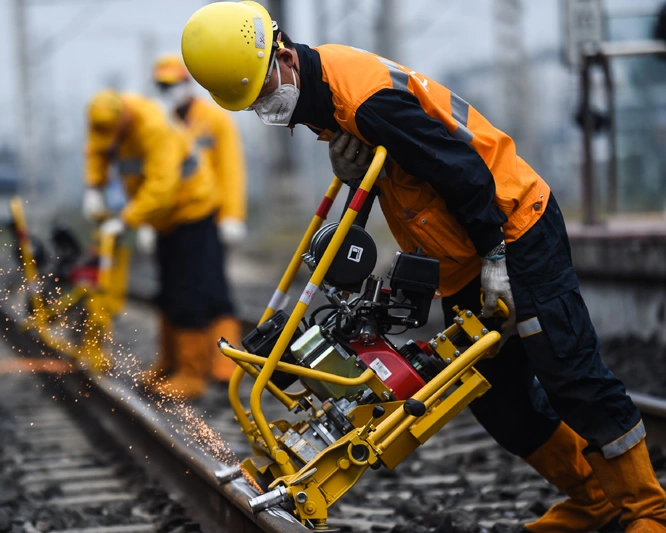
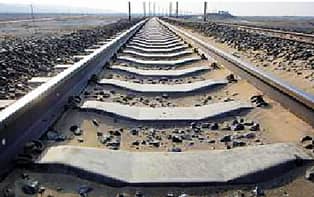
As an important national infrastructure and a popular means of transportation, the safety and stable operation of railways are of vital importance. And railway forging is the key link in building a solid “scheletro” for railways. From the connecting parts of the railway tracks to the key components of the trains, countless forged steel parts jointly support the vast operation system of the railway. Forgiatura, by applying pressure to metal billets to cause plastic deformation, yields parts with specific shapes, sizes and properties, providing a guarantee of high strength and high reliability for railway equipment.
Since the birth of railways, forging techniques have been closely associated with them. In the early days of railway construction, due to the limitations of technology and materials, forging was mainly used to manufacture simple components such as rail connection clamps. With the advancement of the Industrial Revolution, steel smelting and forging technologies have been continuously improving, and the types and properties of railway forgings have also been greatly enhanced. From the era of steam locomotives to the era of diesel locomotives and electric locomotives, and now to the era of high-speed railways, every leap in railway technology has been inseparable from the innovation and development of forging techniques. Ad esempio, the forged wheels used in high-speed trains have performance requirements far higher than those of ordinary train wheels. The advancement of forging technology has made this goal achievable.
The commonly used materials for railway forging are mainly carbon steel and alloy steel. Carbon steel has good strength and toughness, and its price is relatively low. It is suitable for manufacturing some railway components with not particularly high performance requirements, such as ordinary rail fasteners. Acciaio legato, on the other hand, is made by adding other alloying elements such as chromium, nickel and molybdenum to carbon steel, significantly enhancing the strength, durezza, wear resistance and corrosion resistance of the steel. The key components of high-speed trains, such as axles and gears, are usually forged from alloy steel to ensure safety and reliability during high-speed operation and complex working conditions.
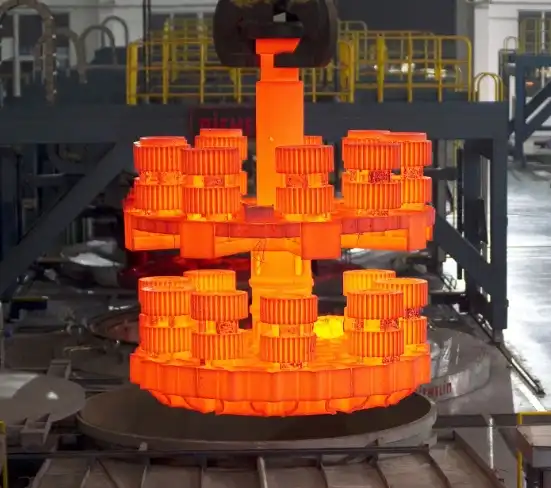
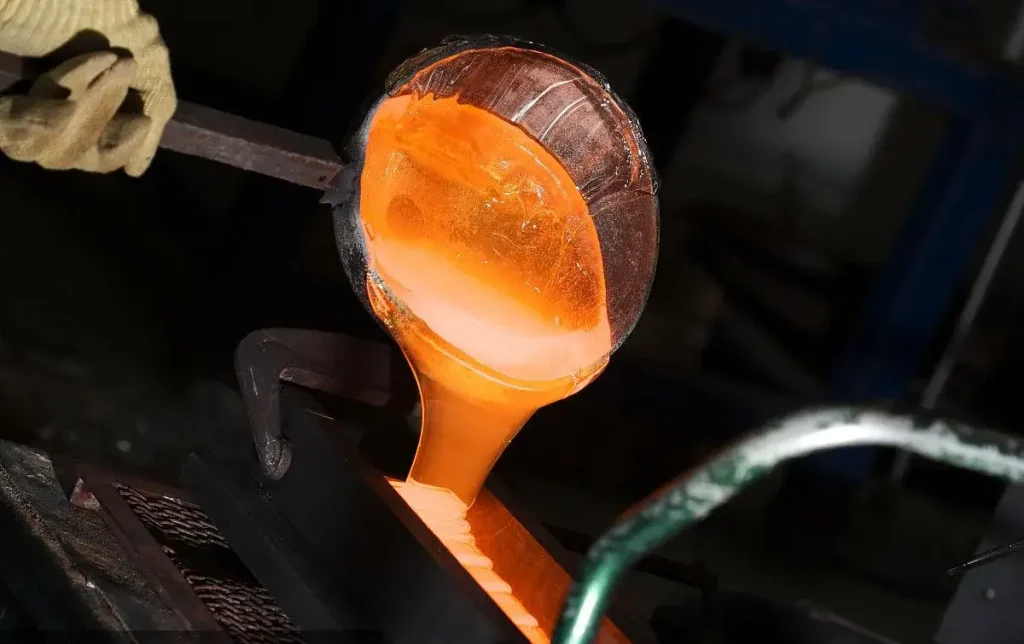
Blanking is the first step in forging. According to the design requirements of the forging, the raw materials are cut to the appropriate length and size. Heating involves placing the cut billets into the heating furnace and heating them to an appropriate temperature. Different materials and forging processes require different heating temperatures. Generally speaking, the heating temperature should ensure that the metal has good plasticity, facilitating subsequent forging deformation. Ad esempio, the heating temperature of carbon steel is typically around 1200℃, while that of alloy steel needs to be precisely controlled based on its alloy composition.
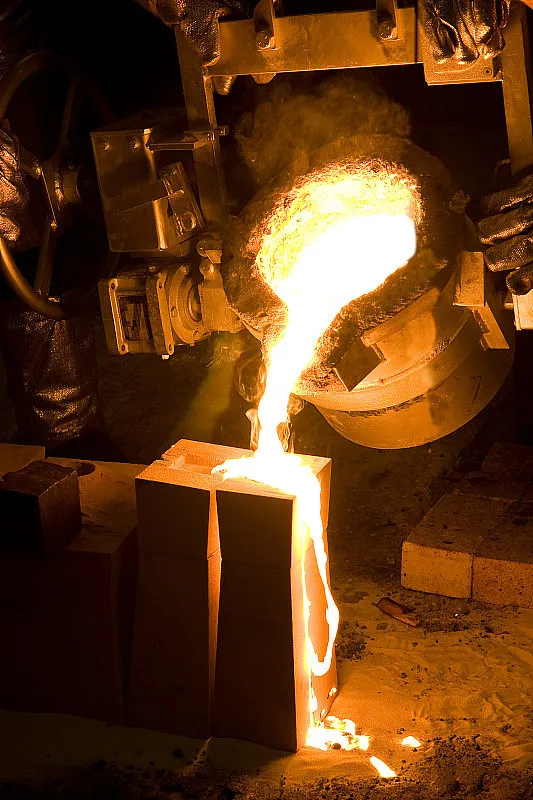
Forging forming is the core link of the entire process. Common forging methods include free forging, die forging, ecc. Free forging involves placing a heated billet between a flat anvil or a type anvil, and applying pressure through hammering or a press to cause the billet to deform freely. It is suitable for manufacturing simple-shaped and small-batch forgings. Die forging involves placing the billet into a forging die and shaping it within the die cavity under pressure. This process can produce complex-shaped and high-precision forgings and is widely used in the production of key components for railways.
Railway forgings are subjected to huge loads and complex stresses during use. Internal defects may cause sudden fractures of the forgings during use, leading to serious safety accidents. Perciò, internal defect detection is an important part of quality control. Common testing methods include non-destructive testing, such as ultrasonic testing and magnetic particle testing. Ultrasonic testing can detect defects such as cracks and pores inside forgings, while magnetic particle testing is mainly used to detect cracks on the surface of forgings.
The dimensional accuracy of forgings directly affects their assembly performance and usage effect. Durante il processo di forgiatura, it is necessary to ensure that the dimensions of the forgings meet the design requirements through precise mold design and processing, strict control of process parameters and other means. Allo stesso tempo, necessary mechanical processing is also required after forging to further improve the dimensional accuracy and surface quality of the forgings.
With the continuous development of technologies such as artificial intelligence and big data, intelligent forging will become the future development direction of railway forging. By installing sensors on forging equipment to collect real-time data such as temperature, pressure and deformation during the forging process, and using artificial intelligence algorithms for analysis and optimization, automatic adjustment and quality control of the forging process can be achieved, thereby improving forging efficiency and product quality.
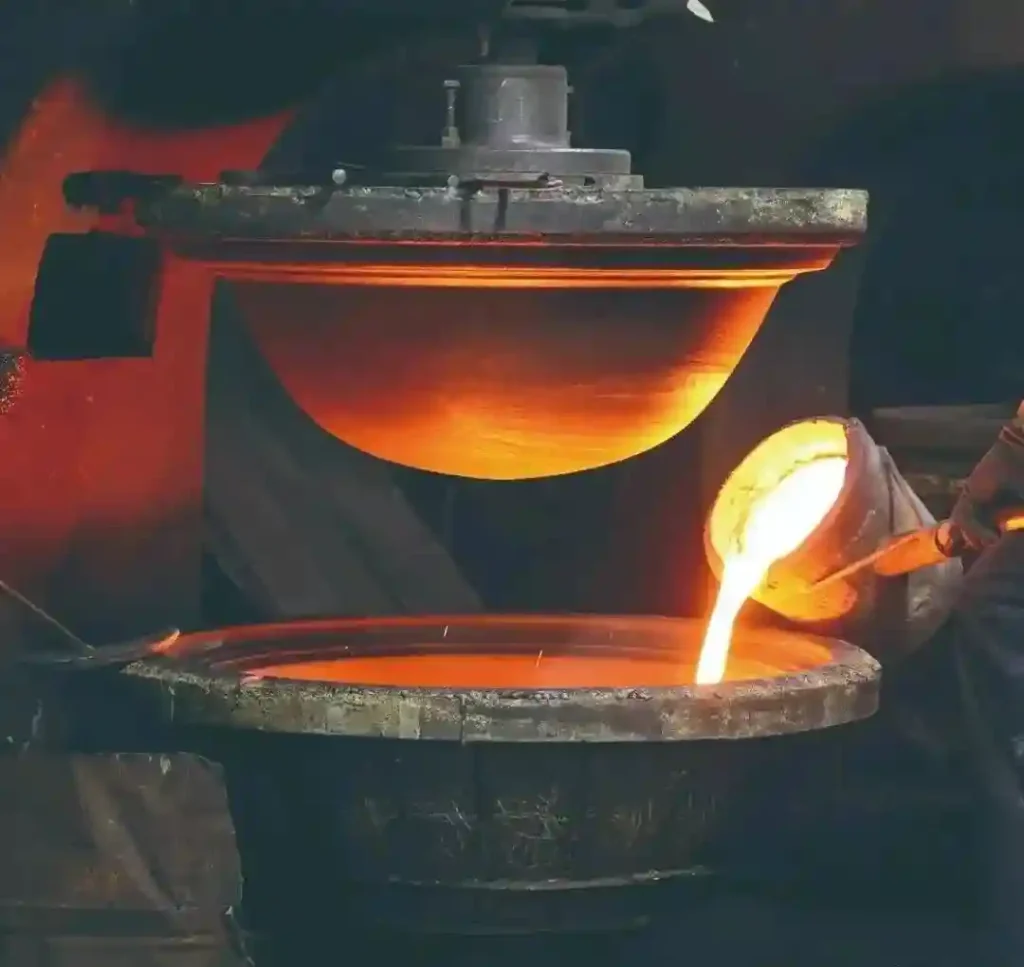
Oggi, with increasingly strict environmental protection requirements, green forging has also become a focus of industry attention. Develop new forging heating equipment to improve energy utilization efficiency and reduce exhaust gas emissions; Use environmentally friendly lubricants and coolants to reduce pollution to the environment. Allo stesso tempo, strengthen the recycling and reuse of forging waste to achieve the circular utilization of resources.
Forgiatura ferroviaria, as a key process in railway construction, plays an irreplaceable role in ensuring the safe operation of railways and promoting technological progress in the railway industry. With the continuous innovation and development of technology, railway forging will embrace a brighter future and inject new impetus into the development of the railway industry.
Luoyang Fonyo Heavy Industries Co., Ltd, fondata nel 1998, è un produttore di parti ferroviarie in fusione. La nostra fabbrica copre un'area di 72.600㎡, con più di 300 dipendenti, 32 tecnici, compreso 5 ingegneri senior, 11 ingegneri assistenti, E 16 tecnici. La nostra capacità produttiva è 30,000 tonnellate all'anno. Attualmente, produciamo principalmente fusione, lavorazione, e assemblaggio per locomotiva, vagone ferroviario, treni ad alta velocità, attrezzature minerarie, energia eolica, ecc. I nostri prodotti sono stati esportati in Russia, gli Stati Uniti, Germania, Argentina, Giappone, Francia, Sudafrica, Italia e altri paesi.