Scansiona il codice WeChat per contattarci
Scansiona il codice WeChat per contattarci
Sentiti libero di inviarci un'e-mail e ti risponderemo il prima possibile.
Creare il futuro con cuore e anima


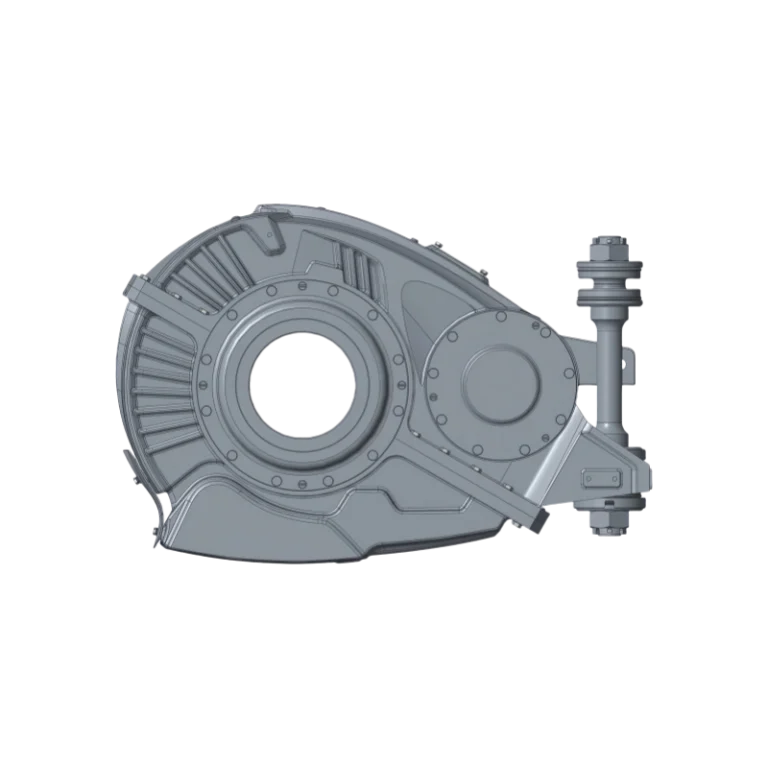
Nel sistema di trasporto ferroviario, although riduttori are not often seen, sono la forza chiave che spinge i treni ad avanzare costantemente. Sono come conduttori silenziosi, precisely regulating the process of power transmission from the motor to the wheels. As rail transit moves towards higher speeds, carichi più pesanti, and greater environmental friendliness, the technical forms of gearboxes are becoming increasingly diverse. Attualmente, the commonly used gearboxes for rail vehicles mainly include parallel shaft type, planetary type, and the new generation quasi-helical type, tra gli altri. Each has its own characteristics and is applied in different scenarios, jointly supporting the efficiency and safety of modern railway transportation.
1.Parallel Shaft Gearbox:
1.1 Applicazione
The parallel shaft gearbox is the most widely used and longest applied type of transmission device. Its structural feature is that the input shaft and output shaft are arranged in parallel, and power is transmitted through one or more pairs of cylindrical gears. Different tooth shapes, such as straight teeth, helical teeth, or herringbone teeth, can be adopted. Tra loro, helical teeth are the mainstream choice due to their smooth engagement and high load capacity.
1.2 Vantaggio
The greatest advantage of this type of cambio is its simple structure, bassi costi di produzione e manutenzione, and strong adaptability to the environment (such as dust and temperature). It is commonly found in urban subways, tram, and medium and low-speed freight trains, performing the core function of reducing speed and increasing torque – questo è, converting the high speed of thousands of revolutions per minute from the motor into the hundreds of revolutions per minute required by the wheels and outputting greater torque.
Tuttavia, due to its relatively large axial size and weight, the parallel shaft structure is gradually being used less in modern high-speed trains or vehicles with limited space. But its excellent reliability and economy still play an irreplaceable role in many conventional lines.
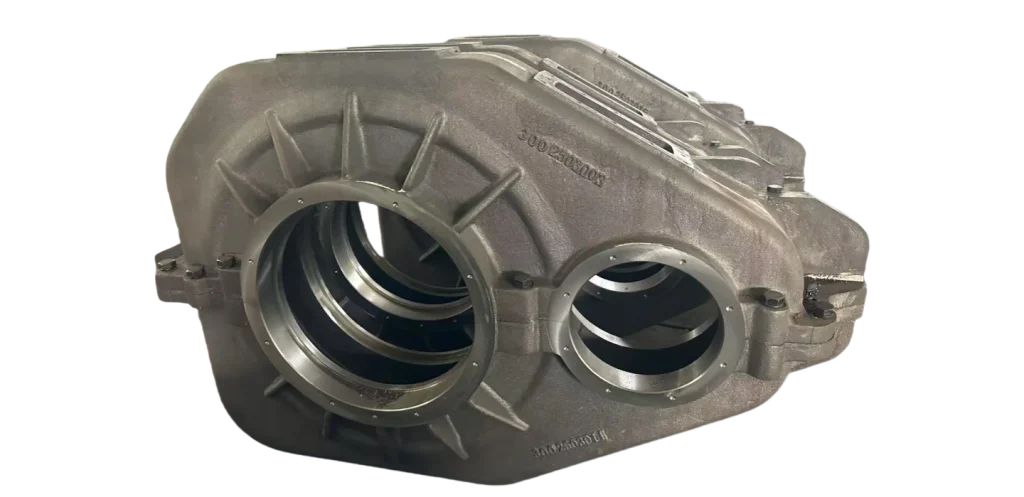
2.1 Struttura
To meet the demands of train lightweighting and high-speed operation, planetary riduttori have gradually emerged. Their structure is similar to the operation mode of the solar system: the sun gear is at the center, and multiple planetary gears mesh together, and power is output through the outer ring gear. Questo “power split” design enables it to achieve a larger reduction ratio and higher torque capacity in the same volume.
2.2 Applicazioni
Planetary riduttori are particularly suitable for applications with limited installation space but high performance requirements, such as high-speed trains, power-concentrated trains, and some light rail vehicles. Due to the load distribution among multiple planetary gears, they operate more smoothly with less vibration, and the transmission efficiency can reach over 98%, significantly superior to the traditional parallel shaft structure.
2.3 Manufacturing Requirements
Ovviamente, planetary riduttori also have higher requirements for manufacturing precision, material strength, and assembly processes. Their components are complex, and maintenance is more challenging, with a relatively high initial investment cost. Tuttavia, with the improvement of processing technology and large-scale applications, they are gradually becoming the preferred configuration for medium and high-end rail vehicles.
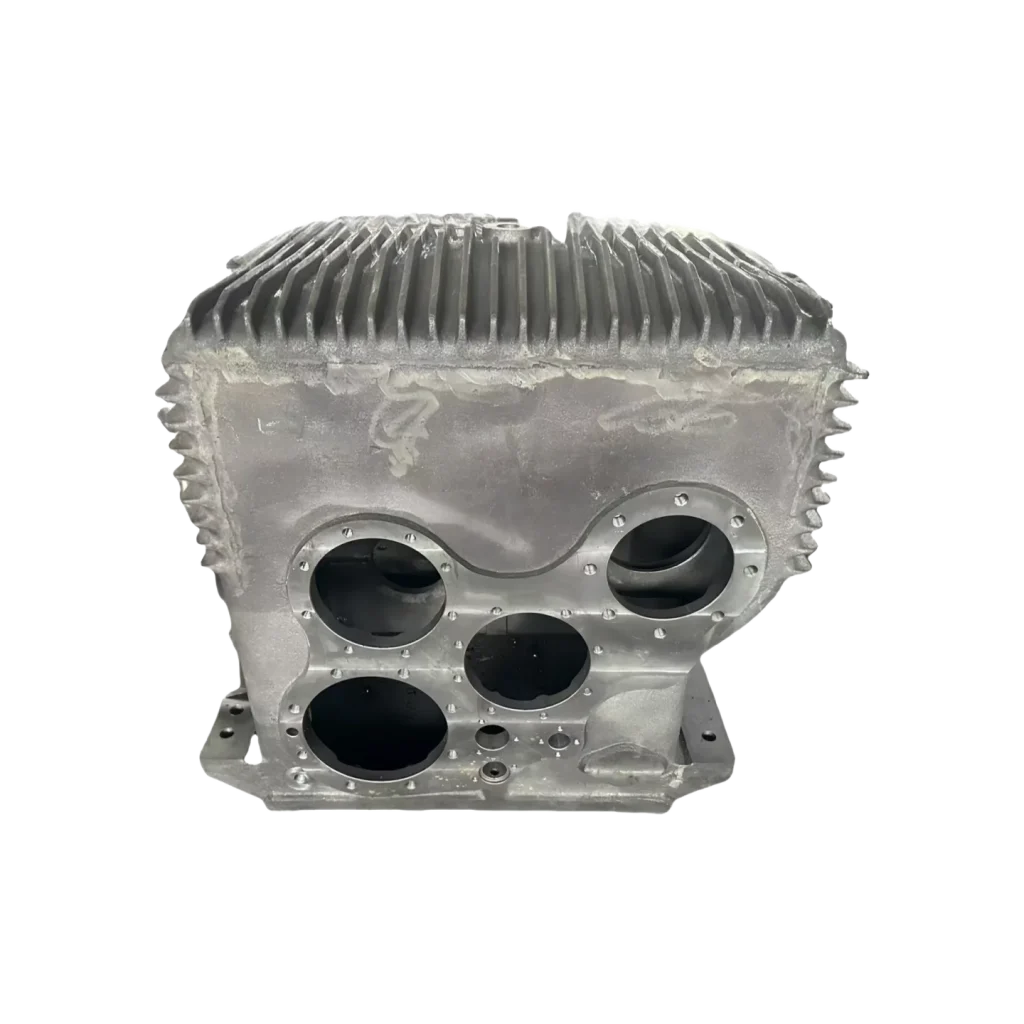
3.1 Vantaggi
In heavy-haul railways and special engineering vehicles, quasi-helical riduttori demonstrate unique advantages. Their most significant feature is that the axes of the driving gear and driven gear are spatially crossed (usually at 90 gradi), and the tooth shape is a stretched curved surface, resulting in a smoother meshing process and extremely low noise.
3.2 Struttura
This structure not only achieves efficient power transmission (often used in the arrangement where the motor is vertical and the axle is horizontal) ma anche, due to the larger contact area of the tooth surface, can withstand extremely high torque and impact loads. Perciò, it is widely used in heavy-haul locomotives, large shunting and engineering maintenance vehicles, especially suitable for complex lines with many slopes and curves.
3.3 Technical Requirements
Tuttavia, quasi-helical gears are very sensitive to lubrication and assembly precision, requiring the use of special extreme-pressure lubricating oil and regular maintenance to avoid abnormal wear. Despite the higher manufacturing cost, their performance in specific working conditions still far exceeds other types.
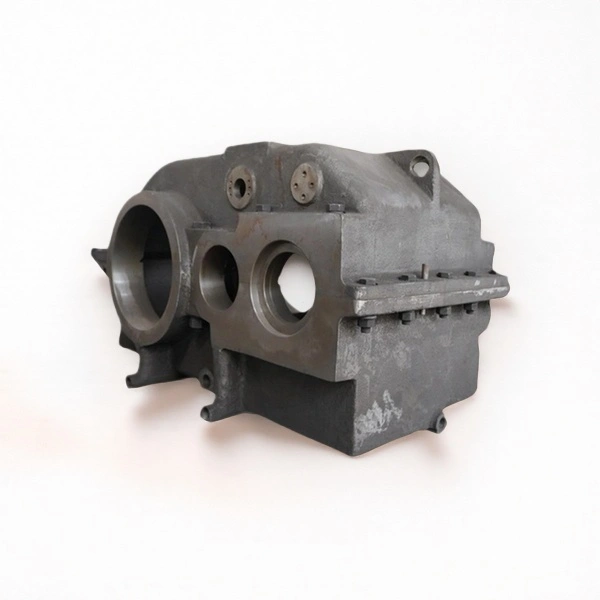
4.1In addition to the above three mainstream structures, negli ultimi anni, some new types of riduttori have emerged, such as two-stage reduction gearboxes and “mechatronic integrated” gearboxes integrated with motors. They further break through the limitations of traditional layouts, improve transmission efficiency, and integrate new technologies such as condition monitoring and intelligent lubrication to achieve predictive maintenance. In futuro, the development of gearboxes will focus more on lightweight materials (such as composite material housings), low-noise design, higher efficiency transmission (such as ≥99%), and cost optimization throughout the entire life cycle. Modularization and intelligence will become the themes of the next round of technological iteration.
From the robust parallel shafts to the advanced planetary gears and then to the specialized hypoid gears, the diverse development of the gearboxes in rail vehicles reflects the technological evolution of the entire rail transportation industry. The correct selection not only affects the efficiency of power transmission but also directly influences the energy consumption, rumore, reliability and maintenance costs of the train. Against the backdrop of “carbon neutrality” and smart railways, this traditional mechanical component, il cambio, is quietly undergoing profound innovation through new materials, new processes and intelligent algorithms.
Luoyang Fonyo Heavy Industries Co., Ltd,fondata nel 1998, è un produttore di pezzi fusi per ferrovie. La nostra fabbrica copre un'area di 72.600㎡, con più di 300 dipendenti, 32 tecnici, compreso 5 ingegneri senior, 11 ingegneri assistenti, E 16 tecnici. La nostra capacità produttiva è 30,000 tonnellate all'anno. Attualmente, produciamo principalmente fusione, lavorazione, e assemblaggio per locomotiva, vagone ferroviario, treni ad alta velocità, attrezzature minerarie,energia eolica,ecc.
Siamo la fornitura di componenti ferroviari a CRRC(compreso più di 20 filiali e controllate di CRRC),Macchine per l'ingegneria Gemac,Sanygroup, Industrie pesanti Citic,ecc. I nostri prodotti sono stati esportati in Russia, gli Stati Uniti, Germania, Argentina, Giappone, Francia, Sudafrica,Italia e altri paesi in tutto il mondo.
Informazioni sui contatti:
E-mail:[email protected]
Mobile:008615515321683