Scannez le code WeChat pour nous contacter
Scannez le code WeChat pour nous contacter
N'hésitez pas à nous envoyer un email et nous vous répondrons dans les plus brefs délais.
Créer l'avenir avec cœur et âme


Wind energy has become one of the most important renewable energy sources in the global transition toward sustainable power. Les éoliennes modernes sont des systèmes mécaniques volumineux et complexes, and their structural components must meet extremely high standards for strength, fiabilité, et résistance à la fatigue.
Parmi ces composants, le wind turbine generator housing plays a critical role in protecting internal electrical systems and supporting heavy mechanical loads. Because these housings are typically made from thick steel plates or cast structures, high-quality welding technology is essential to ensure structural integrity and long service life.
In wind power equipment manufacturing, welding processes such as Gas Metal Arc Welding and CO2 Shielded Welding are widely used to fabricate large structural components including generator housings, frames, and support structures.
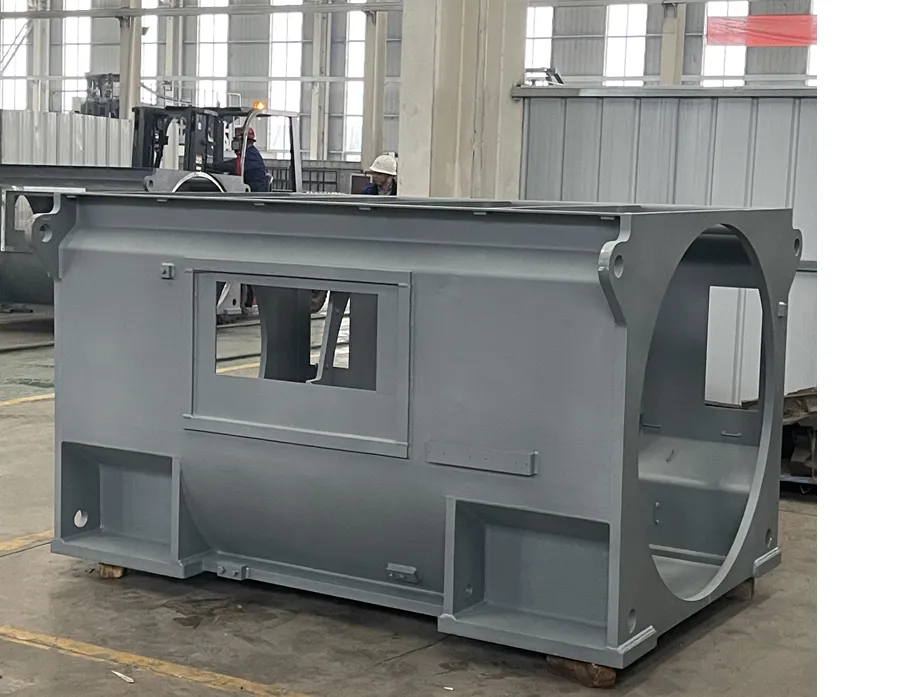
Wind turbine generator housings must operate in extremely demanding environments. They are exposed to continuous vibration, charges lourdes, and varying weather conditions over long periods of time.
High-quality welding ensures:
🔧 Structural strength – Welded joints must withstand long-term mechanical stress.
🌬 Résistance à la fatigue – Wind turbines operate continuously for decades, requiring durable weld seams.
⚙ Dimensional stability – Proper welding techniques help prevent deformation in large steel structures.
🛡 Protection of internal equipment – A well-welded housing protects generators and electrical components from environmental damage.
Because wind turbine components are often very large, welding also allows manufacturers to assemble complex structures efficiently and economically.
Large wind power components may use several industrial welding methods depending on the structural design and material thickness.
One of the most commonly used welding processes in wind turbine component manufacturing is CO2 Shielded Welding.
Dans ce processus, carbon dioxide gas is used as a shielding gas to protect the weld pool from atmospheric contamination while the welding wire melts and forms the weld seam.
Advantages include:
✔ High welding efficiency
✔ Good penetration for thick steel plates
✔ Stable arc performance
✔ Lower cost compared with mixed shielding gases
✔ Suitable for automated and semi-automatic welding
For large wind turbine generator housings, CO₂ shielded welding provides a strong and reliable connection between structural steel sections.
Another important process used in heavy steel fabrication is Submerged Arc Welding.
In submerged arc welding, the welding arc burns beneath a layer of flux, which protects the molten metal and improves weld quality.
This process is particularly suitable for:
Thick plate welding
Long straight weld seams
Large structural components
It is often used for base structures or large cylindrical components in wind turbine manufacturing.
Manufacturing wind turbine generator housings involves several technical challenges.
Large structural size
Wind turbine components can be several meters in diameter and weigh several tons. Controlling welding deformation is therefore extremely important.
Thick materials
Heavy steel plates require deep weld penetration and precise heat control during welding.
High quality standards
Wind power equipment must meet strict quality standards for durability and safety. Welding defects such as:
Porosity
Slag inclusion
Cracks
must be carefully controlled through proper welding procedures and inspections.
To ensure reliable performance, manufacturers implement strict welding quality control procedures.
Common quality control measures include:
✔ Welding procedure qualification
✔ Skilled and certified welders
✔ Pre-welding preparation and cleaning
✔ Controlled welding parameters
✔ Non-destructive testing methods such as ultrasonic inspection
These procedures ensure that welded joints meet the required strength and reliability standards for long-term operation.
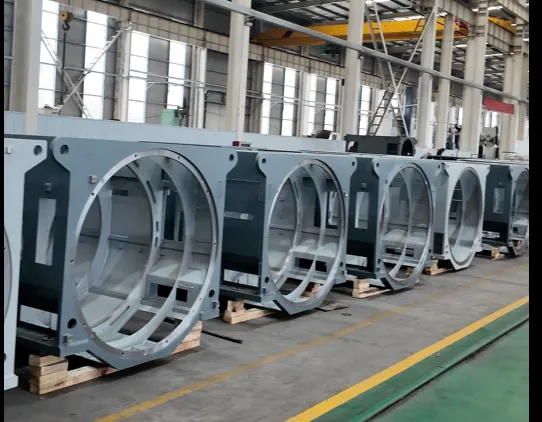
Advanced welding technologies are widely used across many heavy industries. Par exemple, railway infrastructure uses specialized rail welding techniques such as Flash Welding and Aluminothermic Welding to connect steel rails in high-speed railway systems.
Although the applications are different, the underlying goal is the same: to create strong, durable welded joints that ensure long-term structural reliability.
Luoyang Fonyo Industrie Lourde Co., Ltée. has extensive experience in manufacturing heavy steel components for railway, exploitation minière, and wind power equipment.
Our production capabilities include:
Heavy steel fabrication and welding
CO₂ shielded welding for structural components
Precision machining of large parts
Assembly of complex equipment housings
With a modern manufacturing facility covering 72,600 m² and an annual production capacity of 30,000 tonnes, we provide reliable manufacturing solutions for industries such as railway transportation, énergie éolienne, and mining equipment. Please visit our website www.railwaypart.com to get more information about us. Si vous êtes intéressé par l'un de nos produits, or you have any requirement, please tell us, we can custom metal products according to your drawings and samples.
CO₂ shielded welding (Soudage MAG) is widely used because it offers high efficiency, good penetration, and stable weld quality for thick structural steel.
Wind turbines operate continuously under heavy loads and vibration. High-quality welding ensures structural strength and long-term reliability.
Manufacturers typically use non-destructive testing methods such as ultrasonic testing to detect internal defects and ensure weld quality.