Escanea el código WeChat para contactarnos
Escanea el código WeChat para contactarnos
No dudes en enviarnos un correo electrónico y te responderemos lo antes posible.
Creando el futuro con corazón y alma


1. What is Ductile Iron?
1.1 Ordinary cast iron is like a piece of biscuit – hard but full of empty structures inside, so that it is very easily crackedd. It’s easy to break and snap under bending. The magic of ductile iron lies in a special process called nodulizing. This treatment transforms those easy broken structures into tiny, round balls within the material.
1.2 These little balls act like bearings, effectively absorbing and distributing impact from all directions. This gives ductile iron a unique combination of strength and toughness. It keeps the “iron skeleton” hardness of cast iron but also gains the flexibility and impact resistance similar to steel.
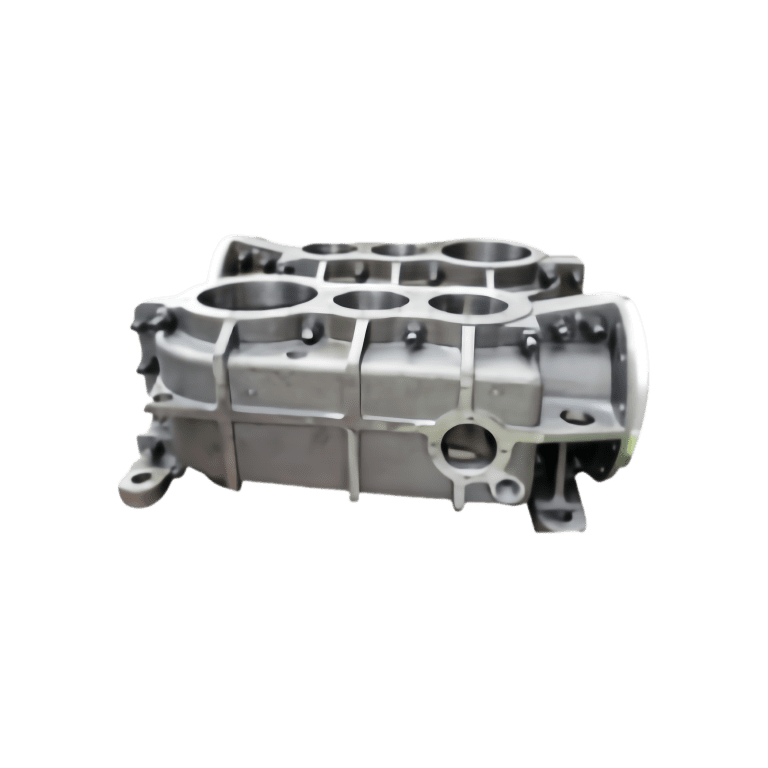
1.3 This special internal structure makes it an ideal choice for critical railway castings, allowing them to handle the huge pressures and vibrations of high-speed trains.
2. Material Standard: GB/T 1348-2019, SABS 1223-1993, GOST 7293-85, ASTM A536
2.1 Ductile iron castings have strict quality demands; they must reach material standards, Por ejemplo, GB/T 1348-2019, SABS 1223-1993, GOST 7293-85, ASTM A536 and so on. It requires a tensile strength of 500MPa. Although it is small, it can carry a high weight and not broken. As well as it must be a very good property of good elongation, which is at least 7%, that is to say, it can bend and deform slightly without suddenly breaking – it’s not overly hard.
2.2 Quality requirements for hierro dúctil are strict. Suppliers should provide a certificate to prove their ability and trustworthy to make the Ductile Iron
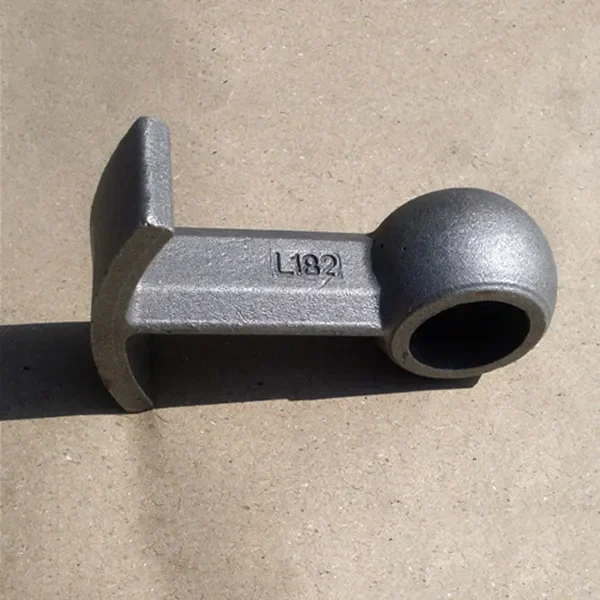
3. Metallographic Structure: Nodularity is Key
3.1 Nodularity is crucial for the ability of Hierro dúctil. When you want to pick a good and sweet watermelon, we check if it’s ripe, and it is also important for us to get the flesh, to make sure it is sweet and grainy. Under a microscope, the roundness of the graphite balls is like the “flesh.” Higher nodularity, just like more perfect, round “balls,” leads to better material performance.
3.2 Railway components demand a high quality of nodularity, normally no less than 85%. Not mentioning some critical parts, their nodularity will reach over 90%. Inspection of often done by microscope for materials, follows the ISO 945-1 estándar.
4. Chemical Composition: Precise Control makes Quality trustworthy
The element content is like ingredients in cooking – they directly affect the final product’s “taste” y “nutrition.”
4.1 Carbon (do): 3.40%-3.60%. Forms the base for the “balls,” ensuring a solid “skeleton.”
4.2 Silicon (Y): 1.70%-2.70%. Boosts “tenacidad,” but too much makes it brittle in cold temperatures.
4.3 Manganese (Minnesota): ≤0.3%. A double-edged sword. A little helps, but too much increases brittleness.
4.4 Sulfur (S): ≤0.015%. El “number one enemy” of the nodulizing process. Must be strictly controlled.
5. Special Requirements for Railway Components
Railway castings have tougher demands than general industrial parts.
Parts for trains running in cold regions must resist extreme cold. Advanced low-temperature ductile iron is a kind of new material; it needs to have precise composition control, stays as tough and flexible as high-quality rubber even in freezing temperatures, unlike brittle glass that shatters easily.
6. Procurement Guide: 4-Step Quality Control
6.1 Supplier Qualification Check
To ensure the quality, the supplier should have relevant certificates from bodies like the China Foundry Association. Prefer manufacturers with proven railway industry experience – it’s like choosing a partner with an “experienced co-pilot.”
6.2 Inspection Report Review
Request third-party test reports – the product’s “health check-up.” Focus on mechanical properties, metallographic analysis, and chemical composition.
6.3 Control Production Process
For critical parts, arrange factory inspections. See the “magic” happen yourself – ensure key steps like nodulizing and heat treatment are done correctly.
6.4 Incoming Inspection
When goods arrive, conduct sampling inspections – give them a “final exam.” Consider using a third-party lab for re-inspection as the last quality safety net.
7. Proveedor
7.1 Industrias pesadas Co. de Luoyang Fonyo., Limitado. es un fabricante líder de piezas y componentes industriales pesados., Especializado en proporcionar piezas fundidas de acero de alta calidad., incluyendo acero al carbono, Hierro dúctil, acero alto en manganeso, acero aleado, y piezas fundidas de acero resistentes al calor. Con un modelo de servicio integral integrando diseño, fundición, mecanizado, y servicio, Fonyo garantiza que cada producto cumpla con rigurosos estándares de calidad y rendimiento para satisfacer las exigentes necesidades de diversas industrias pesadas..
7.2 Si está buscando un proveedor confiable de piezas de fundición y maquinaria industrial pesada, Por ejemplo, Pieza de fundición de hierro dúctil, Industrias pesadas Co. de Luoyang Fonyo., Limitado. es tu elección ideal. Visita el sitio web oficial de Fonyo (www.railwaypart.com) para obtener más información sobre el producto y soporte técnico!