Scan WeChat-koden for at kontakte os
Scan WeChat-koden for at kontakte os
Du er velkommen til at sende os en e-mail, og vi vil svare dig hurtigst muligt.
At skabe fremtiden med hjerte og sjæl


Når folk taler om jernbanesikkerhed, de tænker ofte på signaler, spor, eller togets bremsesystem som helhed. But one small component plays a very direct role in stopping a train — the railway brake shoes.
Bremsesko kan se simple ud, but they are very important. They work under heavy loads, high temperatures, and repeated braking cycles.
So if we understand how they work, we can choose the right material and avoid unnecessary problems.
A railway brake shoe is a friction component used in traditional wheel-tread braking systems.
It is mounted on the brake rigging and pressed directly against the wheel tread when braking.
When it touches the wheel, friction is created, which slows the wheel down and stops the train.
In simple words:
Brake shoes stop trains by rubbing against the wheels.
They are widely used on freight trains, tunge jernbaner, passagervogne, and many conventional rail systems around the world.
Even though the system looks complex, the principle is actually simple.
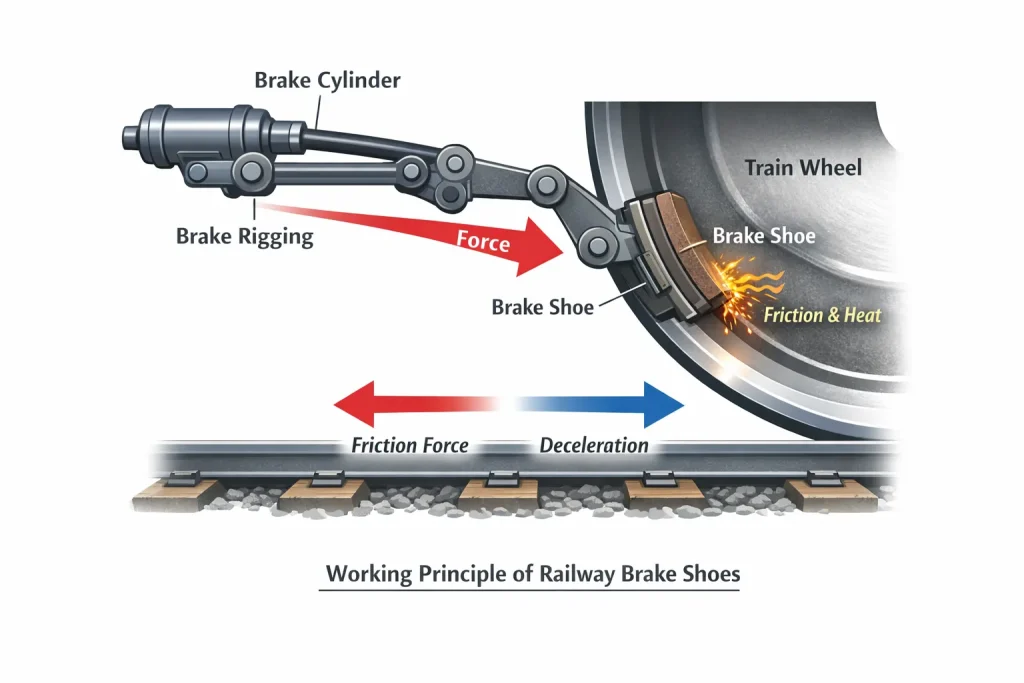
The brake cylinder is the power source of the braking system.
When the driver applies the brake, compressed air enters the cylinder.
The air pressure pushes the piston inside, creating mechanical force.
The cylinder itself doesn’t touch the wheel. Its job is only to generate force.
The force from the cylinder is transferred through the brake rigging, a set of mechanical parts like levers, stænger, and beams.
Its job is to transfer the braking force from the cylinder to the brake shoes. Desuden, it makes sure that both sides of the wheel receive the force evenly. Derudover, det sikrer, at bremseskoene presser hjulet korrekt.
En veldesignet bremserigning hjælper skoene med at slides jævnt og fungerer problemfrit.
Endelig, bremseskoen presses mod hjulets slidbane.
I dette øjeblik, hjulet roterer, og bremseskoen modstår bevægelsen. Følgelig, friktion genereres, som omdanner kinetisk energi til varme.
Efterhånden som friktionen øges, hjulet bremser, så bremser toget sikkert.
Dette er hovedpunktet ved jernbanebremsning.
Ikke alle bremsesko er ens. Forskellige jernbaner bruger forskellige materialer baseret på deres driftsforhold.
Gråjern er den traditionelle mulighed. Den er kendt for sin stabile friktionsydelse. Derudover, det giver god varmebestandighed og høj pålidelighed. It’s still widely used on freight trains and heavy-haul railways.
Ductile iron is stronger and tougher than grey iron. It offers better resistance to cracking. Desuden, it provides stable performance under heavy loads. It’s suitable for demanding applications where durability matters.
Composite brake shoes are made from non-metallic friction materials.
With the composite material, they are chosen for their lower noise, less wheel wear, and cleaner operation. These are often used on passenger trains and urban rail systems.
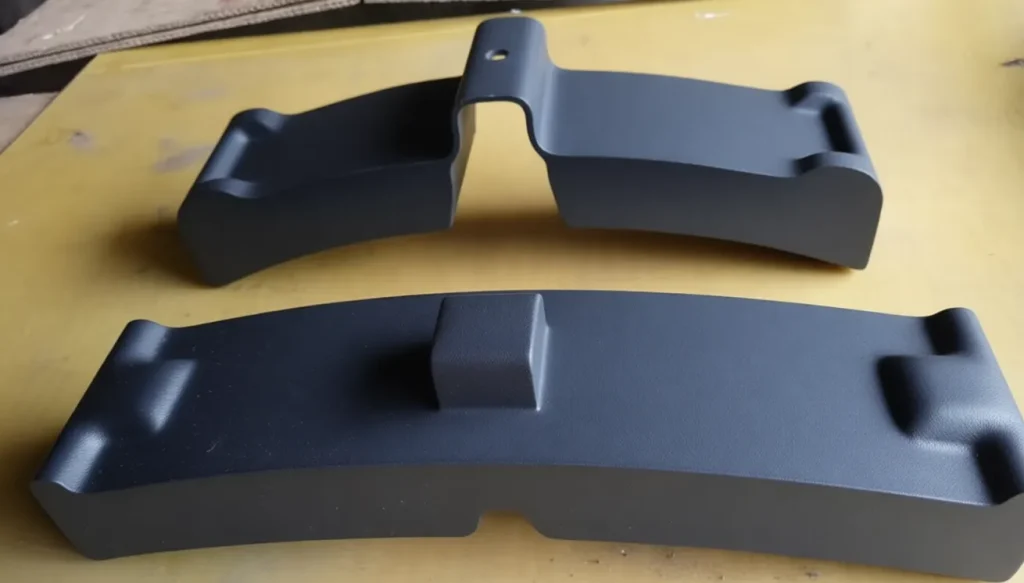
Choosing the right material is more than a technical detail — it affects daily operations. The right material can ensure stable braking performance. Desuden, it can protect wheel treads, reduce noise, extend service life, og lavere vedligeholdelsesomkostninger. There isn’t a single material that works for everything. The best choice depends on how and where the train operates.
Railways operate under very different conditions. Some carry heavy loads. Some run at high speed. Some work in cold climates. Others focus on low noise and comfort. På grund af dette, brake shoes often need to be customised. Customisation can include choosing the right material and adjusting friction performance. Derudover, it involves designing the size and shape, adapting mounting or back plate design, and meeting different international standards.
A well-matched brake shoe works better, lasts longer, and keeps trains safe.
Brake shoes may not be complicated parts, but they are extremely important. They directly affect braking safety, as well as influence wheel condition and operating costs. Understanding how brake shoes work and choosing the right material makes a real difference in railway performance.
Og Luoyang Fonyo Heavy Industries Co., Ltd., we provide reliable and customised railway brake shoes to meet your specific needs. Besøg vores hjemmeside på www.railwaypart.com to learn more or contact us — we can help you find the most suitable solution for your application.
Du kan også kontakte os direkte:
WhatsApp: +86 15515351287
E-mail: [email protected]
We’re always ready to help you find the most suitable solution for your application.