Bizimle iletişime geçmek için WeChat kodunu tarayın
Bizimle iletişime geçmek için WeChat kodunu tarayın
Bize e-posta göndermekten çekinmeyin; size en kısa sürede cevap vereceğiz.
Geleceği kalp ve ruhla yaratmak


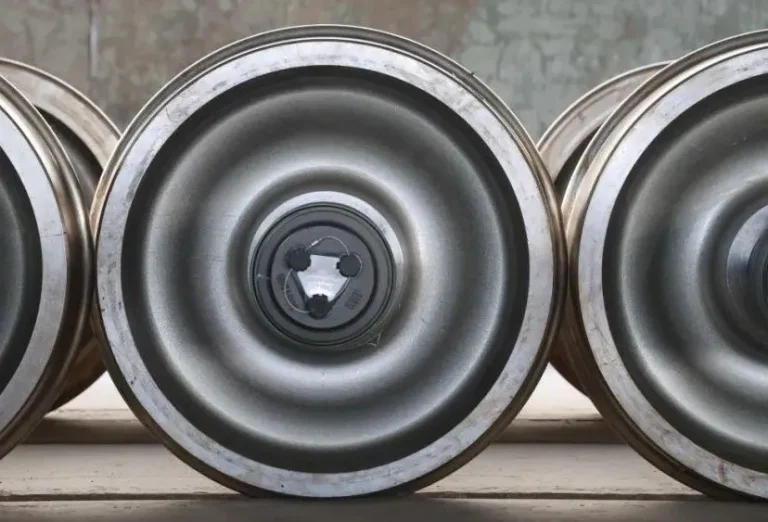
The railway wheel hub, as the core component that directly contacts the train with the track, seems to be a simple “disc” yapı. Fakat, it bears the entire weight of the train, withstands the huge impact during high-speed operation, and is the key to ensuring train safety. It is like human feet, which must be both firm and reliable as well as flexible and adaptable. It is an indispensable “steel foot” demiryolu sisteminde.
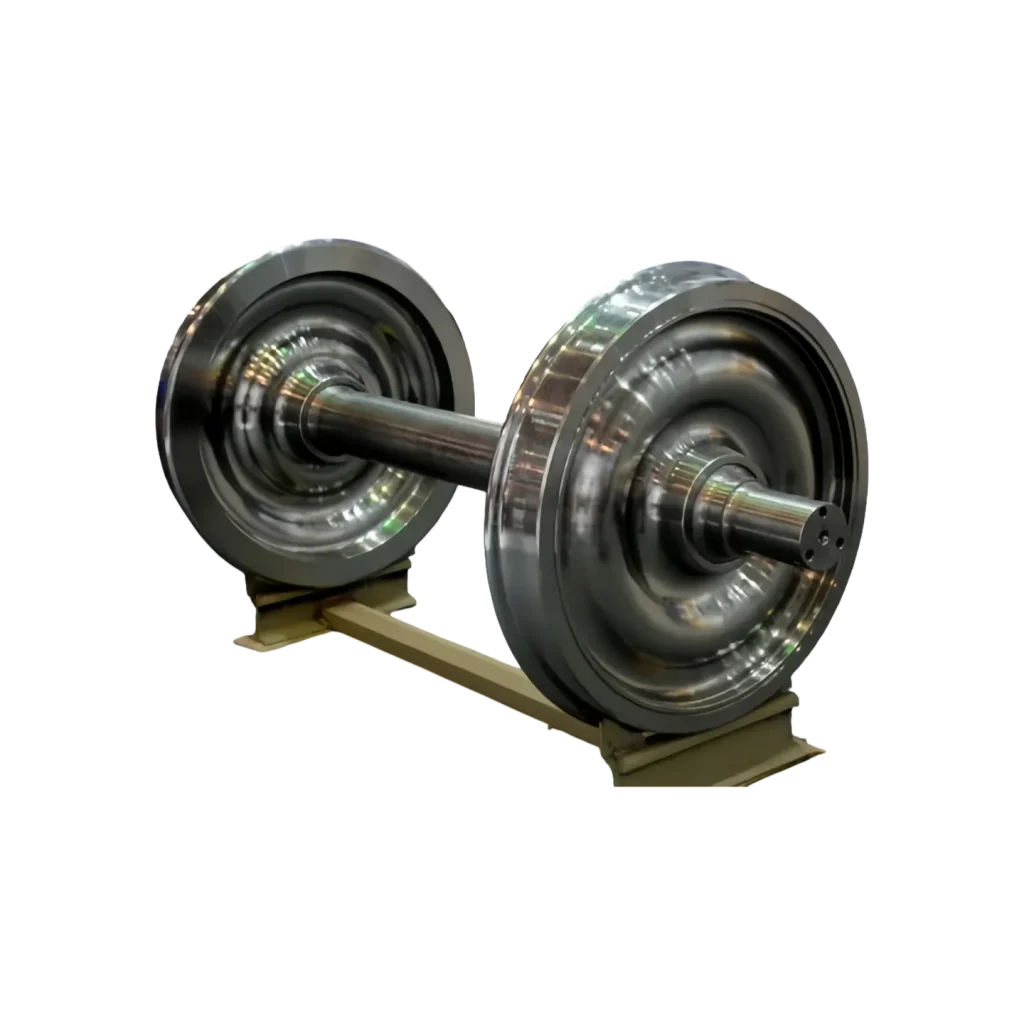
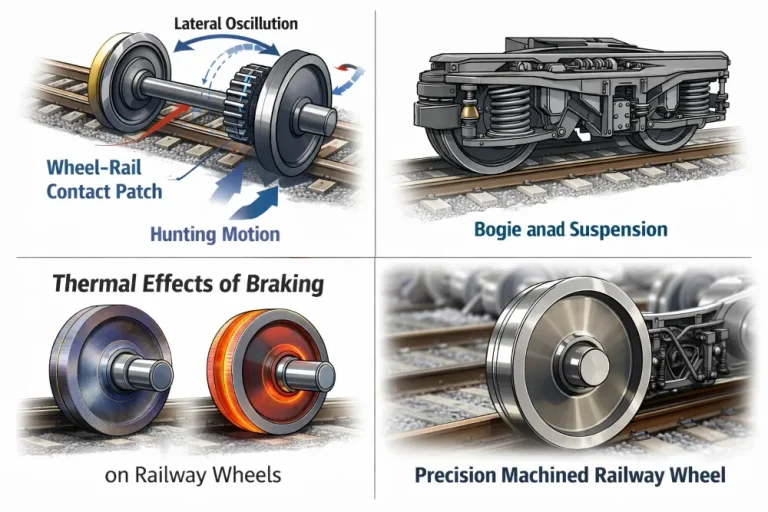
Railway wheel hubs are usually composed of four parts: the rim, the tread, the spokes and the hub holes. The rim is the raised part on the inner side of the hub, acting like a “guardrail” to prevent the train from derailing. The tread is the outer circular surface in contact with the track, and its shape (such as conical or worn shape) directly affects the smoothness of train operation. The spoke plate connects the rim and the hub hole, presenting an arc or straight plate shape, which not only reduces weight but also enhances structural strength. The hub hole is a central circular hole, which is used to closely fit with the axle to transmit traction and braking force.
The primary function of a wheel hub is to bear weight – for a train carrying thousands of tons, its weight is evenly transferred to the track through the wheel hub. ikinci olarak, there is guidance. The coordination between the flange and the track ensures that the train runs along the predetermined route and avoids derailment. Ek olarak, the hub also needs to be connected to the axle through the hub hole to efficiently transmit the power of the traction motor or the braking force of the braking system, thereby achieving the start, stop and speed change of the train.
In the early days, railway wheels were mostly made of cast steel. Fakat, with the increase in train speed and load, modern wheels generally use high-strength alloy steel (such as low-carbon alloy steel containing manganese, silicon and chromium), which has a tensile strength of over 800MPa, and also has good fatigue resistance and wear resistance. Son yıllarda, composite materials (such as carbon fiber reinforced plastics) and titanium alloys have also begun to be tested on a small scale, aiming to reduce weight further and enhance performance.
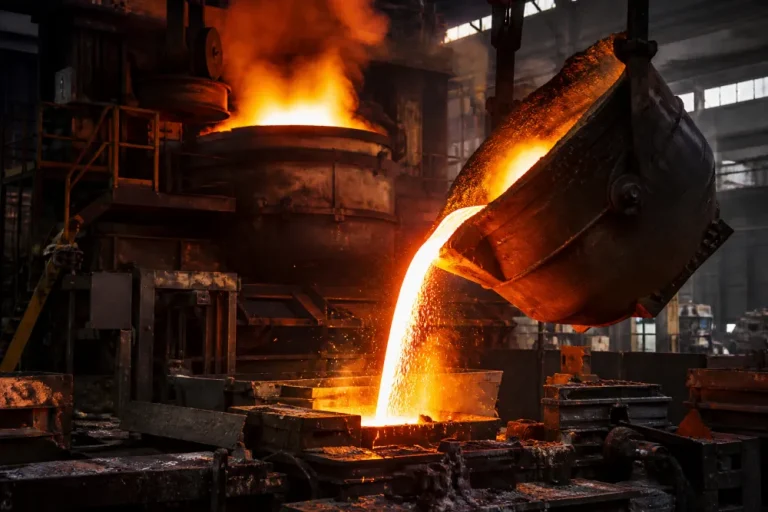
The manufacturing of wheel hubs involves multiple processes: İlk önce, they are formed through casting or forging (forged wheel hubs have a denser internal structure and better performance); Daha sonra, ısıl işlem (such as quenching + tempering) is carried out to eliminate internal stress and enhance hardness; Nihayet, the dimensional accuracy of the tread and flange should be ensured through precision processing (such as CNC machine tools), with the error controlled within 0.1 milimetre. Some high-speed train hubs also adopt laser quenching technology to enhance surface wear resistance.
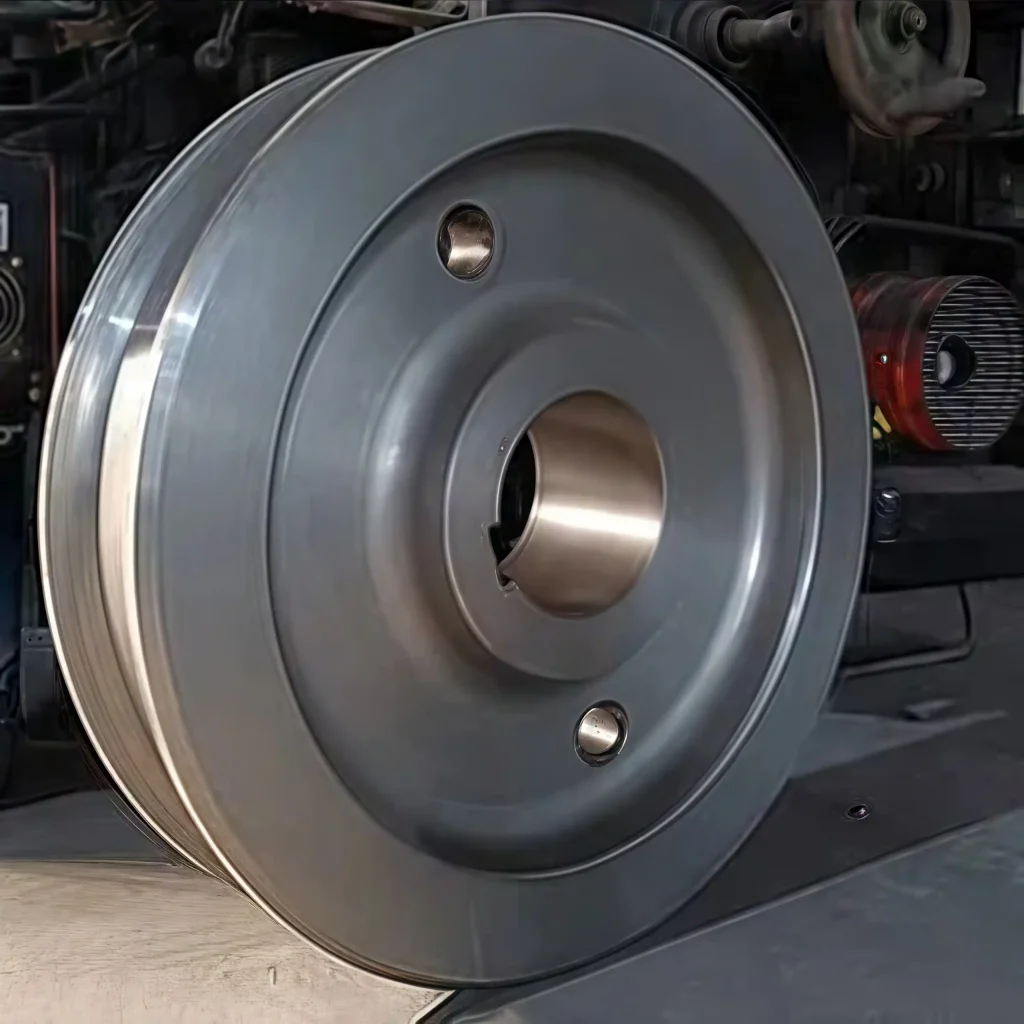
The hub is prone to wear, cracks or the embedding of foreign objects (such as stones or metal shavings) due to long-term friction with the track. Daily maintenance requires regular cleaning of the tread, inspection of the flange thickness (replacement is necessary if less than 23mm), circumferential wear of the tread (screw correction is required if more than 7mm), and measurement of the fit clearance between the hub hole and the axle to ensure it is tight and not loose.
Traditional detection relies on manual visual inspection and tapping to listen to sounds, which is inefficient and prone to missed detections. Modern railways adopt non-destructive testing technologies: for instance, ultrasonic flaw detection can detect internal cracks in wheel hubs (with an accuracy of up to the millimeter level). Magnetic particle testing can detect surface or near-surface defects. Infrared thermal imaging can monitor abnormal temperatures during operation (such as overheating of bearings). Some high-speed lines have piloted intelligent monitoring systems, which collect stress and temperature data in real time through sensors built into the hubs and predict faults by combining big data analysis.
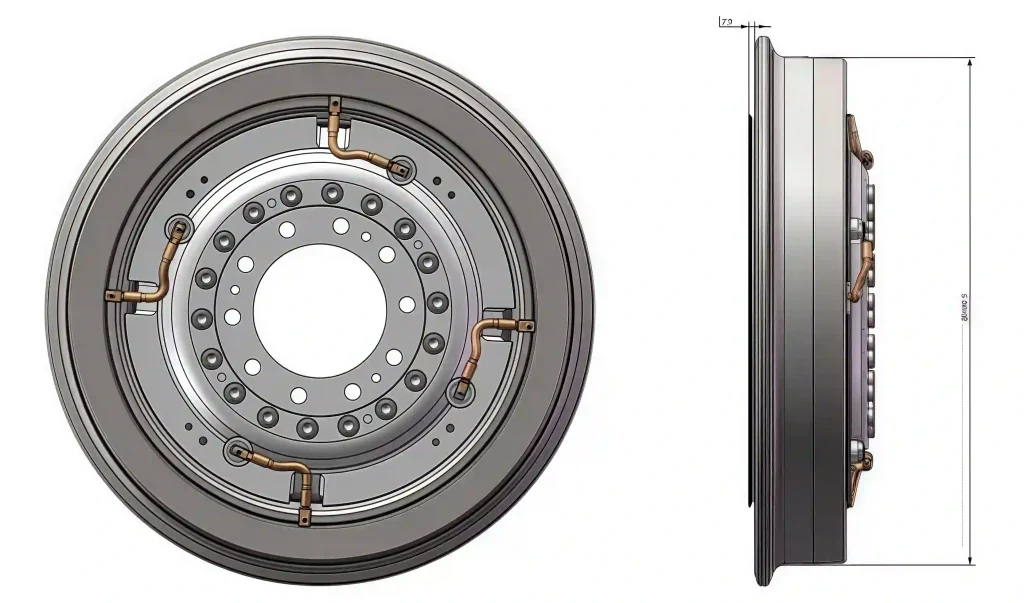
As railways develop towards “higher speed, heavier load capacity and greater intelligence”, hub technology is also being innovated. Lightweighting is an important direction: titanium alloy wheels can reduce weight by more than 30%, while carbon fiber composite material wheels can further lower energy consumption. In terms of intelligence, future wheel hubs may integrate more sensors (such as strain sensors and optical fiber sensors) to achieve “self-perception and self-diagnosis”, and even be linked with the train control system through the Internet of Things to warn of risks in advance.
From cast iron wheels in the steam age to alloy intelligent wheels in the high-speed rail era, the evolution history of railway wheels is a microcosm of humanity’s unremitting pursuit of “speed and safety”. This pair of “steel feet” will continue to lift the train and sail towards a more distant future.
Luoyang Fonyo Ağır Sanayi A.Ş., Ltd., 1998 yılında kurulan döküm demiryolu parçaları üreticisidir. Fabrikamız 72.600㎡ alanı kaplamaktadır, fazlasıyla 300 çalışanlar, 32 teknisyenler, içermek 5 kıdemli mühendisler, 11 yardımcı mühendisler, Ve 16 teknisyenler. Üretim kapasitemiz 30,000 ton/yıl. Şu anda, ağırlıklı olarak döküm üretiyoruz, işleme, ve lokomotif için montaj, vagon, yüksek hızlı trenler, madencilik ekipmanları, rüzgar enerjisi, vesaire. Ürünlerimiz Rusya'ya ihraç edildi, Amerika Birleşik Devletleri, Almanya, Arjantin, Japonya, Fransa, Güney Afrika, İtalya ve diğer ülkeler.
Temas etmek: Stella Liu
E-posta: satış@railwaypart.com
WhatsApp: +86-155-1535-1287