Отсканируйте код WeChat, чтобы связаться с нами.
Отсканируйте код WeChat, чтобы связаться с нами.
Не стесняйтесь, отправьте нам электронное письмо, и мы ответим вам как можно скорее.
Создаем будущее сердцем и душой


Under a microscope, type A graphite exists as evenly distributed flakes, resembling countless microscopic ball bearings embedded in a metal matrix. Когда железнодорожные компоненты begin to operate, these graphite flakes form a stable lubricating film at the friction interface, converting sliding friction into a low-resistance motion similar to rolling. Experimental data show that the coefficient of friction of type A graphite cast iron is 40% lower than that of type D graphite, a difference that is multiplied over long-term operation.
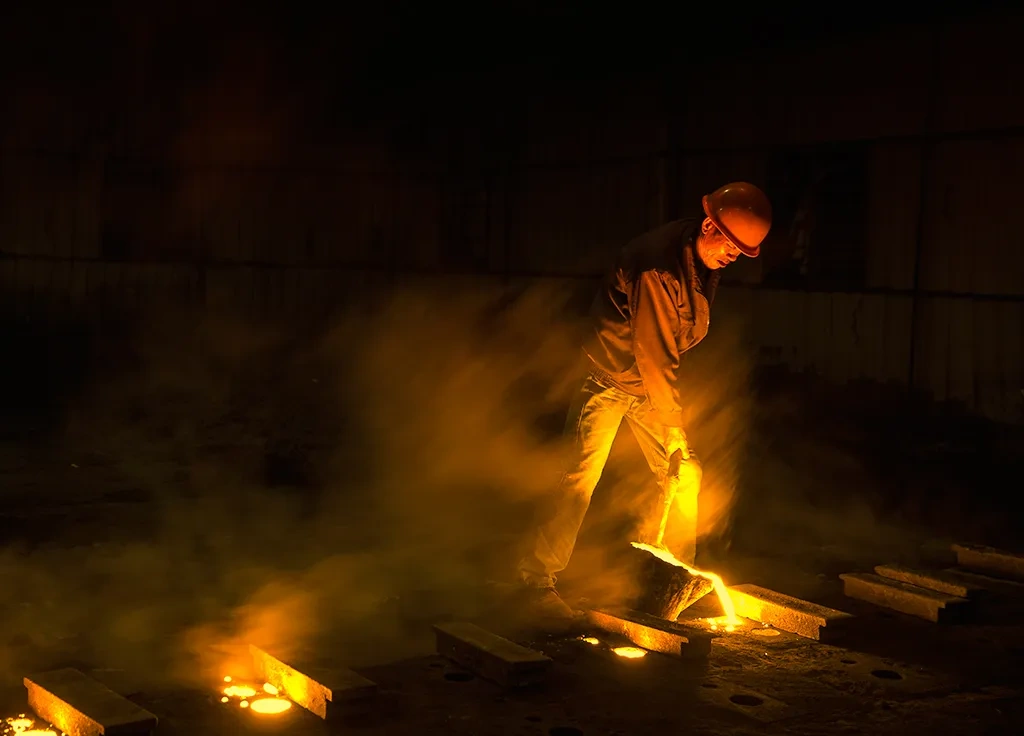
В отличие, type D graphite is distributed as fine dots. While it increases material strength, it fails to form a continuous lubricating layer. Endurance testing by an automobile manufacturer showed that after 500 hours of operation, the surface roughness of gears made of type D graphite cast iron increased by 25%, while the roughness of type A graphite cast iron decreased by 60%. This morphological difference determines whether a casting becomes smoother or rougher with use.
The addition of molybdenum atoms forms hard carbides at grain boundaries, like countless micro-bearing raceways embedded in a metal matrix. When friction generates heat, these carbides promote the precipitation of graphite, forming a dynamically replenishing lubrication layer. Field measurements at a heavy machinery plant show that cast iron bearings with a 0.5% molybdenum addition experience three times less wear than ordinary cast iron in high-temperature environments.
The addition of copper modifies the graphite nucleation mechanism, acting as a catalyst to promote the growth of graphite in a more regular flake structure. Более того, copper’s excellent thermal conductivity helps dissipate frictional heat, preventing localized overheating and material deformation. Using copper-reinforced cast iron in an aerospace engine turbine component increased the operating temperature from 650°C to 800°C and reduced the weight of the lubrication system by 30%.
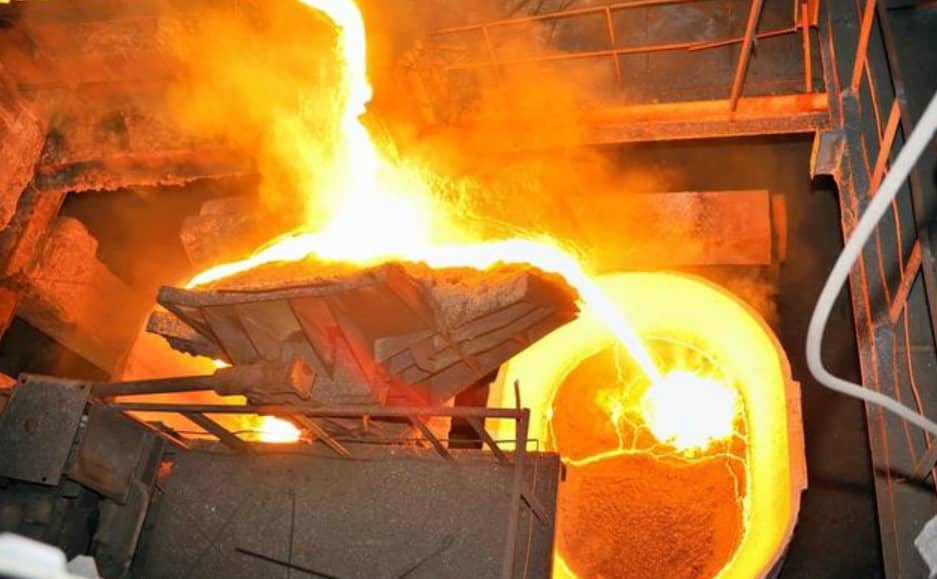
Contrary to conventional wisdom, the wear curve of self-lubricating cast iron exhibits a unique “U-shaped” characteristic. During the initial run-in phase, a graphite lubricating layer gradually covers the entire friction surface. During mid-life operation, the graphite forms a conformal lubricating film with the metal surface. Later in life, asperities are gradually smoothed, enhancing the lubrication effect.
Tracking statistics from a diesel engine manufacturer show that the maintenance interval for crankshaft components using self-lubricating cast iron has been extended from the conventional 12 months to 30 months. Even more astonishingly, after disassembly, a dense graphite layer 0.2-0.5mm thick forms on the surface of the components. This natural protective film has a hardness of 3 on the Mohs scale, equivalent to that of natural marble, and requires no external lubrication.

The secret of self-lubricating cast iron lies in the meticulous design of the material’s DNA. By manipulating graphite morphology to achieve solid-state lubrication and utilizing alloying elements to create a dynamic lubrication system, the result is a self-maintaining intelligent material. This innovation not only extends equipment life but also opens up the possibility of “zero-maintenance” industrial components, heralding a quiet revolution in traditional materials, reshaping the foundations of industrial civilization with the wisdom of the microcosm.
Лоянская компания Fonyo Heavy Industries Co., ООО, основана в 1998 году, является производителем литых железнодорожных деталей.. Наша фабрика занимает площадь 72 600 кв.м., с более чем 300 сотрудники, 32 техники, включая 5 старшие инженеры, 11 помощники инженера, и 16 техники. Наша производственная мощность составляет 30,000 тонн в год. В настоящее время, в основном мы производим литье, механическая обработка, и сборка для локомотива, вагон, высокоскоростные поезда, горное оборудование, энергия ветра, и т. д.. Наша продукция экспортируется в Россию., Соединенные Штаты, Германия, Аргентина, Япония, Франция, ЮАР, Италия и другие страны.
Контакт: Стелла Лю
Электронная почта: [email protected]
WhatsApp: +86-152-3615-7103