WeChat 코드를 스캔하여 문의하세요
WeChat 코드를 스캔하여 문의하세요
이메일을 보내주시면 최대한 빨리 답변해 드리겠습니다..
마음과 영혼을 다해 미래를 창조하다

In the field of railway transportation, material is a very important factor we must consider. Because reliability and durability are the most important things in the railway system. In the railway system, every component directly impacts the safety and efficiency. As specialists in the manufacturing of 철도 부품, we really understand that material selection is the cornerstone of product performance. This article provides a systematic analysis of the two core materials used in railway castings, which are 강철 그리고 연성이 있는 철, to help you understand why they serve as the backbone of rail equipment.
Railway components endure long-term exposure to high-frequency impacts, 무거운 짐, and harsh environmental conditions. General-purpose materials cannot meet these demanding requirements. Professional materials for railway parts must achieve a precise balance among 힘, 인성, 피로 저항, and castability. This means they have proper properties to become casting parts. This is exactly why steel and ductile iron are widely adopted.
주강, with its carefully controlled carbon content, typically contains 0.1%–0.5% carbon, and alloying elements which offer exceptional comprehensive properties.
Key Advantages:
Cast steel provides high strength, not only with good toughness. But also, it shows excellent impact and fatigue resistance. 추가적으로, it offers good weldability and adaptability to various manufacturing processes.
Typical Railway Applications:
Cast steel is commonly used in critical coupler and buffer systems. It is also essential for load-bearing bogie structures. 게다가, high-performance braking components rely on this material. 마지막으로, turnout and track fastening parts are often made from cast steel.
Cast steel parts are particularly suitable for important locations that directly withstand dynamic high loads and require absolute safety.
연성이 있는 철, also known as nodular iron, is treated with magnesium or rare earth elements to form spherical graphite. This special structure achieves a great performance blend between cast iron and steel.
Key Advantages:
Ductile iron offers strength close to that of steel, as well as retaining excellent casting fluidity. It also provides good properties to resist vibration damping, which helps reduce noise and vibration transmission. 게다가, it demonstrates good wear and corrosion resistance. Importantly, it is suitable for casting parts with complex shapes and varying wall thicknesses.
Typical Railway Applications:
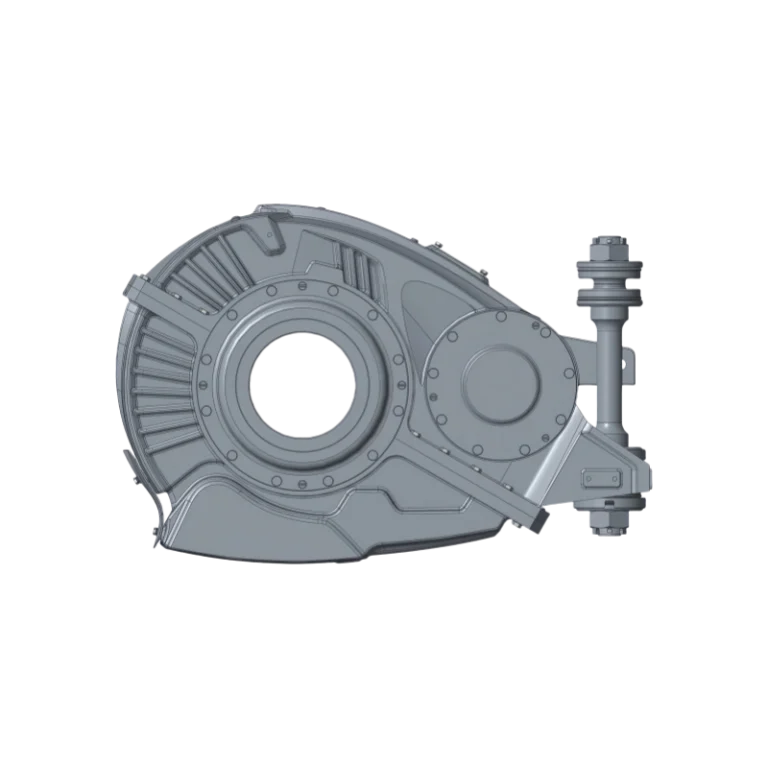
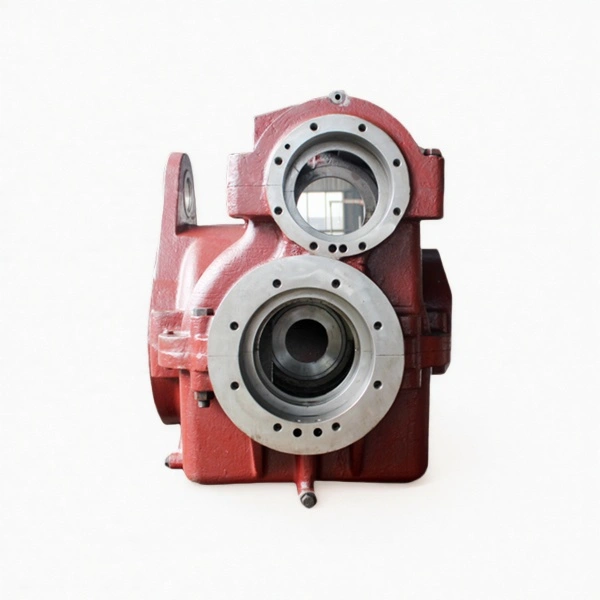
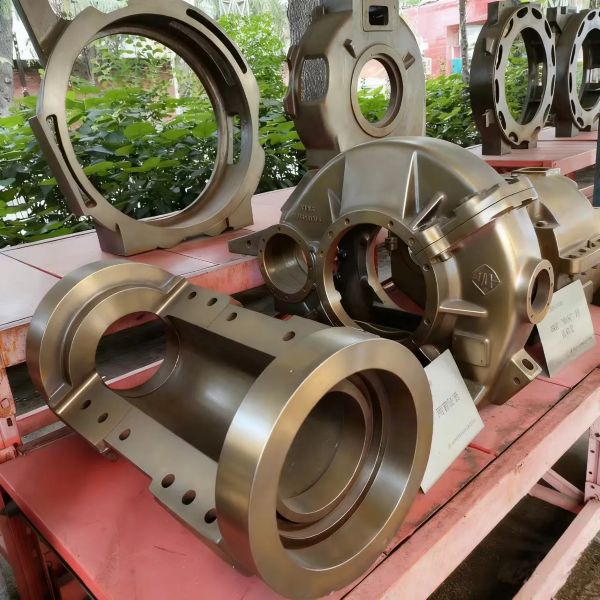
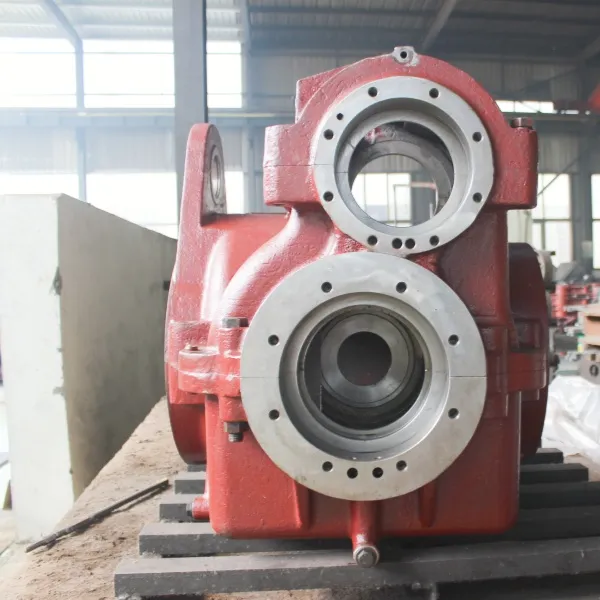
Ductile iron is widely used in axle boxes and gearbox housings. It is also found in brake callipers, brackets, anti-squealers and other under-frame components. 게다가, equipment supports and connecting elements are often made from this material. Many components certified under AAR (미국 철도 협회) and EN standards utilize ductile iron.
In the material selection process for railway components, systematic comparative analysis is very important. Both steel and ductile iron possesses unique properties and suitable application situations. The scientific choice is always based on the specific part function, operating conditions, and full lifecycle cost. The following table provides a clear comparison of the key considerations for these two kinds of material in railway casting applications.
| Consideration Dimension | 주강 | 연성이 있는 철 |
| Load-Bearing Nature | Suitable for components subject to dynamic high-load and strong impact forces. | Better suited for static or cyclical loading situations requiring vibration damping. |
| Structural Complexity | Suitable for moderately complex structural designs. | Excels at manufacturing thin-walled parts with highly complex shapes and varying wall thicknesses. |
| Cost Efficiency | Material and processing costs are typically higher. | Excellent castability often makes the overall cost more competitive for complex designs. |
| Lightweighting Needs | Effective weight reduction can be achieved through high-strength design. | The material’s lower density than steel offers inherent weight advantages for certain components. |
| Industry Standards & Certs | Typically conforms to standards for steel structures like AAR M-201/M-203, 안에 15085. | Typically conforms to specific standards like AAR M-202, 안에 1563 (for ductile iron). |
The full potential of materials is realized through advanced casting technologies. We employ several key methods.Precision casting technology ensures the dimensional accuracy and surface quality of castings.Solidification simulation analysis optimizes the process before casting to minimize defects.Customized heat treatment precisely controls the final mechanical properties. 추가적으로, 에이non-destructive testing system guarantees 100% internal quality compliance with railway safety standards.
As railways evolve toward higher speeds, heavier loads, and greater environmental sustainability, materials continue to advance.High-performance alloy steels enhance durability under extreme operating conditions.Austempered Ductile Iron (ADI) offers improved strength and wear resistance.Lightweight composite materials are being integrated with metals to optimize component performance. 게다가, full lifecycle green manufacturing principles are being implemented, emphasizing sustainability from material selection to production processes.
In the field of railway parts, there is no single “best” material—only the “most suitable” solution. The choice between steel and ductile iron depends on the functional requirements, stress conditions, manufacturability, and lifecycle cost of each component. 뤄양포뇨중공업(Luoyang Fonyo Heavy Industries Co.)에서, 주식회사, we combine our deep expertise in materials science with advanced casting technology to deliver safe, 믿을 수 있는, and high-performance railway castings for clients worldwide.
To explore our range of railway parts, including couplers, bogie components, 바퀴, brake systems, and more, visit www.railwaypart.com. For technical guidance or material selection advice, our engineering team is ready to assist you.
For technical guidance or questions about our railway parts, please 저희에게 연락주세요—our engineering team is ready to assist you.