WeChat 코드를 스캔하여 문의하세요
WeChat 코드를 스캔하여 문의하세요
이메일을 보내주시면 최대한 빨리 답변해 드리겠습니다..
마음과 영혼을 다해 미래를 창조하다


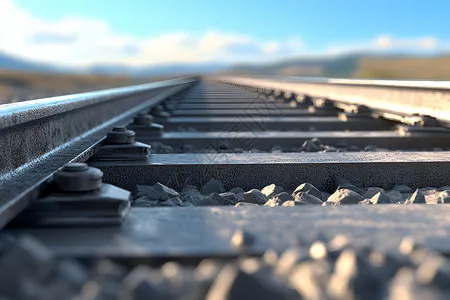
High-speed railway fastening systems are far from being simple track connection components; they are precise “joints” that ensure the safe, smooth, and high-speed operation of trains. Their adaptability directly determines the durability of the line, passenger comfort, and economic efficiency throughout the entire life cycle. The following is an in-depth analysis of their adaptability from key dimensions:
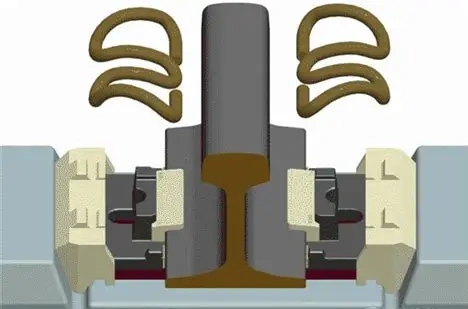
Temperature Fluctuation Response: The system must withstand extreme temperature changes, from severe cold (e.g., -40°C in Northeast China) to intense heat (e.g., over 60°C on the surface in Northwest China). Metal components need to have low cold brittleness sensitivity (such as optimizing alloy composition), and polymer pads (such as chloroprene rubber) must maintain stable elastic modulus and creep performance across a wide temperature range to prevent the loss of clamping force or track geometry deformation due to thermal expansion and contraction. The successful operation of lines like the Harbin-Dalian High-Speed Railway has proven the system’s reliable service under extreme temperature differences (up to over 70°C).
Humidity and Corrosion Resistance: Coastal high salt fog, tunnel condensation water, acid rain, and other environments require fastening systems to have excellent anti-corrosion performance. This involves surface treatment processes (such as Dacromet and zinc diffusion), the application of stainless steel components, and the design of sealed structures to delay metal corrosion and the aging of insulating parts significantly. 예를 들어, coastal lines widely use multi-layer anti-corrosion fastening systems to ensure the long life of key components.
Resilience to Geological Settlement and Vibration: Soft soil, mined-out areas, and other poor geological sections can cause uneven foundation settlement. The fastening system needs to have a certain vertical adjustment capability (such as using adjustable height pads) and be combined with high-elasticity cushion layers to absorb high-frequency vibration energy, protecting the underlying foundation and the surrounding environment. The Wuhan-Guangzhou High-Speed Railway has effectively mitigated the additional dynamic loads caused by complex geological conditions through optimized fastening parameters in some sections.
Suppression of Continuous High-Intensity Vibration: At a train speed of 350 시간당 킬로미터, the wheel-rail interaction force is huge and frequent. The fastening system must provide precise and stable longitudinal resistance (to prevent rail creep) and rely on high-performance, elastic cushion layers (such as polyurethane microcellular pads and composite rubber pads) to efficiently attenuate high-frequency vibrations, preventing excessive energy transmission to the ballast and bridge structures, protecting infrastructure and reducing noise. The dynamic and static stiffness ratio and fatigue life of the rubber pads are key evaluation indicators.
Fatigue Resistance and Long-Term Service Reliability: Under billions of cycles of loading, metal components (탄성바와 같은) need to resist fatigue fractures (by optimizing structural design and heat treatment processes to enhance their fatigue limit), and non-metallic components need to resist permanent deformation and aging brittleness. Rigorous accelerated fatigue tests and long-term monitoring data from actual lines are the key basis for verifying their durability.
Differentiated Matching for Tunnels and Bridges: In tunnels, where space is limited, humidity is high, and noise reflection is strong, fastening systems with lower structural heights, higher anti-corrosion, and noise reduction requirements are often used (such as elastic iron pad systems with noise reduction wings). For bridges, the impact of beam deformation (expansion, deflection) on the fastening system’s force state needs to be considered, and the setting of longitudinal resistance is particularly crucial, requiring a balance between constraining rail creep and allowing the coordinated deformation of the beam and rail.
Enhanced Coordination in Switch Areas: Switch areas have complex structures and concentrated forces. Fastening systems need to provide stronger lateral stability and more uniform support stiffness to ensure the precise positioning and smooth conversion of switch rails and center rails. Enhanced elastic base plates or special locking structures are often used.
Convenience of Inspection, Adjustment, and Replacement: Modern fastening systems attach great importance to maintenance convenience. Modular design, bolt-free or few-bolt structures (such as e-type elastic bars) can significantly improve the efficiency of inspecting and replacing track underlayers or adjusting track gauge and height, reducing the intensity and cost of maintenance during the window period. 예를 들어, some new fastening systems can achieve rapid and step-less adjustment of the track gauge. Intelligent integration of condition monitoring: By integrating sensors (such as force-measuring washers and displacement sensors) into the fastener system, real-time monitoring of clamping force, gauge variation, and pad condition can be achieved. Combined with big data analysis, this enables a precise shift from “planned maintenance” 에게 “condition-based maintenance”, enhancing the overall adaptability and economy of the system. This represents the cutting-edge direction of fastener technology development.
The adaptability of high-speed railway fastener systems is a systematic engineering project that integrates materials science, 구조 역학, environmental engineering, and intelligent operation and maintenance. It requires finding the optimal solution under multiple constraints, such as static and dynamic conditions, short-term and long-term perspectives, functionality, and cost. With continuous breakthroughs in new materials (such as high-performance composite materials), 새로운 구조 (such as designs with higher locking reliability), and intelligent technologies, the environmental tolerance, dynamic matching, and operation and maintenance friendliness of fastener systems will continue to improve, laying a more solid foundation for the safe, 효율적인, green, and intelligent operation of high-speed railways as a national strategic infrastructure. The successful operation of China’s high-speed railway network is a concentrated manifestation of the outstanding adaptability of countless such key components under complex environments and extreme working conditions.
뤄양포뇨중공업(Luoyang Fonyo Heavy Industries), 주식회사,1998년에 설립된 철도 주조 부품 제조업체입니다.. 우리 공장의 면적은 72,600㎡입니다., 이상으로 300 직원, 32 기술자, 포함 5 수석 엔지니어, 11 보조 엔지니어, 그리고 16 기술자. 우리의 생산 능력은 30,000 연간 톤. 현재, 우리는 주로 주조물을 생산하고 있습니다, 가공, 기관차 조립 및 조립, 철도 차량, 고속 열차, 광산 장비, 풍력, 등.
우리는 CRRC에 철도 부품을 공급하고 있습니다.(이상 포함 20 CRRC의 지사 및 자회사), Gemac 엔지니어링 기계, 삼니그룹, 중공업, 등. 우리의 제품은 러시아로 수출되었습니다, 미국, 독일, 아르헨티나, 일본, 프랑스, 남아프리카, 이탈리아와 전 세계의 다른 나라들.
연락하다: 캐시
이메일:[email protected]
이동하는:008615515321683