Scansiona il codice WeChat per contattarci
Scansiona il codice WeChat per contattarci
Sentiti libero di inviarci un'e-mail e ti risponderemo il prima possibile.
Creare il futuro con cuore e anima

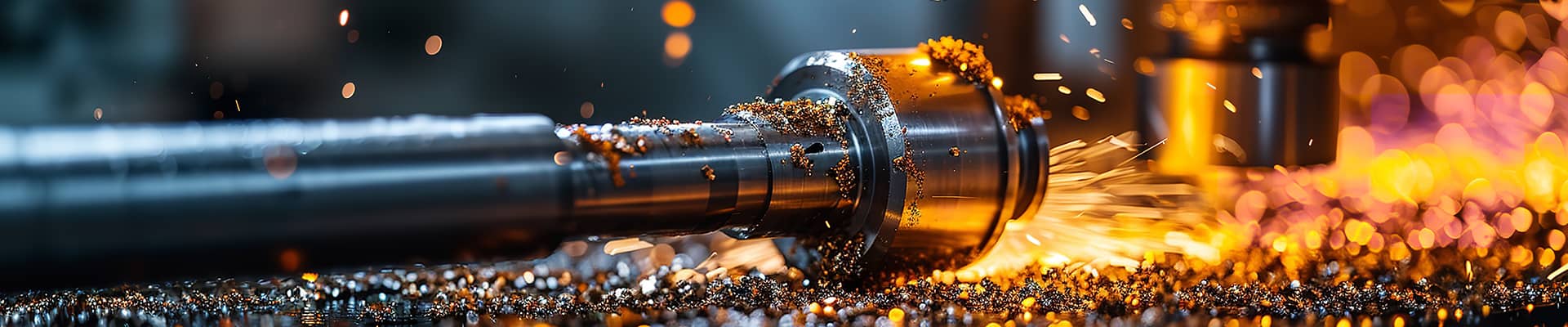
In the field of railway equipment produzione, la qualità dei getti è un elemento fondamentale per garantire la sicurezza e la stabilità della circolazione dei treni. Come due processi di fusione speciali tradizionali, V-process casting and lost foam casting, with their unique technical advantages, play a significant role in the production of key components such as bogies, accoppiamenti, and brake discs.
The core of V-process casting lies in achieving sand mold compaction through vacuum pressure difference. Its technological process can be summarized as a trinity of “film – vacuum – dry sand”. Taking the production of a certain high-speed rail brake disc as an example, Primo, a 0.12mm thick EVA film is heated to 90℃ to soften it. Poi, through a vacuum suction force of 300mmHg, it is made to closely adhere to the surface of the pattern, forming a cavity without adhesive. Successivamente, 150-mesh quartz sand was filled into the sand box. After being compacted by the vibration table, the vacuum pump was started to create a negative pressure of -66,500Pa on the surface of the sand mold, significantly increasing the friction between the sand grains. Eventually, the hardness of the sand mold reached 92 degrees on the wet hardness tester. This physical compaction method not only eliminates the gas evolution problem caused by chemical binders, but also increases the permeability of the sand mold to three times that of the traditional wet mold, making it particularly suitable for the production of thin-walled castings with a wall thickness of 5-15mm.
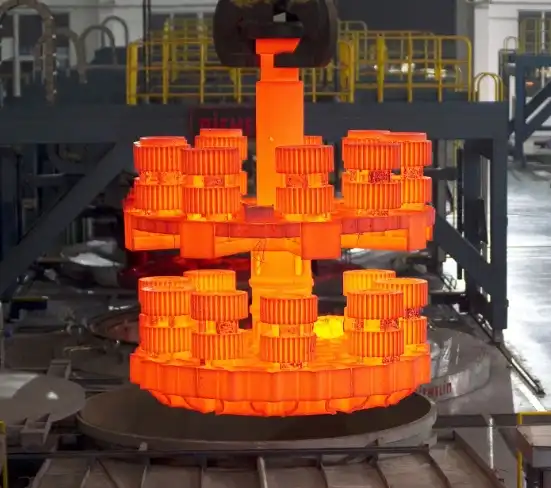
Lost foam casting follows the displacement logic of “foam vaporization – metal filling”. Taking the production of ZGMn13 steel turnouts as an example, the process flow begins with the steam molding of pre-expanded EPS beads. By precisely controlling the steam pressure (0.2-0.3MPa) and temperature (105-115℃), a foam pattern with a density of 18g/L is obtained. Poi, two coats of paint are applied: the first coat uses a fast-drying alcohol-based paint (with a density of 1.8g/cm³), and the second coat uses a slow-drying water-based paint (with a density of 1.6g/cm³), forming a composite coating with a total thickness of 1.2mm. During the embedding stage, 40/70 mesh pearl sand was used in combination with a three-dimensional compaction table to achieve a sand mold density of 1.62g/cm³. During the pouring process, the 1580℃ molten steel causes the foam model to vaporize within 0.8 secondi. The generated gas is discharged through the micro-pores of the coating layer (with a pore size of 5-15μm), e infine, the cavity space is occupied by the molten metal.
The V-process casting equipment system features “vacuum-dominated and modular coordination”. Its core vacuum unit adopts a dual-stage pumping mode of “water ring pump + Roots pump”. In the initial stage, the water ring pump quickly establishes a vacuum (reaching -40,000 Pa within 0-10 secondi), and then the Roots pump intervenes to achieve deep vacuuming (ultimately stabilizing at -66,500 Pa). The sand treatment system is equipped with a vibrating screening device, which can precisely control the distribution of sand particle size (100 mesh passing rate ≥95%, 200 mesh passing rate ≤10%). The template system adopts adjustable temperature electric heating plates, with a temperature control accuracy of ±2℃, ensuring uniform softening of EVA films. Data from a certain locomotive bolster production line shows that this equipment configuration has shortened the sand mold preparation cycle to 8 minuti, increasing efficiency by 40% compared to the traditional clay sand process.

Lost foam casting equipment emphasizes the precise coordination of “model processing – negative pressure control”. The foam pattern forming machine adopts a PLC-controlled steam injection system, which can precisely adjust the expansion ratio of the pre-expanded beads (35-40 volte). The coating line is equipped with an integrated device for automatic dip coating, leveling and drying. The coating is rapidly cured through infrared heating tubes (with a power density of 80W/cm²), and the drying time is shortened to 15 minuti. The negative pressure casting system adopts a staged air extraction design: initially, a negative pressure of 0.06MPa is used to rapidly expel the liquid phase products (0-5 secondi), then adjusted to 0.04MPa in the middle stage to prevent oxygen absorption in the molten steel (5-30 secondi), and after the casting is completed, a negative pressure of 0.02MPa is maintained for 3 minutes to ensure feeding. The production practice of a certain high-speed rail axle box shows that the synergy of this equipment has reduced the shrinkage porosity of castings from 3% in the traditional process to 0.5%.
In the production of carbon steel castings, V-process casting strictly controls the carbon increase within 0.03% through staged control of “aerobic combustion – anaerobic reaction”. Taking a certain front axle casting exported to the United States as an example, when the molten steel comes into contact with the EVA film at the initial stage of pouring, IL 20% oxygen in the cavity fully oxidizes the carbon element to form CO₂. After the mid-term, oxygen consumption is converted into CO. A questo punto, the residual carbon is centrally recovered through the riser design (accounting for 25% of the casting volume). At the end, electromagnetic stirring technology (with a frequency of 50Hz) is adopted to promote the uniform distribution of carbon elements. The measured data show that the carbon equivalent fluctuation range of the Q345B steel castings produced by this process is ≤0.02%, which is far better than the 0.05% required by the industry standard.
Lost foam casting is confronted with the technical bottleneck of “melting but not burning”. A certain chain track plate production line has made three innovative breakthroughs: Innanzitutto, it adopts vacuum pre-foaming technology, reducing the density of the beads from 22g/L to 18g/L and decreasing the gas evolution per unit volume. In secondo luogo, STMMA copolymer resin was used to replace EPS, raising the pyrolysis temperature from 420℃ to 480℃ and extending the gasification time to 1.2 secondi. Finalmente, the pouring temperature was raised to 1600℃, increasing the carbon diffusion coefficient to 0.8×10⁻⁷cm²/s (0.3×10⁻⁷cm²/s in the traditional process). After testing, the carbon content on the surface of the casting was reduced from 0.15% A 0.05%, and the thickness of the carbon enrichment layer was decreased from 0.2mm to 0.03mm, significantly enhancing the fatigue resistance of the casting.
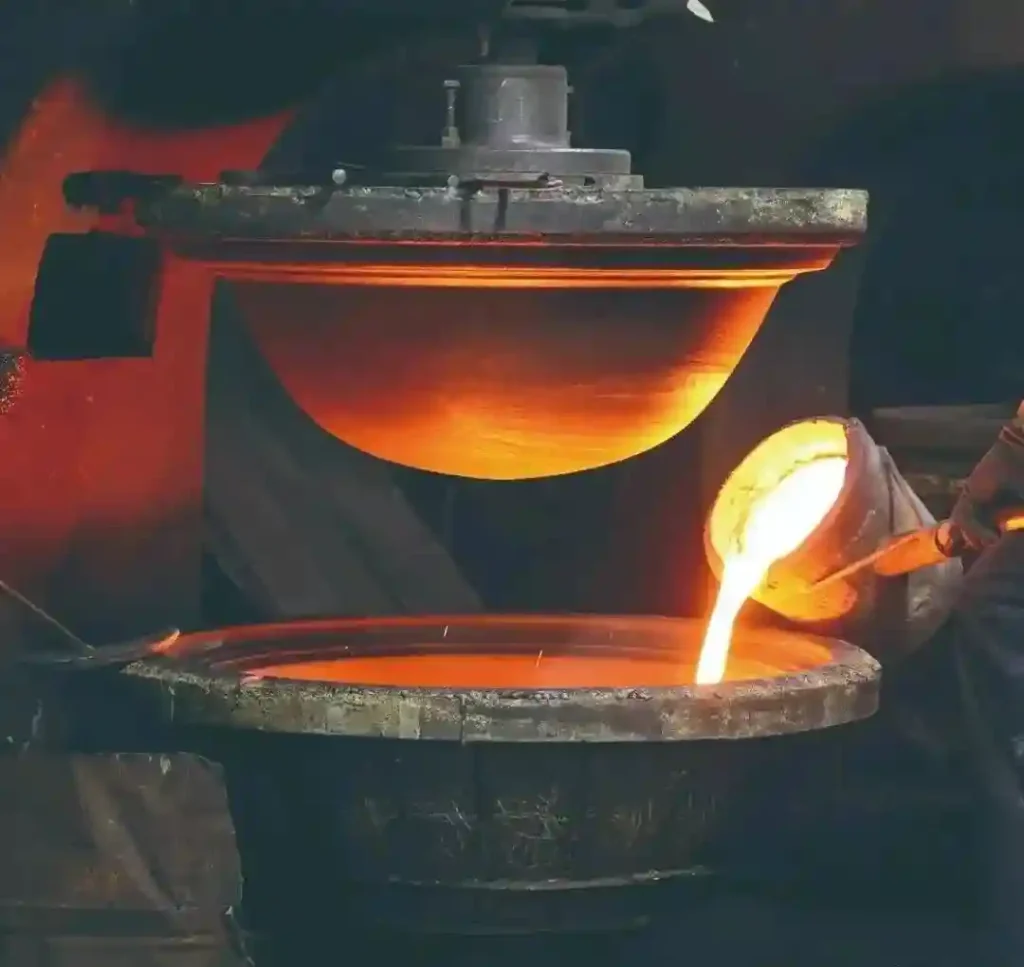
V-process casting demonstrates unique competitiveness in the production of thin-walled castings. A certain piano frame casting (with dimensions of 1200×1400×7mm) was successfully formed with a 2mm thin wall on one side by using the V-process. Through a 0.08mm ultra-thin EVA film and 200-mesh fine sand, the weight was reduced by 18% compared with the lost foam process. The key lies in the vacuum system’s ability to precisely control the compaction of the sand mold (durezza 90-95 degrees), combined with a 0.5° draft slope design, effectively preventing the collapse of the box at thin-walled areas. Data shows that the qualification rate of thin-walled castings produced by this process reaches 98.5%, che è 12 percentage points higher than that of the traditional process.
Lost foam casting is adept at handling complex inner cavity structures. The casting of a certain high-speed rail brake disc adopts a combined foam pattern. Through 12 inner gates, sequential solidification is achieved. Combined with negative pressure setting technology, the shrinkage porosity at the hot spot area is reduced from 8% in the traditional process to 0.5%. The feature of this process that does not require a sand core increases the design freedom of the brake disc flow channel by 40% and the cooling efficiency by 22%. In practical applications, after the brake discs of a certain type of EMU adopted the lost foam process, their thermal fatigue life was increased from 1.2 million times to 1.8 milioni di volte, reaching the international advanced level.
V-process casting and lost foam casting, as the two core technologies in railway casting production, each have their own characteristics in terms of process principles, equipment configuration, quality control and application scenarios. With the in-depth advancement of intelligent transformation, the two processes are evolving towards the direction of “precise control and green manufacturing”. In futuro, through digital modeling and intelligent regulation of process parameters, it is expected that the quality, stability and production efficiency of railway castings will be further enhanced, providing solid technical support for the upgrading and replacement of rail transit equipment.
Luoyang Fonyo Heavy Industries Co., Ltd, fondata nel 1998, è un produttore di parti ferroviarie in fusione. La nostra fabbrica copre un'area di 72.600㎡, con più di 300 dipendenti, 32 tecnici, compreso 5 ingegneri senior, 11 ingegneri assistenti, E 16 tecnici. La nostra capacità produttiva è 30,000 tonnellate all'anno. Attualmente, produciamo principalmente fusione, lavorazione, e assemblaggio per locomotiva, vagone ferroviario, treni ad alta velocità, attrezzature minerarie, energia eolica, ecc. I nostri prodotti sono stati esportati in Russia, gli Stati Uniti, Germania, Argentina, Giappone, Francia, Sudafrica, Italia e altri paesi.
Contatto: Stella Liu
E-mail: [email protected]
Whatsapp: +86-155-1535-1287