Scannez le code WeChat pour nous contacter
Scannez le code WeChat pour nous contacter
N'hésitez pas à nous envoyer un email et nous vous répondrons dans les plus brefs délais.
Créer l'avenir avec cœur et âme


With the growing global demand for clean energy, production d'énergie éolienne, as an efficient and environmentally friendly form of energy, is gradually becoming an essential part of the energy structure of various countries. In this green wave, wind turbines, as the core equipment for wind energy conversion, are of vital importance in terms of performance and quality. As one of the key components of wind turbines, its cover not only bears the heavy responsibility of protecting the internal precision equipment and resisting lousy weather but also directly affects the overall efficiency and life of wind turbines.
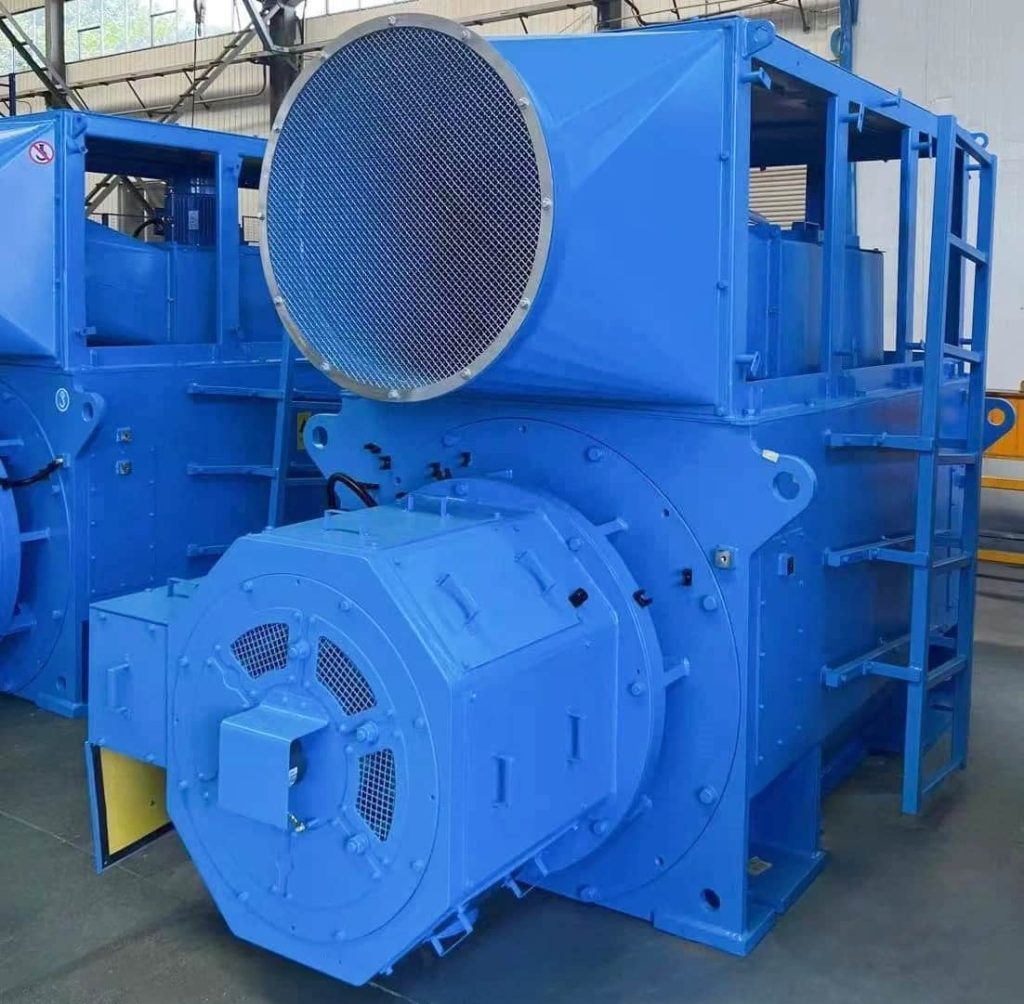
1. The importance of wind turbine cover
Wind turbines are usually located in remote and harsh areas, such as mountains, deserts, and oceans. Donc, wind turbine cover or wind turbine energy cover must have extremely high strength and corrosion resistance to resist the invasion of extreme weather, such as strong winds, heavy rains, blizzards, and sandstorms. En même temps, wind turbine protection must also have lightweight characteristics to reduce the burden on the tower and reduce transportation and installation costs. En outre, the design of the casing must also consider aerodynamic performance to minimize wind resistance and improve the power generation efficiency of wind turbines.
2. Material selection of wind turbine cover
The material selection of a wind turbine cover is directly related to its performance and service life. À l'heure actuelle, the mainstream shell materials on the market include high-strength steel, alloy and composite materials.
High-strength steel: High-strength steel has excellent mechanical properties and corrosion resistance and can withstand massive pressure under extreme weather conditions. En même temps, steel has good weldability and processing performance, which is convenient for manufacturing shells of various complex shapes. Cependant, the density of steel is large, which is not conducive to achieving lightweight shells.
Alloy: Alloy has the advantages of low density, high strength and good corrosion resistance, making it ideal for lightweight shells. It also has good thermal conductivity and plasticity and is easy to process and form. Cependant, the cost of the alloy is relatively high, and its mechanical properties may be affected in extraordinarily high or low-temperature environments.
Composite materials: Composite alloy materials are composed of multiple alloy materials of different properties through physical or chemical methods and have excellent mechanical properties, corrosion resistance, wear resistance and lightweight characteristics. Composite shells can not only effectively resist lousy weather but also improve the overall performance of wind turbines. Cependant, the manufacturing cost of composite materials is high and the processing technology requirements are high.
Considering factors such as performance, coût, and processing difficulty, wind turbine shells are currently mainly made of high-strength steel and iron alloy. With the development of materials science, the application prospects of alloy material wind turbine generator covers are becoming increasingly broad.
3. Forging process of wind turbine cover
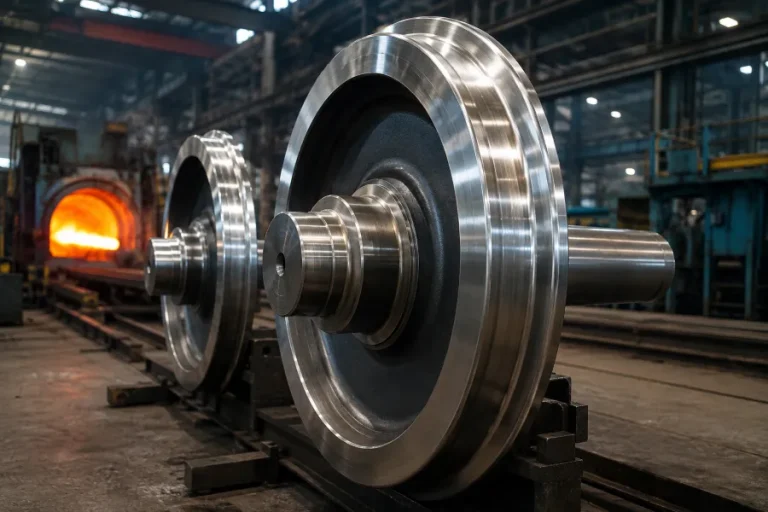
The forging process of wind turbine protection is one of the key links in its manufacturing process. The choice of the forging process directly affects the cover’s mechanical properties and surface quality. The following will introduce the forging process of a wind energy cover in detail.
Préparation des matières premières: D'abord, prepare the corresponding raw materials according to the design requirements and material selection of the wind turbin generator cover. The raw materials must undergo strict inspection and testing to ensure that their chemical composition, mechanical properties and other indicators meet the standard requirements. En même temps, the raw materials are pre-treated by cutting, nettoyage, and other pretreatment work to prepare for the subsequent forging process.
Heating process: The raw materials are sent to the heating furnace. The heating temperature and time need to be reasonably set according to the material and thickness of the raw materials to ensure that they have good plasticity and fluidity during the forging process. During the heating process, the furnace temperature and heating speed must be strictly controlled to avoid defects such as overheating and overburning of the raw materials.
Forgeage: The heated raw materials are sent to the forging press for forging. The forging press applies tremendous pressure to cause the raw materials to undergo plastic deformation and gradually form the initial shape of the shell. Pendant le processus de forgeage, the forging speed and forging force must be strictly controlled to make sure the dimensional accuracy and surface quality of wind energy products. En même temps, attention must also be paid to temperature control during the forging process to avoid defects such as overcooling and overheating of the shell.
Processus de traitement thermique: after forging, the covers need to be heat treated to improve their mechanical properties and corrosion resistance. Standard heat treatment processes include quenching, trempe, aging treatment, etc.. Quenching can give the housing a higher hardness and strength; tempering can eliminate the internal stress and brittleness generated during the quenching process; aging treatment can further improve the stability and corrosion resistance of the housing. The selection of the heat treatment process and parameter setting need to be reasonably adjusted according to the material and requirements of the shell.
Machining and surface treatment: Après traitement thermique, the cover needs to be machined and surface-treated. Machining includes milling, forage, cutting and other processes, which are used to process various holes, grooves, threads and other structures on the shell. Surface treatment includes sandblasting, painting, electroplating and other processes, which are used to improve the corrosion resistance and aesthetics of the shell. The machining accuracy and surface quality must be strictly controlled during machining and surface treatment to ensure that the cover meets the design requirements.
4. Process optimization and innovation of wind turbine cover
With the continuous development of wind power generation technology, the performance and quality requirements of wind turbine cover are getting higher and higher. In order to meet market demand and continuously improve the competitiveness of products, enterprises need to explore and innovate the process optimization methods of housings continuously.
Fournisseur
Luoyang Fonyo Heavy Industries Co., Ltée,fondée en 1998, est un fabricant de pièces ferroviaires moulées. Notre usine couvre une superficie de 72 600㎡, avec plus de 300 employés, 32 techniciens, y compris 5 ingénieurs supérieurs, 11 ingénieurs adjoints, et 16 techniciens. Notre capacité de production est 30,000 tonnes par an. Actuellement, nous produisons principalement du moulage, usinage, et montage pour locomotive,wagon,trains à grande vitesse, équipement minier,énergie éolienne,etc. Nos produits ont été exportés vers la Russie, les États-Unis, Allemagne, Argentine, Japon, France, Afrique du Sud,Italie et autres pays.
Contact:Cathy
E-mail:[email protected]
Mobile:008615515321683