Scannez le code WeChat pour nous contacter
Scannez le code WeChat pour nous contacter
N'hésitez pas à nous envoyer un email et nous vous répondrons dans les plus brefs délais.
Créer l'avenir avec cœur et âme


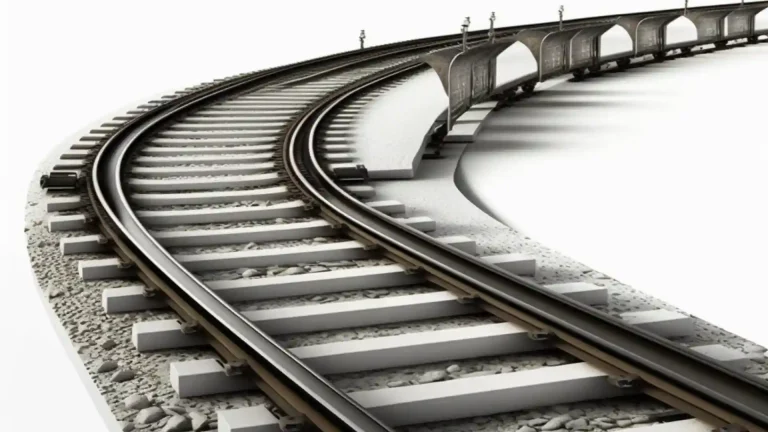
It is not easy to produce large railway castings, because they are expected to perform under heavy loads for many years. From bogie components to structural parts, reliability is very important. The requirement is very strict when we manufacture the parts.
On the surface, many railway castings may look perfect at first glance. The dimensions are correct, the surfaces are smooth, and machining often goes as planned. But problems will appear later during processing or even in service. In some cases, castings may deform during machining unexpectedly, cracks may appear after installation, and over time, these issues can reduce the service life of the component.
These problems often raise the same question for us. We want to know if the casting looked fine, and what went wrong? Dans la plupart des cas, the answer lies deep inside the metal, in the way heat moved during the casting process.
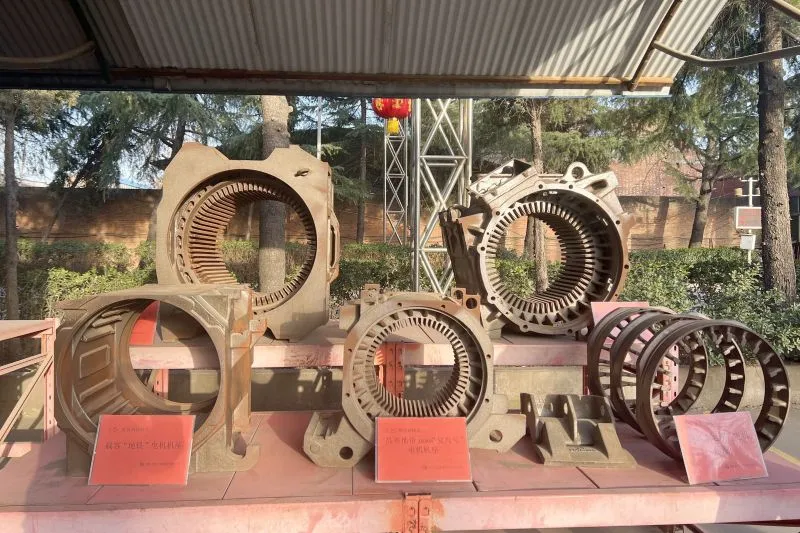
Before any metal takes shape, heat is the first requirement. Solid steel must be heated until it melts, and then it is usually heated further to ensure that it can flow properly and fill the mould during pouring.
This extra heat is necessary, but it also creates potential risks. If the metal is not heated enough, it will not flow properly, and the mould may not fill. D'autre part, excessive heat will lead to other problems, such as coarse structure or increased risk of shrinkage.
For railway castings, this balance is especially important because the components are large, thick, and heavy. They will store a huge amount of thermal energy, and any mistake in temperature control can have serious consequences. This is why casting quality is never a simple thing. It is just about shape; it is always about how heat is introduced, controlled, and eventually released.
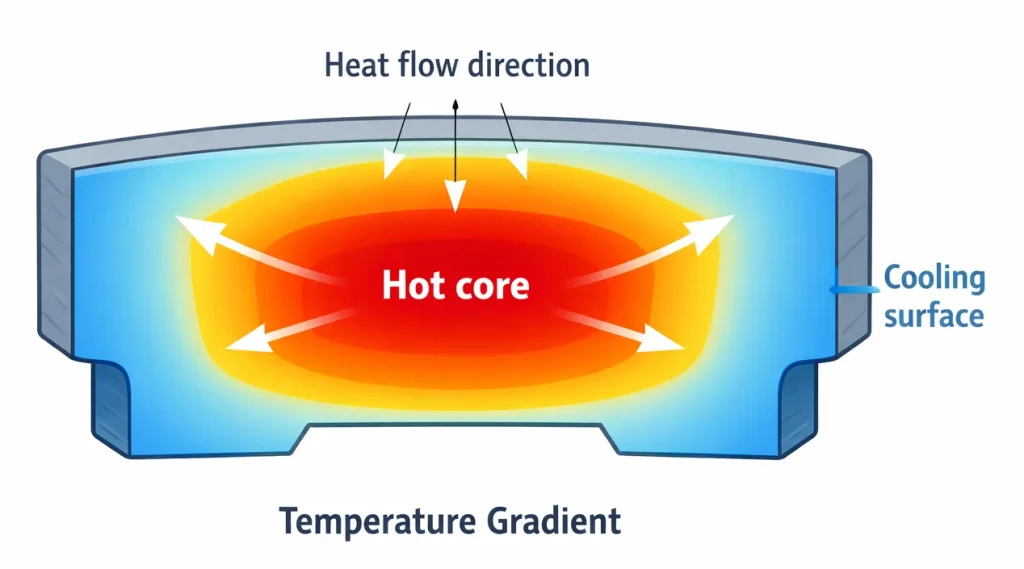
Once the molten metal enters the mould, heat begins to leave the system immediately. The metal transfers heat to the cooler mould and then to the surrounding environment, and this process cannot be reversed.
The surface of the casting cools first, while the interior remains hot for a much longer time. In large railway castings, this temperature difference can be significant, and even small variations in wall thickness can create very different cooling conditions.
A ce stade, the internal quality of the casting is already being shaped, although nothing unusual is visible from the outside. The thermal history of the casting is quietly determining the final result.
The size of the casting changes everything about how heat behaves. Small castings cool quickly, and heat escapes easily, so the process finishes in a relatively short time.
Large railway castings, by contrast, cool slowly, and heat remains trapped inside for a long period. This slow cooling amplifies the effect of any thermal decision. A small difference in temperature that would be harmless for a small part can cause serious internal problems in a large casting.
Because the process takes longer, internal changes have more time to develop. Heat influences factors such as the structure, internal stress, and long-term stability of the component. This is why experience with small castings cannot simply be applied to large railway components; the thermal scale is completely different.
One of the biggest challenges in casting is that heat cannot be seen during production. There are no visual signals to show how temperature is distributed inside a large casting, yet heat is constantly shaping the internal condition of the metal.
If heat leaves the casting in an uncontrolled way, the risk of internal defects increases. When heat is controled and managed properly, the final quality becomes much more predictable. This difference separates castings that perform reliably from those that carry hidden risks.
For railway parts, these hidden risks are dangerous. Because they may not cause immediate failure, but also they can shorten service life and reduce overall reliability.
Railway components work under conditons such as repeated loads and long service cycles, and they must maintain their strength and stability for many years. Internal issues caused by poor heat control may remain hidden at first, but later they may lead to deformation, fissuration, or premature failure over time.
This is why heat control is not a secondary consideration in railway casting production. It is the foundation of all later quality control measures, including inspection and testing. Understanding how heat flows through a large casting allows engineers to predict potential problems before they appear and to design processes that produce stable and reliable results.
Understanding heat flow is only the first step. What truly matters is how this knowledge is applied in real production.
À Luoyang Fonyo Heavy Industries Co., Ltée., we specialise in large railway castings where thermal control plays a very important role in quality and long-term performance. From mould design to pouring practice and cooling management, every stage of our process is built around controlling heat behaviour in thick, heavy components.
Our products include railway carter de boîte de vitesses, carter de boîte d'essieu, suspension bearing hung housing, composants de bogies, brake-related cast parts, and other safety-critical railway items such as railway wheels. These components are designed for demanding operating conditions and long service life, where internal quality matters just as much as external dimensions.
If you are looking for a foundry partner who understands the casting process and technology, who not only know how to cast metal but also how heat shapes reliability in railway applications, we would be glad to connect. You can learn more about our railway casting solutions at www.railwaypart.com
Vous pouvez également nous contacter directement:
WhatsApp: +86 15515351287
E-mail: [email protected]
Nous sommes toujours prêts à vous aider à trouver la solution la plus adaptée à votre application.