Scannez le code WeChat pour nous contacter
Scannez le code WeChat pour nous contacter
N'hésitez pas à nous envoyer un email et nous vous répondrons dans les plus brefs délais.
Créer l'avenir avec cœur et âme


On the vast land or the rough sea, rows of équipement éolien stand like giants, converting natural wind energy into clean electricity. Every elegant rotation of these “green giants” is inseparable from the precise and solid core components inside. Parmi ces composants, cast steel and cast iron castings are like “invisible armor”, silently bearing the test of extreme environments, ensuring the stable operation of wind power equipment for more than 20 années.
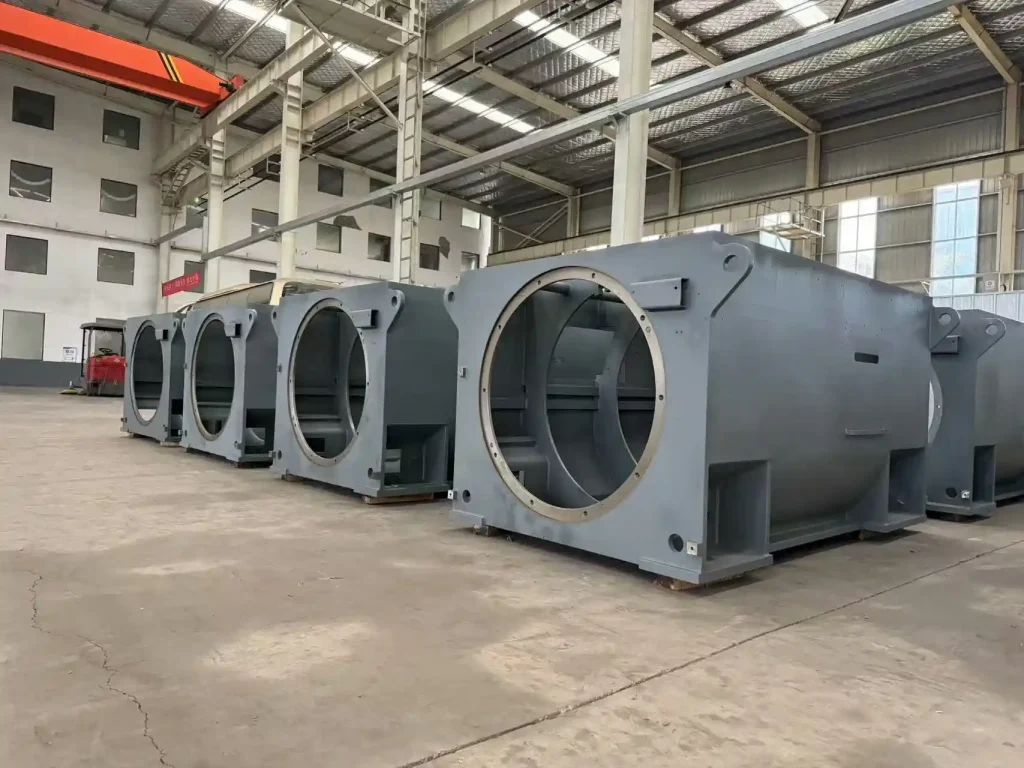
The core structure of wind power equipment can be divided into modules such as nacelle, boîte de vitesse, moyeu, blade bracket, etc., and each module needs to withstand huge loads and complex stresses. Par exemple, the nacelle needs to accommodate precision equipment such as generators and control systems, with a total weight of up to hundreds of tons; la boîte de vitesses, comme le “cœur” of power transmission, needs to withstand tens of thousands of Nm of torque during high-speed rotation; the hub needs to connect three blades and withstand dynamic loads several times the gravity under strong winds.
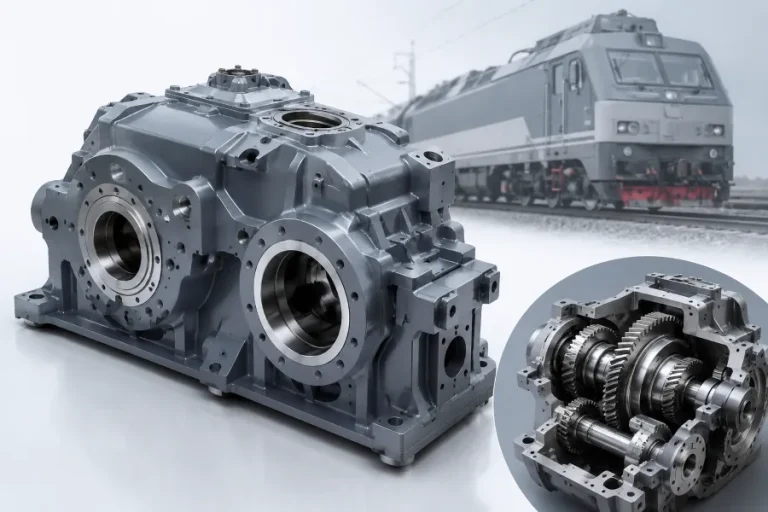
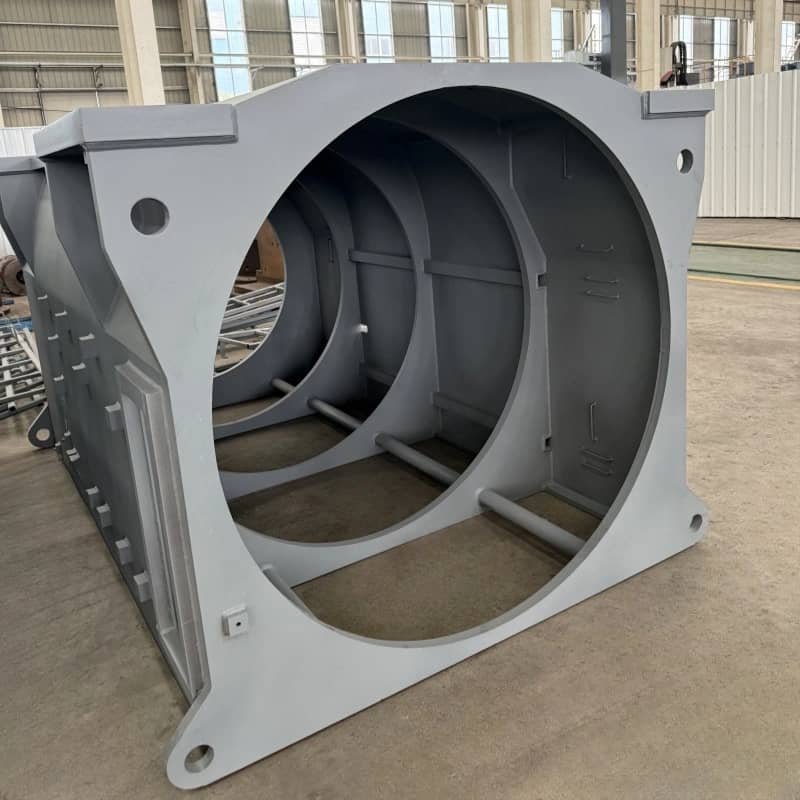
The core components of these key parts, such as gearbox housing, motor housing, hub body, etc., are almost all made of cast steel or cast iron. Castings use an integral molding process to cast complex structures in one go, avoiding the risk of stress concentration caused by welding or assembly, while having higher strength and rigidity. Par exemple, the gearbox housing needs to withstand the impact force generated by the meshing of internal gears, and the high strength and toughness of cast steel materials can effectively prevent cracking; the motor housing needs to take into account both heat dissipation and sealing, and the thermal conductivity and deformation resistance of cast iron make it an ideal choice.
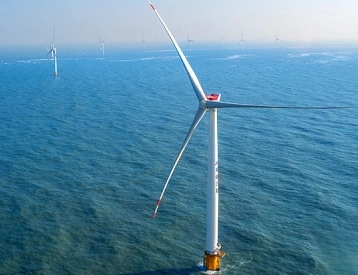
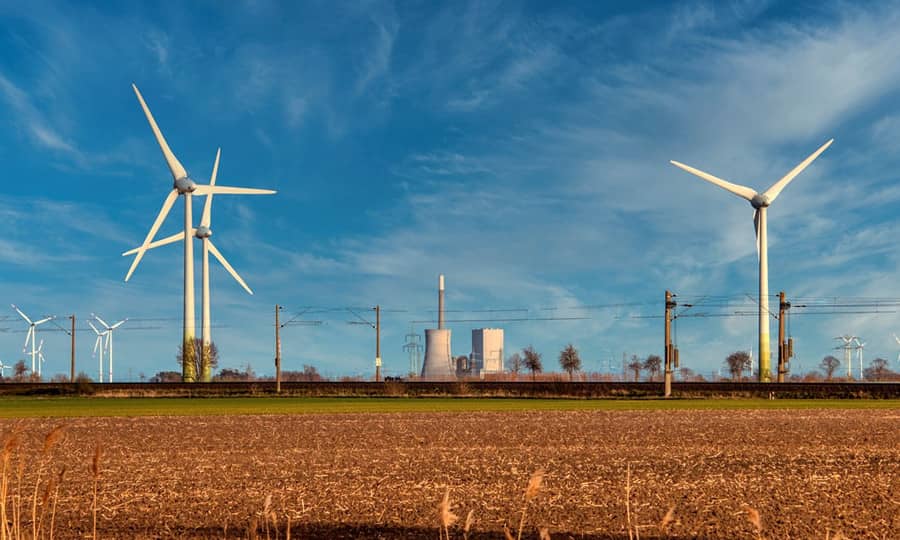
The operating environment of wind power equipment can be called an “extreme environment laboratory”. On land, equipment needs to deal with sand and dust erosion and thermal expansion and contraction caused by the temperature difference between day and night; at sea, salt spray corrosion, humid environment and typhoon impact have become the “ultimate test” of castings. The quality of castings directly determines the life and safety of the equipment.
Résistance à la corrosion: Offshore wind power equipment is exposed to a salt spray environment for a long time, and ordinary metal materials will be corroded and perforated within a few years. The company uses special alloy cast steel and anti-corrosion coating technology to form a dense oxide film on the surface of the casting, and the salt spray test life is increased to more than 2,000 heures, far exceeding the industry standard.
Résistance à la fatigue: Wind power equipment needs to run 24 hours a day, the gearbox rotates dozens of times per minute, and the casting needs to withstand hundreds of millions of cyclic loads. By optimizing the casting process and heat treatment technology, the fatigue strength of the gearbox housing produced by the company has increased by 30%, which can resist the risk of material embrittlement under extreme temperature differences from -40°C to +60°C.
Dimensional accuracy: Minor deformation of the casting may cause increased vibration of the equipment or seal failure. The company introduced high-precision CNC molding lines and 3D sand mold printing technology to control the dimensional tolerance of the casting within ±0.3mm, ensuring the precise assembly gap between the gearbox and the motor housing, and reducing operating noise and energy consumption.
Taking the offshore wind power motor housing as an example, its production needs to go through strict control of the entire process from molten iron smelting, mold design, to post-processing. The company uses electric furnace smelting and off-furnace refining technology to reduce the content of harmful elements such as sulfur and phosphorus in molten iron to below 0.01%, significantly improving the purity of the material; optimize the casting system through simulation software to avoid defects such as shrinkage holes and pores; finally, ultrasonic flaw detection and pressure testing are carried out to ensure that each casting has no defects inside.
In gearbox production, the company has developed high-nickel-chromium alloy cast steel materials for the special needs of offshore wind power. Its corrosion resistance is twice that of ordinary cast steel. En même temps, the weight is reduced by 15% through topological optimization design, which not only reduces transportation costs but also improves equipment energy efficiency.
A seemingly ordinary steel casting is actually the “first line of defense” for wind power equipment to resist extreme environments. From land to sea, from desert to plateau, the company uses high-precision casting technology and material innovation to put on “invisible armor” for wind power equipment, so that the stable output of clean energy has a more solid guarantee. À l'avenir, as wind power develops towards deep-sea and super-large scale, casting technology will continue to break through its limits and protect the birth of every degree of green electricity.
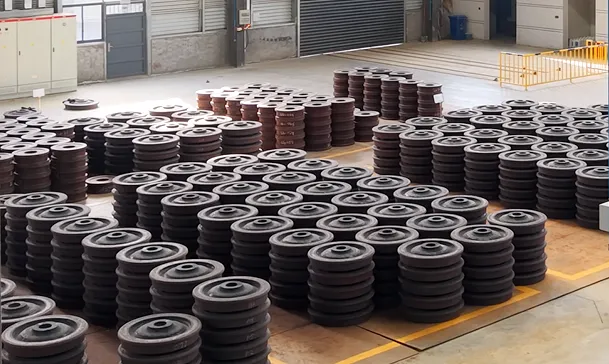
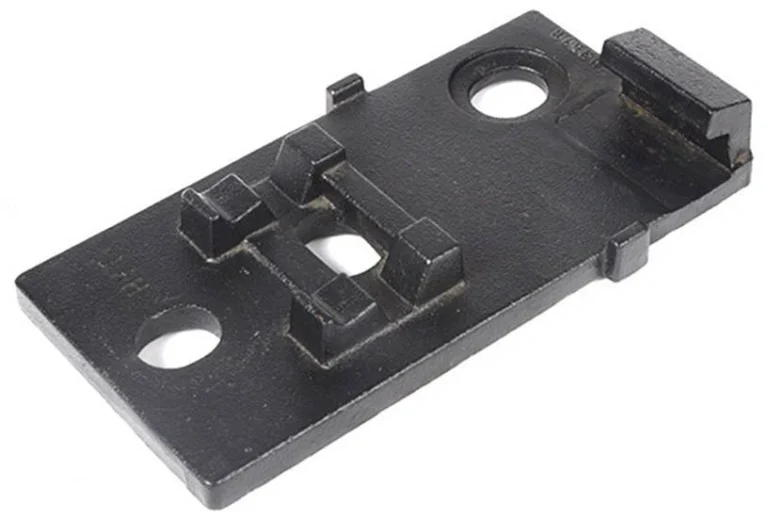
Luoyang Fonyo Heavy Industries Co., Ltée, fondée en 1998, est un fabricant de pièces ferroviaires en fonte. Notre usine couvre une superficie de 72 600㎡, avec plus de 300 employés, 32 techniciens, y compris 5 ingénieurs supérieurs, 11 ingénieurs adjoints, et 16 techniciens. Notre capacité de production est 30,000 tonnes par an. Actuellement, nous produisons principalement du moulage, usinage, et montage pour locomotive, wagon, trains à grande vitesse, équipement minier, énergie éolienne, etc.. Nos produits ont été exportés vers la Russie, les États-Unis, Allemagne, Argentine, Japon, France, Afrique du Sud, Italie et autres pays.
Contact: Stella Liu
E-mail:[email protected]
Mobile:+8615515351287