Escanea el código WeChat para contactarnos
Escanea el código WeChat para contactarnos
No dudes en enviarnos un correo electrónico y te responderemos lo antes posible.
Creando el futuro con corazón y alma


En la red ferroviaria entrecruzada, trains shuttle back and forth at lightning speed, carrying people’s dreams of travel and the heavy responsibility of cargo transportation. Behind this busy scene, there is a seemingly inconspicuous but crucial component perno de pescado, which is like an invisible guardian, silently maintaining the stability and safety of the track.
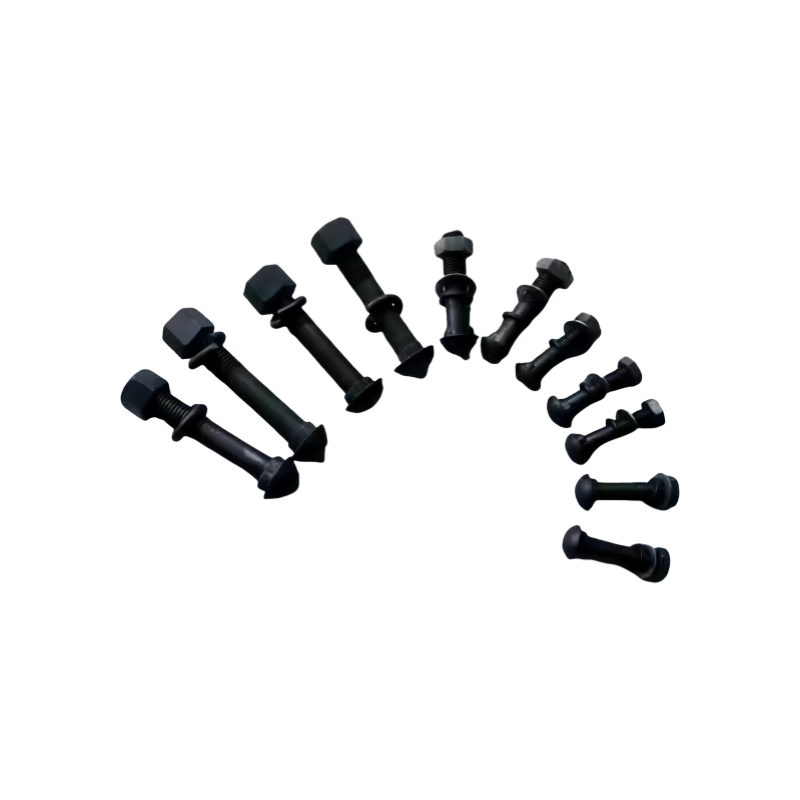
Origin: El “connection pioneer” born from the development of railways
The history of fish bolts is closely linked to the birth of railways. In the early 19th century, the wave of the Industrial Revolution promoted the rise of railway transportation. The early railway track connection method was very simple. People tried to fix the rails together with simple iron bars or wooden wedges, but this method was very easy to loosen when the train was running, resulting in uneven tracks and even derailment accidents.
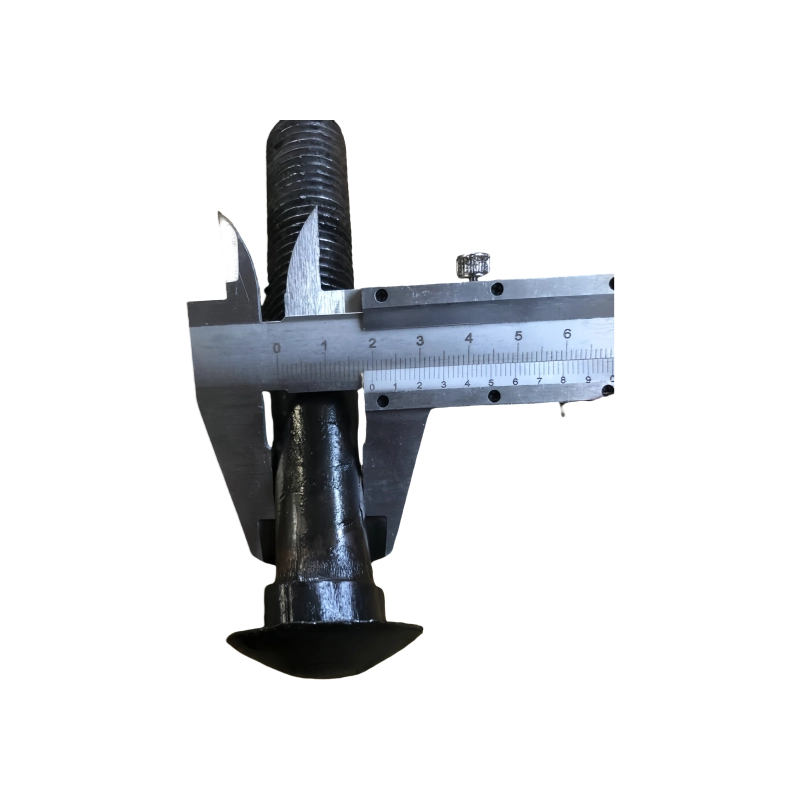
With the increase in railway transportation volume and the increase in train speed, higher requirements are placed on the reliability of track connections. Against this background, fish bolts came into being. The original fish bolt was simple in design, shaped like a fishtail, with raised parts at both ends to clamp the waist of the rail and bolt holes in the middle for installing bolts. It connects two rails tightly together by tightening the bolts, greatly improving the stability and safety of the track. This innovative design laid the foundation for the rapid development of railway transportation, allowing trains to travel safely at higher speeds and with greater loads.
Evolution: Dual Upgrade of Materials and Processes
In the development history of fish bolts, the improvement of materials and processes is the key factor in promoting their performance improvement.
In the early days, fish bolts were mainly made of ordinary carbon steel. Although this steel has a certain strength, it has poor corrosion resistance and is prone to rust in humid and rainy environments, affecting its service life and connection performance. With the advancement of metallurgical technology, alloy steel has gradually become the main material for fish bolts. Alloy elements such as chromium, níquel, and molybdenum are added to alloy steel, which significantly improves the strength, tenacidad, and corrosion resistance of the steel. Por ejemplo, some high-performance alloy steel fish bolts can be used for decades in harsh environmental conditions without obvious damage, greatly reducing the cost of railway maintenance.
In addition to material improvements, manufacturing processes are also constantly innovating. Traditional fish bolt manufacturing mainly uses forging technology, which heats the steel and applies pressure to shape it. Although this process can ensure the basic shape and size of the fish bolt, its production efficiency is low, and it isn’t easy to process complex shapes. With the development of CNC machine tools and precision casting technology, the manufacturing accuracy and efficiency of fish bolts have been greatly improved. CNC machine tools can accurately process various parts of fish bolts according to preset programs to ensure their dimensional accuracy and surface quality; precision casting technology can realize the one-time molding of complex-shaped fish bolts, reducing subsequent processing steps and improving production efficiency.
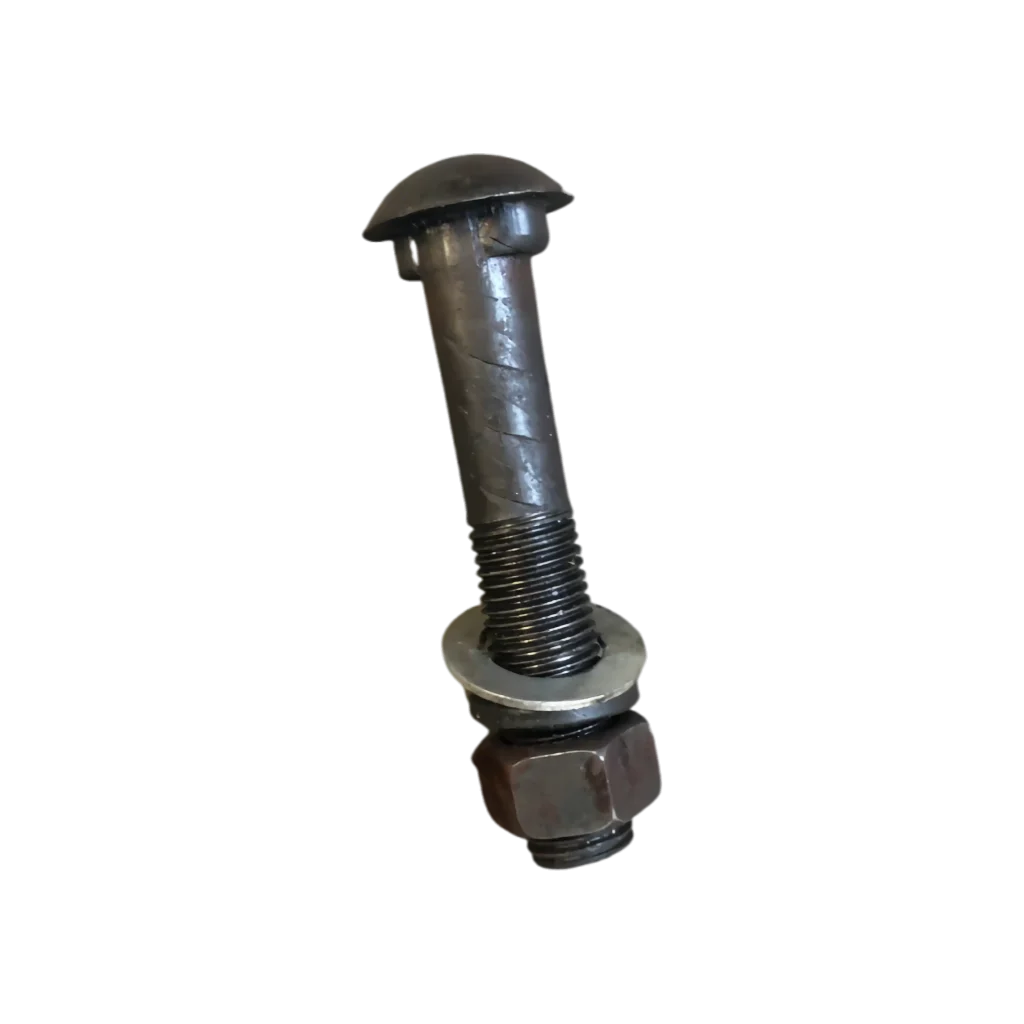
Innovación: Adapting to new challenges of high speed and heavy load
Entering the 21st century, the rapid development of high-speed and heavy-load railways has brought new challenges to fish bolts. High-speed trains will generate huge dynamic loads when running, which puts higher requirements on the strength, stiffness and vibration reduction performance of fish bolts; heavy-load railways require fish bolts to withstand greater tension and pressure to ensure stable connection of the track.
In order to meet these challenges, researchers continue to innovate technology. On the one hand, new high-strength and high-toughness fish bolt materials have been developed. Por ejemplo, some new bainitic steel fish bolts have excellent comprehensive mechanical properties and can maintain good connection performance under high speed and heavy load conditions. Por otro lado, the structure of the fish bolt has been optimized. Por ejemplo, a new type of elastic fish bolt is used, which can produce a certain elastic deformation when the train is running, absorb part of the vibration energy, reduce the impact on the track and the train, and improve the stability and comfort of the ride.
Además, intelligent monitoring technology has also begun to be applied to the maintenance and management of fish bolts. By installing sensors on the fish bolts and monitoring their stress, strain, temperature and other parameters in real-time, potential safety hazards can be discovered in time, and corresponding maintenance measures can be taken to ensure the safety of railway transportation.
Perspectiva: “Reliable Partner” of Future Railways
With the continuous advancement of science and technology and the continuous development of railway transportation, fish bolts will continue to innovate and improve. En el futuro, we can expect the emergence of lighter and higher-performance fish bolt materials further to reduce the cost and energy consumption of railway construction; more intelligent fish bolt monitoring systems will realize real-time and accurate monitoring of track connections and improve the safety and reliability of railway transportation.
Although the fish bolt, this small railway component, is not well known, it plays an indispensable role in the development of railway transportation. From the initial simple design to today’s high-tech products, it has always been committed to the position of track connection and has silently contributed to the development of the railway industry. I believe that in the future, the fish bolt will continue to be a “reliable partner” of railway transportation and accompany us to a better tomorrow.
Proveedor
Industrias pesadas Co. de Luoyang Fonyo., Limitado,Fundada en 1998, es un fabricante de piezas fundidas para ferrocarriles. Nuestra fábrica cubre un área de 72,600㎡, con más de 300 empleados, 32 tecnicos, incluido 5 ingenieros superiores, 11 ingenieros asistentes, y 16 Técnicos. Nuestra capacidad de producción es 30,000 toneladas por año. Actualmente, Producimos principalmente fundición., mecanizado, y montaje para locomotora,automotor,trenes de alta velocidad, equipo de minería,energía eólica,etc. Nuestros productos han sido exportados a Rusia, los estados unidos, Alemania, Argentina, Japón, Francia, Sudáfrica,Italia y otros países..
Contacto: Estela Liu
Correo electrónico:[email protected]
Móvil:+8615515351287