Escanea el código WeChat para contactarnos
Escanea el código WeChat para contactarnos
No dudes en enviarnos un correo electrónico y te responderemos lo antes posible.
Creando el futuro con corazón y alma


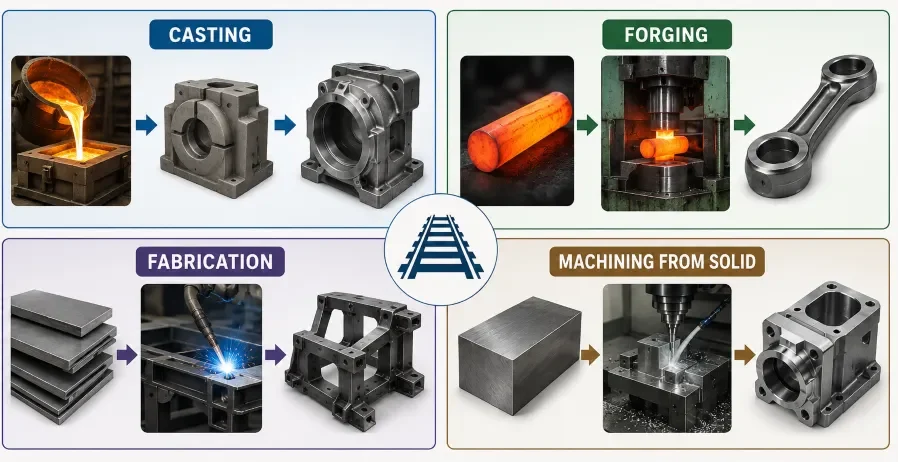
Choosing a manufacturing process for a railway component starts with three questions: what the component must survive, how many you need, and what happens if it fails. Casting suits complex shapes and large volumes, forging suits safety-critical parts where fatigue life matters, fabrication suits low-volume or equipment-driven designs, and machining from solid suits simple parts in small quantities. The right process is the one that matches the load, the geometry, the volume and the inspection requirements, not the one a supplier happens to specialise in.
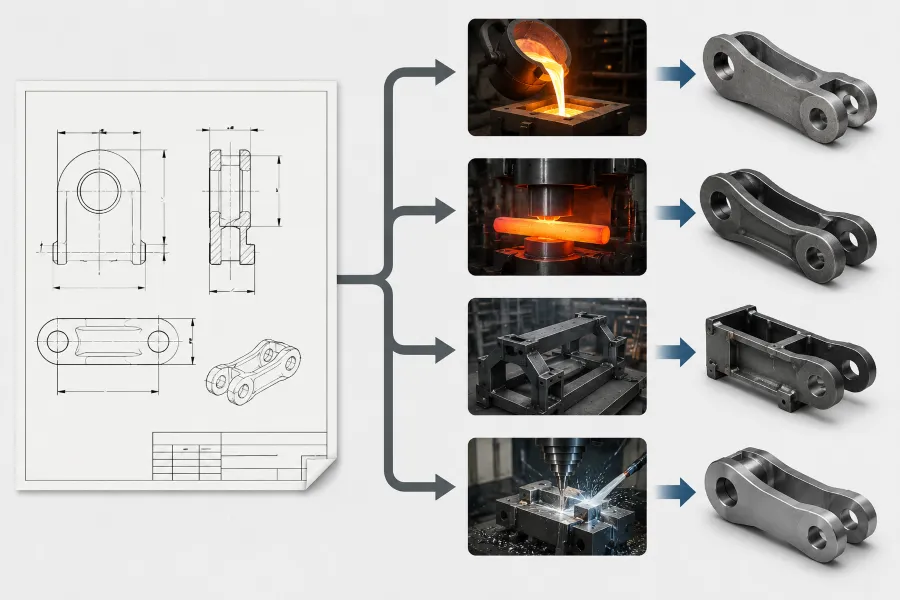
If you have ever sent a railway component drawing to a supplier and been asked “do you want this cast, forged or fabricated?”, you have faced the question this article answers. The drawing describes the part. It does not say how the part should be made. That decision falls to someone, and it is usually made before anyone thinks about it clearly.
A primera vista, the choice seems like a supplier detail: they make it, you buy it.
En la práctica, choosing the manufacturing process for a railway component is not quite that straightforward.
The process decides the internal structure of the metal, the fatigue behaviour, the cost, the tooling, the lead time and the inspection you will need. Two parts with the same drawing, made by different processes, are not the same part. The process is the difference between a component that survives thirty years and one that fails in five.
So how do you choose the right manufacturing process for a railway component?
Every process decision starts with the load, and the load starts with the failure consequence. Before you commit to any manufacturing process, understand what the part is carrying.
A railway component is not a generic part. Some parts are safety-critical: a wheel, a coupler, a bogie side frame. If one of these fails, the consequences can be serious. Other parts are structural but less critical: a housing, a bracket, a cover. They still need to be made correctly, but the failure consequence is different.
The failure consequence should set the level of inspection and the material and process discipline. A safety-critical part in a forged or fabricated process still depends on the process control, but the consequences of getting it wrong are what justify the extra care. The choice of manufacturing process is where that discipline gets decided.
Before choosing a process, ask what the part is carrying, how the load cycles over its life, what environment it will see, and what happens if it fails. The process follows from those answers, not the other way around.
Casting pours molten metal into a mould and lets it solidify. The process is chosen for complex geometry, internal cavities and large, awkward shapes.
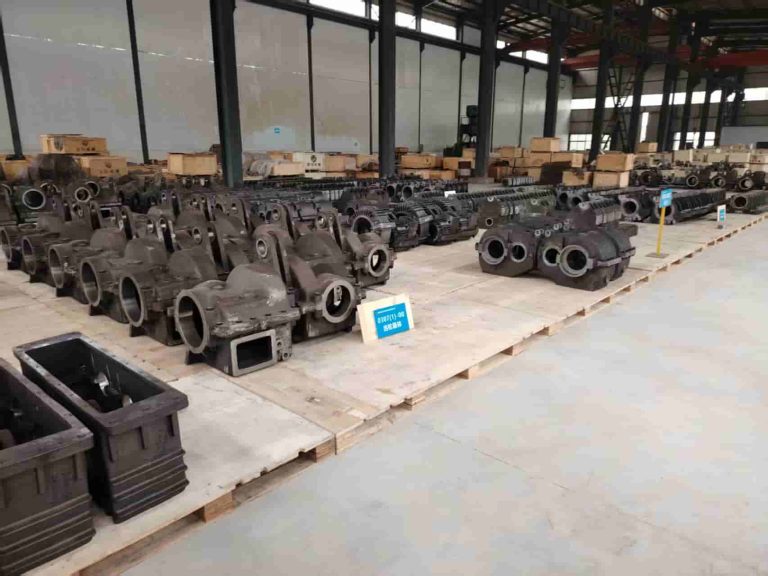
Casting is often the right call when the part has a shape that would be difficult or expensive to produce any other way. A gearbox housing with internal channels, an axle box housing with mounting features, a bogie side frame with pedestal openings and spring seats: these are shapes that casting handles well.
Casting also suits high-volume production. The tooling is a mould or pattern, and once that investment is made, the cost per part falls as the volume rises. For a fleet of thousands of identical parts, casting is often the economical choice.
The trade-off is in the internal structure. Molten metal shrinks as it solidifies and can trap gas or inclusions, which is why castings are inspected with ultrasonic and radiographic methods. A well-made casting is reliable, but it depends on the gating, the solidification control and the heat treatment. The process moves the engineering difficulty into the foundry.
For the specific case of bogie side frames and bolsters, our guide article Acero fundido versus marcos de bogie fabricados: ¿Cuál es el adecuado para su proyecto ferroviario? compares the casting route against the fabricated route in detail.
Forging shapes solid metal under compressive force, which refines the grain structure and aligns it with the load path. The result is a dense, strong component with excellent fatigue resistance.
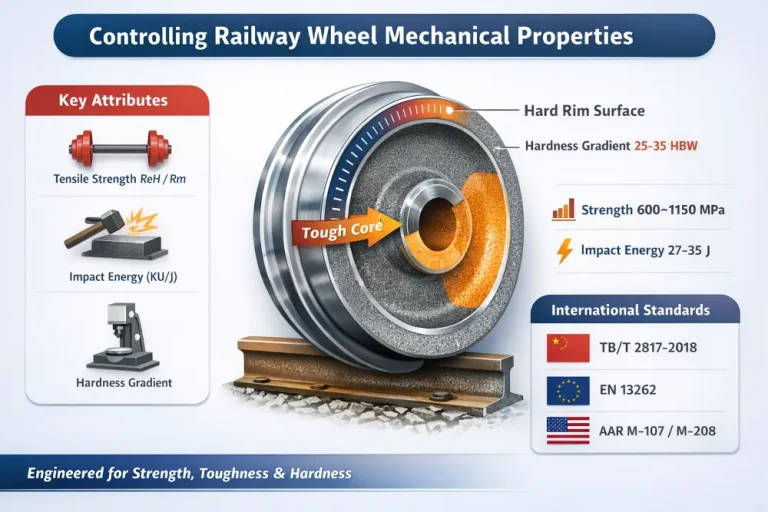
Forging is often the right call for safety-critical parts that carry high cyclic loads: ruedas de ferrocarril, acopladores, suspension links, componentes del eje. These parts live and die by fatigue, and forging’s grain flow gives them the fatigue life that casting cannot match.
The trade-off is in shape and cost. Forging cannot produce complex internal cavities the way casting can, and the tooling and equipment are expensive. Forging works best when the geometry is relatively simple and the volume justifies the tooling.
The decision is not “forging is better than casting”. Es “which process matches this part’s loads, geometry and volume”. A wheel is forged because it is a high-cycle, safety-critical part with a shape that forging handles well. A gearbox housing is cast because it is complex and less sensitive to fatigue. The process choice also feeds directly into cost, which our guide to Ruedas de ferrocarril: La guía completa de diseño, Fabricación, Microestructura, Estándares y vida útil breaks down for the wheel side of the question.
For the wheel side of the question, our guide to train wheel design covers how the geometry and material are chosen before the process is selected.
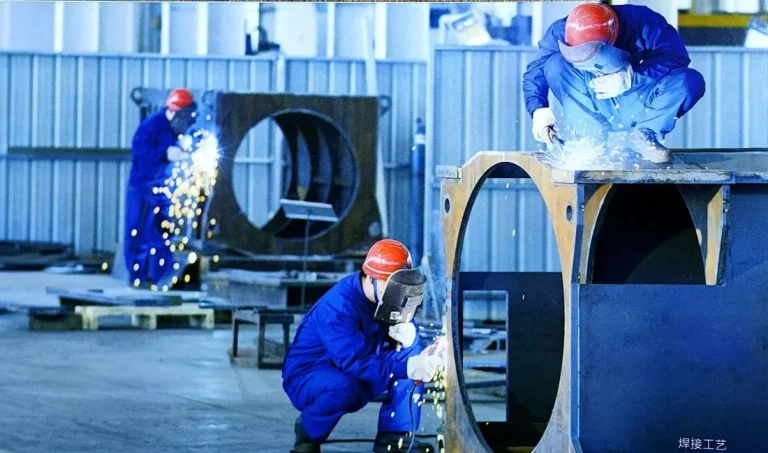
Fabrication cuts, forms and welds steel plate into a finished structure. It is a different route entirely from casting or forging, and it suits a different set of problems.
Fabrication is often the right call when the design is driven by the equipment it has to carry. A modern locomotive bogie frame carries traction motors, cajas de cambios, brake units and auxiliary equipment, and the frame is designed around that equipment from the first line of CAD. There is no mould, so the design can change without retooling.
Fabrication also suits low and medium volumes, where the mould cost of casting or the tooling cost of forging would be prohibitive. A prototype, a rebuild programme or a specialised vehicle in small series can be fabricated without that upfront investment.
The trade-off is the weld. Cada soldadura es un potencial iniciador de grietas., and the assembly carries residual stress until it is stress-relieved. This is why welded railway structures are governed by demanding standards such as EN 13749 for structural requirements and EN 15085 for welding quality. The process is only as good as the welding procedure, La calificación del soldador y la inspección..
Fabrication and casting are not rivals in a simple ranking. They move the engineering difficulty to different places, and the same article on bastidores de bogie de acero fundido walks through that comparison.
There is a fourth route that is easy to overlook: machining a part from a solid bar or plate.
Machining from solid is the right call when the quantity is small and the geometry is simple. Sin moho, no weld, no tooling. The part is cut directly from stock, and the process is quick to set up and easy to change.
The trade-off is material waste and unit cost. Cutting a complex shape from solid removes a lot of metal, and for anything beyond a handful of parts, casting or forging becomes more economical.
Machining from solid is also useful for prototypes and for parts where the design is not yet frozen. It lets you test a geometry before committing to the tooling of a casting or forging process.
There is no universal answer, and any supplier who gives you one without asking about your part is selling you their equipment.
A practical selection looks more like this:
| Pregunta | Por qué es importante |
|---|---|
| What happens if the part fails? | Sets the inspection and process discipline level |
| What loads does it carry, and how do they cycle? | Fatigue-critical parts favour forging or careful fabrication |
| How complex is the geometry? | Complex shapes and cavities favour casting |
| How many do you need? | High volume favours casting or forging; low volume favours fabrication or machining |
| Does the design depend on carried equipment? | Equipment-driven design favours fabrication |
| ¿Qué estándar se aplica?? | AR, EN or UIC standards may constrain the process |
| ¿Qué inspección se requiere?? | Utah, radiografía, weld inspection all attach to the process |
Estos son puntos de partida, not a universal rule. The final choice should be checked against the drawing, the loads and the applicable standard.
Imagine two parts that look similar on paper. One is a bracket in a low-stress location, made in small numbers, and machining from solid is the economical answer. The other is a coupler that must survive impact and fatigue, and forging with controlled heat treatment is the only defensible choice. The process is not decided by the shape alone; it is decided by what the part is asked to do.
When choosing a manufacturing process, I would not stop at asking which process the supplier recommends. Ask what they can demonstrate about the process control behind it.
A reliable manufacturer should be able to provide:
Para proyectos más grandes, traceability matters most. If a part fails in service, la capacidad de rastrearlo hasta el calor, the batch and the inspection records is what makes the investigation possible.
The manufacturing process is a promise about how the part will behave, and that promise is only as reliable as the process control and inspection behind it. nuestra guía pararailway casting inspection explains why a passed inspection is not a guarantee, whatever the process.
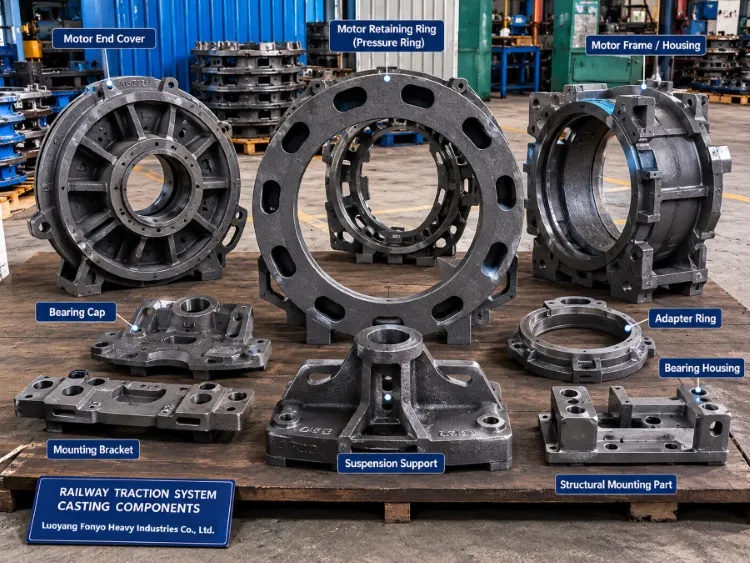
The manufacturing process for a railway component is not a preference. It is an engineering decision driven by the load, the geometry, the volume, the failure consequence and the standard. Fundición, forja, fabrication and machining each move the engineering difficulty to a different place, and the right choice is the one that puts that difficulty where you can control it.
That is why I would not recommend choosing a process based on what a supplier happens to make. Start with what the part must survive. Check the geometry and the volume. Confirm the standard. Then compare the processes that fit, and choose the one whose inspection you can verify.
En Industrias pesadas Co. de Luoyang Fonyo., Limitado., nosotros fabricamos railway casting bogies, ruedas de ferrocarril y marcos de bogie fabricados, which means we can compare casting, forging and fabrication on their engineering merits rather than on the process we happen to sell. For any railway component, we can review the drawing, the loads and the standard, and recommend the manufacturing route that fits.
si tienes un dibujo, specification or an existing component sample, envíanos los detalles. Our engineering team can help check the required manufacturing process, material, standard and production requirements before quotation.
Start with three questions: what the component must survive, how many you need, and what happens if it fails. Then match the process to the answers: casting for complex shapes and volume, forging for fatigue-critical parts, fabrication for equipment-driven or low-volume designs, and machining from solid for simple parts in small quantities.
No. Forging gives better fatigue life and a denser grain structure, which is why it suits safety-critical parts like wheels and couplers. Casting suits complex shapes and high volume where the geometry justifies it. The right process depends on the loads, geometry and volume, not a simple ranking.
Casting pours molten metal into a mould and suits complex shapes and high volume, with the trade-off of possible internal defects. Fabrication welds cut and formed plate together and suits equipment-driven, low-volume designs, with the trade-off that every weld is a potential crack starter.
Safety-critical parts that carry high cyclic loads are usually forged, incluyendo ruedas de ferrocarril, acopladores, suspension links and axle components. The grain flow of forging gives these parts the fatigue life they need.
Machining from solid suits simple geometries in small quantities, prototypes, and parts where the design is not yet frozen. It avoids tooling cost but wastes material, so it becomes uneconomical beyond a handful of parts.
Welded railway structures are governed by standards such as EN 13749 for structural requirements and EN 15085 for welding quality. These standards control the welding procedure, La calificación del soldador y la inspección..
Ask for the manufacturing route and why it fits the part, la norma aplicable, the material and heat treatment, resultados de pruebas mecánicas, the inspection methods and acceptance criteria, and traceability from the heat or batch to the specific part.