Scan WeChat-koden for at kontakte os
Scan WeChat-koden for at kontakte os
Du er velkommen til at sende os en e-mail, og vi vil svare dig hurtigst muligt.
At skabe fremtiden med hjerte og sjæl


Jernbanehjul machining process refers to the complete manufacturing steps including forging, rough machining, CNC precision turning, varmebehandling, efterbehandling, og inspektion. It ensures the wheel achieves accurate geometry, high durability, and safe wheel-rail interaction under real operating conditions.
When we talk about railway wheels, we are dealing with one of the most safety-critical components in rail systems. Each wheel carries heavy loads, rotates at high speed, and constantly interacts with the rail surface under dynamic stress.
Fra et ingeniørmæssigt perspektiv, forging alone cannot guarantee performance. It only provides material strength. The real performance of a railway wheel is defined during the machining process, where geometry, overfladekvalitet, and tolerances are precisely controlled.
This article explains the full railway wheel machining process, based on real industrial production practice—from forged blank to finished CNC-machined wheel.
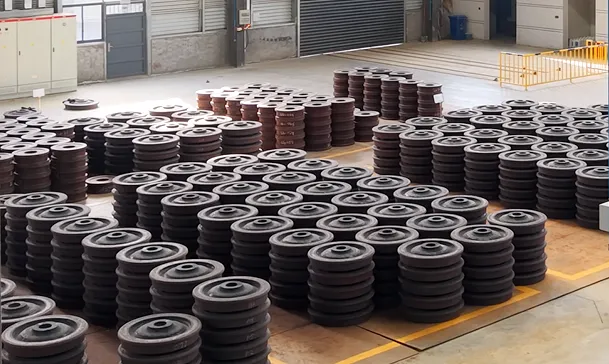
Every jernbanehjul starts with a forged steel blank.
Forging is not just shaping metal—it refines the internal grain structure of steel.
Engineering benefits of forging:
Efter smedning, the wheel blank is usually heat treated and normalized to stabilize its mechanical properties before machining begins.
Efter smedning, the wheel surface is irregular and oversized. Rough machining is the first cutting stage.
På dette stadium, precision is not the goal. Stability and shape preparation are the focus.
Main functions:
Heavy-duty CNC lathes are used because the workpiece is still large and unbalanced.
This is the most critical stage in the entire railway wheel machining process.
I vores produktionslinje, we use:
Machining range:
φ400 mm – φ1400 mm wheel diameter
Key CNC operations:
Ud fra et ingeniørmæssigt synspunkt, this stage determines:
Even small deviations in profile can significantly affect service performance.

Heat treatment is used to balance hardness and toughness.
Depending on the process route, it may occur before or after machining.
Main effects:
Proper thermal control ensures the wheel performs reliably under long-term cyclic loading.
Railway Wheel Finishing and Surface Treatment
After CNC machining, finishing operations improve surface quality and durability.
Typical processes:
Surface quality is critical because microscopic defects can become fatigue crack initiation points over time.
Railway wheels require strict quality control before delivery.
100% inspection includes:
We also support third-party inspection based on customer requirements.
Typical compliance standards include EN and AAR specifications.
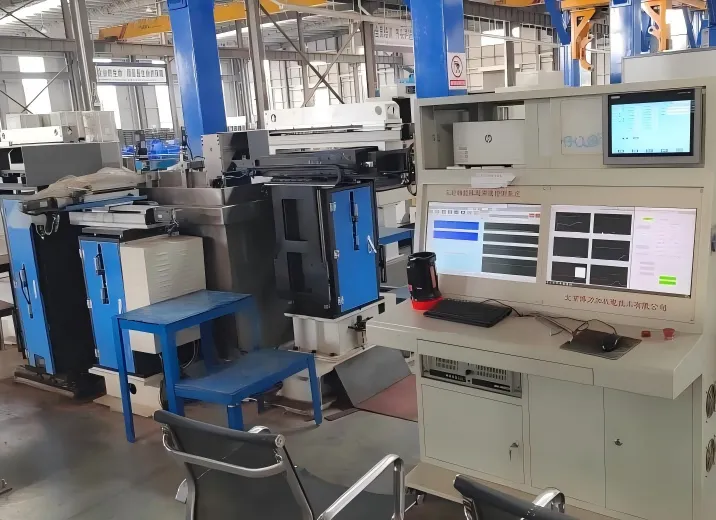
Modern railway wheel machining requires both precision and scale.
Production capacity:
Machining lines:
This structure allows both mass production and customized OEM orders.
Railway wheel machining involves several engineering challenges:
1. Thermal deformation control
Heat generated during machining can affect dimensional accuracy.
2. Residual stress management
Improper machining may introduce internal stress affecting fatigue life.
3. Profile accuracy sensitivity
Small geometry errors directly impact wheel-rail interaction.
4. Material variation in forged steel
Process adjustments are required to maintain consistency.
Advanced CNC control systems are essential to ensure stability.
Machined railway wheels are widely used in:
Each application requires different combinations of hardness, geometri, og slidstyrke.
Fra et ingeniørmæssigt perspektiv, forging provides the strength foundation, but machining defines how the wheel actually performs in service.
The railway wheel machining process ensures dimensional accuracy, overfladekvalitet, and long-term reliability under extreme operating conditions.
På Luoyang Fonyo Heavy Industry Co., Ltd., we integrate forging, varmebehandling, CNC-bearbejdning, and full inspection to produce high-quality railway wheels for global rail applications.
We supply wheels for freight wagons, passagertog, lokomotiver, and heavy-haul systems with OEM/ODM customization support.
Contact us for technical drawings, quotations, and railway wheel solutions. visit our Website: www.railwaypart.com