Scan WeChat-koden for at kontakte os
Scan WeChat-koden for at kontakte os
Du er velkommen til at sende os en e-mail, og vi vil svare dig hurtigst muligt.
At skabe fremtiden med hjerte og sjæl


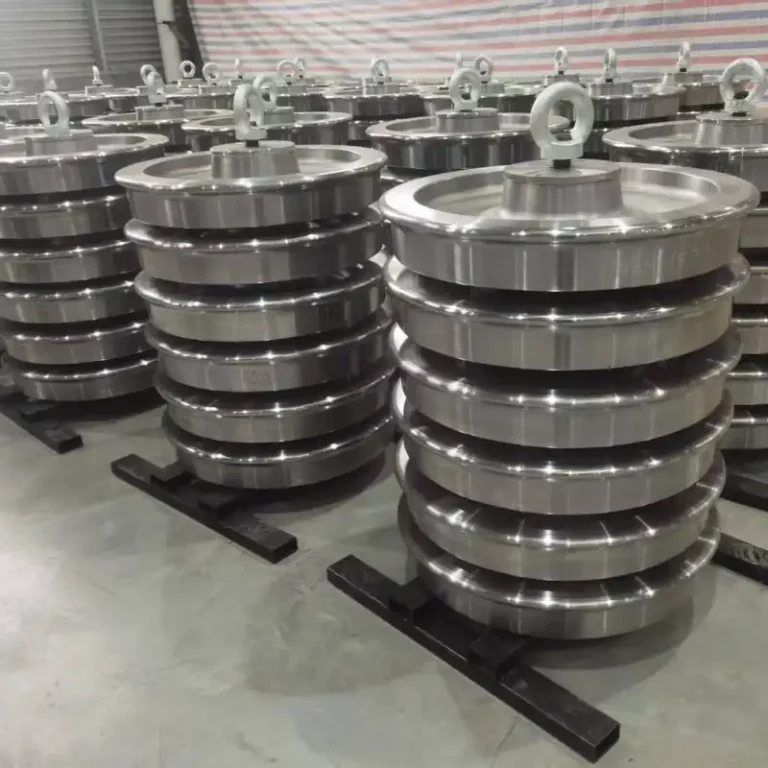
I det krydsende jernbanenet, trains shuttle at lightning speed, ensuring people’s travel and the transportation of goods. In various key parts of the railway, der er en tilsyneladende upåfaldende, men afgørende komponent – de railway flange, which is like an “invisible link” that silently maintains the safety and stable operation of the railway system.
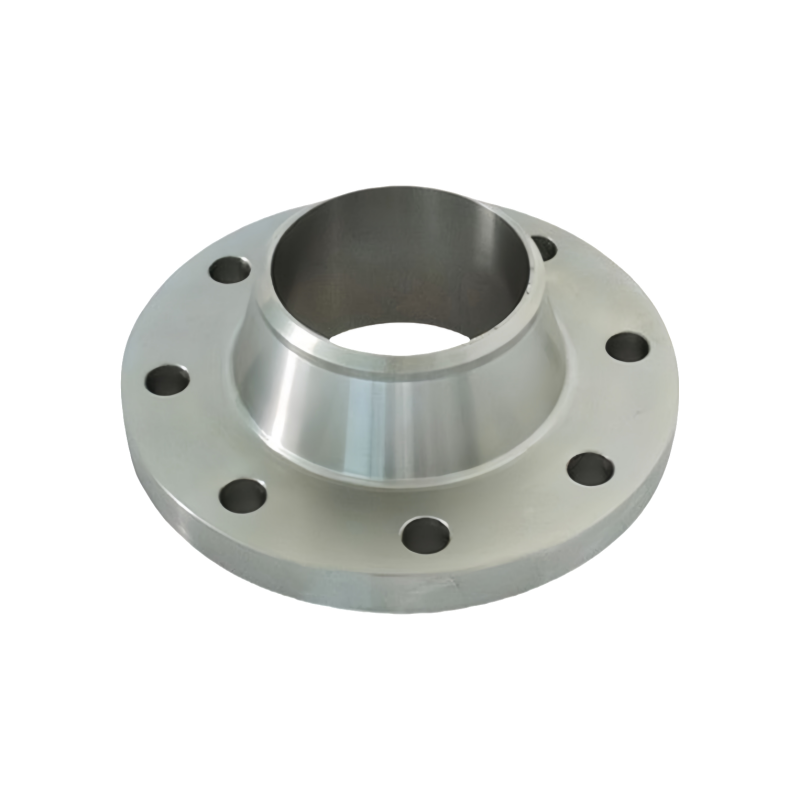
Connecting “led”: stringing together the railway veins
A railway flange is a disc-shaped part, usually used in pairs, mainly used in railway pipelines, equipment connections and the joints of track-related components. Its primary function is connection. In the railway’s water supply, drainage, fuel transportation and other pipeline systems, flanges are tightly connected to adjacent pipe sections by bolts to form a continuous and sealed channel. This channel is like the “blood vessels” of the railway system, ensuring that all kinds of media can be transported smoothly and without leakage.
In the braking system, air pipelines and other parts of railway locomotives, flanges also play a key connecting role. Signals and power, such as braking commands and compressed air, are effectively transmitted through flange-connected pipelines to ensure the sensitivity and reliability of the train braking system. It can be said that the railway flange is the “led” that connects the railway veins, making the entire railway system an organic whole.
Sealing “Guardian”: Resisting external intrusion
In addition to connection, railway flanges also have excellent sealing performance. The railway operating environment is complex and diverse, and pipelines and equipment need to withstand the pressure from the internal medium and various influences of the external environment, such as temperature changes, vibrations, wind and rain erosion, osv.
High-quality railway flanges use special sealing materials and structural designs to maintain reliable sealing under various harsh conditions. Taking the drainage system of railway bridges as an example, the pipes connected by flanges must ensure that rainwater can be discharged smoothly while preventing external impurities from entering the pipes. Once the seal fails, impurities entering the pipe may block the drainage channel and affect the safety of the bridge structure. Railway flanges are like loyal “guards”, resisting external intrusions, preventing medium leakage, and avoiding safety accidents and resource waste caused by leakage.
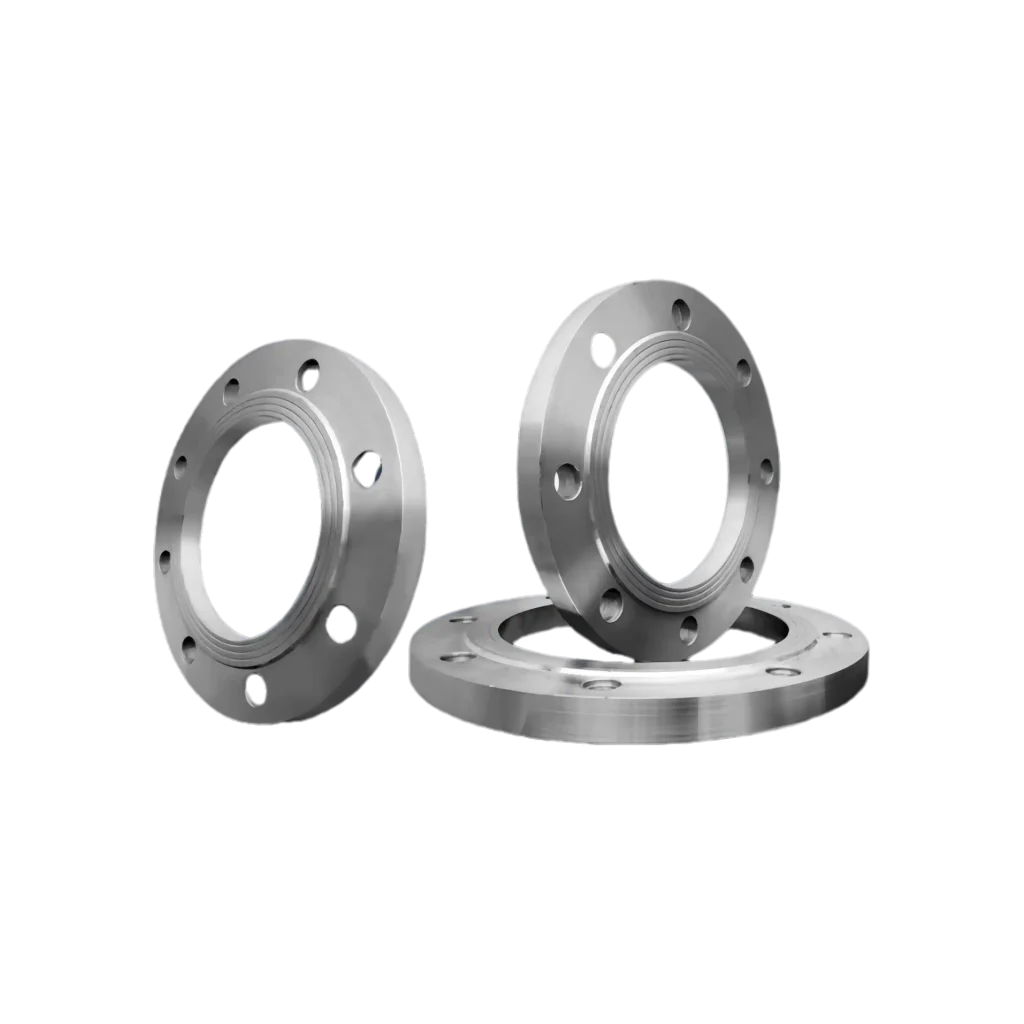
Materiale “pioneer”: Adapt to various working conditions
The material selection of railway flanges is also very particular. Considering the strict requirements of the railway system on strength, korrosionsbestandighed, slidstyrke, osv., common railway flange materials include carbon steel, stainless steel, alloy steel, osv.
Carbon steel flanges have low cost and high strength. They are suitable for railway pipeline connections in general environments and are the “economical and applicable pioneers” in railway construction. Stainless steel flanges have excellent corrosion resistance and perform well in humid and chemically corrosive environments. They are often used in coastal areas or railway facilities that are exposed to corrosive media and can be called “corrosion-resistant pioneers”. Alloy steel flanges combine the advantages of multiple metals, have higher strength and high-temperature resistance, and are suitable for special working conditions of high temperature and high pressure, such as related pipeline connections of railway steam locomotives. They are “special working conditions pioneers”.
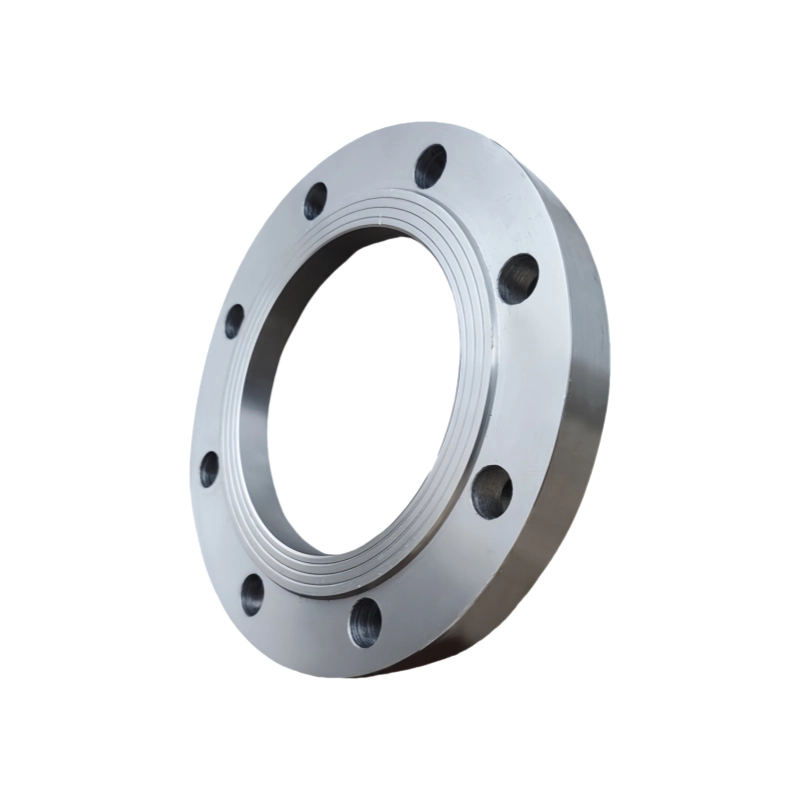
Innovation “engine”: driving railway development
With the continuous development of railway technology, railway flanges are also constantly innovating and improving. The new railway flanges are more optimized in structural design and are more convenient to install and disassemble, which greatly improves the efficiency of railway construction and maintenance.
Advanced manufacturing processes and testing methods ensure that the quality and performance of flanges are more stable and reliable. F.eks, the use of precision casting and CNC machining technology can improve the dimensional accuracy and surface quality of flanges; the use of non-destructive testing technology can timely detect defects inside flanges and ensure product quality. The innovative development of railway flanges is like the “engine” that drives the railway forward, providing a solid guarantee for the safe and efficient operation of the railway.
Although the railway flange is small, it is an indispensable and important part of the railway system. With its tough body and excellent performance, it silently sticks to every corner of the railway, escorting the safe and efficient operation of the railway.
Leverandør af jernbanestøbningsdele
Luoyang Fonyo Heavy Industries Co., Ltd,grundlagt i 1998, er en producent af støbte jernbanedele. Vores fabrik dækker et areal på 72.600㎡, med mere end 300 medarbejdere, 32 teknikere, inklusive 5 senioringeniører, 11 assistentingeniører, og 16 teknikere.Vores produktionskapacitet er 30,000 tons om året. For tiden, vi producerer hovedsageligt støbning, bearbejdning, og montage til lokomotiv,jernbanevogn,højhastighedstog, mineudstyr,vindkraft,osv. Vores produkter er blevet eksporteret til Rusland, USA, Tyskland, Argentina, Japan, Frankrig, Sydafrika,Italien og andre lande.
Kontakte: Stella Liu
E-mail:[email protected]
Mobil:+8615515351287