Scan WeChat-koden for at kontakte os
Scan WeChat-koden for at kontakte os
Du er velkommen til at sende os en e-mail, og vi vil svare dig hurtigst muligt.
At skabe fremtiden med hjerte og sjæl


In the field of mechanical manufacturing, støbejernsdele are widely used in various mechanical equipment due to their good castability, stødabsorbering og slidstyrke. Imidlertid, cast iron parts may produce defects such as cracks, pores, slag inclusions, osv., during the production process. Disse defekter er ligesom “miner” hidden in the dark, which may cause equipment failures at any time or even cause safety accidents. And magnetic particle flaw detection technology is the “ildøjne og gyldne øjne” that discover these defects.
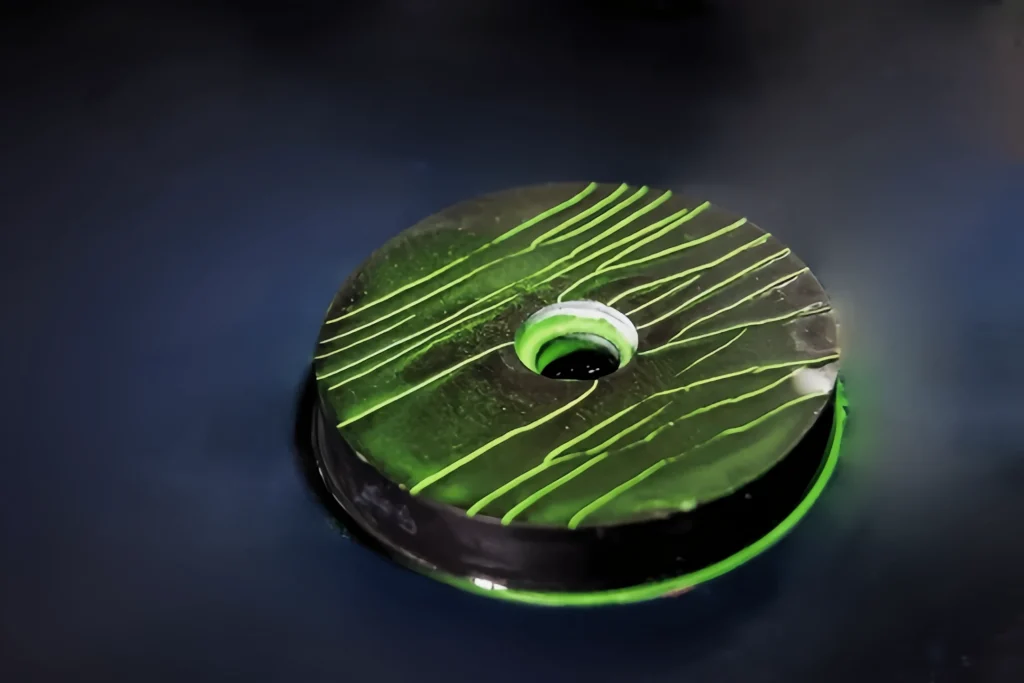
The principle of magnetic particle flaw detection is actually not complicated. It is based on the magnetic properties of ferromagnetic materials. When the cast iron parts are magnetized, if there are defects on the surface or near the surface of the cast iron parts, the magnetic resistance at the defects will increase, the magnetic lines of force will be distorted, and some magnetic lines of force will leak out of the surface of the cast iron parts, forming a leakage magnetic field. På dette tidspunkt, sprinkle magnetic powder on the surface of the cast iron parts; the magnetic powder will be adsorbed by the leakage magnetic field, forming obvious magnetic marks at the defects, thereby intuitively presenting the defects.
The process of magnetic particle inspection generally includes pretreatment, magnetization, application of magnetic powder, observation and recording, and post-processing. In the pretreatment stage, the surface of the cast iron parts should be cleaned and rust-free to ensure that there are no interference factors, such as oil, rust, osv., on the surface, so as to prepare for subsequent flaw detection. Magnetization is a key link. The cast iron parts are usually magnetized by alternating current, direct current or permanent magnets to generate a magnetic field inside the cast iron parts. Efterfølgende, magnetic powder is evenly sprinkled on the surface of the cast iron parts. The magnetic powder can be dry powder or suspended in a liquid to form a magnetic suspension. If there are defects in the cast iron parts, the magnetic powder will gather at the defects to form clear magnetic marks. By observing the shape, size and position of the magnetic marks, the operator can accurately judge the nature and severity of the defects. Endelig, post-processing such as demagnetization and cleaning is carried out to avoid the residual magnetism from affecting the subsequent use of the cast iron parts.
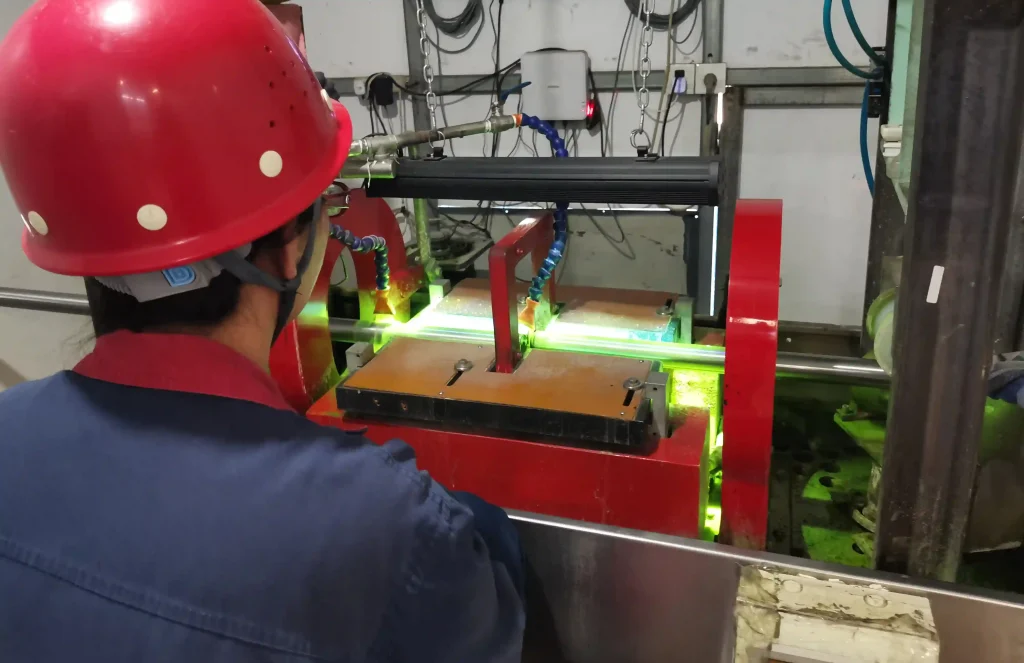
Magnetic particle inspection technology has many advantages. It is relatively simple to operate, does not require complex equipment and expensive costs, and can quickly and effectively detect tiny defects on the surface and near the surface of cast iron parts. Desuden, magnetic particle inspection can directly display defects, and even inexperienced operators can easily identify defects. Imidlertid, this technology also has certain limitations. It can only detect ferromagnetic materials, but not non-ferromagnetic materials.
In the production and maintenance of cast iron parts such as rail car accessories and machine tool beds, magnetic particle inspection technology plays a vital role. By regularly performing magnetic particle inspection on cast iron parts, potential quality problems can be discovered and dealt with in a timely manner, equipment failures and production accidents caused by defects in cast iron parts can be avoided, and the stable operation of mechanical equipment can be ensured. Med den fortsatte udvikling af videnskab og teknologi, magnetic particle inspection technology is also constantly innovating and improving, providing more reliable technical support for the quality inspection of cast iron parts and safeguarding the safe development of the machinery manufacturing industry.
Leverandør
Luoyang Fonyo Heavy Industries Co., Ltd,grundlagt i 1998, er en producent af støbte jernbanedele. Vores fabrik dækker et areal på 72.600㎡, med mere end 300 medarbejdere, 32 teknikere, inklusive 5 senioringeniører, 11 assistentingeniører, og 16 teknikere.Vores produktionskapacitet er 30,000 tons om året. For tiden, vi producerer hovedsageligt støbning, bearbejdning, og montage til lokomotiv,jernbanevogn,højhastighedstog, mineudstyr,vindkraft,osv. Vores produkter er blevet eksporteret til Rusland, USA, Tyskland, Argentina, Japan, Frankrig, Sydafrika,Italien og andre lande.
Kontakte: Stella Liu
E-mail:[email protected]
Mobil:+8615515351287