Scan WeChat-koden for at kontakte os
Scan WeChat-koden for at kontakte os
Du er velkommen til at sende os en e-mail, og vi vil svare dig hurtigst muligt.
At skabe fremtiden med hjerte og sjæl


Når et tog accelererer jævnt ned ad sporet, de fleste passagerer tænker naturligvis på trækmotorens rå kraft. But if you ask a railway engineer what really matters for long-term performance, they will point to something less obvious: how those motors are mounted to the bogie.
The mounting arrangement affects unsprung mass, kørekvalitet, wheel-rail forces, maintenance intervals, and even energy efficiency. In modern rolling stock, two configurations dominate—axle-hung and nose-suspended traction motors. They share the same basic goal of turning the wheels, but their dynamic behavior, impact on bogie components, and ideal applications are quite different.

Let’s start with the older, simpler design: the axle-hung traction motor. As the name suggests, this motor is hung directly on the axle. The motor frame sits on the axle via sleeve or roller bearings, so the entire motor moves up and down with the wheelset.
[ Bogie Frame ]
│
(Springs)
│
[ Wheel / Axle ] ◄─── [ Trækmotor ] (Clamped directly to axle)
Figur 1: In an axle-hung layout, the motor clamps directly to the axle and moves in unison with the wheelset.
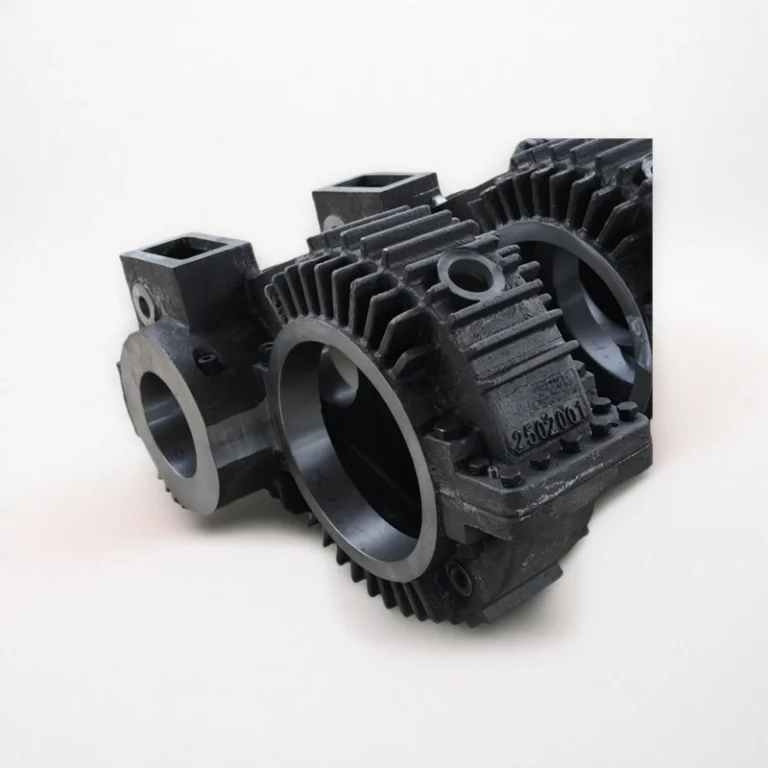
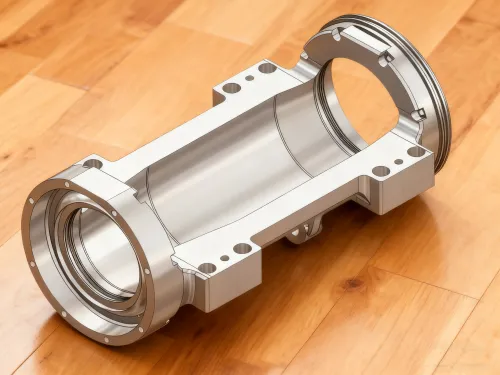
The motor bolts rigidly to a cast housing—commonly called the Axle-Hung Suspension Housing which then mounts onto the axle via heavy-duty bearings. That housing transmits every newton of traction torque and transfers the motor’s weight straight to the wheelset. mere end 90 percent of the motor’s deadweight bypasses the primary suspension and lands directly on the track.
The axle-hung design has three big advantages. Først, it is compact—it barely takes up space inside the bogie frame. Anden, it costs less to build because the mechanical design is simple with few moving parts. Tredje, maintenance is straightforward: you can access and swap the motor easily during depot overhauls. And because the gear engagement is direct, there is almost no power loss.
The downside is that all that motor mass adds directly to the unsprung mass. Since there is no suspension buffer, every track irregularity sends a high-frequency shock straight into the motor and the rail. Over tid, these harsh vibrations accelerate fatigue in the motor frame and nearby bogie components. That is why you rarely see axle-hung motors on passenger trains—they are just too harsh.
The nose-suspended design was developed to fix the harshness of the axle-hung layout. Instead of dumping all the motor weight onto the axle, this arrangement splits the load between the axle and the bogie frame.
┌────────────────────────┐
[ Bogie Frame ] ◄──(Flexible Nose)──┤
│ │
(Springs) [Trækmotor]
│ │
[ Wheel / Axle ] ◄───(Gearkasse)──┘
Figur 2: In a nose-suspended motor setup, the weight splits between the axle and a resilient nose connection on the bogie frame.
One side of the motor (the gearbox end) still connects to the axle. But the other side—the “nose”—mounts to the bogie frame through a flexible element, typically a rubber sandwich mount or a steel spring. That flexible nose lets the motor pivot slightly, absorbing rotational torque shocks and vertical impacts.
Unlike the axle-hung design where nearly all the weight stays on the axle, here only about 30 til 40 percent of the motor mass is supported by the axle and gearbox. The remaining 60 til 70 percent is carried by the bogie frame through that nose suspension.
By shifting most of the motor mass onto the sprung part of the bogie, the nose-suspended design dramatically lowers unsprung mass. That means smoother ride quality for passengers and less wear on the track. It also improves dynamic stability at higher speeds—the train is less likely to hunt or develop lateral oscillations. That is why you will find nose-suspended motors on metros, commuter EMUs, and regional passenger trains.
The trade-off is complexity. You need torque arms, resilient links, and flexible mounts, all of which require precise engineering integration. And those elastic components wear out—rubber hardens, springs fatigue—so you have to inspect and replace them regularly. The initial cost is also higher than an axle-hung setup.
To understand the real-world difference, let us trace two paths: the power path (how torque reaches the wheels) and the weight path (where the motor’s mass goes).
In anaxle-hung motor, the power flows from the motor to a pinion, then to a bull gear, then to the axle, and finally to the wheels. The weight path is simple: more than 90 percent of the motor mass sits squarely on the axle.
I ennose-suspended motor, the power path is almost the same: motor, pinion, gearwheel, aksel, hjul. But the weight path is different. About 30 til 40 percent goes to the axle and gearbox, while 60 til 70 percent goes through the suspension nose up to the bogie frame.
A quick note: some modern urban transit applications add resilient gearwheels—gearwheels with internal rubber damping blocks—to nose-suspended motors. That gives even more noise and vibration reduction, but it is an optional feature, not a requirement for nose suspension itself.
If you ask a rolling stock engineer why motor suspension matters, the answer will always come back to unsprung mass.
Unsprung mass means all the components that are not supported by the primary suspension springs. In a typical bogie, that includes the wheels and axles (the entire wheelset), the axleboxes and bearings, the gearbox housing (or most of it), de axle-hung suspension housing and its internal bearings, and the portion of the traction motor that sits directly on the axle.
The basic physics is simple: the dynamic impact force on the track equals unsprung mass times the vertical acceleration caused by track defects. In equation form: F = M<sub>u</sub> × a, where F is in kilonewtons, M<sub>u</sub> in tonnes, and a in meters per second squared.
When unsprung mass is high, the impact forces escalate quickly as speed increases. You get faster track degradation, ballast that turns to dust, and brutal vibration through the whole train.
For heavy-haul freight running at 60 til 100 km/t, the high unsprung mass of an axle-hung motor is acceptable. The vertical accelerations from track defects are still moderate, so the impacts are manageable.
But for passenger trains and metros running at 120 to 200-plus km/h, minimizing unsprung mass becomes non-negotiable. Once you go above about 250 til 280 km/t, many designers move from nose-suspended to fully suspended motors—frame-mounted or body-mounted configurations with cardan shafts—to cut unsprung mass to the absolute minimum. Imidlertid, nose-suspended motors remain perfectly viable and cost-effective up to that 250–280 km/h range.
| Feature | Axle-Hung Traction Motor | Nose-Suspended Traction Motor |
| Bogie Installation | Directly mounted on the wheelset axle | Split support between axle and bogie frame |
| Unsprung Mass Allocation | Høj (>90% of motor mass is unsprung) | Lower (Only 30–40% of motor mass is unsprung) |
| Ride Comfort Level | Moderat (fine for freight) | Høj (optimized for passengers) |
| Track Wear | Higher localized railhead wear | Lower localized track damage |
| Opretholdelse | Simple, straightforward swap-outs | More complex; needs suspension monitoring |
| Initial Cost | Lower | Højere |
| Typiske applikationer | Heavy-haul freight locomotives | Metros, commuter EMUs, regional passenger trains |
Freight operators care about three things: starting tractive effort, rugged simplicity, and low operating cost. They do not care about smooth rides. Because freight trains run at lower speeds but need enormous torque, axle-hung motors are still the workhorse. They shrug off the dust and abuse of heavy-haul corridors with very little maintenance.
Urban transit is the opposite world. You have frequent acceleration and braking, tight schedules, and passengers who expect a comfortable ride. Nose-suspended motors fit perfectly here. By reducing unsprung mass, they cut cabin vibration and reduce track wear during all those stop-start cycles.
The choice between axle-hung and nose-suspended does not just affect the motor. It directly determines how long your wheels and axles will last.
[ High Unsprung Mass (Axle-Hung) ]
│
▼
[ Increased Contact Stresses ] ──► Tread Spalling & Beskydning (Hjul)
│
▼
[ Elevated Cyclic Vibrations ] ──► Accelerated Fatigue (Aksler)
When you have an axle-hung motor, every vertical shock passes directly to the wheelset. That means higher contact stresses at the wheel-rail interface. The results are faster tread wear, premature hollow wear profiles, and increased rolling contact fatigue (RCF) that leads to shelling and spalling. The wheel lathe will see your wheels more often, and total wheel life goes down.
The same high-frequency vibrations hammer the axles. Dynamic bending and torsional stresses go up, accelerating fatigue accumulation in the axle body. If you are running axle-hung motors, you need rigorous non-destructive testing—ultrasonic inspection, for example—and you need axles made to the highest metallurgical standards. There is no shortcut.
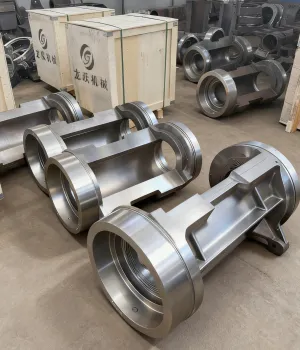
There is a component that often gets overlooked, yet it is the structural linchpin of the whole system: the axle-hung suspension housing, as it is known in Chinese railway engineering. This housing transfers every newton of traction torque and every kilogram of unsprung mass from the motor to the wheelset. It has to survive three kinds of punishment:
A poorly cast or inadequately heat-treated housing can crack. That leads to misalignment of the axle bearings, and in the worst case, the traction motor can detach from the axle—a serious safety hazard on any moving train.
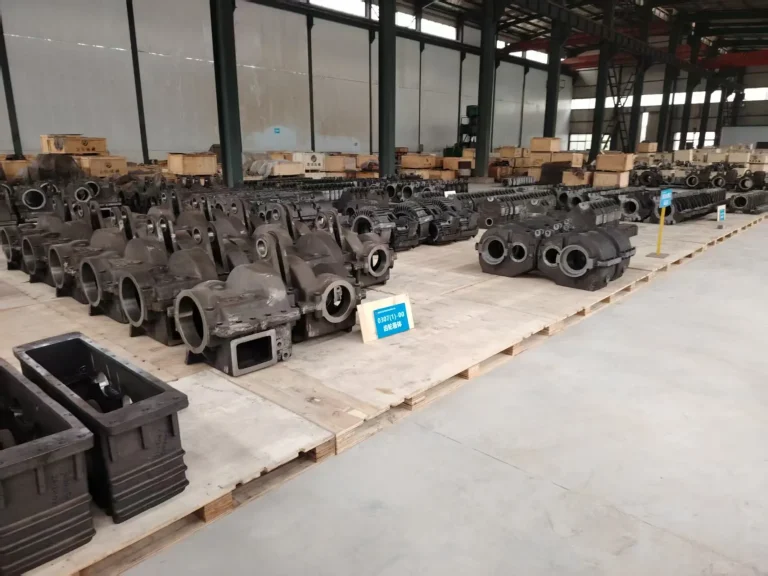
På Luoyang Fonyo Heavy Industries Co., Ltd. , we manufacture precision axle-hung suspension housings to the most demanding railway standards, inklusive AAR, I, and GB/T. Our housings are made from high-strength nodular cast iron (EN-GJS-400-18LT or equivalent) or cast steel grades. We machine the bearing seats to tight concentricity tolerances, and we perform rigorous non-destructive testing (MT and UT) on every single casting. We have already exported these housings to multiple countries across Europe, Southeast Asia, Sydamerika, og Mellemøsten.
Whether your fleet uses axle-hung or nose-suspended motors, Fonyo can supply compatible, ready-to-install housings that help extend wheel and axle life and reduce failures caused by unsprung mass.
På Luoyang Fonyo Heavy Industries Co., Ltd. , we understand the forces generated by both axle-hung and nose-suspended propulsion systems. We manufacture heavy-duty Jernbanehjul, precision-forged Railway Axles, axle-hung suspension housings, rugged Gearkassehuse, holdbar Bogie komponenter, and specialized Jernbanestøbegods—all designed to handle the highest dynamic loads.
Whether you are overhauling a legacy locomotive or developing a new metro fleet, our engineering team provides full OEM and custom manufacturing based on your drawings and international rail specifications.
Contact us today to discuss your next rolling stock project.