قم بمسح رمز WeChat للاتصال بنا
قم بمسح رمز WeChat للاتصال بنا
لا تتردد في مراسلتنا عبر البريد الإلكتروني وسوف نقوم بالرد عليك في أقرب وقت ممكن.
صنع المستقبل بالقلب والروح


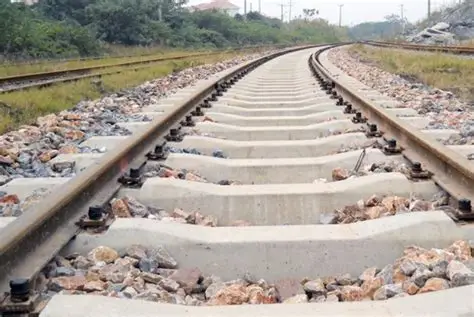
منذ ظهور السكك الحديدية, لقد اعتمد على عنصر دعم بالغ الأهمية – النائم, والذي لعب دورًا مهمًا جدًا منذ البداية. لا يستطيع النائم أن يتحمل القوة الهائلة المتولدة عند تشغيل القطار فحسب، بل يمكنه أيضًا التأكد من التشغيل المستقر والآمن للمسار.
1、 التطور التاريخي لعوارض المسار
تتبع النائمون, المعروف سابقا باسم النائمين, هي نوع من ملحقات السكك الحديدية. في المراحل الأولى من تطوير السكك الحديدية, بسبب وفرة الموارد الحرجية والمرونة الجيدة, العزل, خفة, وقابلية معالجة الخشب, تم استخدامه على نطاق واسع كهيكل دعم للمسارات. بعد العلاج المضاد للتآكل, تتمتع هذه العوارض الخشبية بعمر خدمة يبلغ حوالي 15 سنين, مما يجعلها المادة المفضلة لبناء السكك الحديدية في ذلك الوقت. وفقا للإحصاءات, خلال فترة الذروة لاستخدام النائم الخشبي, أكثر من 3 billion sleepers were laid worldwide, most of which were pine wood.
لكن, with the reduction of forest resources and the increasing awareness of environmental protection among people, as well as the development of science and technology, wooden sleepers have gradually withdrawn from the historical stage. At the beginning of the last century, some countries began to try using steel sleepers and reinforced concrete sleepers to replace wooden sleepers. Although steel pillows have high strength, they consume too much metal, are expensive, and are prone to corrosion, so they have not been widely promoted. Reinforced concrete sleepers have gradually become the mainstream choice in railway construction due to their long service life, high stability, and low maintenance workload.
In the process of railway development in China, the sleeper material has also undergone changes, gradually transitioning from the early wooden sleeper to reinforced concrete sleeper. Since 1957, prestressed concrete sleepers have been applied on a large scale in China’s railway field, and today, the number of laying has reached hundreds of millions of roots. The application of these sleepers makes the railway operation more stable and safe, and also makes the cost of railway maintenance greatly reduced.
2、 Structural characteristics of track sleepers
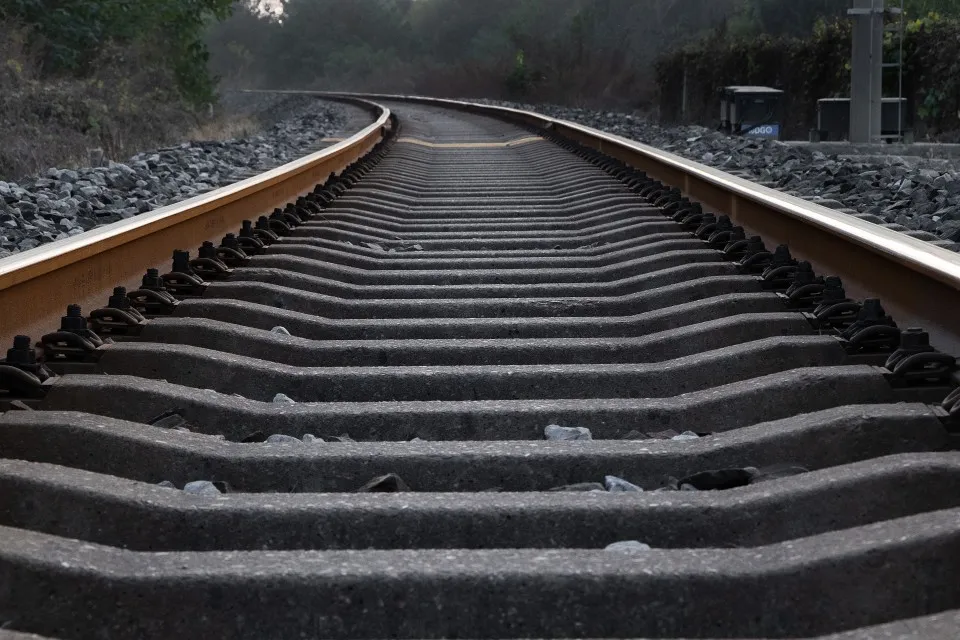
The structural design of track sleepers is quite sophisticated, usually consisting of multiple components, including upper cover plate, lower cover plate, rubber plate, central bolt, and toothed pad iron. These components work together to make sure the stability and durability of the sleepers.
The upper cover plate plays a key role in connecting the sleeper and the rail, just like a bridge, bearing the heavy responsibility of supporting the railway rail. It is mostly made of high-strength steel so that it could withstand the strong pressure generated by the train. The lower cover plate carries the weight of the sleeper itself and disperses the load of the rail. The presence of plywood not only helps prevent moisture but also has a certain sound insulation effect. The central bolt tightly connects the upper and lower cover plates, further stabilizing the structure of the rail sleeper.
In the particular scene of railway curve, the application of toothed cushion iron is particularly critical. Its function is to significantly enhance the smoothness of the rail vehicle when passing through the curve, and effectively resist the track deviation or structural damage that may be caused by the vibration of the train. It is these carefully considered and designed details that work together to build a solid and stable framework of track sleepers, laying a solid foundation for the overall safe and efficient operation of the railway system.
3、 The material evolution of track sleepers
With the advancement of technology and the improvement of environmental awareness, the materials of track sleepers are also constantly evolving. From the initial wooden sleepers to reinforced concrete sleepers, and now to composite material sleepers and cast steel sleepers, each material represents the advancement of technology and environmental protection concepts at that time.
Although wooden sleepers have the advantages of good elasticity and easy processing, its service life is not long, and it is also susceptible to the influence of surrounding environmental factors. The reinforced concrete sleeper just makes up for these shortcomings of the wooden sleeper, with better stability and longer durability. لكن, reinforced concrete sleepers themselves also have some short boards, such as large weight and poor elasticity. In order to overcome these drawbacks, people began to try using composite materials to manufacture sleepers.
Composite material sleepers are made from materials such as plastic, ممحاة, petrochemical additives, crop straws, and wood chips and are synthesized through modern process technology. These materials not only have the advantages of lightweight, قوة عالية, and corrosion resistance but also could reduce the noise and vibration generated during train operation to a certain extent. فضلاً عن ذلك, composite sleepers also have good environmental performance, which is in line with the concept of sustainable development.
Cast steel sleepers are a new type of sleeper material that has emerged in recent years. It is manufactured using cast steel technology and has advantages such as high strength, صلابة عالية, ومقاومة التآكل. Cast steel sleepers could not only withstand the enormous pressure during train operation but also adapt to various complex geological and environmental conditions. لكن, due to its relatively high manufacturing cost, it has not yet been widely applied.
4、 Application and prospect of cast steel sleepers
As a new type of sleeper material, cast steel sleepers have broad application prospects. In the fields of heavy-duty and high-speed transportation, such as high-speed railways and urban rail transit, cast steel sleepers could provide better stability and safety. في أثناء, due to its excellent corrosion resistance, it could also adapt to various harsh environmental conditions.
لكن, if cast steel sleepers want to be applied in a wider range, there are still some problems to be solved. أولاً, its manufacturing cost is high, which prompts relevant parties to conduct in-depth research and improvement on the existing production process to achieve cost reduction. ثانية, the weight of cast steel sleepers is larger, which undoubtedly brings more difficulty to the transportation and installation work and puts forward more stringent requirements. لذلك, in future development, it is necessary to continuously research and develop new technologies and materials to improve the performance of cast steel sleepers and reduce costs.
فضلاً عن ذلك, with the increasing awareness of environmental protection and the deepening of the concept of sustainable development, environmentally friendly sleeper materials such as cast steel sleepers will gradually be more widely used. في نفس الوقت, it is also necessary to strengthen the maintenance and upkeep of track sleepers, extend their service life, and reduce their impact on the environment.