قم بمسح رمز WeChat للاتصال بنا
قم بمسح رمز WeChat للاتصال بنا
لا تتردد في مراسلتنا عبر البريد الإلكتروني وسوف نقوم بالرد عليك في أقرب وقت ممكن.
صنع المستقبل بالقلب والروح


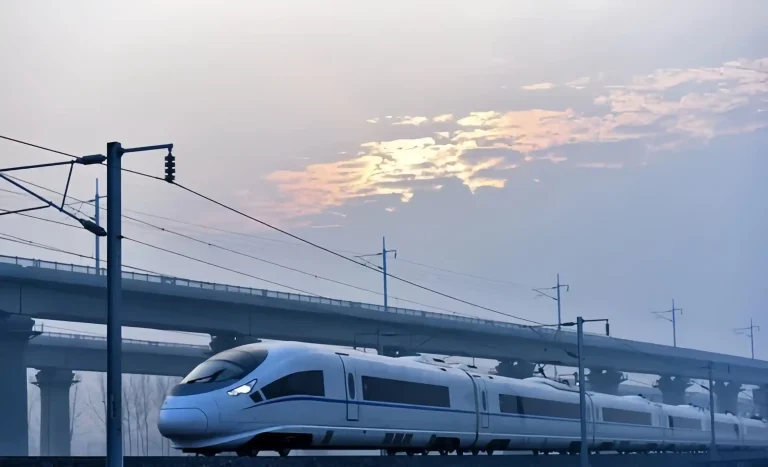
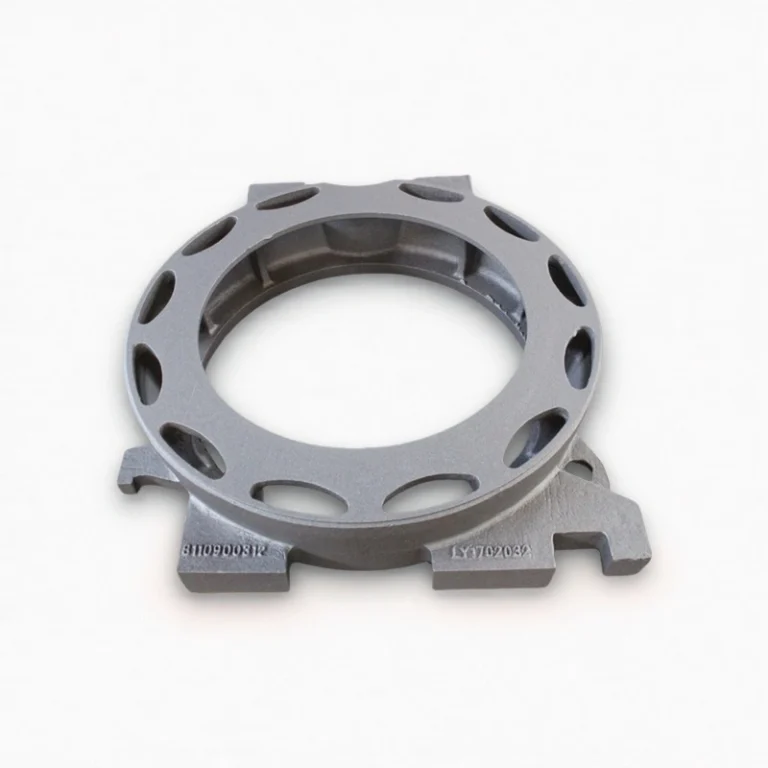
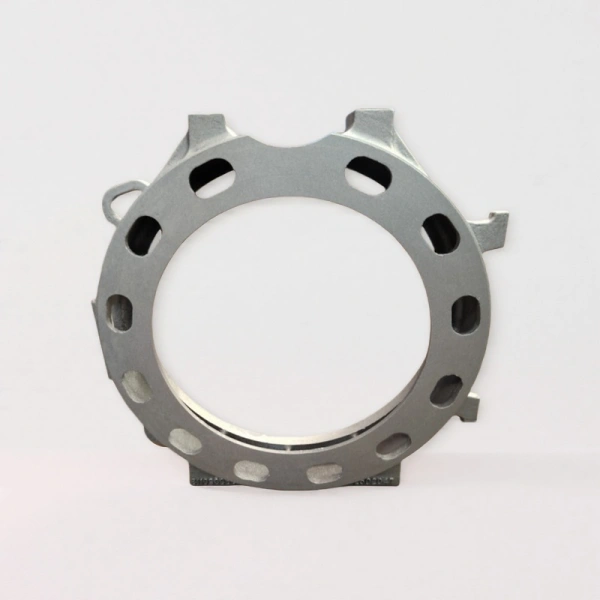
في تصنيع معدات النقل بالسكك الحديدية, صب quality directly impacts the safety and reliability of train operations. As the two main processes for rail part production, صب الرمل (صب الرمل) وفقد صب الرغوة (EPC) differ significantly in terms of cost, دقة, and production cycle. This article will systematically compare the core parameters of the two processes based on their technical principles, providing a reference for process selection for rail part manufacturers.
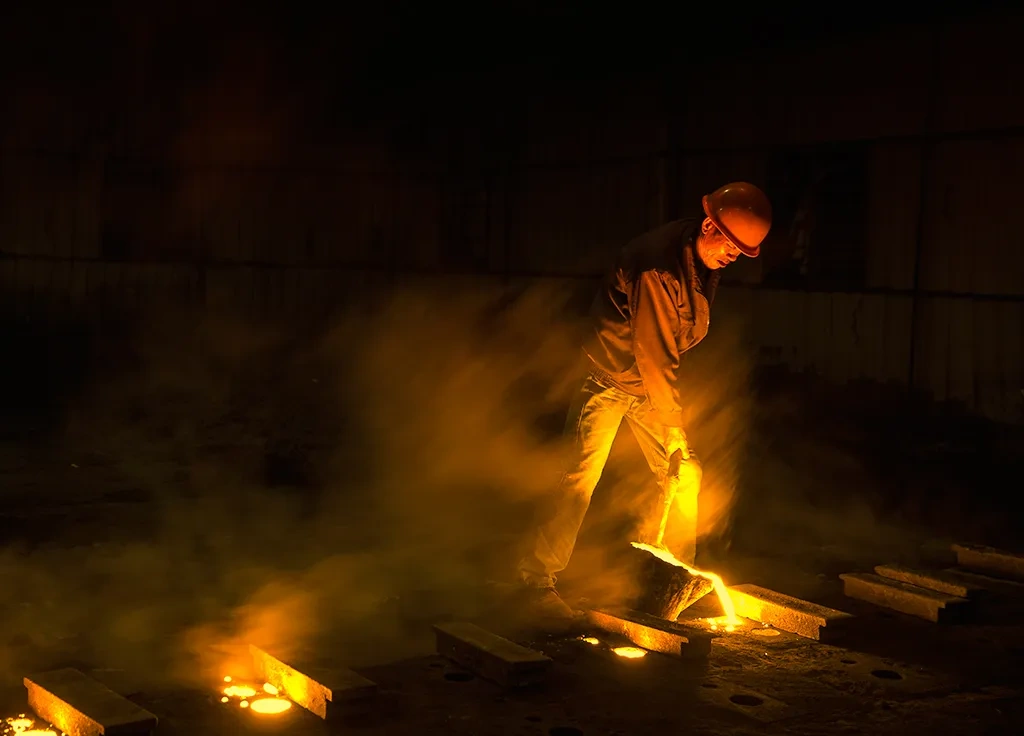
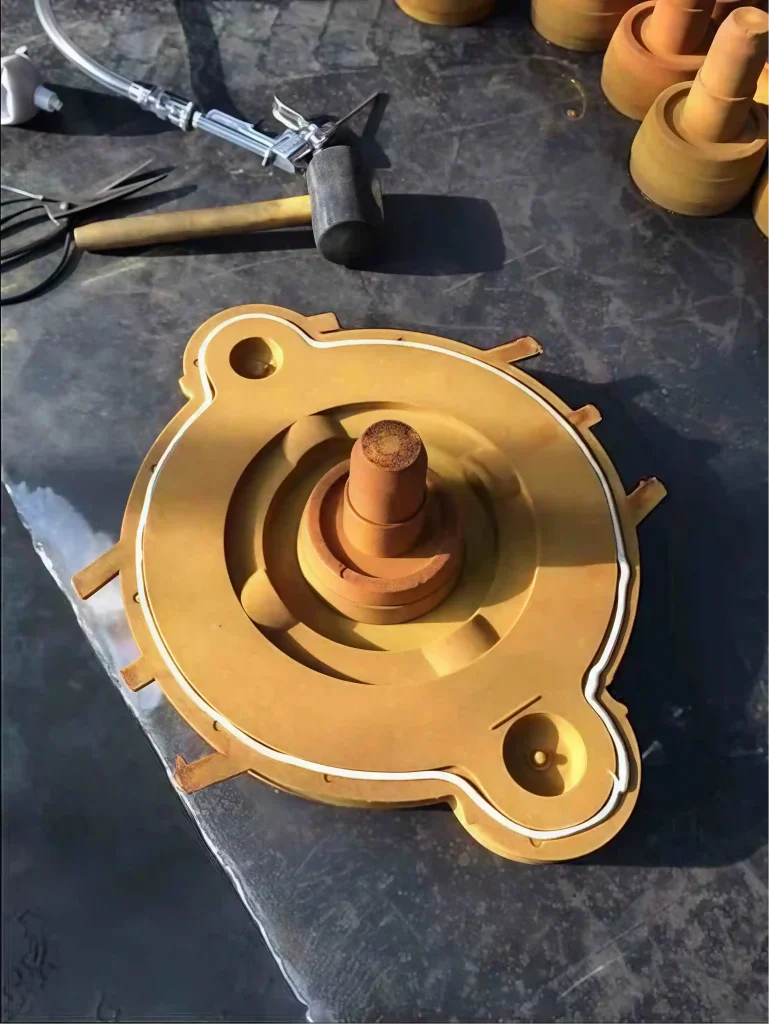
Sand casting uses a sand box as a mold carrier. Sand and binder are mixed to form a mold. Production is completed through processes such as box assembly, صب, and sand shakeout. Mold development accounts for approximately 30% of the cost structure, and the cost of a single mold increases exponentially with increasing complexity. على سبيل المثال, for a certain type of high-speed rail bogie axle box, the sand casting mold development cycle takes 45 أيام, with mold costs reaching 800,000 يوان.
بالإضافة إلى, a dedicated warehouse is required for mold storage, resulting in significant indirect costs. بالإضافة إلى, sand casting places stringent demands on the properties of the molding sand. The cost of self-hardening resin sand is 200% higher than that of ordinary clay sand, further driving up the cost per piece.
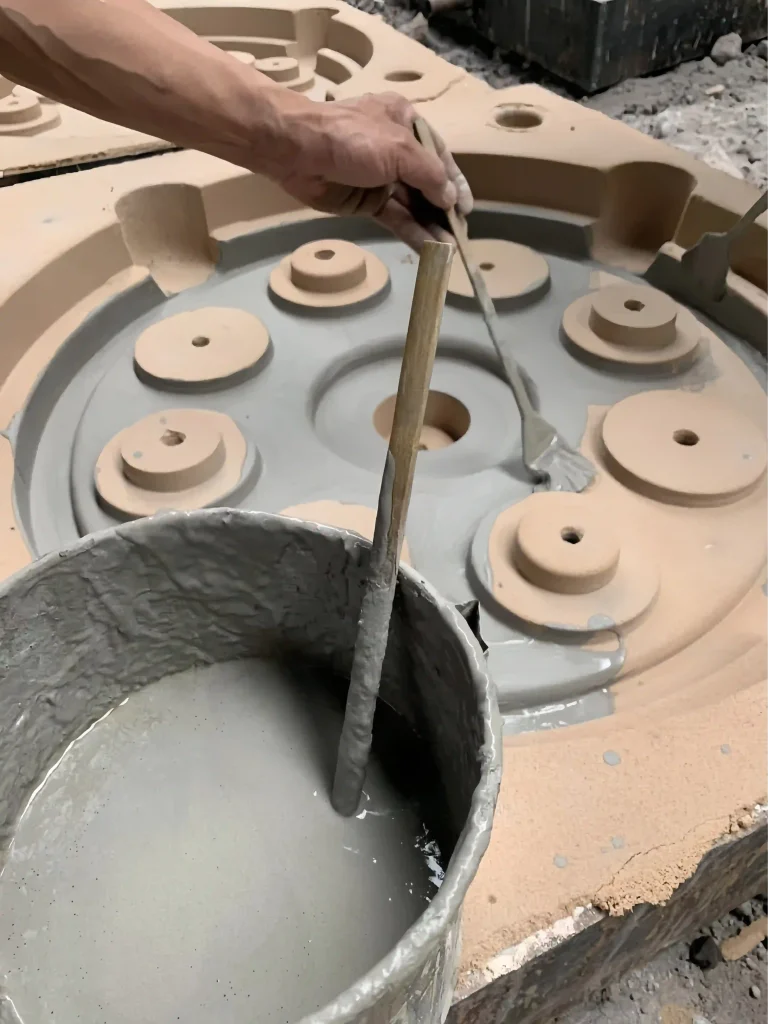
Lost foam casting uses expandable polystyrene foam (EPS) to create a full-size model that is identical to the casting. This process achieves “patternless casting” through a series of steps, including dipping in a refractory coating, drying, sand embedding and pouring. Its core cost advantage lies in the mold: EPS models are produced using CNC cutting technology, resulting in a single-piece mold cost only 1/20 of that of sand casting molds, and rapid modifications are possible (على سبيل المثال, design changes can be completed within 24 ساعات). For one company producing subway brake discs, the amortized cost of a single mold using sand casting was 150 يوان, while using the lost foam process cost only 8 يوان. لكن, coating costs account for 15% (an 8 percentage point increase compared to sand casting), and optimization of the coating formula (على سبيل المثال, using water-based coatings instead of alcohol-based coatings) is needed to reduce this cost by 15%-20%.
The dimensional accuracy of sand casting is affected by multiple factors, including sand properties, compactness, and assembly errors. Conventional sand-cast rail components can achieve dimensional tolerances of CT9-CT10 (جيجابايت/ت 6414) and surface roughness of Ra6.3-12.5μm. For key components such as high-speed rail axleboxes, the self-hardening resin sand process is required to increase tolerances to CT7. لكن, this increases material costs by 40% and reduces sand recovery to 85% (requiring the addition of 3% new sand to maintain performance). Tests conducted by one company showed that the controllable wall thickness deviation of sand-cast brake discs is Δ≥3mm. Exceeding this value requires machining to compensate, increasing costs by 12%.
Lost foam casting uses a foam model to replicate the casting geometry precisely. Combined with negative pressure pouring technology, it can achieve CT7-CT8 precision and a surface roughness of Ra3.2-6.3μm. Comparative tests conducted by one company showed that when producing brake discs with complex flow channel structures, the lost foam process improved dimensional consistency by 37% compared to sand casting, reduced machining allowance by 0.5mm, and shortened machining time by 20%. لكن, carbon residue generated by the pyrolysis of the foam model can lead to surface carburization, requiring optimized coating formulations (such as adding 5% alumina powder) to control the carbon increment to less than 0.05%. In one case, the surface carbon content of an unoptimized lost foam casting reached 0.3%, resulting in an 8% increase in the subsequent quenching crack rate.
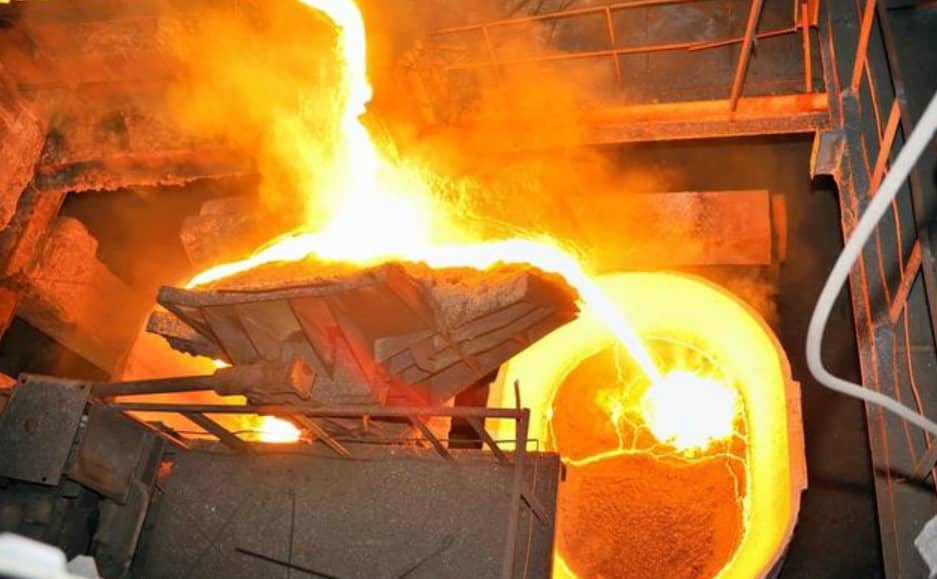
The standard production cycle for sand casting is 28-35 أيام, of which mold manufacturing accounts for 60% (على سبيل المثال, high-speed rail axle box molds require 45 أيام). For high-variety, small-batch orders, the cost of idle molds becomes a major constraint. Statistics from a railway vehicle plant show that sand casting line equipment utilization drops to 62% for batches less than 500 pieces, increasing unit costs by 23%, and mold changeover time can reach as long as 8 ساعات (requiring sand box cleaning and adjustment of the closing mechanism). لكن, for large-scale production, sand casting lines can implement automated molding (such as the DISAMATIC vertical parting line), with a single-shift capacity of up to 800 molds per day, and unit costs decrease rapidly as production increases.
The EPS (Easy-Pressed Foam) model production cycle for lost foam casting is only 3-7 أيام, and supports rapid digital modification (such as direct adjustment of model data through CAD software). One company used the lost foam process to produce subway traction motor end caps, achieving a 15-day timeline from design to first-part delivery, أ 57% reduction compared to sand casting. The process also supports “one-furnace, multiple-piece” mixed-flow production (a single furnace can simultaneously cast five different end cap models), increasing equipment utilization to 85%. For complex rail components with annual production of less than 2,000 pieces, the lost foam process offers an overall cost advantage of 18%-25%. For urgent orders, combined with 3D printed foam modeling technology, trial production can be shortened to 10 أيام (compared to the three months required with traditional sand casting).
Lost foam casting is the preferred choice. Typical applications include parts with complex internal structures, such as high-speed rail gearboxes and brake discs. The lost foam process reduces parting surface design (by over 50% compared to sand casting) and mitigates the risk of assembly errors. For one company producing EMU couplings, the lost foam process reduced the number of parting surfaces from 12 ل 2, reducing the scrap rate from 12% ل 3%. The process also eliminates the need for core production, streamlining the production process.
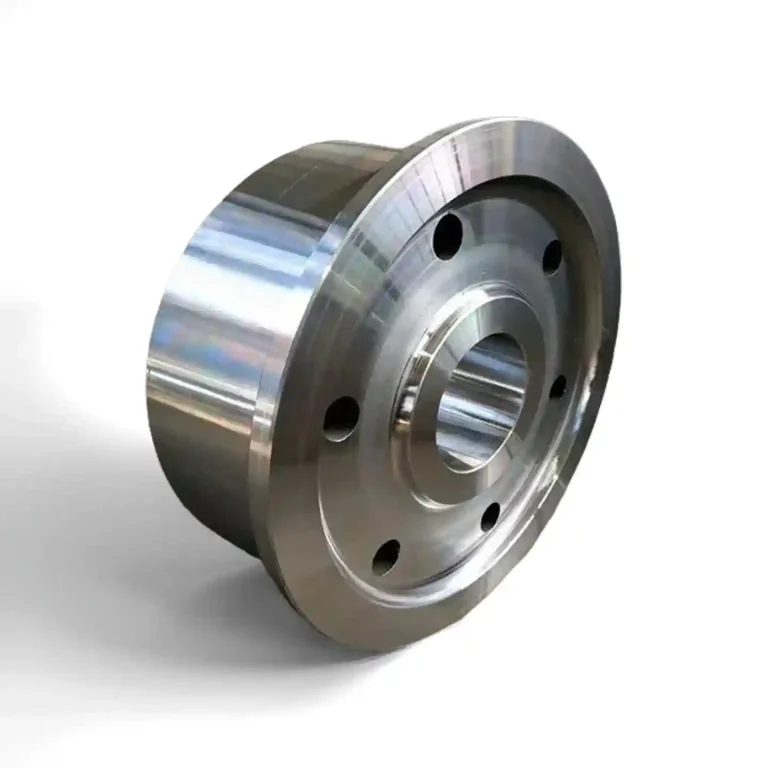
Sand casting is more economical. Typical examples include rotating parts such as axles and wheel hubs. The amortized cost of sand casting molds can be as low as 0.8 yuan per piece, أ 65% reduction compared to lost foam casting. بالإضافة إلى, sand casting lines can achieve fully automated production (على سبيل المثال, integrated molding, حَشد, and pouring), with a single-shift capacity of 1,200 molds per day, reducing labor costs by 40%.
The lost foam process offers exceptional responsiveness. One company used 3D printing foam modeling technology to reduce trial production cycles from three months to 10 أيام. This technology supports the digitalization of the entire “design-print-cast” عملية, significantly shortening new product development cycles. In the repair of accident parts, the lost foam process can deliver the first part within 72 ساعات, minimizing losses from train downtime.
For rail components requiring surface carburization (such as traction motor gears), the sand casting process’s molding sand system makes it easier to control the carbon potential distribution (via adjustable CO/CO₂ ratio). The lost foam process, لكن, requires the development of specialized coatings to prevent carbon buildup, which presents a high technical barrier to entry. Tests conducted by one company showed that the surface hardness uniformity of carburized gears produced using the sand casting process reached ±1 HRC, while the lost foam process required additional post-processing to achieve the same level.
حالياً, the lost foam process is deeply integrated with additive manufacturing, using SLM-printed metal molds to replace EPS models, achieving intelligent casting where “the model is the mold.” لكن, the equipment is expensive (a single metal 3D printer costs over 5 مليون يوان) and is currently only suitable for ultra-complex structural parts (such as turbine blades). في المستقبل, as multi-laser head technology matures, metal 3D printing efficiency will increase by 300%, دفع عملية الرغوة المفقودة إلى سوق المعدات المتطورة.
يستخدم صب الرمل تقنية قالب الرمل للطباعة ثلاثية الأبعاد (مثل طابعة الرمل Voxeljet) لتحقيق إنتاج خالي من العفن. لكن, التكاليف المادية هي 300% أعلى من القوالب الرملية التقليدية, مما يجعلها مناسبة حاليًا فقط للطلبات ذات الحجم المنخفض للغاية (أقل من 100 pieces). ينصب التركيز الرئيسي على تطوير أنظمة صب الرمل القابلة لإعادة التدوير (مثل الرمال الرابطة غير العضوية), زيادة معدل إعادة تدوير الرمال المستخدمة 95% وخفض التكاليف البيئية. استخدمت إحدى الشركات تقنية الفلتر الخزفي لتقليل انبعاثات الغبار الناتجة عن صب الرمل من 50 ملجم/م3 إلى 10 ملجم/م3, تلبية المعايير البيئية للاتحاد الأوروبي.
سوف يدخل تصنيع مكونات السكك الحديدية عصر الإنتاج المرن, تتميز “اختيار العملية حسب الطلب.” Companies will need to establish process databases and use digital simulation technology to predict the cost-quality curves of different processes to optimize the allocation of manufacturing resources. على سبيل المثال, one company has developed process selection software that allows input of part parameters (مقاس, مادة, batch size) to generate cost comparison reports for sand casting automatically and lost foam processes, improving decision-making efficiency by 60%.
شركة لويانغ فونيو للصناعات الثقيلة, المحدودة, تأسست في عام 1998، وهي شركة مصنعة لأجزاء السكك الحديدية المصبوبة. مصنعنا يغطي مساحة 72,600㎡, مع اكثر من 300 موظفين, 32 الفنيين, مشتمل 5 كبار المهندسين, 11 المهندسين المساعدين, و 16 الفنيين. قدرتنا الإنتاجية هي 30,000 طن سنويا. حالياً, نحن ننتج بشكل رئيسي الصب, بالقطع, والتجمع للقاطرة, عربة السكك الحديدية, القطارات عالية السرعة, معدات التعدين, طاقة الرياح, إلخ. وقد تم تصدير منتجاتنا إلى روسيا, الولايات المتحدة, ألمانيا, الأرجنتين, اليابان, فرنسا, جنوب أفريقيا, إيطاليا ودول أخرى.
اتصال: ستيلا ليو
بريد إلكتروني: [email protected]
واتساب: +86-152-3615-7103