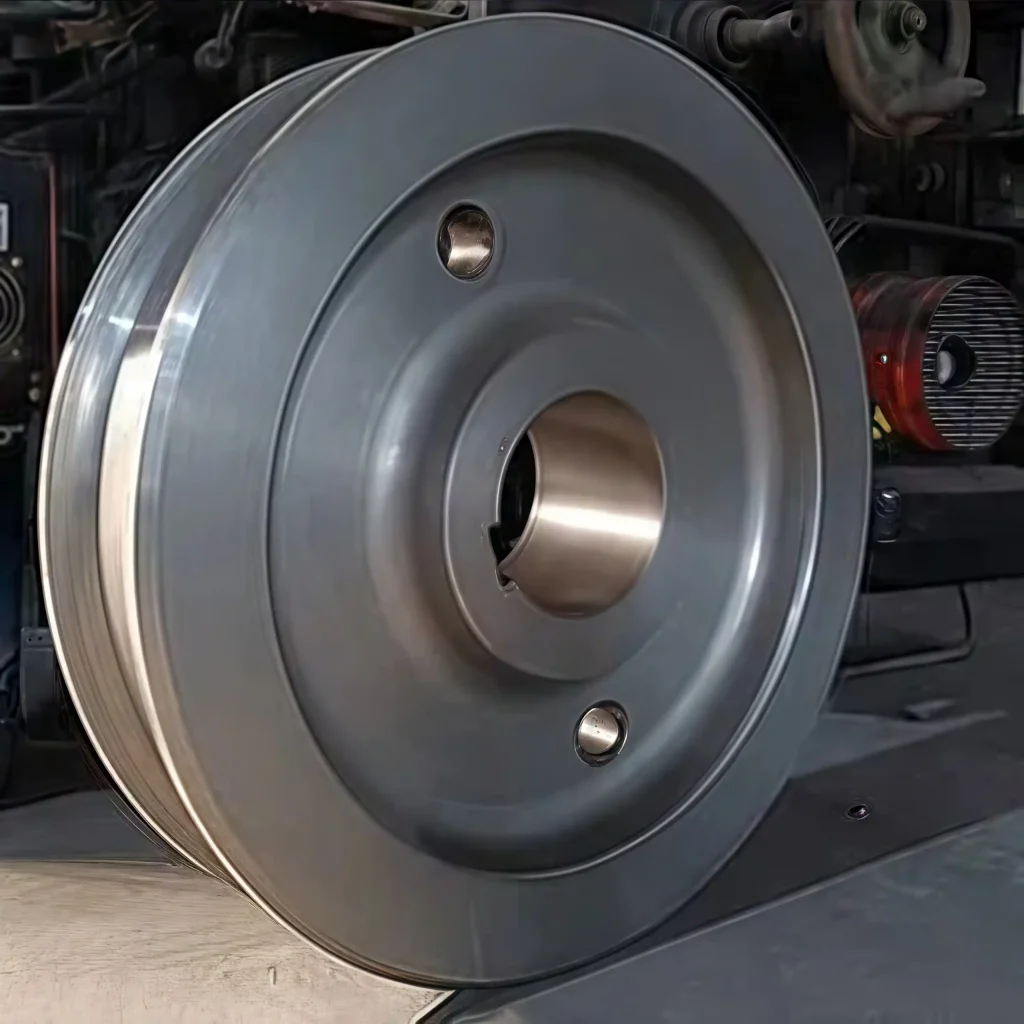
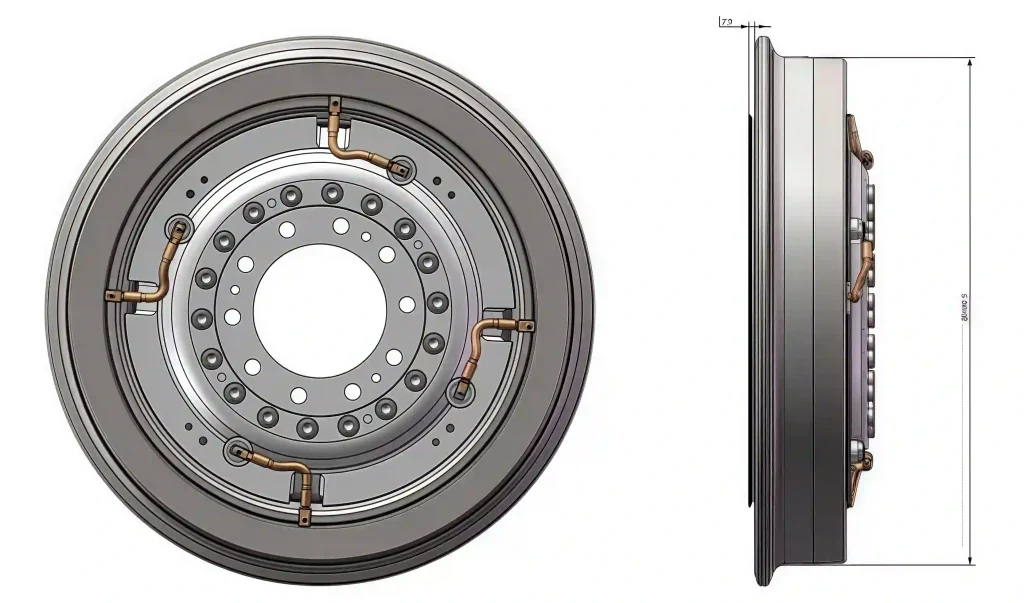
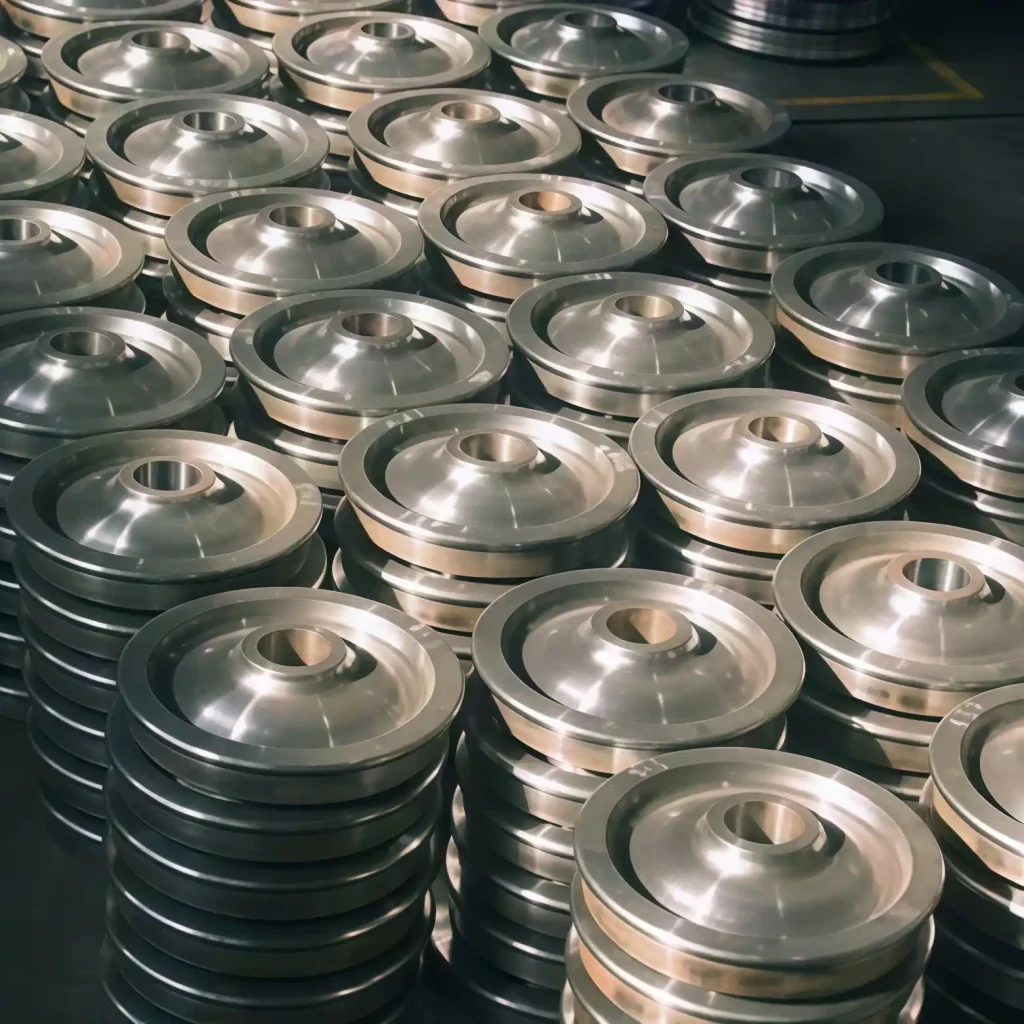
كمكونات أساسية لمركبات السكك الحديدية, عجلات السكك الحديدية يجب أن تعمل بشكل موثوق في ظل الظروف القاسية. يجب أن يلبي تصميمها ثلاثة متطلبات رئيسية:
تحمل حمولة ثقيلة للغاية: يمكن أن تصل الأحمال ذات المحور الواحد 30 طن (لقطارات الشحن الثقيلة), تتجاوز بكثير 1-2 طن من عجلات السيارات;
عمر طويل للغاية: عمر التصميم يتجاوز 1 مليون كيلومتر, مع الحفاظ على الأداء في البيئات المعقدة مثل السرعات العالية (350 كم/ساعة), درجات حرارة منخفضة (-40درجة مئوية), والرطوبة العالية;
تصميم التكرار الآمن: أي خلل بسيط يمكن أن يؤدي إلى الخروج عن المسار, وضع متطلبات صارمة على توحيد المواد وموثوقية العملية.
عجلة السكك الحديدية
2. عملية تزوير: الموازنة بين الأداء العالي والتكلفة العالية
2.1 مبادئ العملية وخصائص المواد
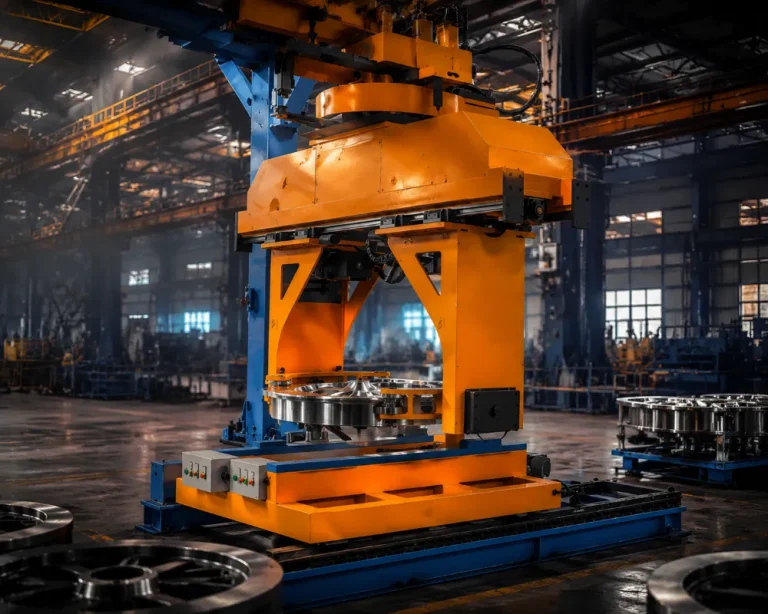
تستخدم عجلات السكك الحديدية المزورة عملية تزوير شعاعية مدمجة وتزوير القالب. فولاذ متوسط الكربون (على سبيل المثال, 50من) أو سبائك الصلب (على سبيل المثال, 30نيكروموV12) billet heated to 450-500°C is gradually formed using a multi-directional press (with a pressure of up to 10,000 طن). This process creates a bidirectional fibrous structure in the metal grains along the circumference and axial directions of the rim, refining the grain size to 15-25μm and achieving a density of 99.8%.
Through T6 heat treatment (solution treatment + aging), the forged wheel hub achieves a tensile strength of 900MPa, a yield strength of 800MPa, an elongation of 15%, and a fatigue limit of 450MPa—30% higher than cast hubs. In a simulated drop-weight test (impact energy of 100kJ), the forged hub exhibited a residual deformation of only 2mm, far superior to the 5mm of a cast hub.
2.2 Performance Advantages and Applications
The core advantage of the forging process lies in its superior material properties:
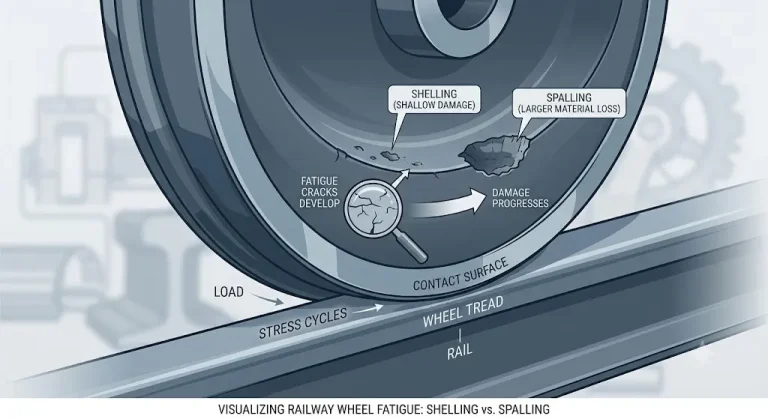
حياة التعب:Under heavy load conditions, the crack growth rate is reduced by 50% compared to cast wheels, with a design life of up to 1.5 مليون كيلومتر.
Thermal Stability:At 300°C, the strength retention rate reaches 85%, making it suitable for braking conditions in high-speed EMUs.
مقاومة التأثير:Passes EN 13262 اختبار (10^7 cyclic loading), with no crack initiation at a stress of 250 الآلام والكروب الذهنية.
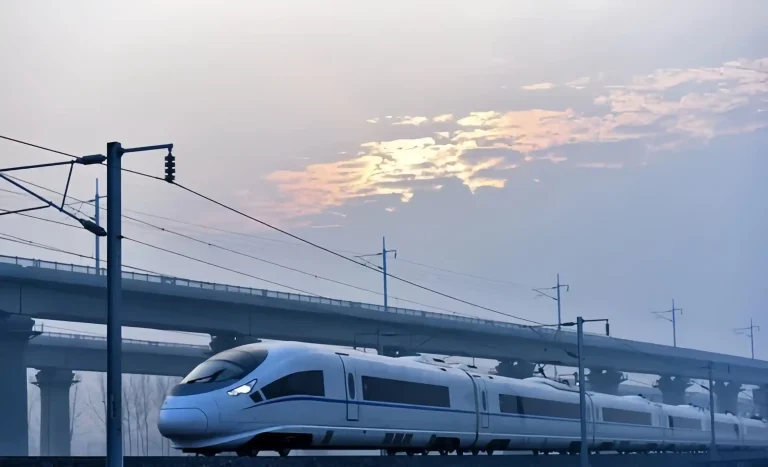
These properties make it the preferred choice for high-speed EMUs (such as the China Harmony CRH380 series) and heavy-duty freight trains (such as the Daqin Railway C80 coal-hauling train). على سبيل المثال, the CR400AF Fuxing EMU uses forged wheels. When operating continuously at 350 كم/ساعة, the rim temperature remains stable below 80°C, resulting in a fatigue life of 12 مليون كيلومتر.
لكن, the high cost of forged wheels (8,000-12,000 yuan per wheel) and long production cycle (20-30 أيام) limit their application, and they currently only hold approximately 15% of the high-end market share.
عجلة السكك الحديدية
3. Casting Process: The Cornerstone of Economic Efficiency and Large-Scale Application
3.1 Process Principles and Material Optimization
The mainstream process for railway wheel hub casting is static casting combined with heat treatment. The specific process is as follows:
Melting and Refining:Steel ingots (such as AAR M201-E1 grade steel) are melted in a medium-frequency induction furnace. Vacuum degassing is used to control the hydrogen content to below 1.5 جزء في المليون, و 0.04% titanium is added to refine the grain size.
Filling and Solidification:Liquid metal is poured into a sand or metal mold. A controlled cooling rate (gradient of 3-5°C/s) minimizes shrinkage defects, achieving a yield of 85%.
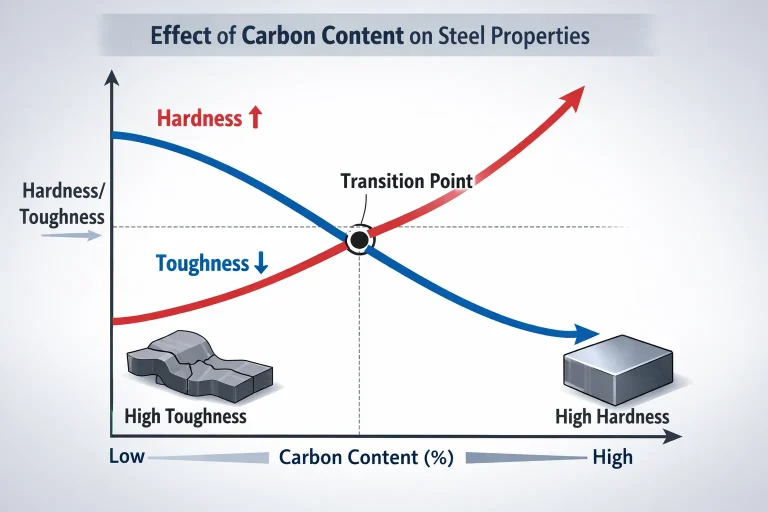
تحسين المعالجة الحرارية:A normalizing (890°C for 2 ساعات) followed by tempering (580°C for 4 ساعات) process is used to achieve a wheel hub tread hardness of 280-320 HB and a core hardness of 180-220 غ.ب, achieving both wear resistance and toughness. Performance and Application Compatibility
3.2The core advantages of cast wheels lie in their affordability and scalable production:
فعالية التكلفة:The cost per wheel is 2,000-3,500 يوان, only one-third that of forged wheels, and the production cycle is only 7-10 أيام.
Reliability Verification:Tested according to EN 13262 (10^7 cyclic loading), the wheels show no crack initiation at 200 الآلام والكروب الذهنية, meeting the requirements of standard lines.
القيود:Under ultra-high-speed (>300 كم/ساعة) or ultra-heavy load (>30 tons axle load) شروط, fatigue life is 40% shorter than forged parts, requiring increased wall thickness (10-15 مم) to compensate for this.
Cast wheels are widely used in conventional passenger trains (such as the 25T passenger car) and standard-load freight trains (such as the C70 general-purpose open wagon). على سبيل المثال, Shanghai Metro Line 16 uses cast wheels. Operating at 80 km/h and with an average daily passenger flow of 100,000, the wheel replacement cycle is 12 سنين, with a maintenance cost per kilometer of only 3,000 yuan per year.
عجلة السكك الحديدية
4. Technological Evolution and Future Trends
4.1 Process Innovation Directions
Liquid Forging Technology:Liquid metal is injected into a mold and immediately subjected to high pressure (150 الآلام والكروب الذهنية). This combines the low cost of casting with the high performance of forging, increasing wheel strength by 25% while increasing costs by only 10%.
3D Printed Sand Casting: 3D printing complex sand molds enables topological optimization of the wheel structure, تقليل الوزن بنسبة 8-12% while increasing design freedom.
Composite Wheels:Carbon fiber reinforcement rings (5-8 مم سميكة) are embedded in the outer layer of the steel wheel hub, increasing rim stiffness by 40% وتخفيض الوزن بنسبة 15%. لكن, this technology is costly (زيادة 50,000 yuan per wheel) and is currently limited to the experimental stage. Market Trend Forecast
High-speed rail drives forging demand: مع تجاوز عدد الكيلومترات التشغيلية للسكك الحديدية عالية السرعة في الصين 40,000 كيلومترات, معدل اختراق العجلات المزورة في 350 من المتوقع أن تزداد وحدات EMU كم/ساعة عن التيار 10% ل 25%.
يؤدي الشحن الثقيل إلى ترقيات الصب: من خلال عمليات مثل تزوير السائل, ستصل نسبة العجلات المصبوبة في قطارات الشحن ذات الحمولة المحورية 25 طنًا إلى 70%, استبدال العجلات المصبوبة التقليدية.
التصنيع الذكي يقلل التكاليف ويزيد الكفاءة: صناعة 4.0 التقنيات (مثل التلميع الآلي الآلي وفحص الجودة بالذكاء الاصطناعي) يمكن أن تقلل من تكلفة العجلات المزورة عن طريق 20%, تضييق الفجوة السعرية مع العجلات المصبوبة إلى أقل من 2x. دليل القرار ودراسات الحالة النموذجية.
عجلة السكك الحديدية
4.2 أبعاد الاختيار الرئيسية
سرعة التشغيل: للسرعات العالية (>250 كم/ساعة), اختر تزوير; للسرعات القياسية (<200 كم/ساعة), اختر الصب.
تكلفة دورة الحياة: للتزوير تكلفة شراء أولية أعلى ولكن تكاليف صيانة أقل; تتميز عملية الصب بتكلفة شراء أولية أقل ولكن تكرار الاستبدال أعلى. حالات التطبيق العملي
وحدات EMU عالية السرعة: يستخدم CR400AF Fuxing EMU عجلات مطروقة. When operating continuously at 350 كم/ساعة, تظل درجة حرارة حافة العجلة مستقرة أقل من 80 درجة مئوية, resulting in a fatigue life of 12 مليون كيلومتر.
قطارات الشحن الثقيلة: تستخدم عربة نقل الفحم C80E التابعة لسكة حديد Daqin عجلات مطروقة بالسائل. في ظل الظروف الصعبة المتمثلة في حمولة محورية تبلغ 30 طنًا وحجم شحن سنوي يبلغ 200 مليون طن, تم تمديد عمر العجلة من 5 سنوات ل 8 سنين, تقليل تكاليف دورة الحياة عن طريق 35%.
النقل بالسكك الحديدية في المناطق الحضرية:Shanghai Metro Line 16 uses cast wheels. Operating at 80 km/h and with an average daily passenger flow of 100,000, the wheel replacement cycle is 12 سنين, وبتكلفة صيانة سنوية فقط 3,000 يوان لكل كيلومتر.
إن الاختيار بين التزوير والصب هو في الأساس مقايضة بين الأداء والكفاءة الاقتصادية. مع التقدم التكنولوجي, سوف يصبح التمييز بين الاثنين طمسًا تدريجيًا, لكن الاختلافات الأساسية - كثافة المواد وموثوقية العملية - ستظل هي العوامل الرئيسية في قرار الاختيار.
مورد أجزاء صب السكك الحديدية
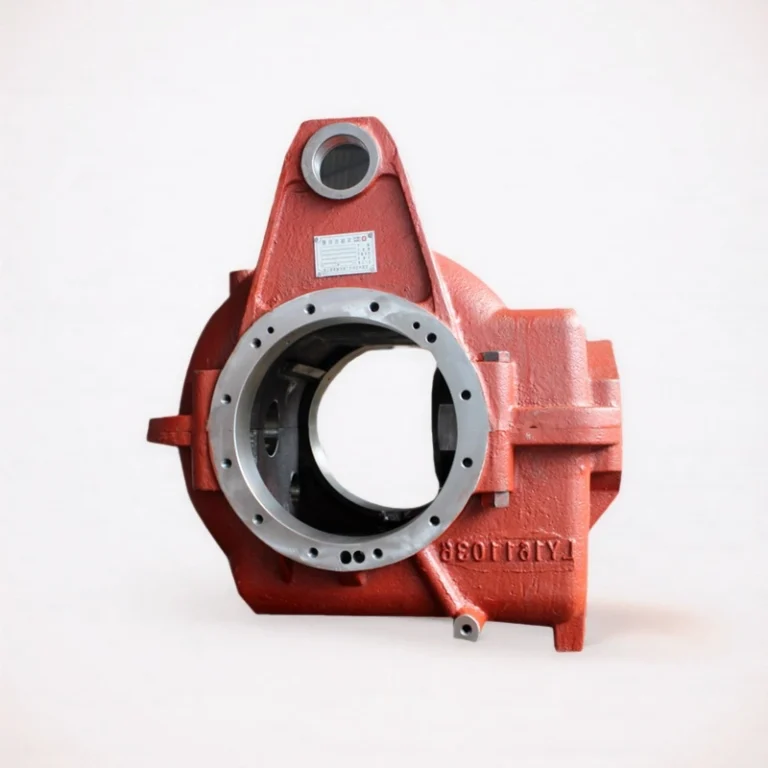
شركة لويانغ فونيو للصناعات الثقيلة, المحدودة, تأسست في عام 1998، وهي شركة مصنعة لأجزاء السكك الحديدية المصبوبة. مصنعنا يغطي مساحة 72,600㎡, مع اكثر من 300 موظفين, 32 الفنيين, مشتمل 5 كبار المهندسين, 11 المهندسين المساعدين, و 16 الفنيين. قدرتنا الإنتاجية هي 30,000 طن سنويا. حالياً, نحن ننتج بشكل رئيسي الصب, بالقطع, والتجمع للقاطرة, عربة السكك الحديدية, القطارات عالية السرعة, معدات التعدين, طاقة الرياح, إلخ. وقد تم تصدير منتجاتنا إلى روسيا, الولايات المتحدة, ألمانيا, الأرجنتين, اليابان, فرنسا, جنوب أفريقيا, إيطاليا ودول أخرى. اتصال: ستيلا ليو بريد إلكتروني: [email protected] واتساب: +86-155-1535-1287