قم بمسح رمز WeChat للاتصال بنا
قم بمسح رمز WeChat للاتصال بنا
لا تتردد في مراسلتنا عبر البريد الإلكتروني وسوف نقوم بالرد عليك في أقرب وقت ممكن.
صنع المستقبل بالقلب والروح


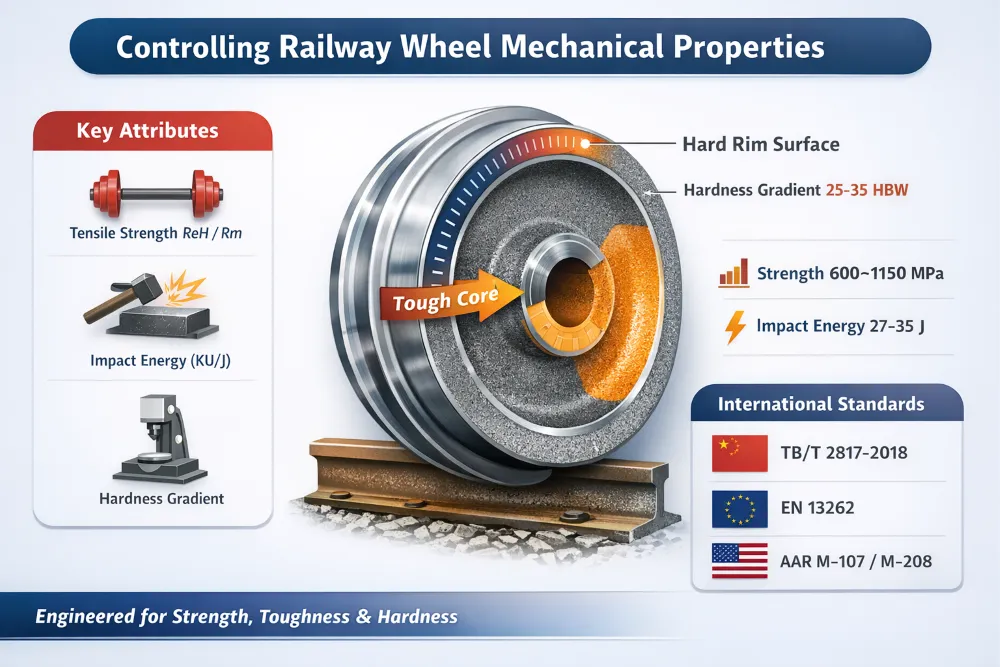
When people see a عجلة السكك الحديدية for the first time, they often notice the shiny steel surface and impressive size. But as any engineer will tell you, the real story lies inside. قوة, صلابة, and hardness are what make a wheel safe, موثوق, and long-lasting under the extreme loads of railway operations. In our company, when we produce railway wheels, we don’t just manufacture wheels; we control every step of the process to ensure mechanical properties meet the strictest standards—TB/T 2817-2018 in China, في 13262 in Europe, and AAR M-107/M-208 in North America.
But before we get into the specifics of each standard, let’s take a step back. What do we actually mean when we talk about a wheel’s mechanical properties? في الأساس, we’re looking at three key personality traits of the steel itself.
أولاً, there’s strength. This isn’t about how much it weighs, but about how much force it can handle. We measure its yield point (ReH) and tensile strength (Rm) – basically, the limit of how much load it can carry before it starts to bend or break permanently.
Then there’s toughness. Think of this as the wheel’s shock absorber. Measured by impact energy (KU2 or KV2), it tells us how well the wheel can handle a sudden, violent hit – like hitting a hard spot on the track – without cracking.
أخيراً, we have hardness. This is measured on the wheel’s tread, the part that actually rides on the rail. A harder surface, measured in HBW, simply means it’s more resistant to wear, helping the wheel last longer and keep its shape over millions of miles.
These three traits—strength, صلابة, and hardness—work together to define a wheel’s performance and safety.
Take our CL60, CL65, and AAR C wheels as examples:
| Wheel Grade | ReH / Rm (الآلام والكروب الذهنية) | Avg Impact (J) | Hardness Gradient (HBW) |
| CL60 | 616 / 996 | 33 | 35 |
| CL65 | 638 / 1048 | 34.8 | 29 |
| AAR C | 704 / 1153 | 27.9 | 25 |
These numbers don’t just meet standards—they demonstrate consistent strength and toughness balance across multiple grades.
عجلات السكك الحديدية are not one-size-fits-all. Each region sets different requirements:
في شركة لويانغ فونيو للصناعات الثقيلة, المحدودة., our production process is flexible enough to produce wheels that meet all these standards. Each wheel grade—from CL60 to AAR C—has its mechanical properties precisely engineered, not just tested after production.
Achieving high tensile strength is one thing; making sure the wheel also absorbs impact energy is another. على سبيل المثال:
This combination of high strength and adequate toughness comes from carefully controlled forging, المعالجة الحرارية, and quenching processes. We don’t just aim for numbers; we ensure that the wheel can survive real-world shocks without compromising safety.
A common misconception is that harder wheels are always better. في الواقع, a wheel cannot be uniformly hard. If the core is too soft, it deforms; if it’s too hard, it may crack under load. That’s why we control hardness gradients:
This gradient ensures durability and safety while avoiding brittleness—a subtle but critical part of wheel engineering.
Even a single wheel with perfect properties can fail if the batch isn’t consistent. This is why we monitor surface hardness across entire production batches:
This demonstrates that our process isn’t just precise—it’s repeatable. Every wheel leaving our facility has mechanical properties within a tightly controlled range, minimizing risk during operation.
شركة لويانغ فونيو للصناعات الثقيلة, المحدودة., we see wheel manufacturing as an engineering discipline, not just a production process. By integrating advanced forging, precise heat treatment, and rigorous quality testing, we create wheels that deliver more than just steel. Every wheel that leaves our facility is a package of engineering promises fulfilled:
Whatever the market demands—TB, في, or AAR—compliance is guaranteed. The wheel delivers a reliable balance of strength and toughness, ready for both heavy loads and sudden impacts. A carefully controlled hardness gradient ensures a wear-resistant surface, while the core stays tough and durable. Yet the real differentiator is consistency. From start to finish, every wheel in a batch performs the same, minimizing risk and maximizing predictability for our customers.
The result is a wheel that not only meets regulatory standards but also performs safely and reliably under real-world railway conditions.
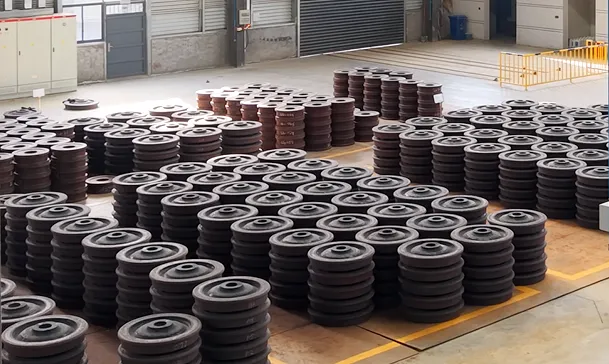
Railway wheels are deceptively simple components. Their safety depends on a careful balance of strength, صلابة, and hardness, all controlled consistently across batches and standards. Our CL60, CL65, ER7–ER9, and AAR C wheels demonstrate this control in practice.
في شركة لويانغ فونيو للصناعات الثقيلة, المحدودة., we engineer wheels with precision and reliability in mind. From forging to final testing, every wheel is built to meet TB/T 2817-2018, في 13262, and AAR standards.
Discover how our engineering approach ensures mechanical property excellence for your railway operations: www.railwaypart.com
إذا كنت تبحث عن مورد موثوق به لعجلات السكك الحديدية, مصبوبات السكك الحديدية, or forged railway components, feel free to contact us to discuss your project.
What mechanical properties determine railway wheel performance?
The most important mechanical properties of railway wheels include hardness, قوة الشد, impact toughness, and fatigue resistance. These properties determine how well the wheel can withstand heavy axle loads, repeated rolling contact, and long-term service under demanding railway operating conditions.
How do TB, EN and AAR standards differ for railway wheels?
Different railway systems use different technical standards. TB standards are mainly applied in Chinese railway projects, EN standards are widely used across Europe, while AAR standards are commonly required in North America.
Although the testing principles are similar, each standard defines its own acceptable ranges for hardness, قوة الشد, and impact toughness. Standards are developed by organizations such as the European Committee for Standardization and the Association of American Railroads.
Why is heat treatment critical for railway wheel mechanical properties?
Heat treatment is one of the most important steps in railway wheel manufacturing. Through controlled quenching and tempering, manufacturers adjust the balance between hardness, قوة, and toughness.
Even small variations in cooling rate or temperature control can influence fatigue resistance and long-term wheel reliability.
Where are mechanical properties tested on a railway wheel?
Mechanical property testing is typically performed on samples taken from the wheel rim. This area experiences the highest stress during service because it is the part that directly contacts the rail.
Testing the rim ensures that the wheel can withstand both high contact stresses and repeated rolling fatigue.
Why is consistency important in railway wheel mechanical properties?
Railway wheels are usually produced in large batches, and consistent mechanical properties are essential for safe railway operation. If properties vary too much between wheels, it can lead to uneven wear, اهتزاز, or reduced service life.
This is why manufacturers closely control chemical composition, forging processes, and heat treatment parameters.