Отсканируйте код WeChat, чтобы связаться с нами.
Отсканируйте код WeChat, чтобы связаться с нами.
Не стесняйтесь, отправьте нам электронное письмо, и мы ответим вам как можно скорее.
Создаем будущее сердцем и душой


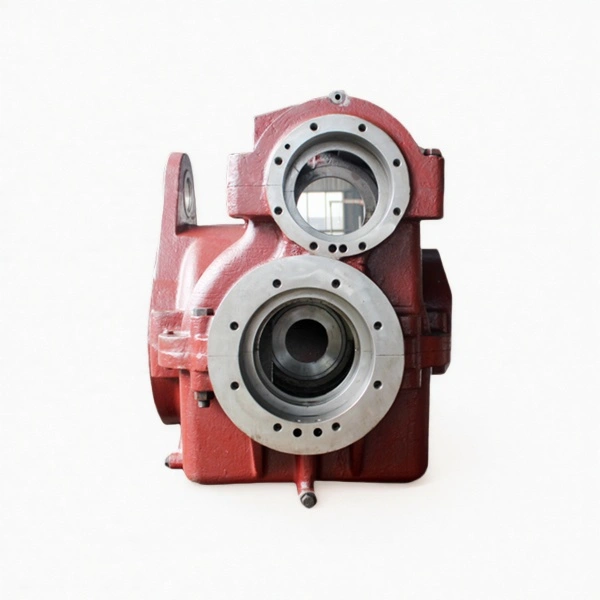
In the world of metal casting, railway castings and automotive castings may look similar on the surface, but the way they are designed, produced, and machined reflects two completely different manufacturing philosophies. Railway locomotive castings are large, big sized, например, the gearbox case, тот буксы, they may look the same, but there are lots of difference between them.
This article explains these differences in a natural, reader-friendly way—without losing technical accuracy.

Railway locomotive castings—such as axle-hung housings, компоненты тележки, and gearbox housings—often weigh hundreds of kilograms or even several tons.
Automotive parts like brackets or suspension components may only weigh a few kilograms.
This size difference changes everything:
Railway castings are “engineered one by one,”
while automotive castings are “produced by the thousands.”
Railway castings usually rely on:
These methods provide flexibility for large, thick-wall structures with complex geometry.
Automotive castings are typically made using: High-pressure die casting, Automated shell-mold lines and Fully automated pouring systems
Проще говоря:
Railway castings prioritize reliability. Automotive castings prioritize efficiency.
Railway components work under heavy load, shock, вибрация, and long-term fatigue. Common materials include: High-grade ductile iron (QT600, QT700), Alloy-modified cast iron and Low-temperature ductile iron (down to –40°C)
Automotive castings more commonly use Standard ductile iron (QT450), Gray iron and Aluminum alloys
The challenge of railway materials lies not in the formula,
but in the consistency and stability of large cast sections.
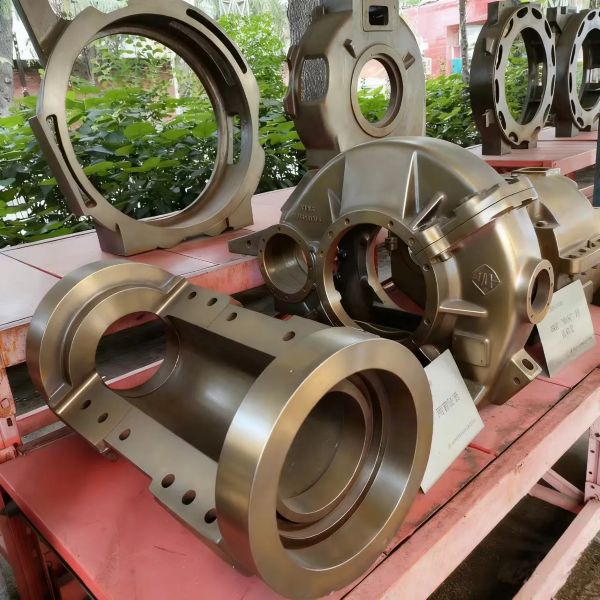
Machining railway castings often requires:
Automotive castings:
Machining a railway casting feels like shaping a “steel structure,”
while machining automotive castings feels like finishing a “precision component.”
Railway locomotive castings are more challenging because of:
Every step in railway casting must be executed with zero compromise.
6. Our Experience: Why Railway Castings Customers Trust Us
Our foundry specializes in:
Many clients tell us:
“The stability of your large castings is extremely valuable.”
Because in railway castings,
success is not about achieving precision once—it’s about achieving it every time.
Railway locomotive castings and automotive castings follow fundamentally different paths in design, производство, and machining. One is built for long-term reliability under harsh conditions, the other for efficiency and high-volume output. With our experience in large railway castings, ductile iron components, and heavy-duty machining, Лоянская компания Fonyo Heavy Industries Co., ООО. helps transform demanding railway designs into dependable, real-world components. Пожалуйста, посетите наш сайт www.railwaypart.com to know more about us and if you are interested in any products, пожалуйста, свяжитесь с нами.